Sunday Compulsion: Devi S. Laskar (Why I Write)

Welcome to “Sunday Compulsion,” in which creatives answer one question: Why do I create? Poet Devi S. Laskar kicks off this new weekly feature.

I’ve been writing poems since I was 9 years old. It’s who I am: a poet. I write nonfiction and I write short stories and novels and I do so because I have this desire to communicate. I am interested in all kinds of forms. And I love to read, which is probably why I live to write. I’m trying to write the stories and the poems I haven’t read yet.

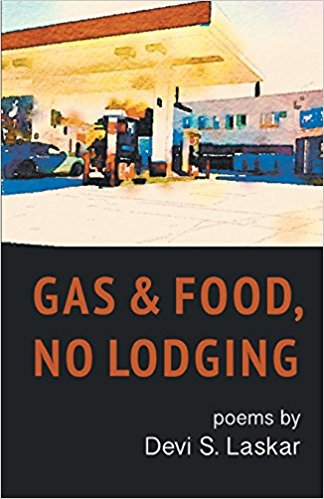
Devi S. Laskar is a native of Chapel Hill, N.C. She holds an MFA from Columbia University in New York, an MA in South Asian Studies from the University of Illinois at Urbana-Champaign and a BA in journalism and English from the University of North Carolina at Chapel Hill. A former newspaper reporter, she is now a poet, photographer and artist. Her photographs include the cover of The Florida Review; and in the pages of Tiferet Journal and Blue Heron Review. Her art can be found currently on the cover of L.A. based Las Lunas Locas poetry anthology. Her poems have appeared in numerous journals including The Blue Heron Review, which nominated her for Best of the Net 2016 & The Raleigh Review, which nominated her for Best New Poets 2016. She is an alumna of both TheOpEdProject and VONA/Voices, and served as a Tupelo Press’ 30/30 Project poet in December 2015. She is also an alumna of Hedgebrook, and poetry workshops at the Community of Writers at Squaw Valley. In 2016, she won first prize in poetry at the 27th Mendocino Coast Writers Conference contest. Finishing Line Press published the first of two chapbooks, “Gas & Food, No Lodging” in March 2017; and will publish “Anastasia Maps” later this year. She now lives in California.

You can get Devi’s book Gas & Food, No Lodging at Finishing Line Press and Amazon,
as well as Bookshop Santa Cruz and online at Barnes & Noble.

Read this review!

Read and listen to her poem “Unanswered, Untranslatable”

To learn more about Devi, visit her website, which includes links to her artaday, essays, and various publications her work has appeared in.

And this podcast.


Untitled from the 80s

Another untitled poem from the 80s…

wood and water
the wave of
fragrance so perfect

we seek to
obtain it as
if we could

be windows open
to a light
the gentlest cloud

would obscure still
spreading like one’s
final exhalation which

travels only to
disperse and become
at last another’s

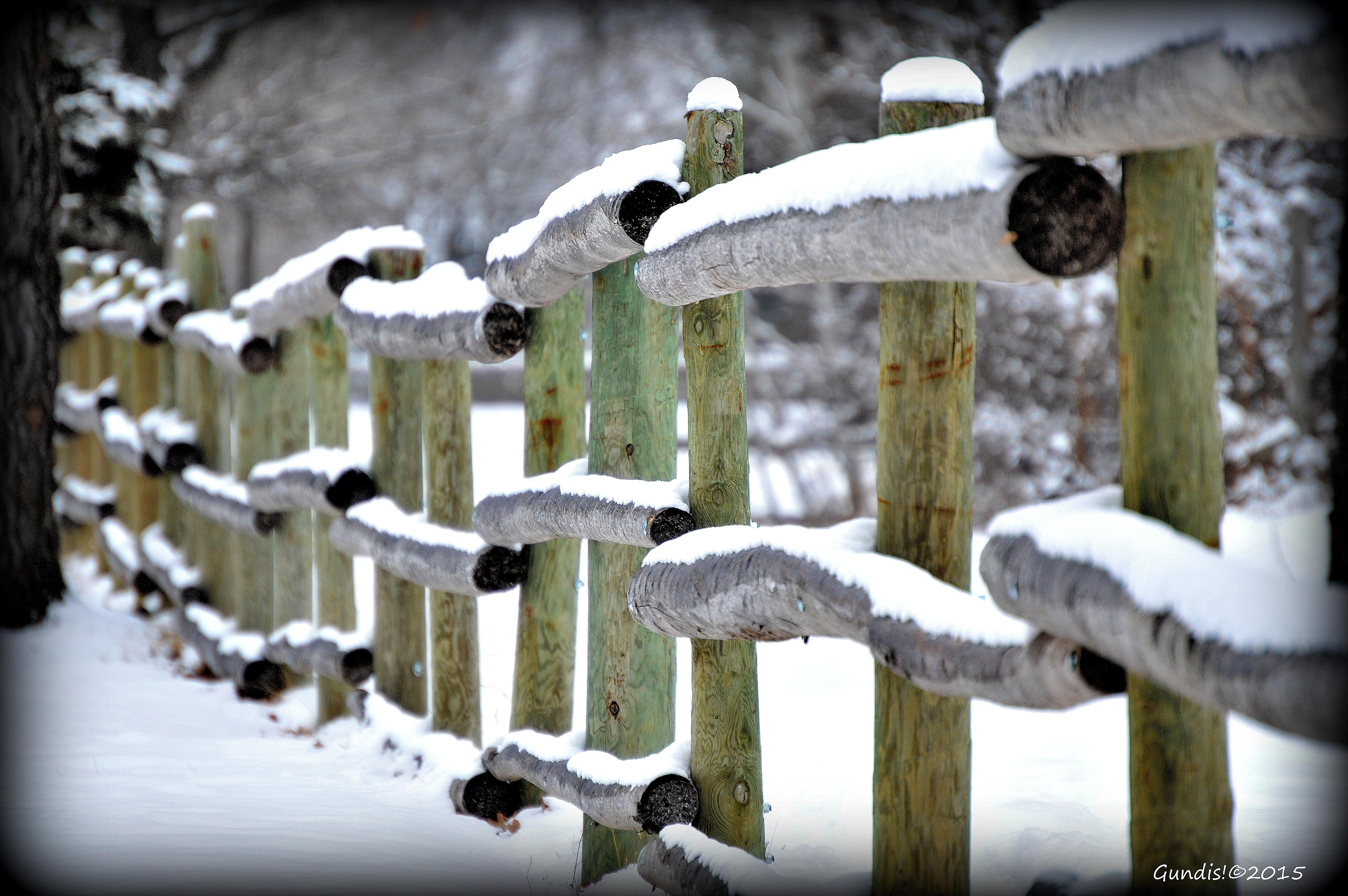
Two Cranes on a Snowy Pine

snow

Two Cranes on a Snowy Pine (after Hokusai)

Who knows where bird
begins and tree

ends,

which branch shifts
snow, which bears

eternity. This, too, will share

joy,
elusive green

and breath,
with no thought

of flight

and night’s
fall.

This first appeared in Panoply in summer, 2016, and was nominated for a Pushcart Prize. Many thanks to editors Ryn Holmes, Jeff Santosuosso and Andrea Walker for this honor, my first such nomination.

It also appears in my forthcoming chapbook, From Every Moment a Second.

See the woodblock print that sparked this poem: Hokusai

crane

Excerpt from My Forthcoming Chapbook

…Red, like your favorite sky,
the in-between, the misplaced one.

From “I Have Answers,” in From Every Moment a Second, available for prepublication order via Finishing Line Press.


Review: You Break What Falls – Robert Okaji

Dani, from Only Books and Horses, has reviewed my 2015 micro-chapbook, You Break What Falls.

Q&A with Poet Chip Dameron

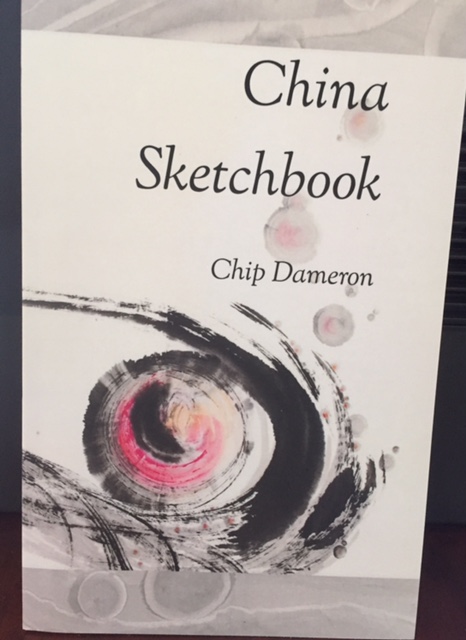
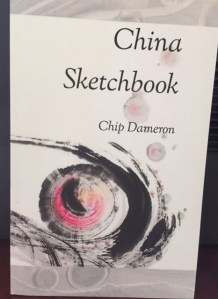
Q&A with Chip Dameron, author of China Sketchbook

Would you mind sharing a bit about your background?

I started writing poems in college and have been been playing with language ever since. To support my family, for many years I taught writing and literature at UT Brownsville and held several administrative positions. Now I am writing full time.

Which three words best describe your poetry?

Precise. Vivid. Imagistic.

Tell us about China Sketchbook. What was its genesis?

A few years ago my wife and I took a month-long trip across China, which was a stunning experience. I’ve long admired Chinese poetry and knew a little Chinese history, so to observe how China is transforming itself and to meet many of its people made for an unforgettable journey. I began drafting poems along the way, and I continued after returning home. China Sketchbook contains 27 poems, and Virtual Artists Collective was kind enough to publish it under its Purple Flag imprint in December 2016.

I’m sure you’re frequently asked this question, but I can’t resist: What carries you from the blank page to a poem? What is your process?

Usually I sit down to explore something I’ve seen or heard or experienced or thought about. What images can I find to get the poem started? Where do they want or need to go? Which words support the movement of the poem and give it the energy it needs to become a language-object that others might enjoy experiencing? Through this process I hope to create poems that are authentic and original.

A few months ago you published At Paisano Ranch, a micro-chapbook, with Origami Poems Project. What can you tell us about this book?

In September 2016, I began a four-month stay as writer-in-residence at Paisano Ranch in Austin, once owned by the legendary Texas writer J. Frank Dobie. You and I met at the ranch several times and talked about poetry, and I was intrigued by the charming micro-chapbook that you had published through Origami Poems Project called You Break What Falls. So I took six poems I had written about my experiences at the ranch and sent them off to OPP, and the editors accepted the micro-manuscript and published At Paisano Ranch in early December. I encourage poets and readers to visit the website, https://origamipoems.com, and download for free any of the micro-chapbooks that interest them. Poets may also wish to submit their own micro-manuscripts of six short poems.

What advice do you have for new poets?

Don’t be in a great rush to publish your work. Work at the craft of creating your poems, read your drafts out loud, and don’t be afraid to tinker with your poems, and even make extensive changes. You are engaging in the process of finding your distinctive voice, your distinctive style. When you’ve found that voice and style, you are ready to go public. And when you experience rejection, as all poets do, keep submitting your poems, and keep writing new ones.

Which artists inspire you? Whose work do you read, listen to, gape at, admire, envy?

I’ve long admired the great American poets of the past, including Whitman, Dickinson, Frost, and Stevens. More recent sources of inspiration include Seamus Heaney, Naomi Shihab Nye, and Billy Collins. And even through translation, which can’t do full justice to the original language, I’ve been amazed at the power of the classical Chinese poets, such as Li Bai, Du Fu, and Tao Qian.

What are you working on now, what’s in the pipeline, and what can we look forward to in the coming months?

I’ve recently completed a collection of poems called Mornings with Dobie’s Ghost, which is scheduled for publication in 2018 by Wings Press. I wrote the 35 poems while living and working at Paisano Ranch. And I’m in the middle of drafting a novel—my first—which has been a most challenging but stimulating experience.

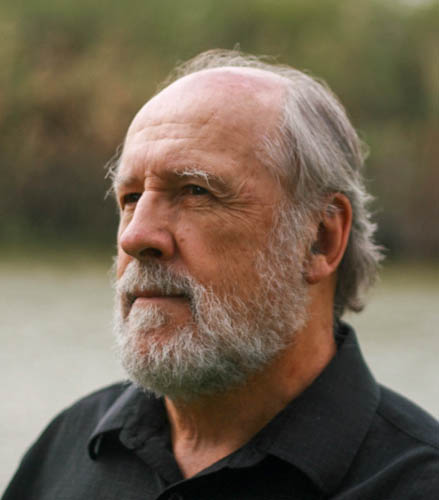
Bio: Chip Dameron is the author of nine collections of poetry and a travel book. His poems and essays on contemporary writers have appeared in the Mississippi Review, Southwestern American Literature, San Pedro River Review, Puerto del Sol, Hayden’s Ferry Review, New Orleans Review, Borderlands, and many other journals and anthologies, as well as publications in Canada, Ireland, Nigeria, India, China, Thailand, and New Zealand.

Website: https://www.cdameron.com

YouTube reading at Malvern Books with Larry D. Thomas

Youtube reading at Malvern Books

Reading at the Friendswood Public Library

“We Real Cool” Video

2017 marks the 100th anniversary of the birth of the great Gwendolyn Brooks. Check out this really cool video featuring her best known work “We Real Cool.”

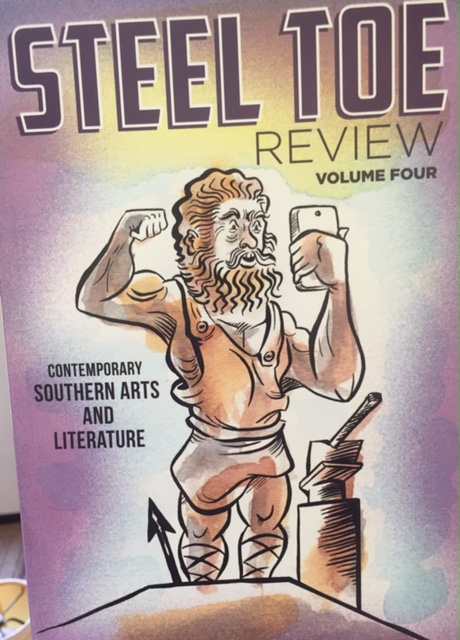
Two Poems in Steel Toe Review

My poems “How to Do Nothing” and “And All Around, the Withered” have been published in Volume Four of Steel Toe Review, available for purchase here.

Many thanks to editor M. David Hornbuckle for taking these pieces.


More Jim Harrison

thigh

Chef Mario Batali interviews Jim Harrison in this brief Food & Wine article. I particularly enjoyed Harrison’s take on America’s “big curse,” and his reply to the last question is priceless.


Jim Harrison

trout

While browsing the Poetry Foundation’s articles, I uncovered this piece from 2016. Jim Harrison has long been one of my favorites. His success at prose has perhaps caused some to forget or disregard his poetry, but in my mind, he’s always been a poet first.