Dead Rose at 5 Points Local


Dead Rose at 5 Points Local
(A collaborative poem written with Stephanie L. Harper)

Having plucked the disheveled
petals from the core,
she waits
for the dead to speak
of last week’s sweetness—

of damp upholstery
and worn-out shoes,
of locked chests
and the faint honey
of unrealized hope.

Magnetized,
I twist the stem;
I quarter the seeds and
blemish the plate.
Which north rings true?

Which faded-red
bridge reveals the lost
inner compass?
Our ice cubes clink
no answers, as the essences

of hibiscus, lavender,
and mint slip over my tongue,
concealing the cool
tang of her demurring
ghosts…

But when she says whisper,
touching her lips
with an index finger,
I hear distant trains
baying like wolves,

and smell the char of nights
trailing the undiminished
river, its waters flowing
in every possible
direction, away.


* * *

“Dead Rose at 5 Points Local” first appeared in Formidable Woman Sanctuary in November 2018. For the story behind the poem, click on the link.

While Reading Billy Collins at Bandera’s Best Restaurant, Words Come to Me


While Reading Billy Collins at Bandera’s Best Restaurant, Words Come to Me

And having no other paper at hand,
I scrawl on a dollar bill, “I want to speak
the language of smoke.” My invisible friend
interrupts. That is a white man’s dilemma.

 At least you have a dollar and a pen.
“But I’m only half-white,” I reply, “with half
the privilege.” Then you must bear double
the burden,
he says. This version of math

twists my intestines into a Gordian knot,
as does the concept of half equals twice,
or in terms I might better comprehend,
one beer equals four when divided by color

or accent and multiplied by projection.
The unsmiling waitress delivers my rib-eye
as I’m dressing the salad, and the check appears
just after the first bites of medium-rare beef

hit my palate, certainly before I can answer the
never-voiced question “would you like dessert?”
Cheese cake, I would have said. Or cobbler. And I
seldom turn down a second beer. This too, I’m told,

is another example of my unearned entitlement. I
contemplate this statement, scribble a few other
phrases on bills, drop them on the table, and walk out,
wondering which direction to take, which to avoid.

* * *

“While Reading Billy Collins at Bandera’s Best Restaurant, Words Come to Me” was a finalist  for the 2017 Slippery Elm Prize in Poetry. It was published in Slippery Elm (print only) in December 2017. You may be amused to hear that shortly after the winner was announced, I had lunch in Bandera with one of the other finalists in this competition, D.G. Geis, but not at the restaurant featured in the poem. The photo is of a local bar, not the eatery, but it offers some of the flavor of the town.

At Work I Stand Observing My Diminished Self


At Work I Stand Observing My Diminished Self


1 (reflection)

Six iterations, alike but lessened in sequence, and always in pairs:
front and back, oblique, the two mirrors becoming four, then six.

A perfect mirror reflects and neither transmits nor absorbs light.

Tilting my chin, I accept reflectance according to its distribution.

Retina as transducer, producing neural impulses.

The images consume no space but the effect is of distance.

Vision is not simply the retina’s translation
but counts inference and assumption among its influences.

The sum and product of its parts: 1 + 2 + 3, or, 1 x 2 x 3.

Angles achieve distinctions apparent at each adjustment.

Turning slightly, I detect movement in each replica.

A six-door cubic cage depicting the bondage of sense and elements.

It is possible to withdraw from this frame.


2 (answers)

Does the weaker eye perceive less.
Who conceals the shadow’s death.
Is a distal truth a lie or merely implication.
How do you rid the mirror of its ghosts.
What resonates in the echo’s decline.
Did the light switch subvert the blackened image.
Apparition, projection or visual representation.
When do waves not disturb.
At what point does belief transmute sight.
What fixes the mirror’s image.
Who closed his eyes and saw light.


3 (prosopagnosia)

I sip coffee and gaze out the second-floor window.

More light enters my neighbor’s office than mine.

Calculate the difference between illumination and glare.

Looking ahead, I claim no face and recognize no one.

The eye converts a signal from one form of energy to another.

Accepting light from external objects, I perceive reflection as the true arbiter.

The dissected path impairs transduction.

Face as identifier: to make, to do.

Translation: imperfection: diminishment.

Blink.

* * *

“At Work I Stand Observing My Diminished Self” was published in Posit in October 2017.

Spring Night (after Wang Wei)

file4401311417052

Spring Night (after Wang Wei)

Among falling devilwood blossoms, I lie
on an empty hill this calm spring night.
The moon lunges above the hill, scaring the birds,
but they’re never quiet in this spring canyon.

Another try at an old favorite…

I consider this adaptation rather than translation, but perhaps appropriation or even remaking might be more accurate.

Here’s the transliteration from chinese-poems.com:

Person idle osmanthus flower fall
Night quiet spring hill empty
Moon out startle hill birds
Constant call spring ravine in

So many choices, none of them exactly right, none of them entirely wrong. How does one imply idleness, what words to use for “flower” (blossom? petal?), or for that matter, “fall” (descend, flutter, spiral)? And how to describe a moonrise that scares the constantly calling birds? My first attempt began:

“I lie among the falling petals”

but it seemed vague. The word “osmanthus” fattened my tongue, or so it felt, but the osmanthus americanus, otherwise known as devilwood or wild olive, grows in parts of Texas. So I brought the poem closer to home.

I considered naming the birds (quail came to mind) but decided against. In this case the specificity felt somehow intrusive.

My hope is that I’ve managed to amplify, in some small way, previous iterations, and that while the edges are still a bit blurred in morning’s first light, perhaps they’ll become slightly crisper by the evening.

file8981286030058

“Spring Night” last appeared here in February 2018.

Incongruities

image

Years ago, I worked in a library…

Incongruities

so little depends
upon

the half-Japanese
bookman

reading Italian
haiku

in the Texas
library.

Once again, my apologies to William Carlos Williams, whose poetry inspires and therefore often bears the brunt of my little diversions into whimsy. “Incongruities” first appeared here in October 2015. The original WCW poem can be found here.

image

Which Poet, Which Beer (2)

pint

Tastes change. In my younger years I preferred sweeter brown ales, eschewed hoppier, bitter beverages, and seldom branched out. Nowadays, I lean heavily towards the bitter, and when the opportunity presents itself, feel compelled to sample the unknown. Thus when I spied Alaskan Brewing Company’s Alaskan Jalapeño Imperial IPA on tap, I had no choice but to order a pint. We may not normally place the words Alaska and jalapeño alongside each other, but if this Imperial IPA is any indication, perhaps we should. With an odor of hops and capsicum, it felt smooth on the tongue, a little malty, even earthy. Not  complex at the outset, but subtle, defying definition and developing over time, in the way a good poem develops. My only complaint would be the lack of heat. But hey, I’m from Texas, and we do jalapeños. This is a beer of multiple cultures, a blend of distinct identities. I think of Joan Naviyuk Kane, and her first book, The Cormorant Hunter’s Wife, in which she writes in “Antistrophic”

Instead of out, I am in,
Trying at the old habit of imperfect definition
As well as the less familiar,
Between falling gold

Kane’s narrative, her mythology and landscape, are not mine, yet they invite me in and envelop my senses, allowing synthesis, acceptance, to occur.

But sometimes I crave the unadorned. The Lone Pint Brewery’s Yellowrose IPA, a single malt, single hop concoction, startled me. Surprisingly mellow in the mouth, it imparts grapefruit and perhaps pineapple with a hint of something I can’t readily identify. Strong yet delicate, infinitely interesting, Yellowrose is most definitely a celebration of simplicity and craft – a few ingredients combined to create magic. Which may also describe Christina Davis’s book An Ethic. Spare in nature, her work transcends the limits of language, the borders of the page. Her poems blossom anew with each reading, and the farther away I move from them, the more I long to return:

”All Those That Wander,” in its entirety:

After the ark survived the Flood,
it was taken apart
to be made into cages.

This is the nature of religion.

Of course my curiosity leads me down other paths, too. Infamous Brewing Company’s Sweep the Leg peanut butter stout pours with a small head, and tastes of rich malts and coffee, with a little cocoa and, of course, subtle peanut tones. An opaque, dark brown or black, with minimal carbonation, exuding stillness, it isn’t quite what I anticipated, with the peanut butter flavor a tad muted. But the mouthfeel is spot on, and the aftertaste lingers, leaving me requesting more of this unlikely combination, and reminding me of Charles Simic’s  Dime-Store Alchemy: The Art of Joseph Cornell, in which he imparts, through prose poems, the experience of viewing Cornell’s enigmatic art. Nothing is quite as you expect it should or could be, yet you go on, somehow understanding. He writes in “Secret Toy”:

In a secret room in a secret house his secret toy sits
listening to its own stillness.

Simic offers openings into Cornell’s art, explains the unexplainable without explanation. I stare into the pint of Sweep the Leg, and find my own stillness. I read Simic and find another. This is what I seek in poetry, what I want in good beer. I have found it.


blackbeer

“Which Poets, Which Beer (2)” has appeared here several times. You will be relieved to hear that I am still conducting research in these matters.

We Call the Neighbor’s Fat Burro Donkey Hotei, but His Name is Cantinflas

file000560125690

We Call the Neighbor’s Fat Burro Donkey Hotei, but His Name is Cantinflas

Certainty grows in corners, away from light.
From his mouth issues the breath we take, the words we keep.

Enjoy the collusion of shape and sound.
We share the hummingbird’s taste for sweet, but not its fierceness.

Its heart beats 1,200 times a minute,
and you ask me how best to bury money.

Hotei’s name means cloth sack, and comes from the bag he carried;
a man of loving character, he possessed the Buddha nature.

What we own cannot be held.
Most plastics are organic polymers with spine-linked repeat units.

The space you’ve left expands exponentially.
Left in the rain, the bell grows.

Christen me at your own peril. Agaves flower once then die.
Fluency in silence.

I dropped my pants when the scorpion stung my thigh.
The wind takes nothing it does not want.

After vulcanization, thermosets remain solid.
The Cantinflas character was famous for his eloquent nonsense.

Vacuum wrap the bills in plastic, place them in pvc.
Having mastered imperfection, I turn to folly.

Not the thing itself, but the process laid bare and opened.
Hoping to hide, the scorpion scuttled under a boot.

Thought to action, whisper to knife: which is not a curse?
The wind wants nothing; the burro sings his loneliness.


This first appeared here in May 2015. My failures often lead to success. I’ve never quite completed this piece, and don’t know that I ever will. But the first draft (nearly five years ago) set me off on a new path, one that has served me well. What more can I ask?
 
 
file2751313196905


Earth’s Damp Mound

OLYMPUS DIGITAL CAMERA

Earth’s Damp Mound
for P.M.

I. February 1998.

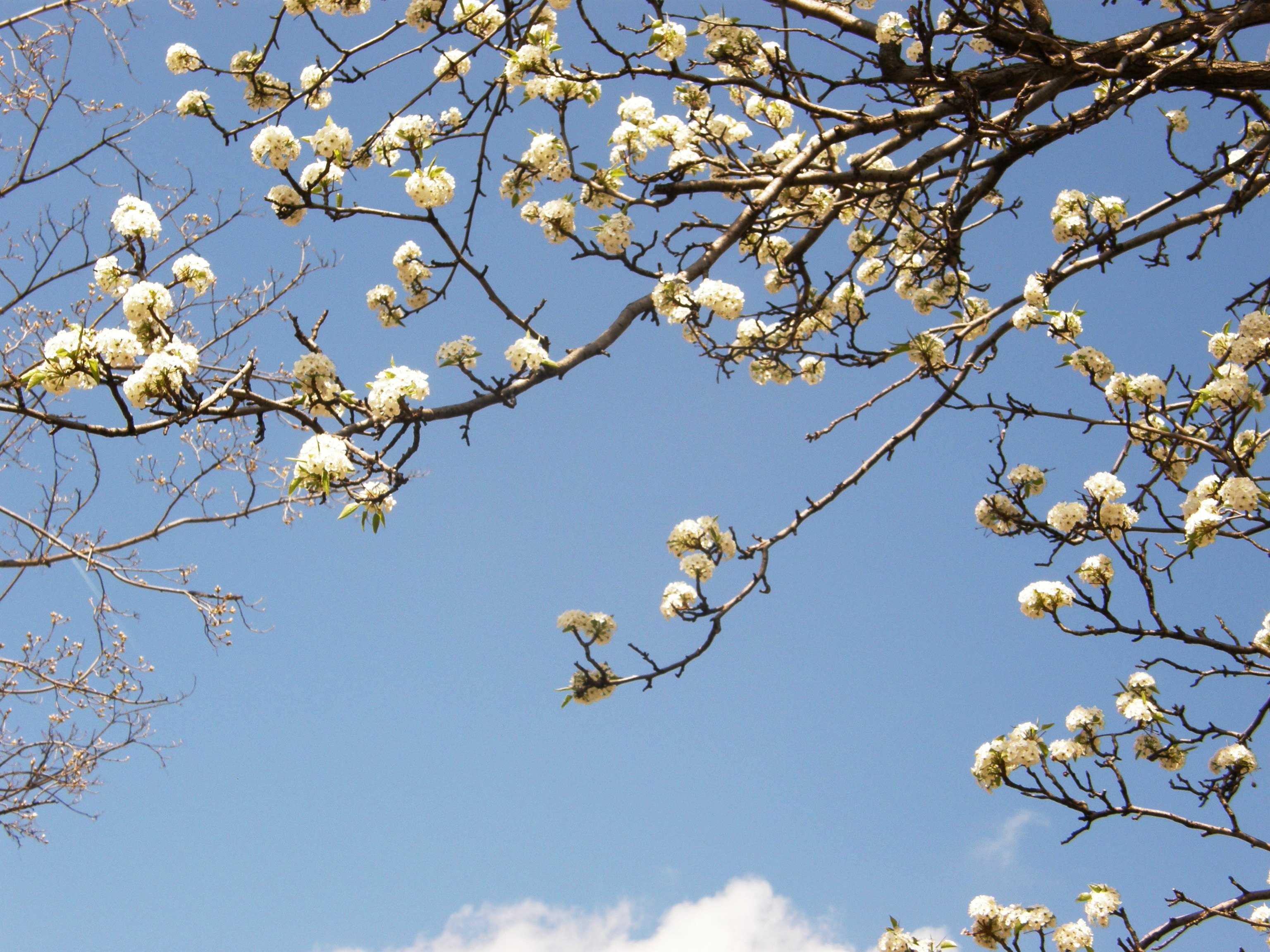
That week it rained white petals
and loss completed its

turn, the words finding themselves
alone, without measure,

without force, and no body to compare.
Though strangers spoke I could not.

Is this destiny, an unopened
mouth filled with

pebbles, a pear tree
deflowered by the wind? The earth’s

damp mound settles among your bones.


II. Count the Almonds

What bitterness
preserves your sleep,

reflects the eye’s
task along the inward thread?

Not the unspoken, but the unsayable.

Curious path, curious seed.
A shadow separates

to join another, and in the darker
frame carries the uncertain

further, past silence, past touch,
leaving its hunger alert and unfed,

allowing us our own protections.


III. The Bowl of Flowering Shadows

Reconciled, and of particular
grace, they lean, placing emphasis on balance,

on layer and focus, on depth of angle
absorbing the elegant darkness,

a lip, an upturned glance, the mirror.

What light caresses, it may destroy.
Even the frailest may alter intent.

So which, of all those you might recall,
if your matter could reform

and place you back into yourself,
would you choose? Forgive me

my selfishness, but I must know.


IV. Requiem

Then, you said, the art of nothingness
requires nothing more

than your greatest effort.
And how, seeing yours, could we,

the remaining, reclaim our
space without encroaching on what

you’ve left? One eye closes, then
the other. One mouth moves and another

speaks. One hears, one listens, the eternal
continuation. Rest, my friend. After.


Prentiss Moore influenced my reading and writing more than he ever realized. We spent many hours talking, eating, arguing, drinking, laughing. Always laughing – he had one of those all-encompassing laughs that invited the world to join in. And it frequently did. Through Prentiss I met in person one of my literary heroes, Gustaf Sobin, whose work Prentiss had of course introduced me to. Those few hours spent with the two of them driving around in my pickup truck, discussing poetry, the Texas landscape, horticulture and the vagaries of the publishing world, are hours I’ll always hold close.

Earth’s Damp Mound last appeared here in April 2018. It was first published in the anthology Terra Firma, and is included in my chapbook, If Your Matter Could Reform.
 

file0001831388228

Nocturne with a Line after Kees

country


Nocturne with a Line after Kees

I close my eyes and see nothing but rain.
And after, take pity

for what turns beyond sight: the wretched
flower, a hiss from the road. Last night the wind
stole sleep from my body,

leaving me alone, wordless, listening
for her next breath. An alchemist,

I transmute the memories of old wounds laid open.


*****

This first appeared in Ijagun Poetry Journal, in December 2013.


Antique pharmacy


Chill (Cento)

silhouette


Chill (Cento) 

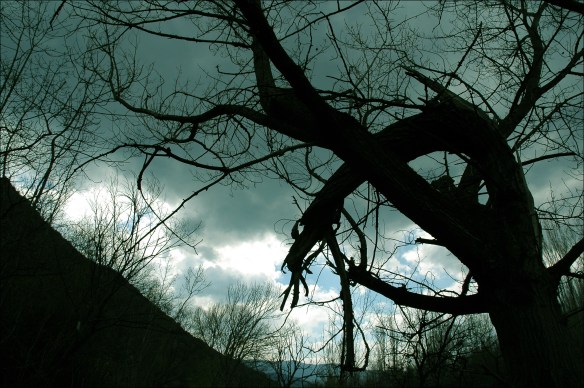
I shiver a little, with the evening,
and you print a shadow like a thin twig.

Wait for my death, then hear me again.
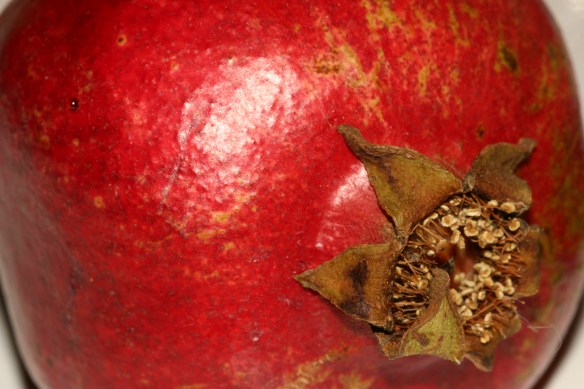
He believes a pomegranate is a thesaurus,

the thundercloud, tomorrow’s puddle. Is
this hunger unlike that of others?

When a drowning man calls out,
his voice follows him downstream.

Why am I grown so cold?


A cento is composed of lines borrowed from other poets. “Chill” owes its existence to: James Wright, H.D., Ingeborg Bachmann, Eduardo C. Corral, Blaga Dimitrova, Forrest Gander, Yusuf Komunyakaa, and Adelaide Crapsey.

pom.jpg

“Chill” first appeared on the blog in March, 2016, and was subsequently published in Long Exposure in October 2016.