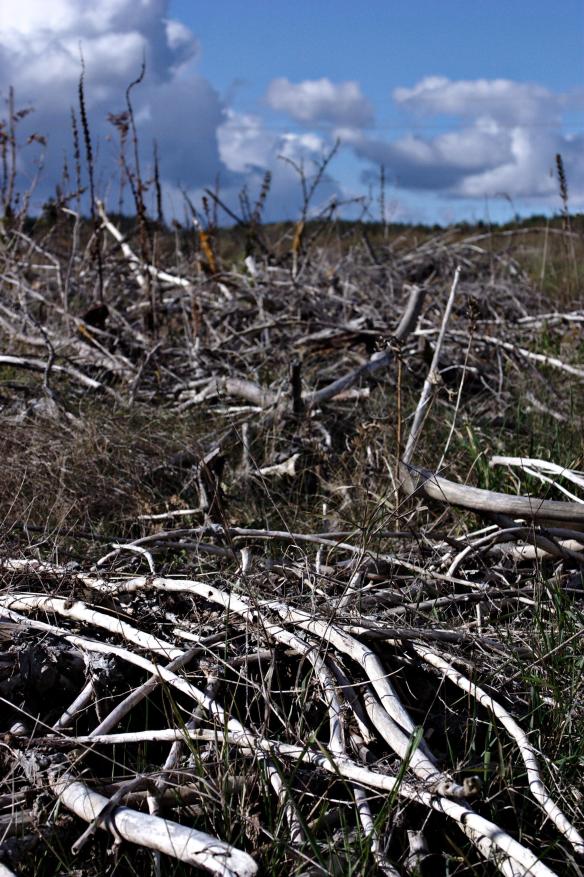
As the Gravy Flows


As the Gravy Flows

Viscosity is always a consideration, as is definition:
traditionally a sauce composed of meat juices and
thickeners, or, a sediment of melted tallow, which
somehow brings to mind a laborer rising early after
a hard night, eating red-eye, made of fried ham
drippings and coffee, served over grits. Or perhaps
an egg gravy – a béchamel sauce flavored by bacon,
with water and milk, and an egg – ladled over butter-
rubbed biscuits. But then I picture my vegetarian
friends pushing away from plates of this fine repast,
and not wishing to deny them or those following a vegan
lifestyle, we turn to roasted vegetables with broth, oils
and wine and a savory yeast extract. But I can’t fathom
a life without giblet gravy, which features the neck and
offal of fowl, including the liver, the taste of which may
be too strong for other recipes using giblets, an interesting
word in itself, from the Old French for a game-bird stew,
and the Middle English meaning of an inessential
appendage, or entrails, morphing to garbage. I would
never throw out an onion gravy, essentially a thick sauce
of slow-cooked onion and stock or wine, and admit to
having tasted a cream version with the consistency and
flavor of diluted paste, indicating a lack of balance in
flavor and poor roux-making technique. My favorite
would be an Italian-American buddy’s gravy, his word
for a rich ragù of sausage, braised beef and shredded
pork, red wine, tomatoes and herbs, served over pasta.
This of course stretches the definition of the word, but
language is elastic, is it not? So it flows, as does the gravy.


“As the Gravy Flows” was drafted during the August 2016 30/30 Challenge. Thank you to Lady Phoenix for sponsoring the poem and providing the title!
 

April 1 Online Reading


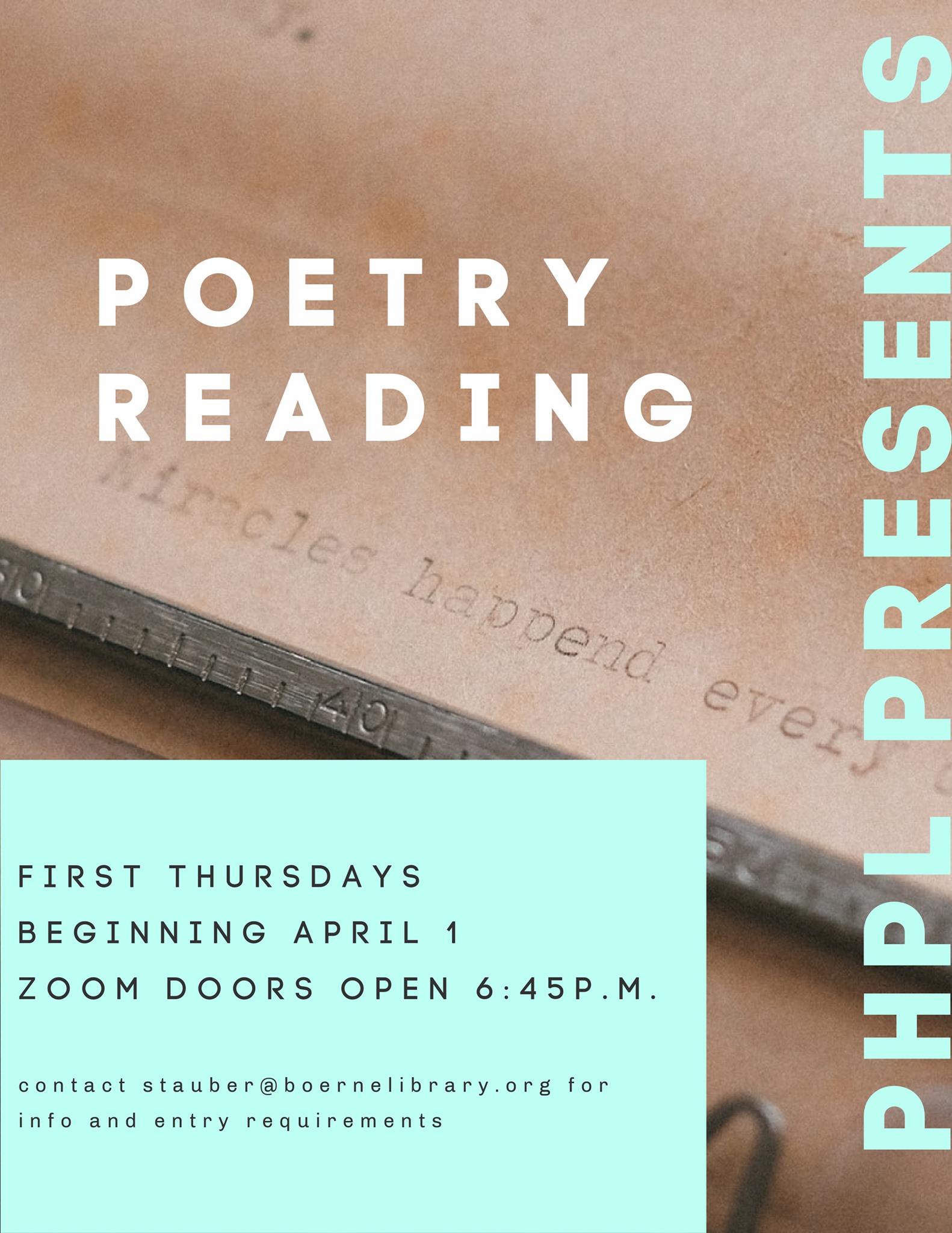
I’m looking forward to participating in an online reading with 12 other poets, including Charles Darnell, Martha K. Grant and Stephanie L. Harper, on Thirsday, April 1 at 7:00  p.m. US Central Daylight Savings Time.  The reading is sponsored by the Patrick Heath Public Library of Boerne, Texas, and is free, but you must email Robin Stauber (place Miracles in the subject line) at stauber@boernelibrary.org to obtain the invitation link.

The reading should last somewhere between an hour and an hour and fifteen minutes (we’ve been asked to read for no more than five minutes). In case you’re wondering, I’m the 11th reader and Stephanie is the 13th. If you’re able to attend, we’d love to see you (if only virtually).


Creek Haibun

Creek Haibun

The creek’s waters flow so quickly that I make little headway in my attempt to cross. A water moccasin slips by, and my left boot takes on water. This is not real, I say. We’ve had no rain and I would not be so foolish as to do this. Asleep? Perhaps, but I’ve passed the halfway point and have no choice but to move forward. I slip and nearly pitch headfirst into the dark current. Lightning stitches the sky.


dreaming, the snake

swims against floodwaters

oh, what have I lost?


The Underbelly of This Seam


The Underbelly of This Seam

Slides beneath your gaze, unnoticed,
but the joining satisfies that particular

urge, combining two separates
into one whole, creating this new

piece. I thumb the string on every fourth
beat, anchor the cloth, pull it taut, and stitch.

What better material than air and silence?
Yesterday’s tune, tomorrow’s silk?

A fine breath zigzagged down the edge – frayed
lines, beneath, on the other side, testifying

to the struggles of the unseen. I exhale,
strike another note. You hum something new.


* * *

“The Underbelly of This Seam” was drafted during the August 2016 Tupelo Press 30/30 Challenge. Many thanks to Ursula, who sponsored the poem and provided the title.

A Step Closer


A Step Closer

The difference in here
and there, a step closer to infinity
swallowing the clover and wild onion.

Not knowing, you shift purpose to intent.

Following the sun,
the flower sips light all day,
pausing only when I walk between.


“A Step Closer” was published in Sleet Magazine in August 2018. I am grateful to editor Susan Solomon for taking this piece.


Synapses and Other Conjunctions

boot


Synapses and Other Conjunctions

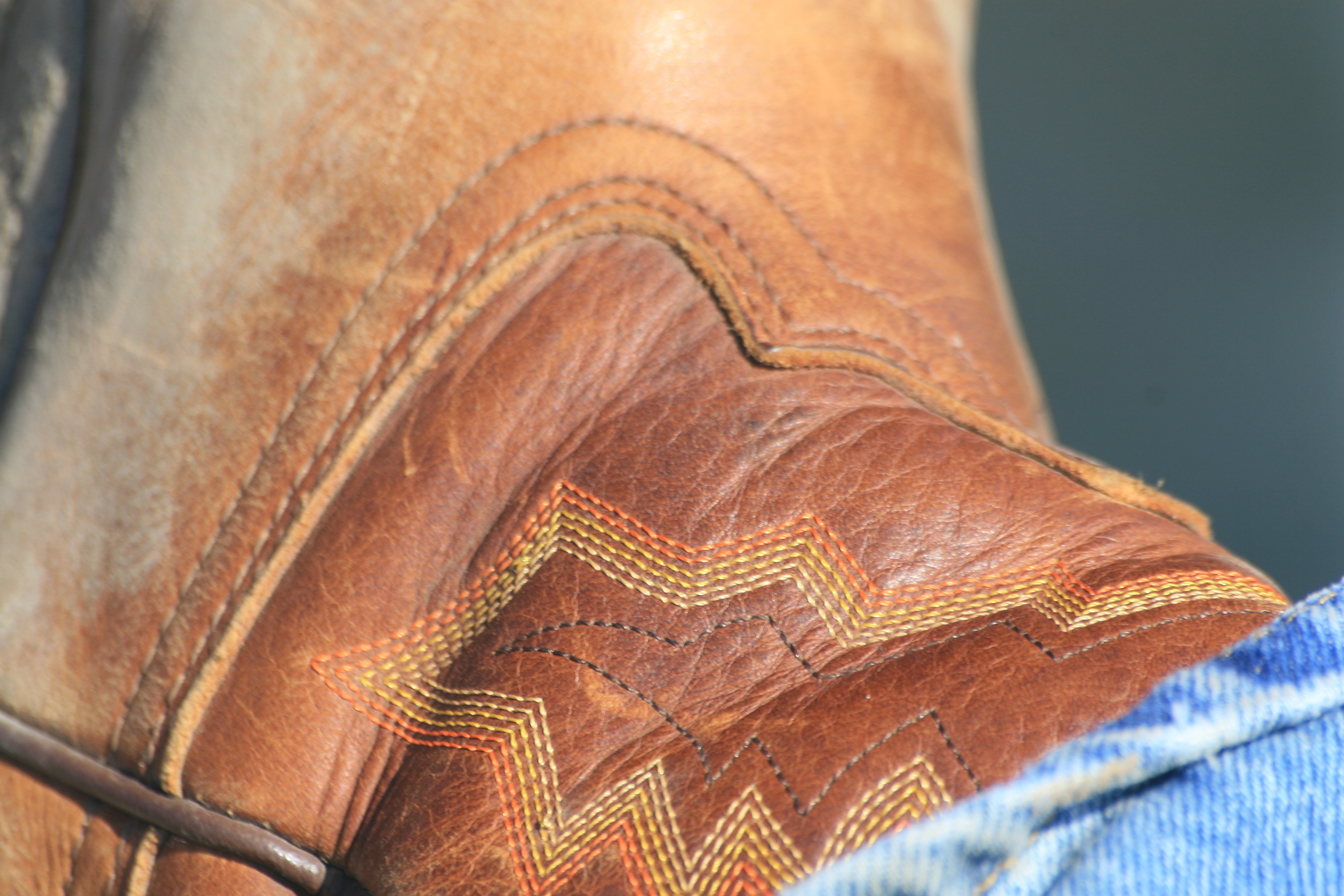
My advice? Wear boots, even among the dead.
Our barefoot friend, having separated the rattler’s
head from its body, picked up the six-foot
length to show off, and stepped back onto
the head, which though not alive, still managed
to squeeze venom from the ducts and inject it
through its fangs, into his foot. Consider this
a metaphor, if you must, but don’t belabor
it. This morning I am searching for
connections. The plumber says that when
the overflow is clogged, the sink won’t drain
properly, and I notice similarities between
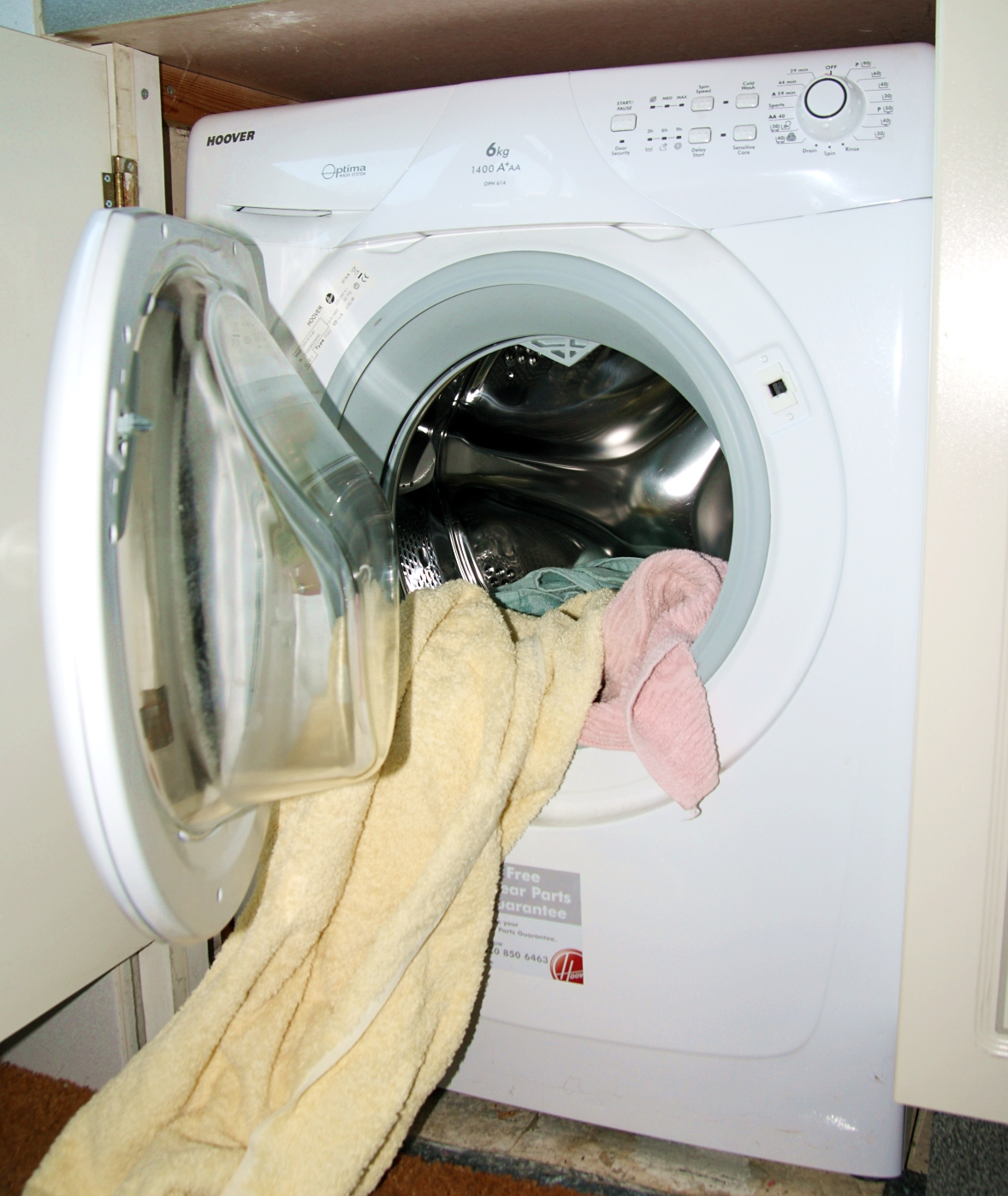
vision and words and the dryer’s vent — how
twists and hard angles and blurry lint may
confuse the issue, perhaps even start a fire.
And before you say, yes, yes, that’s what
I want, a fire
, consider other possibilities,
not to mention consequences. Confuse
one word for another, and you’re an idiot.
Let your finger tap the wrong key, and the
incorrect letter provides a glimpse into
the future, or at least beyond the neighbor’s
closed door, a passage of signals impossible
to predicate. But differences exist: decapitate
poets, and they won’t bite, or at the very least
their venom will infect your nervous system
indirectly. Other advice? Pause before sending,
look before you leap (or step back). Avoid fast
food and politics. Drink good beer. Laugh often,
breathe deeply. Contemplate your footwear.


dryer


“Synapses and Other Conjunctions” was written during the August 2015 Tupelo Press 30-30 challenge, and was subsequently published in September 2016 at The Blue Nib. Many thanks to Luanne Castle for sponsoring the poem and providing the title.


March 14 Online Reading

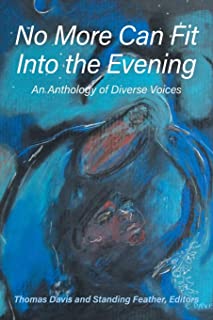
I’m looking forward to participating in an online reading with other poets from the anthology No More Can Fit Into the Evening on Sunday, March 14 at 12:30 p.m. US Central Daylight Savings Time.  The reading is free, but you must register to obtain the link.

Also reading at this time are Richard Brenneman, Cynthia Jobin (read by Julie Murray), Mike Orlock, Albert DeGenova, Redwulf DancingBare, Sharon Auberle, Ralph Murre, James Janko, Ethel Davis, Tom Davis and Standing Feather.

The reading should last somewhere between an hour and an hour-and-a-half (we’ve been asked to read for no more than five minutes). If you’re able to attend, we’d love to see you (if only virtually).

You might also check out the anthology reading on Saturday, March 13, at 11:30 a.m., featuring John Looker, Annette Grunseth, Nick Moore, Anna Mark, Tori Grant Wellhouse, Jim Kleinhenz (read by John Looker), Estella Lauter, Maryann Hurtt, Ina Schroders-Zeeders, Nathan J. Reid, A. Carder (read by John Looker), Robin Chapman, Terence Winch and Kimberly Blaeser. Register here.

The book is being distributed by Ingram, and should be available (if not in stock, through special order) through bookstores in the U.S., Great Britain, Australia, Canada and New Zealand. It’s also available through Amazon.


Poem Up at Silver Birch Press


My poem, “How to Write a Poem,” leads off the Silver Birch Press HOW TO series.
Silver Birch Press is still taking submissions in prose and poetry, so give it a whirl!

* * *

“How to Write a Poem,” is included in Indra’s Net: An International Anthology of Poetry in Aid of The Book Bus, and has appeared on the blog as well.

All profits from this anthology published by Bennison Books will go to The Book Bus, a charity which aims to improve child literacy rates in Africa, Asia and South America by providing children with books and the inspiration to read them.

Available at Amazon (UK) and Amazon (US)


Water Witching, We Hear

dry


Water Witching, We Hear

The rattle of stalks
along dirt roads,

whispery days
sifting through
parched
light,

you say
patience, my
friend
, and again,

patience.


* * *

“Water Witching, We Hear” first appeared on the blog in April 2017.

Thirty-Five Years Later, I Raise My Hand

Thirty-Five Years Later, I Raise My Hand

In spring 1983 I enrolled in a poetry writing course thinking it might help improve my short fiction. I was a history major by default, had never taken a course in poetry, but believed, with absolutely no evidence, that I could write fiction. At the time I would have been hard-pressed to name five contemporary poets, even counting my professor. To be honest, the class struggled to hold my attention. Only about a quarter of the students seemed interested in writing, and the instructor was a bit, uh, tired. But for the first time in my life I read, really read, poetry. I fell in love with Galway Kinnell, Ai, James Wright and Carolyn Forche, to name just a few of my early enthusiasms. I wanted to write like them. So I wrote. And wrote. And wrote. Most of it was laughably bad, but somehow I managed to win an undergraduate poetry contest, which suggested that hope existed. Maybe someday, I thought, one of my poems will be published. This radical idea had never occurred to me before. Publication seemed to be the privilege of special people, and a lifetime of gathered fact revealed that I was unequivocably nothing special.

Early on in the semester, perhaps even in the first class, the professor asked how many of us thought we’d still be writing poetry in twenty years. I didn’t raise my hand. I didn’t know where I’d be in six months, much less what I’d be doing in twenty years. Since I’d realized late in the game that teaching was not for me, I had no job prospects, and few marketable skills, despite experience in chugging beer, manning sound-powered phones on a ship’s helicopter tower, scraping barnacles and bending rules. The world was limited. The world was limitless.

Another gray day

dividing the old and young

Oh, this aching hip!


* * *

A song from that time: