Resurrection (Cento)

rocks and fog


Resurrection (Cento) 

Everything we love
returns to the ground.

Each syllable is the work of sabotage,
a breeze seeping from the heart of the rocks.

They are my last words
or what I intend my last words to be.

I think just how my shape will rise,
a miracle, anywhere light moves.

*****

A cento is composed of lines borrowed from other poets. “Resurrection” first appeared here in January 2016, and owes its existence to the poetry of Tishani Doshi, Paul Auster, Antonella Anedda, Sean Hill, Emily Dickinson, and Ruth Ellen Kocher. I urge you to seek out their work. It astounds!

ladybug

Ocean Vuong’s “Self-Portrait as Exit Wounds”


Today’s offering on the Academy of American Poets Poem-a-Day site is Ocean Vuong’s “Self-Portrait as Exit Wounds,” a superb end to a week of immigrant poems by Juan Felipe Herrera, Chen Chen, Solmaz Sharif, and Mai Der Vang.

May I Be Familiar


May I Be Familiar

Do we find you in what you’ve left or where you’ve gone.

In words you could not form, or forgot long ago.

Missing the pastels, the shades, all nuance.

With moistened hands, I pat rice into a ball and wrap it in seaweed.

By my reckoning, the word who no longer implicates.

Ritual accumulates significance in memory.

Forgotten fruit on the sill. A whisper nailed to the wall.

Honor and pride line your earthen home.

Though you never did, I pickle ginger. Make takuan.

The transparent house reflects no gaze and contains no one.

Gathering your absence, I coil it around my body.

* * *

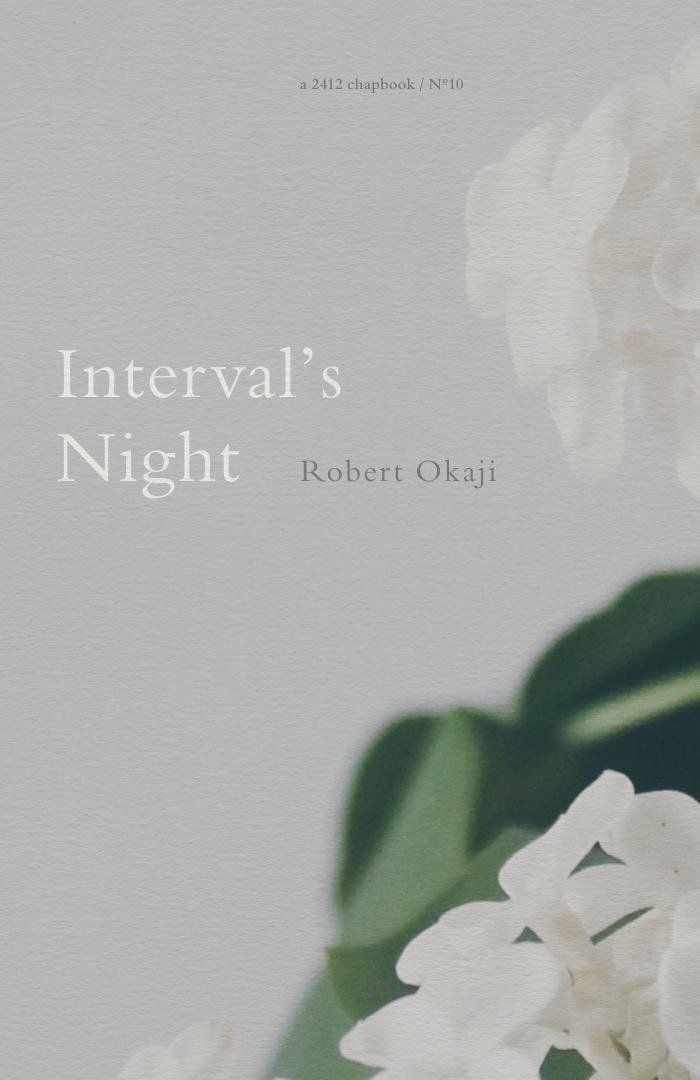
“May I Be Familiar” is included in my mini-digital chapbook, Interval’s Night, published by Platypus Press as part of their 2412 series.


Scarecrow Dances


Scarecrow Dances

A case of the almost
tapping into the deed:

I dance in daylight,
but never on stairs

nor in countable
patterns, the wind

and birds my only
partners. When the

left arm twitches
counter to the right

hand’s frisk, my
head swivels with

the breeze, catching
my feet in pointe,

a moment endured
in humor. Luther

Robinson switched names
with his brother Bill

and became Bojangles,
but my brothers remain

nameless and silent,
flapping without desire

or intent. Why am I
as I am, born of no

mother, stitched and
stuffed, never nurtured

but left to become this
fluttering entity, thinking,

always thinking, whirling,
flowing rhythmically

in sequence, in time
to unheard music?

No one answers me.
But for now, I dance.


“Scarecrow Dances” first appeared in The Blue Nib in September 2016.


Recording of “Magic”

tophat


You might read the poem at Taos Journal of International Poetry & Art.

Every Wind

Every Wind

Every wind loses itself,
no matter where

it starts. I want
a little piece of you.

No.

I want your atmosphere
bundled in a small rice paper packet
and labeled with strings of new rain
and stepping stones.

I want
the grace of silence
blowing in through the cracked
window, disturbing only
the shadows.

Everywhere I go, bits of me linger,
searching for you.

Grief ages one thread at a time,

lurking like an odor
among the lost
things,

or your breath,
still out there,

drifting.


“Every Wind” first appeared in The Lake in July 2016.

Brave

This poem is so good that I can’t help but read it over and over, even though it rips out my guts every single time.

stephanielharper's avatarSLHARPERPOETRY

towering pine

Some things leave no room for misunderstanding,
like your climbs to the tops of towering pines,
and your belief that you can never cry.

At age five, you dream of a woman
with wings like a bat dressed all in black.
She swoops down, grabs you, pins you in her lap,
and while hitting you over and over, she’s whispering
that it will end when you stop struggling;
so you pretend to relax until her grip loosens
and then you fight to escape, but each time
her strength overwhelms you. It takes
several beatings before you realize
she is trying to help you, she is teaching you
how to be brave—
how to be so still
that you can let yourself have no feeling
when the scratchy hands are pressing into you,
like the night lets itself be swallowed by darkness.

An eight-year-old now, you’re standing
outside their locked bedroom door…

View original post 790 more words

Track (after Tranströmer)

file000826525674(1)

Track (after Tranströmer)

2 p.m.: Sunlight. The subway flows
beneath us. Flecks of darkness
shimmer madly on the wall.

As when a man cracks a window into a dream,
remembering everything, even
what never occurred.

Or after skimming the surface of good health,
all his nights become ash, billowing clouds,
strong and warm, suffocating him.

The subway never stops.
2 o’clock. Filtered sunlight, smoke.

* * *

I’ve been dipping into Friends, You Drank Some Darkness, Robert Bly’s 1975 translations of Harry Martinson, Gunnar Ekelöf and Tomas Tranströmer, and I couldn’t resist playing with one of my favorite poems. A different darkness, a separate space, another landscape…

This first appeared here in April 2015.

Senate (Tritina)


Senate (Tritina)

Not imposition, but welcome.  The way
cooperation welcomes coercion, turning the
tenor of the intended phrase, opening

the statement to interpretation, opening
a point without dissension, in the way
of politics, agreeing which fact will shape the

morning, which truth will determine the
next word and the subsequent, as if opening
the issue, claiming to have found the way,

one way, the only, but never actually opening.

* * *

A Tritina might best be described as the lazy poet’s Sestina, consisting of ten rather than 39 lines, with the end words of the first stanza repeating in a specific pattern in the subsequent two stanzas. The last line includes all three end words.

The patterns:
abc
cab
bca
The last line uses the end words in sequence following the pattern of the first stanza.