Even the Sotol Believes

image

Even the Sotol Believes

If we must discuss logographic systems, let us begin with fish.
And how might one mistake an entrance for a perch?

A movable rod for a desert spoon?

Today’s lesson excludes a poorly rendered door.

Hinges are merely mechanical joints, the origin of which means to hang. Concentrate there.

D is the tenth most frequently used letter in English.

Depicted on rock wall paintings, the sotol has provided food, sandals,

blankets, ropes, tools and spirits for millennia.
Slow cook the roots for three nights, crush, then ferment for seventy-two hours in

champagne yeast. Distill, then age in French oak.

We shall neither open nor close, nor mention those things that do.

Like bivalves. Bottles. Eyes. Shops. Caskets. Books. Mouths. Circuits.
Its flower stalk rises up to fifteen feet. Its leaves are long, thin and barbed.

Surrounded by orange ochre flames and black smoke, the sotol spirit appears.

Dalet will not enter our vocabulary today.

image

Originally published in Otoliths 41 (October 2013), and most recently posted here in May 2017.

Letter to Schwaner from the Toad-Swallowed Moon

Letter to Schwaner from the Toad-Swallowed Moon

Dear Jeff: The glow here betrays our fantasies,

and between day and night and that uncertain

moment when neither holds sway, I have gained

a toehold on consequence. Who knew darkness

could shine so? Last November the surgeon

incised my belly six times but no light oozed

out and little crept in. I say little, but feel

a peculiar radiance emanating from my middle

which I can only attribute to the moon, although

the medical professionals would say it’s just

gas. But what do they know of Sheng-Yu or

Li Ho, of jade wheels and spilled cups? Last

night, to honor our marching sisters, I looked

to the cloud-filled sky and toasted them and

our ancestors, the poets and scapegoats, friends,

allies, compatriots, Five White and Jackboy,

shedding a solitary tear of joy in the process.

We won’t label the other tears, but I shudder

at our country’s current course and how the

bulging wallets of the rich continue swelling

at the expense of the poor and unhealthy,

the elderly, the unacknowledged, and those

living on the fringes, in colored shadows.

If we meet in person on some desolate, moon-

free road in a country that could never be,

how will I know you but from the ghosts and

smiles sparkling in the surrounding fog,

and the little voices singing their sad tune

of happiness into the night. This is where

we stand today, but tomorrow? Look for me

on that bench. I’ll be the full-bellied fellow,

the one with an eclipse leaking from his shirt

in a six-point pattern, two glasses in hand,

wine uncorked, ready for reptiles and politicians,

mirth and causation and good conversation

in brightness or tenebrous calm, whichever

needs replenishing more. But bring another

bottle. Or two. Talking makes me thirsty. Bob.


* * *

My poem “Letter to Schwaner from the Toad-Swallowed Moon” was first published at The Hamilton Stone Review in October 2017. Much gratitude to editor Roger Mitchell for taking this piece.

Ikebana

leaf on stone

Ikebana (You without You)

Between frames, between presence and negation, authority.

If your body lies in the earth, why are you here?

Limits admired and sought: the way of the flower.

I pluck leaves from the lower half to achieve balance.

Shape and line detach, yet comprise the whole.

My father, awake in his chair, mourns quietly.

A naked twig forms one point of the scalene triangle.

Starkness implies silence, resonates depth.

Heaven, earth, man, sun and moon invoke your absence.

As you trickle through the interval’s night.

* * *

Ikebana is the art of Japanese flower arrangement.

chair

This first appeared on the blog in March 2016, and is included in my mini-digital chapbook, Interval’s Night, published by Platypus Press in December 2016, and available via free download.

Senate (Tritina)

Senate (Tritina)

Not imposition, but welcome.  The way
cooperation welcomes coercion, turning the
tenor of the intended phrase, opening

the statement to interpretation, opening
a point without dissension, in the way
of politics, agreeing which fact will shape the

morning, which truth will determine the
next word and the subsequent, as if opening
the issue, claiming to have found the way,

one way, the only, but never actually opening.

* * *

A tritina might best be described as the lazy poet’s sestina, consisting of ten rather than 39 lines, with the end words of the first stanza repeating in a specific pattern in the subsequent two stanzas. The last line includes all three end words.

The patterns:
abc
cab
bca
The last line uses the end words in sequence following the pattern of the first stanza.

This first appeared on the blog in March 2017.

Portrait in Ash

blue-smoke


Portrait in Ash

In summer, sweet crushed ice, and crickets pulsing through the night.

Brake lights, and always the blurred memory of nicotine.

I recall running through the glow, laughing, fingers splayed forward,
and the ensuing sharp admonishment.

Steel, flint and spark. Blackened linings and diminishment.

How many washings must one endure to accept an indelible soiling?

In retrospect, your body still resists.

Lovely smoke uncoiling towards the moon, residue of impurities
and substance. Desire, freed and returning.

You dwell underground. I gaze at the cloud-marred sky.

* * *

“Portrait in Ash” appears in Interval’s Night, a mini-digital chapbook, available for free download from Platypus Press.

Khaty Xiong in The Ellis Review

This poem in The Ellis Review breaks my heart and lifts my day all at the same time.

There are many reasons, known and unknown, as to why I write; I don’t like to think these reasons change necessarily, but rather, amass over time—no, maybe, these reasons refine over time. These days, I am writing a lot of elegies, so if I had to answer in the present, I write because it brings me closer to the dead, and being close to what is no longer animate, in whatever state or form, makes the pain that comes with loss just a little more bearable. Even death welcomes conversation.” — Khaty Xiong

My Poem, “Scarecrow Votes,” is Up at Vox Populi

My poem, ‘Scarecrow Votes,” is up at Vox Populi, alongside Jenne Andrews’ call for revolution. Trump’s horrific separation of families policy must end! Thank you to Michael Simms for responding and publishing the poem so quickly.

June 18

Will the center hold? Read C’s poem for her opinion. I’m uncertain, but have hope.

C's avatarOPTIONAL POETRY

See the dust
encrusted with dry rock

and you don’t think
flood zone,

water scouring sage brush
instead of brittle wind,

but it’s happened.
Block ice slouches

in the glass, dessert heat
demostrates the facility

of state change.
See a lazy wheeling hawk,

think gyre, gyre,
getting wider–

do things really fall apart?
Or just slump forward

in apathy?
Define a hole:

a lack of matter–
evil is nothing

but the absence
of empathy.

Say evil is nothing, see,
evil is nothing.

The hawk flies off.
Say in Bethlehem,

oh, whatever.
Say a clear blue sky

as if it belies
the existence of rain,

and when that hillside goes
pretend to be surprised–

say it, say it,
it couldn’t happen here.

View original post

Unwinding

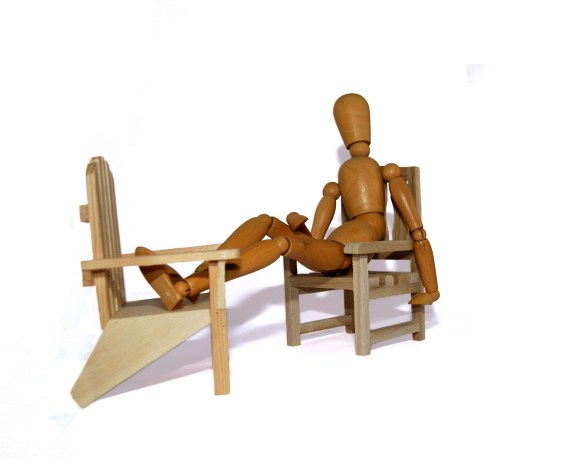
Relaxing in a chair


Unwinding

As in a day’s long
thread

or with cold drink
in hand,

glass sweating,
ice

shrinking, a little
sweet,

some salt, her
smile saying

relax, put up
your feet,

I’ll take care
of this,

don’t worry,
tomorrow’s

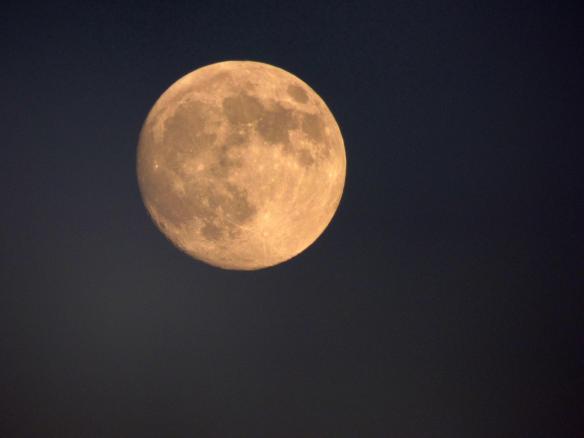
a full moon
away.

fmoon

“Unwinding” first appeared here in January 2017.