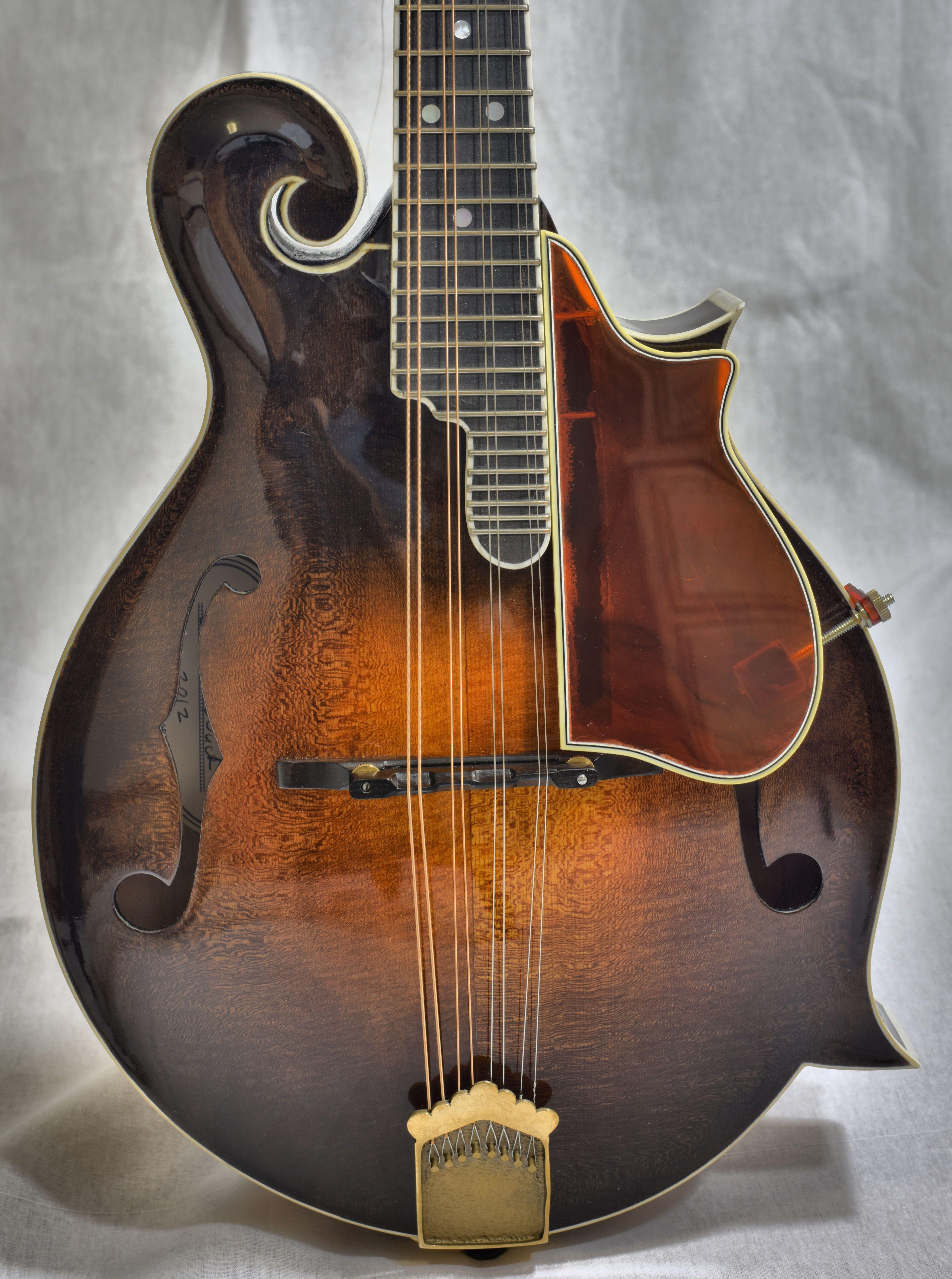
Tuning the Beast


Tuning the Beast

I prepare contingencies for all outcomes. No.
I’ve prepared for this: a body. A key. As if

that cloth draped a leg. Not a leg
but the representation of a limb.

Another fragment, brought forth and opened.
Not a limb, an arrow, perhaps, pointing to the sea.

An oar, brought inland and unrecognized
for its purpose, directed or aimless. No, not an oar.

A neck, polished, and a chamber, with strings.
Repetition, fixation. Position. Intent.

I pluck and strum, pick and stroke, maintaining
space, steel above wood, bending notes,

moving sound in time, purposefully, from
this place to that, the left hand, creating,

conversing. The right, reasoning, controlling,
burning its past to the present, allowing,

preventing, rendering beat, consistent
motion, shaping only this moment, this now.

“Tuning the Beast” was drafted during the August 2015 30-30 Challenge, thanks to Sunshine Jansen’s sponsorship. It subsequently appeared in The Blue Nib in September 2016.




A Word is Not a Home


A Word is Not a Home

A word is not a home
but we set our tables

between its walls,
cook meals, annoy

friends, abuse ourselves.
Sometimes I misplace

one, and can’t find
my house, much less

the window’s desk
or the chair behind it.

But if I wait, something
always takes form in the fog,

an arm, a ribcage, a feathered
hope struggling to emerge.

Inept, I take comfort
in these apparitions,

accept their offerings,
lose myself in mystery,

find shelter there
in the hollowed curves.

Palinode (Hands, Hours, Light)

xhand

P A L I N O D E ( H A N D S , H O U R S , L I G H T)

Consider the hand, its breadth, its history in mathematics and limitation. 27 bones, two strokes. Distal phalanges spanning gaps.  You turn and wave at the winnowed tunnel and the drops feathering the glass. The sinister endures tasks of life; right blesses power and assuages guilt. Presuming inflection, I use both hands to tally the absent. Later as we drive through the checkpoint, our way greased by fluency in the language of coin, heaven’s oblique arch recedes and I praise the passage of hours.

I praise the passage of hours measured in terms unknown to some: beyond two, many. Returning, we see streets guided by lampposts, bent trees and the uneven drizzle of sidewalk mendicants blurring through their days. A hanged man’s dessicated hand (pickled in salt and the urine of man, woman, dog and mare) forms the Hand of Glory, unlocking any portal the bearer desires opened: a direct tool of consciousness. Lacking the fat of a gibbeted felon, I cannot properly light the way.

I cannot properly light the way, but we  observe facets in differing terms: the hand, lips, and mouth claim more neural innervation than the rest of the body combined, perhaps a consequence of the primacy of making and sounding. Candles smolder and yield to shadow through dancing hand stories. The wave of acknowledgment, a finger across the lips, the open hand proclaiming innocence, expressing, grasping, creating, constraining, releasing. Extinguishing.

This first appeared in Hermeneutic Chaos, Issue 11.

 
OLYMPUS DIGITAL CAMERA

Scarecrow Sees

Scarecrow Sees

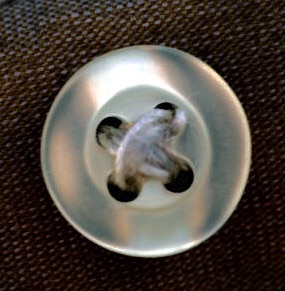
Da Vinci maintained that sight relies on the eye’s
central line, yet the threads holding my
ocular buttons in place weave through four
holes and terminate in a knot. My flying friends
perceive light in a combination of four colors,
unlike the farmer, who blends only three. The
octopus knows black and white but blushes
to escape predators, while I remain fixed,
evading no one. Certainly my sense is more
vision than sight, and not the result of nerve
fibers routing light. Crows choose colors
when asked, but a certain shade of yellow
eludes them. And who would hear, above
the flock’s clamor, my claim to see this world
as it is? Grayscale, monochrome, visual
processing and perceptual lightness measures
mean little to one whose space accumulates
in uncertain increments – what is a foot to an
empty shoe? If I painted, which hues would
prefer my attempts, which would distract or
invade my cellulosic cortex, resulting in
fragmentation or blindness? Fear is not
limited to the sighted alone. I look out over
the field and perceive the harmonious
interaction of soil and root, leaf and sun,
the beauty of atmospheric refraction and
the wonder sprouting daily around me. Then
as one entity the crows explode into the blue,
leaving me alone with the shivering stalks,
questioning my place and purpose, awaiting
the next stray thought, a spark, a lonely
word creeping through this day’s demise.

This was written during the August 2015 Tupelo Press 30-30 Challenge, and was published by The High Window in December 2016.

More on the Ghazal

A little more on the ghazal from the Academy of American Poets. I’ve become enamored with the form. We’ll see what comes of this latest enthusiasm!


Nocturne with a Line from Porchia

bureau

Nocturne with a Line from Porchia

Everything is nothing, but afterwards.
I rise and the moon disturbs the darkness,
revealing symbols, a few stolen words
on the bureau. Tomorrow I’ll express
my gratitude by disappearing be-
fore I’m found, which is to say goodbye
before hello, a paradigm for the
prepossessed. Compton tells us to imply
what’s missing, like Van Gogh or Bill Monroe,
but why listen to the dead before they’ve
stopped speaking? Unfortunately we throw
out the bad with the good, only to save
the worst. I return to bed, and the floor
spins. Nothing is everything, but before.


This first appeared in The Blue Hour Magazine in December 2014, and is also included in my chapbook, If Your Matter Could Reform. The line “Everything is nothing, but afterwards” comes from Antonio Porchia’s Voices, translated by W.S. Merwin. Porchia wrote one book in his lifetime, but what a book it was! Often described as a collection of aphorisms, Voices is so much more – each time I open the book, I find new meaning in old lines.

Vincent

Two Cranes on a Snowy Pine

snow

Two Cranes on a Snowy Pine (after Hokusai)

Who knows where bird
begins and tree

ends,

which branch shifts
snow, which bears

eternity. This, too, will share

joy,
elusive green

and breath,
with no thought

of flight

and night’s
fall.

* * *

“Two Cranes on a Snowy Pine” is included in my forthcoming chapbook, From Every Moment a Second, which is available for pre-publication order until August 11.

The poem first appeared in Panoply in summer, 2016, and was subsequently nominated for a Pushcart Prize. Many thanks to editors Ryn Holmes, Jeff Santosuosso and Andrea Walker for this honor, my first such nomination.

See the woodblock print that sparked this poem: Hokusai

crane

Poem up at The Mantle

Mantle

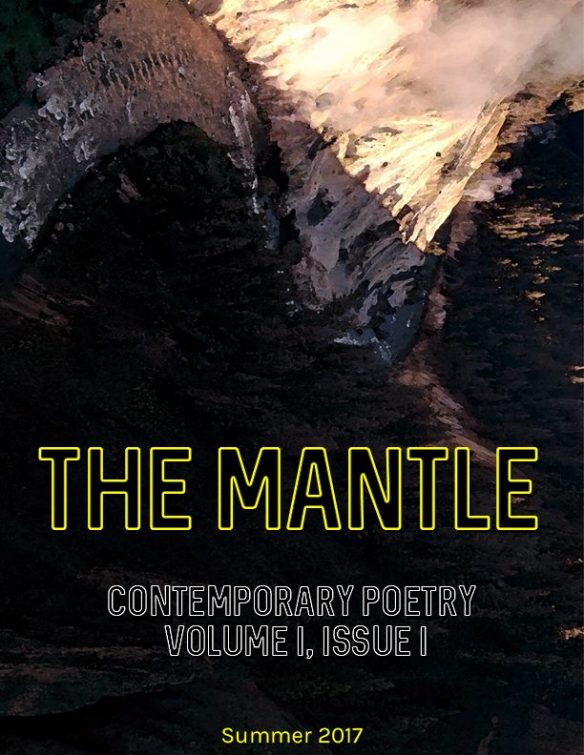
My poem, “Overlooked” has been published in the inaugural issue of The Mantle. Many thanks to editor James Croal Jackson for taking this piece.

Laocoön

GREEK COLUMN LINDOS

Laocoön

This figure of complexity
persuades a lingering

glance, the two-fold
inclination entwined,

horror expressed
in tandem, the sons’

limbs compressed
as the father struggles,

realizing true
sacrifice, the inward

grasp of storm and
wrath and serpent,

his face
echoing those yet

to come, breached
walls, a city in

flames, the cries
of warnings unheeded.

the_kelpies

Laocoön, through Virgil’s Aeneid, is the source of the phrase “Beware of Greeks bearing gifts.” The poem, which first appeared in The Blue Hour Magazine, was inspired by the sculpture “Laocoön and His Sons,” which resides at the Vatican. You might find Wikipedia’s entry of interest. Originally posted on the blog in February 2016.

The Utility of Poetry

Thomas Davis writes on the utility of poetry, using the recently published Indra’s Net as a launching point.

Thomas Davis's avatarfourwindowspress

an essay by Thomas Davis written after reading the poetry anthology, Indra’s Net

When I was a teenager, determined to become a poet and writer, Look Magazine, one of the United States’ most popular publications at the time, wrote an editorial that denigrated the utility of poetry. A lot of decades have passed since I read the editorial, but its assertion that poetry had no real use in a world filled with the marvels of science and technology still stirs me to a passion. As I thought back then, what an exercise in the hubris of trying to stir up controversy.

Look Magazine, of course, has been defunct for some time, and while I was in Lake Geneva, Wisconsin at the Breadloaf Bookstore doing a book signing, Indra’s Net, published by Bennison Books (who also published my epic poem, The Weirding Storm, A Dragon Epic) came…

View original post 1,674 more words