Rice

image

Rice

Yesterday’s rain informs me I’m born of luck and blended
strands, of hope and words forged before a common tongue emerged.

Of my first two languages only one still breathes.

The other manifests in exile, in blurred images and hummed tunes.

Rice is my staple. I eat it without regarding its English etymology,
its transition from Sanskrit to Persian and Greek, to Latin, to French.

Flooding is not mandatory in cultivation, but requires less effort.

Rice contains arsenic, yet I crave its polished grains.

In my monolingual home we still call it gohan, literally cooked rice, or meal.
The kanji character, bei, also means America.

Representing a field, it symbolizes abundance, security, and fertility.

Three rice plants tied with a rope. Many. Life’s foundation.

To understand Japan, look to rice. To appreciate breadth, think gohan.
Humility exemplified: sake consists of rice, water and mold.

The words we shape predicate a communion of aesthetics.

Miscomprehension inhabits consequence.

* * *

“Rice” has appeared here twice before, and is included in my chapbook-length work, The Circumference of Other, published in Ides, a one-volume collection of fifteen chapbooks published by Silver Birch Press and available on Amazon.com.

image

The Geography of Silence

laundry

The Geography of Silence

1. Laundry drooping at midday.

2. She dreams off-key, in pastels.

3. With misunderstanding comes anger.

4. Mata! Mata! Again!

5.  Ashes crossing the ocean.

6.  Sweat, and the taste of separation.

7.  Reaching for past moons, she cries.

8.  Death’s shade.

9.  Rice.

10.  Self-sacrifice, the centered gift.

11. Inward, always. Inward.

telescope map

“The Geography of Silence” last appeared here in April 2017.

May I Be Familiar


May I Be Familiar

Do we find you in what you’ve left or where you’ve gone.

In words you could not form, or forgot long ago.

Missing the pastels, the shades, all nuance.

With moistened hands, I pat rice into a ball and wrap it in seaweed.

By my reckoning, the word who no longer implicates.

Ritual accumulates significance in memory.

Forgotten fruit on the sill. A whisper nailed to the wall.

Honor and pride line your earthen home.

Though you never did, I pickle ginger. Make takuan.

The transparent house reflects no gaze and contains no one.

Gathering your absence, I coil it around my body.

* * *

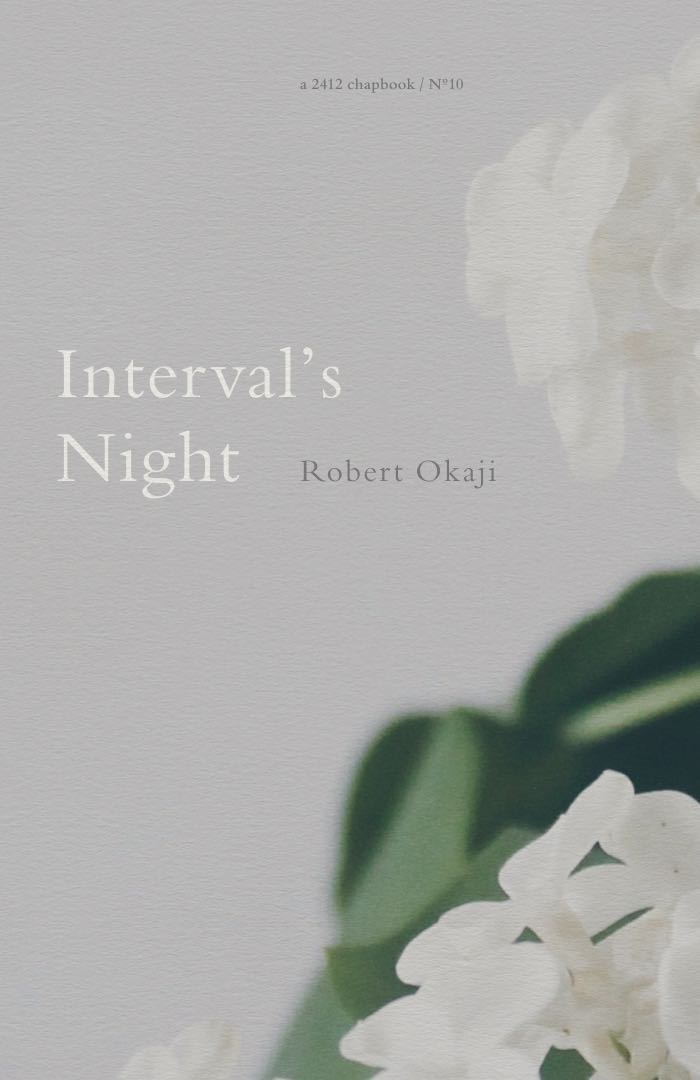
“May I Be Familiar” is included in my mini-digital chapbook, Interval’s Night, published in 2016 by Platypus Press as #10 of their 2412 series.


Recording of Bottom, Falling

bird silhouette

Bottom, Falling

Through that window you see another bird
rising, unlabeled, unwanted, yet noticed.
A limb’s last leaf. The boy’s breath.
Like the morning after your father died,
when temperature didn’t register
and heat shallowed through the morning’s
end. Still you shivered. Glass. Wind.
Night’s body. How to calibrate nothing’s
grace? Take notes. Trace its echo. Try.

“Bottom Falling” was published in Into the Void in October 2016, and is included in my chapbook, From Every Moment a SecondIt was written in response to a note my friend Michael sent me, and as he’s in town and we’re having lunch today, it seems a good time to repost this.

femas-mock-cover

Elegy

Elegy  

1. Adrift

I count more graves than people in my sleep,
but nothing turns more quickly

than an empty wind
in a place whose memory has died.

And all manner of departure: What you have left is you
without you
. As if it could be different, as if decades

could withdraw and draft a blueprint of motive and action,
returning them, returning you, to that point

across the sea where the ship has not yet arrived.
If you ask she will say it does not matter. If you ask.

2. Parentheses

To be within, yet without, as in the unuttered phrase.

It is time the stone made an effort to flower,

to render the void clear and resolute, the diction of
separation divided by decades and your ocean.

The language of silence, drawn near.

3. From the Other Side

Sometime becomes never and steps around a desolate corner,
and all we have left is our field

awash in stone, remnants of the unspoken.
I have no memory of you. Nor you, of me,

but the strands do not lie, and unraveled,
expose the imperfect blends

that compose my love. A leaky roof. The last word.
A pity to put up at all

but there is rain.

4. Another Night

Of all the hours which were the longest?
The earth trembled around me

and I lay still, bearing witness to
the uncertain malice of its

shrug, shoulders brought to
fore, then returned,

and finally, released. If,
after this half-century, words

could reform in your mouth,
what denial would issue?

Ashes, washing ashore.

5. Bridge

And seeing you only as the shadow of an

ending whose voice lies
in an uncommon past, how
may we recognize the very shape we share?

The bridge’s fate is loneliness,
knowing that one side

decries the other’s
call, that separation affords new light:

they are between
comfort and space, between words and a smile,

between nothingness and sorrow,
two points, beginning and end,

reaching, in opposition, towards each other.

Notes:

“What you have left is you without you” is from Edmond Jabes’s “At the Threshold of the Book” in The Book of Questions: Volume I, translated by Rosemary Waldrop.

“It is time the stone made an effort to flower” is from Paul Celan’s poem Corona,” included in Poems of Paul Celan translated by Michael Hamburger.

“A pity to put up at all but there is rain” is from Basho’s Back Roads to Far Towns, translated by Cid Corman and Kamake Susumu.

Albert Huffsticklers poem “Bridges” which appeared in The Balcones Review in 1987, begins “They are between…”

“Elegy” first appeared on Underfoot Poetry in October 2017.

Khaty Xiong in The Ellis Review

This poem in The Ellis Review breaks my heart and lifts my day all at the same time.

There are many reasons, known and unknown, as to why I write; I don’t like to think these reasons change necessarily, but rather, amass over time—no, maybe, these reasons refine over time. These days, I am writing a lot of elegies, so if I had to answer in the present, I write because it brings me closer to the dead, and being close to what is no longer animate, in whatever state or form, makes the pain that comes with loss just a little more bearable. Even death welcomes conversation.” — Khaty Xiong

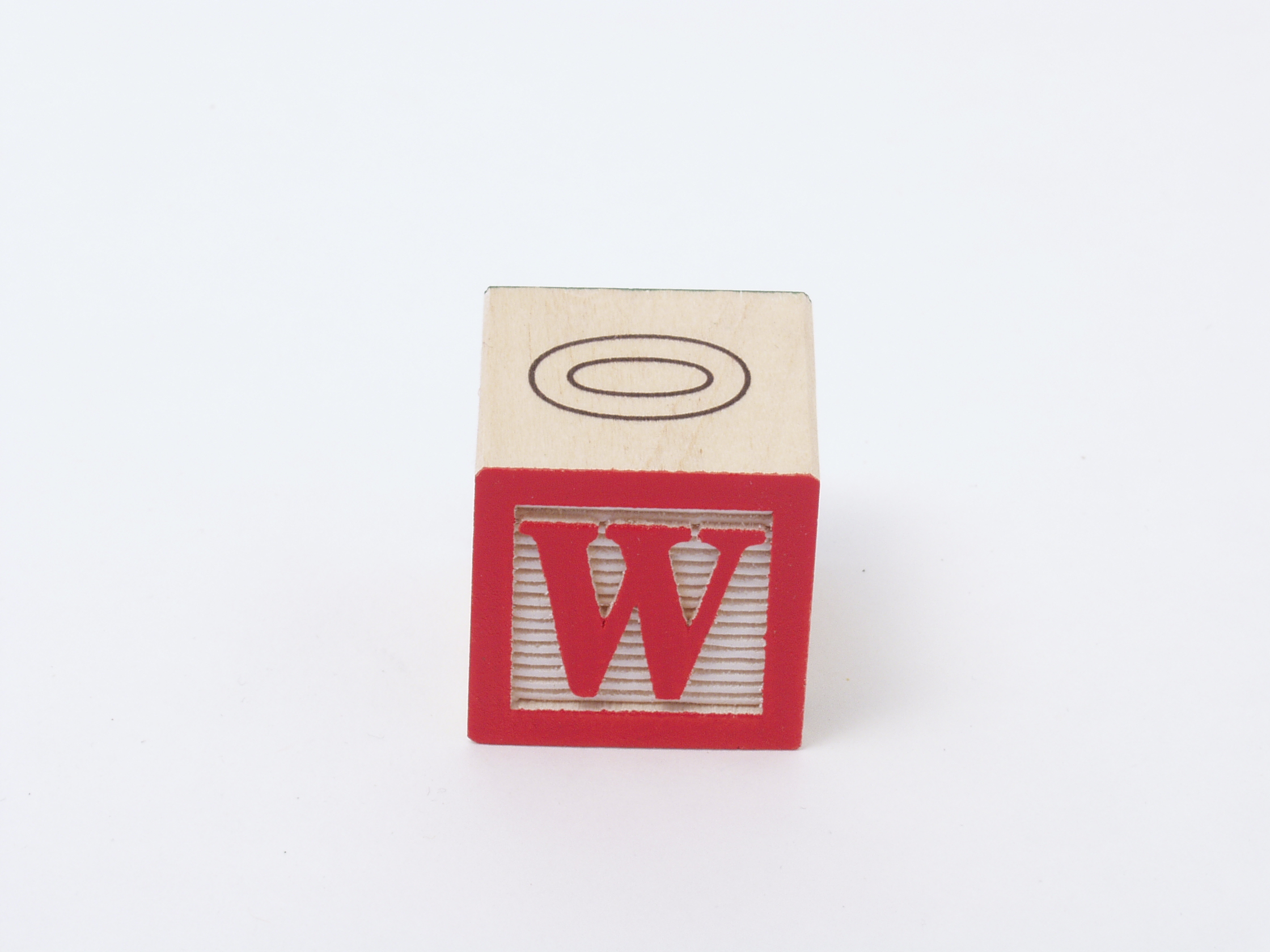
Self-Portrait with W

file7131243281016

Self Portrait with W

One might claim a double victory, or after the Roman Empire’s fall, a reclamation
from the slurred “b” and its subsequent reduction.

Survival of the rarely heard, of the occipital’s impulse.

The oak’s crook performs a similar function.

Shielding myself from adjuration, I contemplate the second family
root, weighted in weapons, in Woden, in wood.

Not rejection, but acceptance in avoidance.

The Japanese homophone, daburu, bears a negative connotation.

Original language was thought to be based on a natural
relation between objects and things.

Baudelaire’s alphabet existed without “W,” as does the Italian.

The recovery of lost perfection is no longer our aim.

When following another, I often remain silent.
As in two, as in answer, as in reluctance, reticence.

We share halves – one light, one shadowed, but both of water.

Overlapped or barely touching, still we complete.

* * *

“Self-Portrait with W” originally appeared in the Silver Birch Press Self-Portrait series in 2014, and was reprinted in my chapbook, The Circumference of Other, included in Ides, a one-volume collection of fifteen chapbooks published by Silver Birch Press and available on Amazon.com.

OLYMPUS DIGITAL CAMERA

Poem Up at Vox Populi

My poem, “The Question is Never,” is up at Vox Populi, and has been paired with Allison Skinner’s essay on the psychological effects of dehumanizing language. Thank you, Michael Simms, for taking this poem.

Emptying Haibun


Emptying Haibun

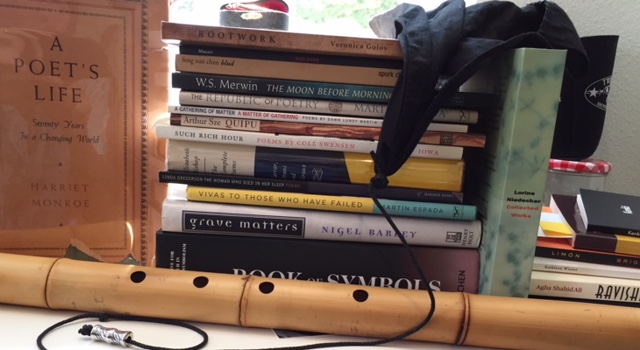
Waiting, I open myself but nothing enters. Even music’s comfort avoids me, preferring calmer ports or perhaps another’s wind choices. I drop the weighted cord through the flute, pull it, and watch the cloth ease out. Some days pain drags behind me no matter what words emerge, what phrases follow. Last night brought the season’s first fireflies. This wall of books grows taller each day.

exhaling, I note

smudges in the sky —

oh, dirty window

Three Poems at Nine Muses Poetry

I have three poems up at Nine Muses Poetry, a new online poetry journal out of the UK. Many thanks to editor Annest Gwilym for taking these poems.