The Resonance of No

dishes

 The Resonance of No

Yes, yes, we’ve heard. The dishwasher wastes less
and cleans better. But Kenk­ō believed in the beauty
of leisure, and how better to make nothing
while standing with hands in soapy water, thoughts
skipping from Miles Davis’s languid notes to the spider
ascending to safe shelter under the sill (after I blow
on her to amuse myself), washing my favorite knife
and wondering if I should hone it, not to mention
my skills on the six-string or the potato peeler.
And if I linger at the plates, even the chipped one,
admiring their gleam after hot water rinses away
the soap residue, who could question the quick gulp
of ale or the shuffle of an almost-but-not-quite
dance step-or-stumble while arranging them on the
ribbed rack, back-to-back, in time to Coltrane’s
solo. Then the forgotten food processor’s blade
bites my palm, and I remember that I’ve outgrown
the dark suit, the cut branches still need bundling
and none of the words I’ve conjured and shaped
over decades and miles will extend their comfort
when I stand at my father’s grave this week or next.

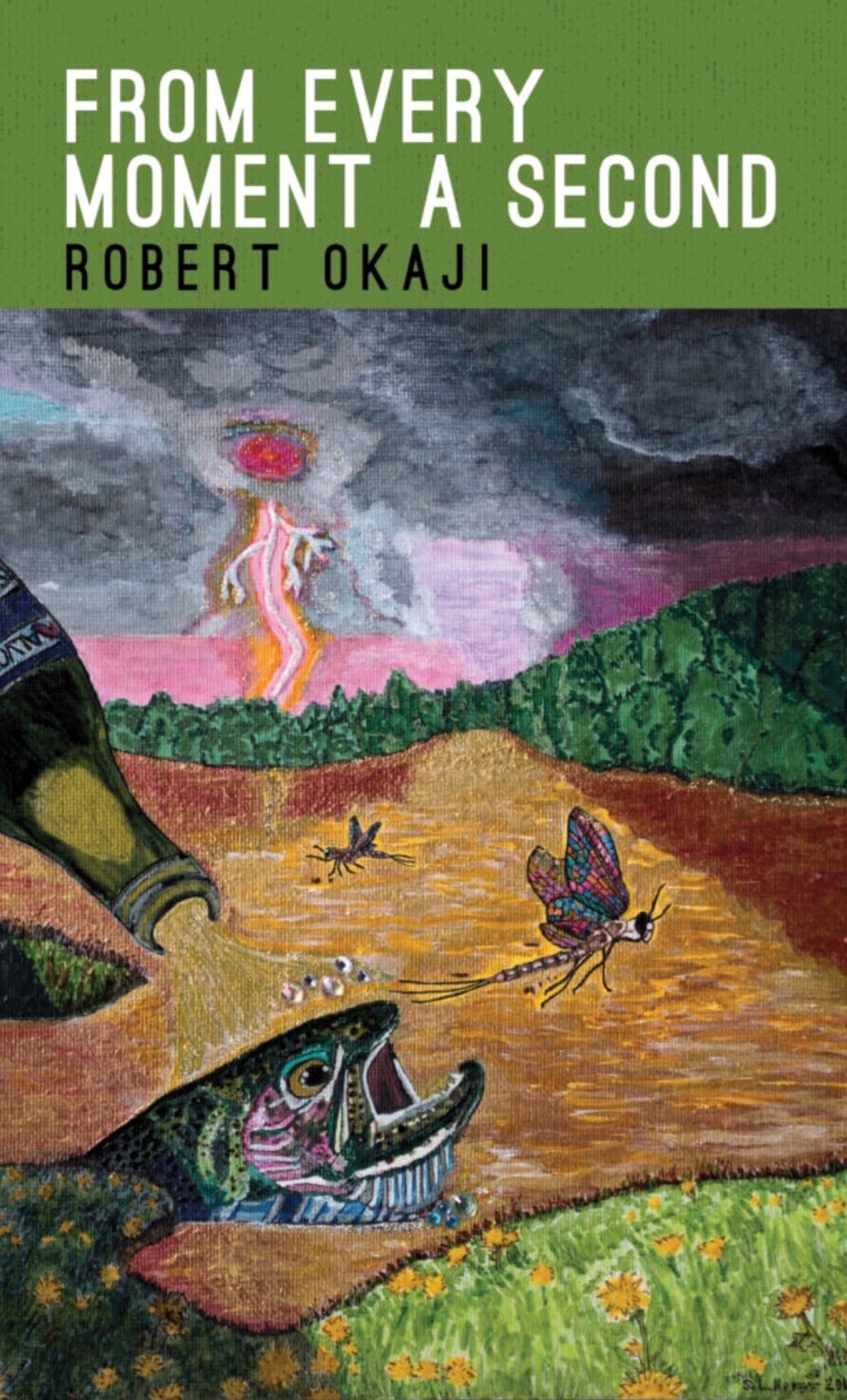
“The Resonance of No,” was published in December 2016 in Gravel, and is included in my chapbook, From Every Moment a Second.

Daniel Schnee wrote about this poem here.

Music Credit: Cool Vibes Kevin MacLeod (incompetech.com)
Licensed under Creative Commons: By Attribution 3.0 License
http://creativecommons.org/licenses/by/3.0/

Countdown, #2 “Review: Robert Okaji’s “From Every Moment a Second”

My last five posts of 2017 are reruns of five of the most viewed posts on this site during the year.

FROM EVERY MOMENT A SECOND

Robert Okaji
Finishing Line Press
2017

★★★★★

From Every Moment A Second, the latest chapbook by American poet Robert Okaji, is yet another meticulously crafted collection of observations, private austerities and hesitancies spelt out in verse. A small collection of twenty poems, each feels “warm”, like a cozy winter Sunday on your living room couch – to paraphrase Junichiro Tanizaki – lost in contemplation of flavours to come.

What makes it a five star collection is each poem is clear in its vision, each unambiguously a part of the greater gist of the book. Each line shows where lesser works ‘tell’, and thus this collection feels like a series of tiny one act plays. Part of this is how each line and stanza feels like it has been put exactly in its proper place, that any further edits would remove a character or…

View original post1,121 more words

* * *

It’s humbling yet fitting that the second most popular post on the blog in 2017 was actually a reblog from Daniel Schnee’s site.

Obsession: Books, or, Poetry Finds Me

photo 2

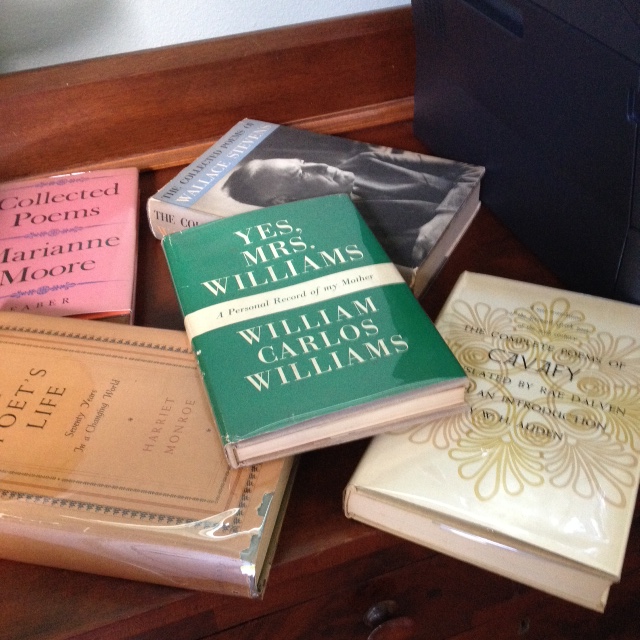
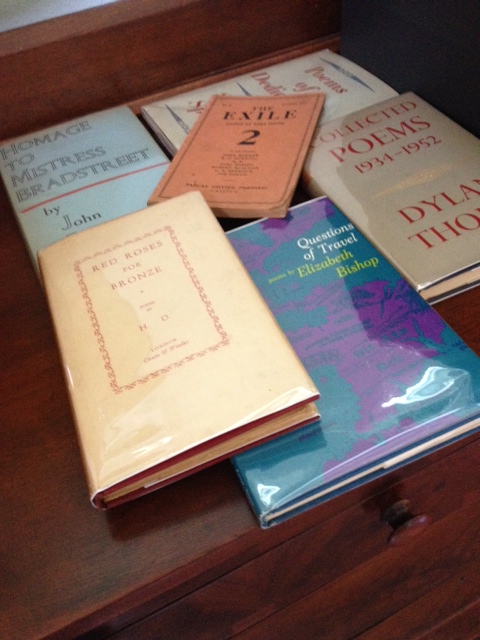
In another life books framed my days. I slept with them, dreamt about them, woke to their presence stacked by the bed and in various corners throughout the house, read them, handled them, discussed their merits with friends, co-workers, beer-drinking buddies, bartenders, customers, strangers, relatives, and even enemies. Traced my fingers slowly down their spines, identified some by odor alone, others by weight and feel. Bought, sold, cleaned, lent, skimmed, traded, gave, borrowed, collected, repaired, preserved, received. Traveled to acquire more, returned home to find still others languishing in never-opened, partially read or barely touched states. There were always too many. There were never enough.

The relationship began innocently. I’ve been an avid reader since the age of five, and over the years developed a knack for uncovering uncommon modern first editions. I’d walk into a thrift shop and spot a copy of William Kennedy’s first novel, The Ink Truck, snuggling up to Jane Fonda’s workout book, for a buck. Or at a small town antique store, something especially nice, perhaps a near-fine first edition of Cormac McCarthy’s Outer Dark, would leer at me from a dark shelf – $1.50. John Berryman’s Poems (New Directions, 1942) found me at a garage sale, for a quarter. Good Will yielded Pynchon’s Gravity’s Rainbow. There were others, of course. Many others.

I partnered with a few like-minded friends and opened a store, and when that didn’t work out, started my own home-based book business, which eventually expanded into a small brick-and-mortar shop, a true labor of love. And I mean labor. The forlorn space we rented was cheap and had housed for years a low-end, illicit massage parlor. Cleaning it out was, oh, shall we say interesting? I’ll never forget the furry massage table, the naked lady lamp or the various implements left behind after the joint was finally forced to close. But we hauled out the filthy carpeting, stripped and refinished the hardwood floors, fixed, painted and patched what we could, and hid what we couldn’t. It was exhausting, but well worth the toil.

My work schedule ran from Monday through Sunday, a minimum of eighty hours a week – in a seven-year period, I took off only two long weekends. It consumed me, but in the end I emerged mostly intact, a little more aware of my proclivities, of an unhealthy tendency to immerse myself wholly into an enthusiasm, to the detriment of family and friends. When we sold our store’s wares, I embraced the change; some dreams simply deplete you. But the itch remained.

Just a few weeks ago I found myself perusing an accumulation of books in a storage facility across the street from a junk shop in Llano, Texas, a small county seat an hour’s drive west of my home on the outskirts of Austin. The shop’s owner had purchased an English professor’s estate, and judging by the collection, the professor had specialized in poetry. My first thought was “I want it all,” but reason set in (I could very well imagine my wife’s reaction were I to arrive home with a trailerful of books) so I glanced over the criticism, fiction, drama, essays and biographies, and concentrated on the poetry. In the end I walked away with thirty-one books, including H.D.’s Red Roses for Bronze (Chatto & Windus, 1931), Randall Jarrell’s Little Friend, Little Friend, Elizabeth Bishop’s Collected Poems and Questions of Travel, a brace of Berrymans – His Toy, His Dream, His Rest and Homage to Mistress Bradstreet – both the U.S. and U.K. first editions, which differ – and Love & Fame. A good haul, to say the least, but one that left me only partially satisfied and contemplating a return. But I remain resolute. So far.

As I said, the itch remains…

* * *

This first appeared in April 2015.

photo 1(1)

Submission Advice from Robert Okaji, author of FROM EVERY MOMENT A SECOND

In this guest appearance on Luanne Castle’s Writer Site, I offer submission advice.

Luanne's avatarLuanne Castle: Poetry and Other Words (and cats!)

Today I want to introduce you to Robert Okaji, poet and the writer of the new Finishing Line Press chapbook From Every Moment a Second. Robert’s poems are relatively short and seem simple. I said seem. Each polished gem is the kind of poem you fall into, without worrying if you will “get” it or not, and an array of meanings will wash over you without effort on your part, but the reward is great –an emotional and intellectual payoff.

Robert is published regularly in literary magazines. So I asked him for advice for readers about submitting to magazines. This is what he wrote for us.

###

Newer poets occasionally ask me for advice on how/where to get published. What follows expands a reply I made to a comment on my blog in August, 2014. I can speak only from my experience, thus any advice I offer should be taken with a…

View original post 796 more words

Review of Robert Okaji’s Chapbook, “From Every Moment A Second”

The first post-publication review of From Every Moment a Second!

UPS Dropped Off This Box Last Evening

Author copies of my chapbook From Every Moment a Second have arrived! These came directly from the printer, and according to Finishing Line Press the rest of the print run should soon be in their hands, and will be packed and shipped to buyers asap. So if you’ve ordered one, it really is on the way. Finally. Thank you for your patience!

How to Write a Poem

How to Write a Poem

Learn to curse in three languages. When midday
yawns stack high and your eyelids flutter, fire up

the chain saw; there’s always something to dismember.
Make it new. Fear no bridges. Accelerate through

curves, and look twice before leaping over fires,
much less into them. Read bones, read leaves, read

the dust on shelves and commit to memory a thousand
discarded lines. Next, torch them. Take more than you

need, buy books, scratch notes in the dirt and watch
them scatter down nameless alleys at the evening’s first

gusts. Gather words and courtesies. Guard them carefully.
Play with others, observe birds, insects and neighbors,

but covet your minutes alone and handle with bare hands
only those snakes you know. Mourn the kindling you create

and toast each new moon as if it might be the last one
to tug your personal tides. When driving, sing with the radio.

Always. Turn around instead of right. Deny ambition.
Remember the freckles on your first love’s left breast.

There are no one-way streets. Appreciate the fragrance
of fresh dog shit while scraping it from the boot’s sole.

Steal, don’t borrow. Murder your darlings and don’t get
caught. Know nothing, but know it well. Speak softly

and thank the grocery store clerk for wishing you
a nice day even if she didn’t mean it. Then mow the grass,

grill vegetables, eat, laugh, wash dishes, talk, bathe,
kiss loved ones, sleep, dream, wake. Do it all again.


“How to Write a Poem,” is included in Indra’s Net: An International Anthology of Poetry in Aid of The Book Bus, and has appeared on the blog as well.

All profits from this anthology published by Bennison Books will go to The Book Bus, a charity which aims to improve child literacy rates in Africa, Asia and South America by providing children with books and the inspiration to read them.

Available at Amazon (UK) and Amazon (US)

A Word is Not a Home


A Word is Not a Home

A word is not a home
but we set our tables

between its walls,
cook meals, annoy

friends, abuse ourselves.
Sometimes I misplace

one, and can’t find
my house, much less

the window’s desk
or the chair behind it.

But if I wait, something
always takes form in the fog,

an arm, a ribcage, a feathered
hope struggling to emerge.

Inept, I take comfort
in these apparitions,

accept their offerings,
lose myself in mystery,

find shelter there
in the hollowed curves.

Which Poet, Which Beer (4)

I come here to sit quietly, emerging from my shack, if only briefly, to eavesdrop and observe, to sip beer and participate in the world of commerce. Ah, yes. The grocery store. If only all of them housed craft-beer bars. I place cilantro and shallots in my basket, add arugula, asparagus and a lime, and wander over to the fish case where two small fillets of Chilean sea bass, the commercial name for Patagonian toothfish, catch my eye.

Finally at the bar, I order Lone Pint Brewery’s Zeno’s Pale Ale, and overhear a disquisition on hydration and landscaping, and a conversation on war and snipers and gratitude. The ale arrives with a light, lacey head, exudes a bready malt profile upfront, and a pine-citrus punch at the back. I can’t quite uncover the truth of the flavor, but enjoy the search, and amidst the swirling combination of voices and beer I somehow think of Veronica Golos’ “Snow in April,” a ghazal in her stunning book Vocabulary of Silence.

“Has my flock of flowers died? An ambush, a bullet-shot
of cold. Undone beneath the snow, what’s truth, in April?”

What is the sniper’s truth? What gratitude might we find within April’s layers? I have no answers, only more questions, and with more questions comes thirst.

My second beer is a curious blend of old and new – a Belgian-style quadrupel that, don’t laugh, smells a bit like a cola, but in a good way. Unibroue’s Trois Pistoles is dark brown, let’s call it mahogany, with a fruity but mellow flavor and a toasty malt finish. And well balanced – with an alcohol content of 9%, it’s strong, but not too strong. Historical undercurrents flow through this brew, yet it also brings with it an appreciation of the new and popular, which leads to thoughts of one of my favorite poets, Frank Bidart, whose work often refers to and resonates with historical figures (in the book at hand, Watching the Spring Festival, Tu Fu and Catullus come to mind), and his poem “Sanjaya at 17,” referencing an American Idol contestant:

“There is a creature, among all others, one,
within whose voice there is a secret voice
which once heard
unlocks the door that unlocks the mountain.”

Today the mountain does not swing open for me. Perhaps a second Trois Pistoles might have done the trick, but instead, knowing I have to prepare dinner, starting with a compound butter of shallot, cilantro, garlic and lime zest, I request a mere taste of Founder’s Breakfast Stout, because, well, the idea of stout for breakfast has a certain appeal, though in my case would not be practical, as it would likely put me to sleep. And yes, it contains both chocolate and coffee (Sumatra and Kona), tastes a bit smoky, is smooth and luxurious in the mouth, and makes me long for a lonely, cold winter’s night in a far-off country, a fire crackling with just a hint of madness, and the full moon leering down at all of us, but particularly the dead genius that was Thomas James, whose poem “Wild Cherries,” from his one and only book Letters to a Stranger, ends:

I watch you eat, tasting yourself perhaps,
Some bitterness that is a part of you,
And I accept it gratefully. When you smile,
I see you dying in that single instant.
Walking back home, into ourselves, we enter
A far-off country neither of us wanted.”

Oh, those things we want and don’t want. To feel. To write. To cook, to sing. To share. To love. To be alone. To be numb. To do nothing. To do everything…