Returns

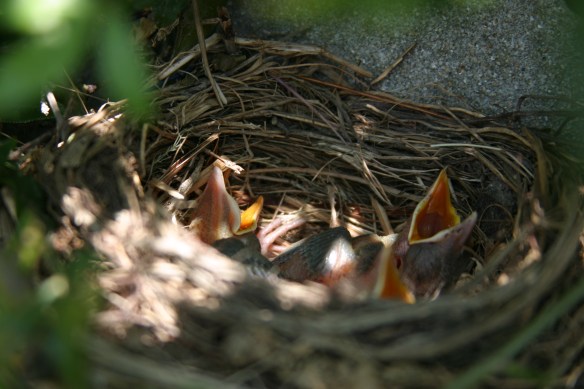
baby birds


Returns

What good is a rock
if the people fall, if truth

remains but no one
hears the long grass

rattle, and words
burst into flame

and gas, and life
poisons itself with

greed and the deficit
of compassion.

No body exists to bury.
I am trying to return

to a place of open
mouths, of nests and

groves left standing
despite their value

to the market. Which
pocket do I empty,

what song do I leave
unsung. Tomorrow

always becomes
yesterday, and today

flakes away into chilled
ash, carried over

rooftops and clouds,
never to be seen again.


gargoyle

“Returns” first appeared here in September 2017.

Osso Buco

file00029145808


Osso Buco

The reconciled, the residue of one’s
virtues displayed or absorbed

that within become the basis for
talk: furtive movements, the knife’s

gentle persuasion, wine
afforded the quality of enhancement.

We must preserve the truth, and other
disingenuous phrases, as if we may

admit our tastes only at great cost
to our politics and sense of being.

And fruitful loss – the reduction
sauce, or stock evaporated – which

attaches in dissipation
the grace of subtlety. To be more

with less. To be apparent yet
concealed. To be, in turn, aware.


file00092920180

“Osso Buco” first appeared here in March 2015.


Poem Up at Allegro Poetry Magazine


My poem “Home: Living Between” is up at Allegro Poetry Magazine. Scroll down to read it. Thank you, Sally Long, for taking this poem.


What a Patriot Dreams

I confess that I’ve ordered multiple copies of this book, because I know I’ll give some away. And the pre-publication sale price of $6.50 is nearly 50% off!

stephanielharper's avatarSLHARPERPOETRY

Starlight 03
What a Patriot Dreams

I saw the flags come down—
their masts falling like the trees
flattened by shockwaves
in those clips of old footage
from military nuclear bomb tests,
spliced into high school history documentaries.

They weren’t projected celluloid etchings
that teenagers confined to plastic chairs
could summarily cancel
with one hand motioning No
in the universal vernacular…

Caught in a wash of floodlights
on the indigo summer dusk,
the red-white-blue swaths crushed
in on themselves like torn parachutes,
& all vanished at once—deposed

by morning’s first, grainy insinuations
that breached the blinds’ periphery,
& accreted into a single, silent force
creeping along my bedroom walls,
as if to thwart illumination:

In this country of my own
birth & citizenship, I’ve, in turn,
given birth to two, precious children—

my riven heart’s two halves now trussed
in a spectacular fiasco of feathers & wax.

STEPHANIE L. HARPER

“What a…

View original post 107 more words

As Breath Defines Constriction

corona


As Breath Defines Constriction (Solar Wind)

The snake swallows itself, integrating the opposite. Or, illustrating the
nature of earthquakes, encourages conjecture.

Wind meditation. The practice of circling mountains, of emptying oneself.

Matter accelerating away from the sun. The prickly pear on the roof.

The Tendai monks of Hiei run 40 kilometers each day for 100 consecutive days.
Only then may they petition to complete the thousand-day trial.

Coronal mass ejections temporarily deform the Earth’s magnetic field.

I sweat while driving to the store for cold beer.

The heliopause is the point at which the solar wind’s strength is no longer
sufficient to push back the interstellar medium.

No matter its destination, a comet’s tail always points away from the sun.

At which point does one hear the sound of sunlight entering stone?

They must complete the thousand-day challenge or die. To this end,
each monk carries a knife and length of rope on his journey.

A map is simply paper. Solar wind, cord of death.

Stones in the path, quivering earth. Eyes focused ahead.

***


“As Breath Defines Constriction” is included in The Circumference of Other, my offering in the Silver Birch Press publication, IDES: A Collection of Poetry Chapbooks, available on Amazon.


stones


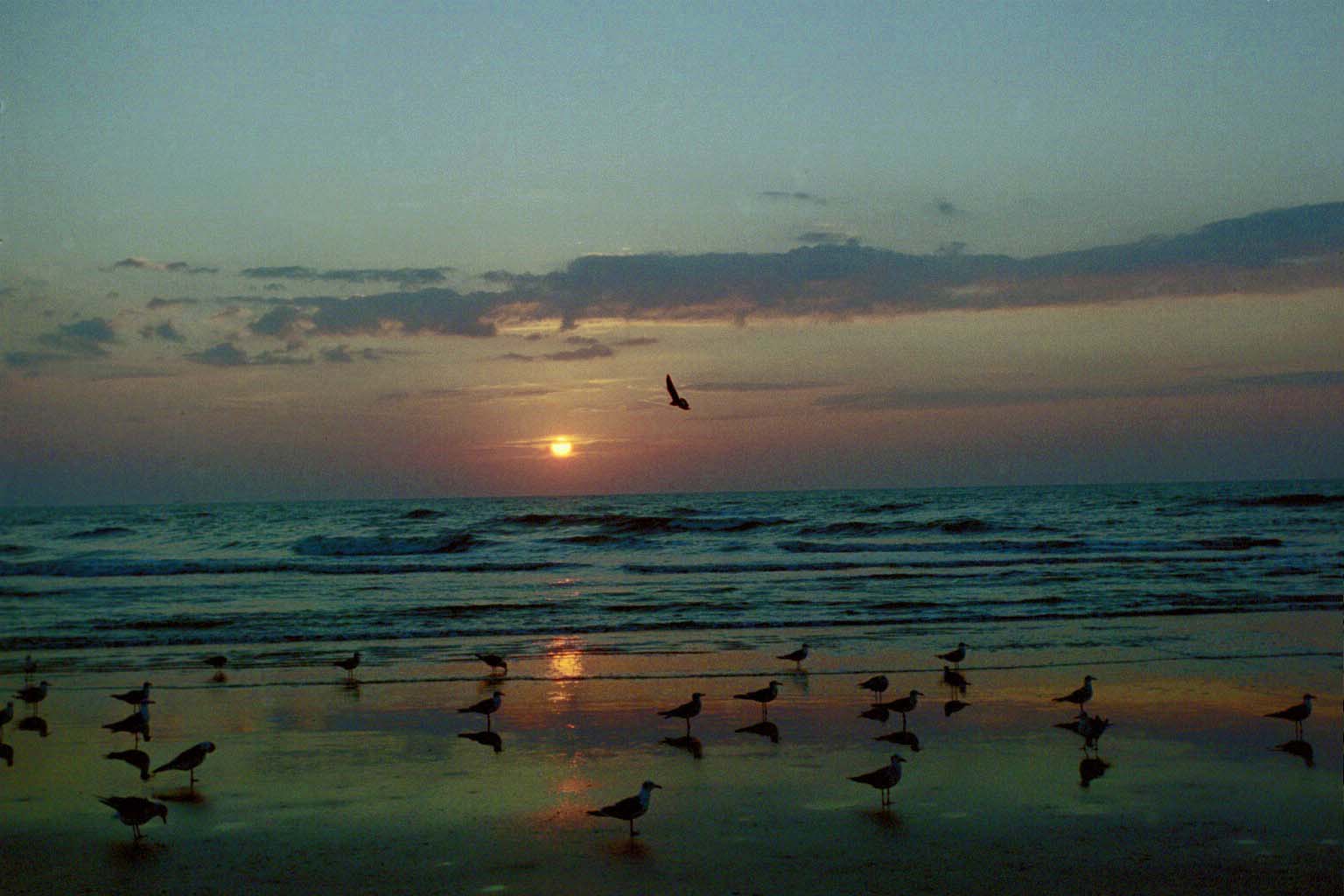
Gulf

gulf

Gulf
for M.V.

Which looms wider, its sky or water? The birds, here, too,
reconvene in greater streaks. This morning I stomped around
Paisano, examining the grasses and soil, the rocks and various
configurations of clouds, and listened to experts discuss
prescribed burns and how the land’s contours can determine
sequence and efficacy. The mockingbird whose territory
we occupy has disappeared. Perhaps he’s just moved on.
I heard a red-bellied woodpecker yesterday, but never saw it,
and of course the rattlers at the ranch are still underfoot, just
less apparent this time of year. I looked closely, as always,
but never spied one. What else did I miss? The rich people
on the bluffs bulldoze habitat, poison creeks and erect their
Italianate villas, caring not a whit for the breeding warblers
or the landscape, although they might pony up a few bucks
for an environmental charity if sucked-up to properly. Given
a choice between the two, I’d pick the snakes every time;
they don’t smile or offer spiked drinks and stories of their
conquests, and usually warn before striking. Even a minor
deity might take offense and crack open a new fault in the
earth between this place and theirs, widening it by inches
with each presumption, every falsehood, whether shaded
in unrelated facts or illogic, until that shifting space could
be spanned solely by a bridge planked with truth and good
manners, and, yes, by mutual consent. Looking back, I
find many examples of these bridges collapsing in utero,
but we keep trying. Your story of the gulf coast storm
reminded me of weeks spent on calm water, and seeing,
no matter where I turned, blue meeting blue, from horizon
to horizon, the sky never broken by bird or cloud, born
anew each day, always looking between, never down.


“Gulf” was published in West Texas Literary Review in March 2017.

Senate (Tritina)

Senate (Tritina)

Not imposition, but welcome.  The way
cooperation welcomes coercion, turning the
tenor of the intended phrase, opening

the statement to interpretation, opening
a point without dissension, in the way
of politics, agreeing which fact will shape the

morning, which truth will determine the
next word and the subsequent, as if opening
the issue, claiming to have found the way,

one way, the only, but never actually opening.


* * *

A tritina might best be described as the lazy poet’s sestina, consisting of ten rather than 39 lines, with the end words of the first stanza repeating in a specific pattern in the subsequent two stanzas. The last line includes all three end words.

The patterns:
abc
cab
bca
The last line uses the end words in sequence following the pattern of the first stanza.

This first appeared on the blog in March 2017.


That Number Upon Which the Demand Lieth


That Number upon Which the Demand Lieth

Overcoming duality, yet binding: the trinity.
Beyond the contrast of two, it initiates the concept of many.
Albertus Magnus claimed that three lives in all things.

Becoming; being;
disappearing.

In Old Saxon, the month of May is named trimilki, season of three milkings.
Number as quality depends upon the visual field.
The ancient Egyptian sign for the plural requires three strokes.

Points; lines;
angles.

Lao-tzu said the triad produces all.
Acronyms, sports, and traffic lights reflect our ternary culture.
The devil may appear in the form of a three-legged hare.

Witness; testament;
tribute.

Representing the unknowable: I, you, and the beyond.
The figure of completion, the number of the cube.
A Sumerian number sequence began “man, woman, many.”

Curse; liturgy;
blessing.

The scale as a succession of thirds.
Imperfection implies the concealment of perfection.
Shiva’s number, his eyes, his braids, his place.

Root; third;
fifth.

The triangle in Euclidean space.
I walk the three roads to the commonplace, preferring rhetoric.
Three to through, it penetrates the personal, unhinges that door.

The law; the land;
the world to come.


“That Number upon Which the Demand Lieth” was published in Posit: A Journal of Literature and Art in September 2017. I am grateful to editor Susan Lewis for taking this piece.


A Brief History of Edges

map


A Brief History of Edges

This road leads nowhere. I live at its end where breezes
wilt and the sun still burns my darkened skin.

I’ve sailed to Oman, but have never seen the Dakotas.
My friend searches for the concealed parable in this truth.

An early clay map depicted Babylon surrounded by a bitter river,
and an island named the sun is hidden and nothing can be seen.

Fitting the limitless within boundaries, she remembers no one.
The lighted sign says boots, but I see books.

Venturing from the shadows, she offers an accord: intersecting borders,
we must retain ourselves, deliver what calls
.

In our place between the hidden and the invisible, consider
that neon gas possesses neither color nor odor.

What lives in creases and at the periphery? The isle called beyond
the flight of birds 
has crumbled from the lower edge.

Where I stand defines my portion of the spherical earth.
Crossing lines, I look to the sky, its bisected clouds.

mapman

“A Brief History of Edges” first appeared here in April 2016.


Even the Light


Even the Light

You look out and the sunbeam blinks –
a difference in brightness
on the drooping seeds.

Some days nothing gets done.
We live with the unwashed,
with stacks of mail, the unfolded,

the incomplete. Phrases pop out
only to crawl away, and later,
reincarnated in other forms,

embed themselves just under
the skin, calcifying. Scratch
as you might, no relief appears.

Your tongue grows heavy
from shaping these words.
Even the light subtracts.

* * *


“Even the Light” was published in the May 2017 issue of La Presa.