The Theory and Practice of Rebellion

arrows


The Theory and Practice of Rebellion

Such small lives we’ve led,
diffident, quiet, until
provoked.

Remove our words,
we become steel
and sharp stone,
fletched softwood
splitting the air,
string reverberating,
singing resist,
resist
.

Fear not
who we are now.

Consider tomorrow.


“The Theory and Practice of Rebellion,” first appeared in Outcast Poetry, and was reprinted on Vox Populi. Many thanks to editor Sean Lynch for originally taking this piece, and for Michael Simms for reprinting this and other pieces. I am truly grateful for his support.

Nights at the Magdalene Laundry

cemetery


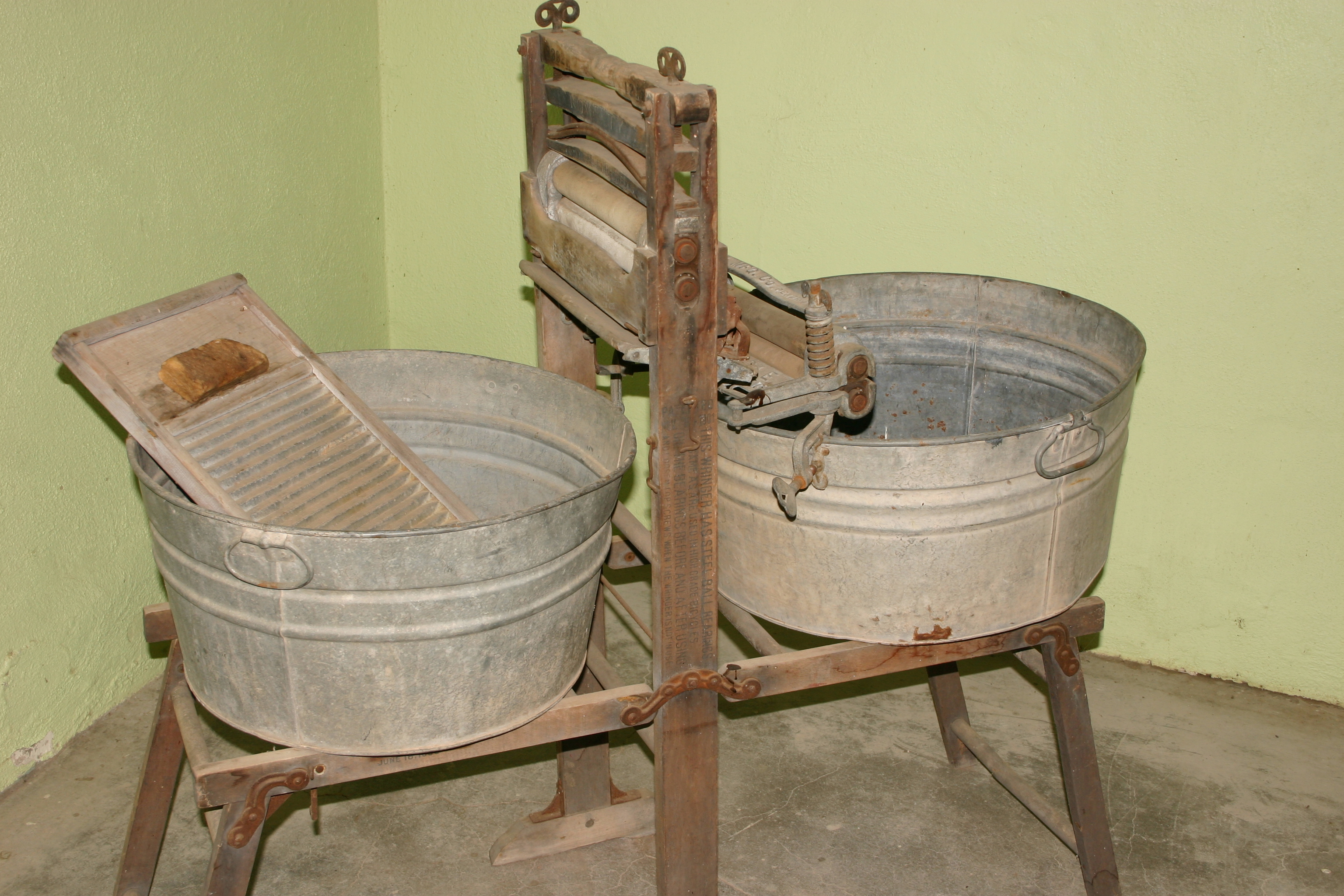
Nights at the Magdalene Laundry

Waiting, as if it could
be foreseen, as if influence and love
and truth could ease into the conversation,

she pours water into the night’s
mouth. A little longer, says the voice,
and the wind bends the grass,

reaching, without apprehension, a conclusion.

Which is not to claim verity, nor the patience of stone
crumbling along the ledge.

She leaves when nothing remains.


washtub

“Nights at the Magdalene Laundry” first appeared here in January 2016, and was subsequently published in The Basil O’Flaherty, in November 2016.


Theology of Carrots


Theology of Carrots

We hide our best
underground

plumed by ornamental
headpieces

allowing the wisdom
of taproots

to prosper
in darkness.


“Theology of Carrots” first appeared here in September 2017.


A Fire to Light Our Tongues: Texas Writers on Spirituality

A Fire to Light Our Tongues

Some publications are well worth the wait: I submitted poems to this project in 2017, and about seven months later was informed that two had been accepted. And then, silence for nearly two years. But the editors had diligently been working behind the scenes, and despite the pandemic and the tragic death of Donna Walker-Nixon, one of the lead editors, A Fire to Light Our Tongues: Texas Writers on Spirituality has recently been released by TCU Press. Featuring work by such luminaries as Naomi Shihab Nye (the title is taken from her introduction to Sailing the Ocean: 100 Poems by Young Poets), Christian Wiman, A.G. Mojtabai, Rick Bass, Nan Cuba, Mary Helen Specht, Kevin Prufer and other well known Texas writers, it is “an eclectic work exploring spirituality, faith, and disbelief…” As serendipity (and maybe karma) would have it, I was touched to discover that my poem “La Grange,” on page 176, faces “A Stockyard Liturgy,” on page 177, a poem by my late friend D.G. Geis. The last time I saw Greg, we met at a restaurant in Bandera, Texas for a “losers’ lunch,” celebrating the fact that neither of us had won a poetry competition in which we’d both been named finalists.

Since I have poems in this anthology, I’m not going to offer a detailed review. But in all honesty I must state that A Fire to Light Our Tongues: Texas Writers on Spirituality is an exquisitely curated collection of fiction, creative nonfiction and poetry. Order it through your local bookstore, or through Amazon.

Edited by Elizabeth Joan Dell and Donna Walker-Nixon.


Tell it Slant: How to Write a Wise Poem, essay by Camille Dungy

OLYMPUS DIGITAL CAMERA


Few essays on writing poetry grab me by the collar, slam me against the wall, and say “Listen, dammit!” But this one did.

Camille Dungy’s words sear through the fog. She tells it slant. She tells it true. She explains how some masters have done it. If you’ve not read her poetry, seek it out. You’re in for a treat. If you have the good fortune to attend a lecture or reading by her, do so. She’s energetic, wise and kind. She knows.

http://www.poetryfoundation.org/article/247926

FIrst posted here in 2014..


Trains

file0001582779533


Trains

1

In the marrowbone of night,
your song parts the fog.

I never knew the secrets entrusted there.

I never knew that cinders and steel
could lie so passionately

and still believe that the watchman’s hours
would evaporate and leave us scratching for more.

I have stolen time.

The windows remain closed and shuttered.
Even the wind turns away.

The track narrows.

You call.

Again.

2

Sometimes song seems the only respite,
the rhythm of clashing cars

and moments stretched beyond the next bend
to that point where light winks out.

We both know this lonely tunnel.

Payment is due.

I have always exited alone.

3

Another evening, and red smoke completes the horizon.

Your ribs stretch for distance,
and while I cannot see their end,
I know by sound
their lot.

Sing for me.
It is not
too close.


“Trains” was originally published in Lightning’d Press (Issue 8) in Spring of 2014, was reprinted on Aubade Rising in April, 2015, and has appeared here several times. It is also included in my chapbook, If Your Matter Could Reform.

track

Bandera

image

Bandera

I offer nothing in return, and in offering, receive.
My mouth is a river

whose current bears no words,
but the silence is not of my making.

Notice the streets and their grey
hunger, the rain and the sun

passing by much
as one passes an unopened door.

That question, unvoiced.
That shiver preceding the icy touch.

You may deny my motives.
You may deny my existence and

the very notion of shape unto form.
I offer nothing, and in offering, receive.

image

“Bandera” first appeared here in May 2015, and was subsequently published in The Basil O’Flaherty in November 2016.

Insomnia


Insomnia

Lying awake
at two in the morning,

wondering
how a dog would suffer

sleeplessness –
silently, or with little

growls and snuffles,
scratching at its

padded bed
in exasperation,

circling, turning
back, again.

I roll to the left,
then to the right,

and flat on my back,
groaning at the pain

in my hip and the anger
of the day’s impending

bull on my shoulders,
and the looming

banshee cry
of that damned alarm.

Memoir (Cento)

untitled_pregamma_1.27_mantiuk06_contrast_mapping_0.1_saturation_factor_1.25_detail_factor_1

Memoir (Cento)

Your hands touched
everything. Will you

be a fountain
or a sea?

A woman sleeps next to me
on the earth. Now

nothing else keeps my eyes
in the cloud.

Each rock is news.

* * *

A cento is composed of lines from poems by other
poets. This cento originated from pieces in:

77 Poems, Alberto de Lacerda
Because the Sea is Black, Blaga Dimitrova
Body Rags, Galway Kinnell
Song of the Simple Truth, Julia de Burgos
Love Poems, Anne Sexton

For further information and examples of the form, you might peruse the Academy of American Poets site: http://www.poets.org/poetsorg/text/poetic-form-cento

Schody ve věži v Olomouci

The Fog (after H.D.)

Man in fog

 The Fog (after H.D.)

I am dead.
You avoid me.
I open like a shell.
You expose me with your breath.
What am I, heartless one?

This was an exercise in which I used H.D.’s poem “The Pool” as the launching point. It’s fun and occasionally illuminating to try these. “The Fog” first appeared on the blog in April 2016.

shell