Mushrooms I Have Known


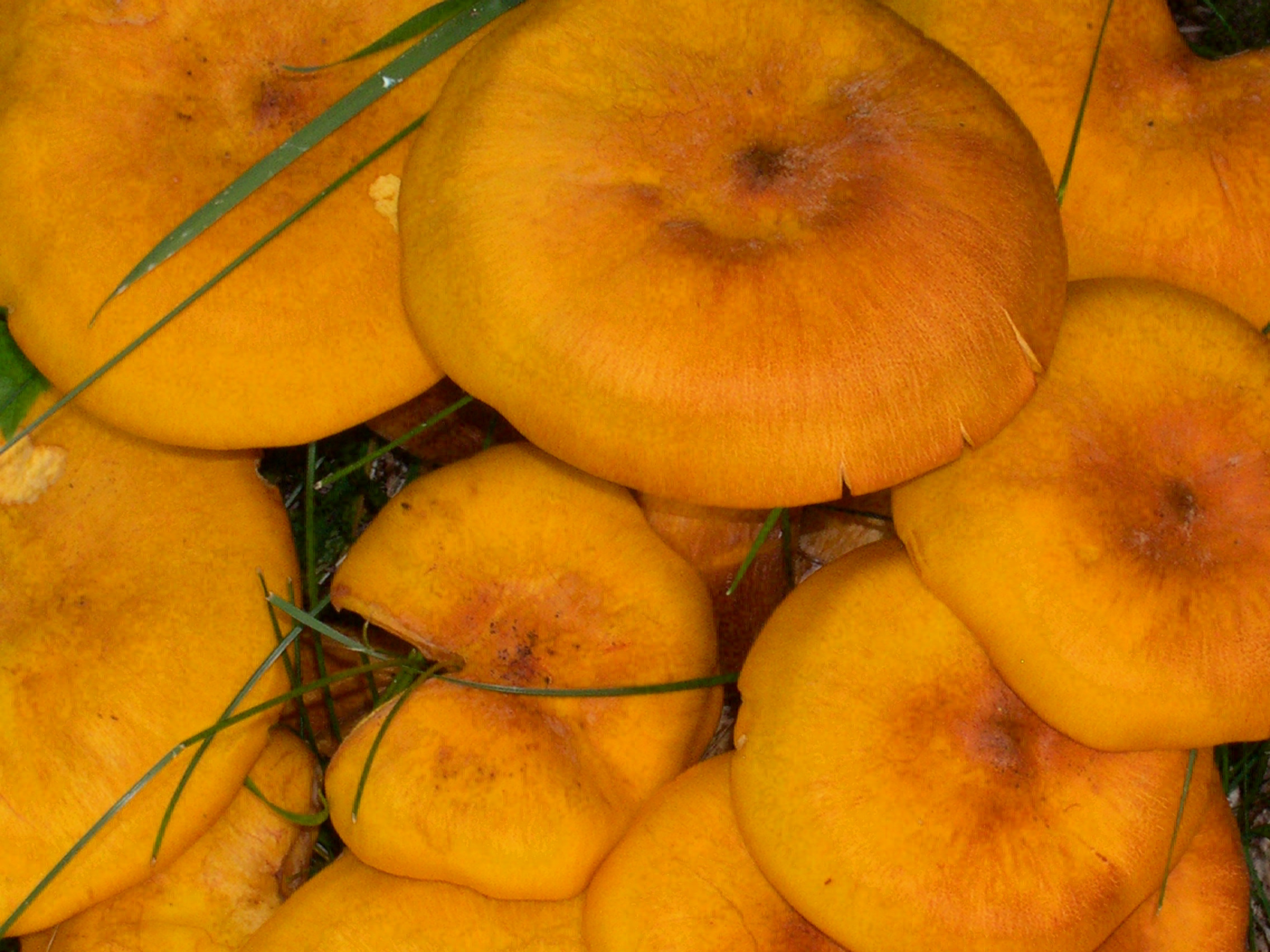
Mushrooms I Have Known

Reticent and tired, withdrawn,
dejected, I return.

Emerging overnight from nothing,
then withering back to zero.

Does light incite you?
The shade?

I walk by and say hello.
You do not speak.

This first appeared on the blog in April 2017.

Poet’s Pantry

file3911233869642

In my sliver of the world, poetry and cooking share many qualities. When I step into the kitchen, I often have only a vaporous notion of what’s for dinner. A hankering for roasted poblano peppers, the need to use a protein languishing in the refrigerator, the memory of an herbal breeze wafting down a terraced hill near Lago d’Averno, Hell’s entrance, according to Virgil, or even a single intriguing word, may spark what comes next. But the success of what follows depends upon the ingredients at hand, on how we’ve stocked the pantry. Good products beget better results. Let’s take my desire for roasted poblanos. What to do with them? Poking around, I uncover an opened package of goat cheese, a bit of grated grana padano and some creme fraiche, and I immediately think pasta! Looking further I spot arugula, a lemon, a handful of pecans, some cherry tomatoes. Dinner: Pappardelle with a roasted poblano and goat cheese sauce, garnished with toasted pecans, served with an arugula and cherry tomato salad dressed with a lemon vinaigrette. Simple, when you’ve stocked a solid base of quality components.

My writing employs a similar process. Anything – a vague sense of uneasiness, a particular word, the sunlight slanting through the unfortunate dove’s imprint on my window, articles or books I’ve read or perused on a myriad of subjects – may launch a poem. But what truly makes the poem, what bolsters, fills and completes, what ignites and catapults it arcing into the firmament? The pantry’s contents.

Everyone’s needs differ, and I wouldn’t presume to inflict my peculiar sensibilities on anyone, but if you cracked open my burgeoning poetry pantry’s door, you’d certainly unearth dictionaries and a thesaurus, fallen stars, books on etymology and language, curiosity, a guitar or mandolin, at least one window (sometimes partially open), conversations floating in the ether, various empty frames, wind, dog biscuits and dirty socks, a walking stick, sunlight and shadows, more books on such subjects as ancient navigation, the history of numbers, the periodic table, alchemy and olives. You might also spy reams of paper, unspoken words, coffee cups, a scorpion or two, scrawled notes on index cards, wandering musical notes, a pipe wrench, wood ear mushrooms and salvaged fragments of writing, failed ideas moldering in clumps on the floor, a few craft beers and empty wine bottles, a chain saw, and most important of all, a bucketful of patience.

(I cannot over-emphasize the bucket’s contents…)

This is just to say (no, I didn’t eat the plums) that the best equipped poets stock their pantries with the world and all its questions, with logic, with faith, persistence, emotion, science, art, romance and yes, patience. Line your kit with every tool you can grasp or imagine. Keep adding to it. Read deeply. Listen. Breathe. Listen again. Converse. Look outward. Further, past the trees, around the bend and beyond the horizon’s curve, where the unknown lurks. Look again. Don’t stop. Continue.

And if after all this you’re wondering what basks in my kitchen pantry:
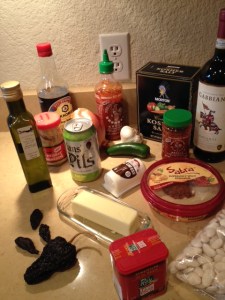
photo(13)

This last appeared here in July  2017.

Poem Up at Kikwetu: A Journal of East African Literature

My poem, “Chilled Soba,” has been published by Kikwetu: A Journal of East African Literature. I am grateful to the editors for accepting my poem.

Recording of “Self-Portrait with Umeboshi”

file0001818876295(1)

Self-Portrait with Umeboshi

Our resemblance strengthens each day.

Reddened by sun and shiso,
seasoned with salt,

we preside, finding
comfort in failure. Or does
the subjugation of one’s flavor for another’s

define defeat? The bitter, the sour, the sweet
attract and repel

like lovers separated by distances
too subtle to see.
Filling space becomes the end.
What do you learn when you look through the glass?

Knowing my fate, I say fallen. I say earth.

Ah, simplicity! When I was a child my mother would occasionally serve rice balls in which a single mouth-puckering umeboshi rested at the center. These have long been a favorite, but I admit that umeboshi might be an acquired taste. Commonly called “pickled plums,” ume aren’t really plums but are more closely related to apricots. I cherish them.

“Self-Portrait with Umeboshi” first appeared in the Silver Birch Press Self-Portrait Series (August 2014), was included in the subsequent print anthology, Self-Portrait Poetry Collection, and also appears in my chapbook, If Your Matter Could Reform.

file0001977442406

Music: “Senbazuru” Kevin MacLeod (incompetech.com)
Licensed under Creative Commons: By Attribution 3.0 License
http://creativecommons.org/licenses/by/3.0/

A Cheese Omelet at Midnight

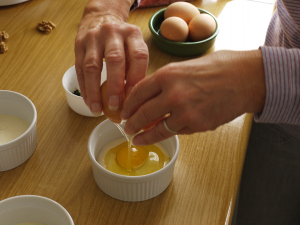
cracking eggs

A Cheese Omelet at Midnight

You can’t ever leave without saying something,
no matter how insipid. That sweater looks good
on you. It’s supposed to rain tomorrow. I’m sorry
I burned the omelet. Nasdaq has plunged 3% 

since last week. And I, in return, can’t let you go without
replying in equal measure. It matches your eyes. I love
to smell rain in August. That cheddar was delicious.
Maybe I’ll start a savings account. Next month.

So I wash dishes when you’re gone, wipe down the
counters, pour salt into the shaker, grab a book, join my
cat in bed. This tune’s been overplayed, the grooves’re
worn down. Maybe next time I’ll say what I mean,

tell you what I want: It would look better in a heap
on the floor. How about a shower here, tonight? Kiss
me and I’ll never think of it again. I don’t give a rat’s
ass about the stock exchange. Step away from that door!

I’ll make your lunch, butter your 7-grain toast, assemble
your IKEA furniture, balance your books, even dye
my hair pink, tattoo a pig on my thigh and drink light beer
in your honor, if you would agree to say what’s on your

mind. On second thought, don’t. Tell me, instead,
what I want to hear, but make it heart-felt. Truthful
and direct. Poached but earnest. Hard-boiled but tender.
I’ll cook your eggs. Invest in me. You’ll earn interest.

* * *

This originally appeared in August 2015, as the 25th offering in the Tupelo Press 30-30 fund raiser. Thank you, Pleasant Street, for sponsoring this.

Asparagus omelet MGD©

Rice

image

Rice

Yesterday’s rain informs me I’m born of luck and blended
strands, of hope and words forged before a common tongue emerged.

Of my first two languages only one still breathes.

The other manifests in exile, in blurred images and hummed tunes.

Rice is my staple. I eat it without regarding its English etymology,
its transition from Sanskrit to Persian and Greek, to Latin, to French.

Flooding is not mandatory in cultivation, but requires less effort.

Rice contains arsenic, yet I crave its polished grains.

In my monolingual home we still call it gohan, literally cooked rice, or meal.
The kanji character, bei, also means America.

Representing a field, it symbolizes abundance, security, and fertility.

Three rice plants tied with a rope. Many. Life’s foundation.

To understand Japan, look to rice. To appreciate breadth, think gohan.
Humility exemplified: sake consists of rice, water and mold.

The words we shape predicate a communion of aesthetics.

Miscomprehension inhabits consequence.

* * *

“Rice” has appeared here twice before, and is included in my chapbook-length work, The Circumference of Other, published in Ides, a one-volume collection of fifteen chapbooks published by Silver Birch Press and available on Amazon.com.

image

As the Gravy Flows


As the Gravy Flows

Viscosity is always a consideration, as is definition:
traditionally a sauce composed of meat juices and
thickeners, or, a sediment of melted tallow, which
somehow brings to mind a laborer rising early after
a hard night, eating red-eye, made of fried ham
drippings and coffee, served over grits. Or perhaps
an egg gravy – a béchamel sauce flavored by bacon,
with water and milk, and an egg – ladled over butter-
rubbed biscuits. But then I picture my vegetarian
friends pushing away from plates of this fine repast,
and not wishing to deny them or those following a vegan
lifestyle, we turn to roasted vegetables with broth, oils
and wine and a savory yeast extract. But I can’t fathom
a life without giblet gravy, which features the neck and
offal of fowl, including the liver, the taste of which may
be too strong for other recipes using giblets, an interesting
word in itself, from the Old French for a game-bird stew,
and the Middle English meaning of an inessential
appendage, or entrails, morphing to garbage. I would
never throw out an onion gravy, essentially a thick sauce
of slow-cooked onion and stock or wine, and admit to
having tasted a cream version with the consistency and
flavor of diluted paste, indicating a lack of balance in
flavor and poor roux-making technique. My favorite
would be an Italian-American buddy’s gravy, his word
for a rich ragù of sausage, braised beef and shredded
pork, red wine, tomatoes and herbs, served over pasta.
This of course stretches the definition of the word, but
language is elastic, is it not? So it flows, as does the gravy.

“As the Gravy Flows” was drafted during the August 2016 30/30 Challenge. Thank you to Lady Phoenix for sponsoring the poem and providing the title!

Which Poet, Which Beer (3)

beer

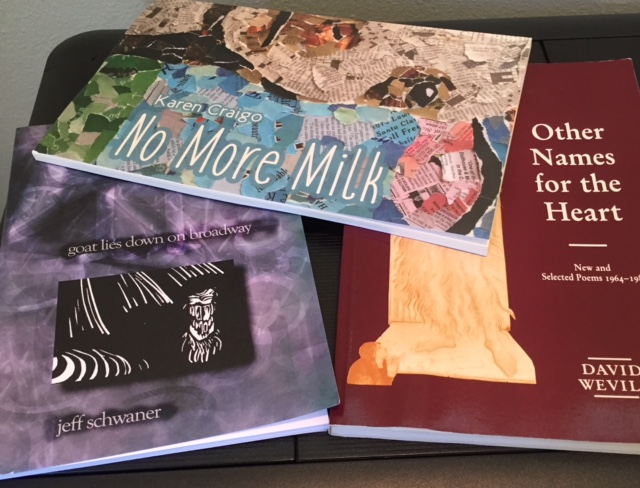
Nebraska Brewing Company’s Melange a Trois, a strong Belgian-Style Blonde ale, aged for six months in French Oak Chardonnay barrels, carries a good bit of the wine, with citrus and a hint of vanilla. A little musty, with an excellent frothy head, which, I believe, could describe me most mornings. But I digress. Deceptively strong (11+ ABV) with a pleasant bitterness. I would pair this with a plate of cured meat and David Wevill’s Other Names for the Heart: New and Selected Poems 1964-1984.

He writes in “Grace”:

… Sometimes lately

a bird you can’t identify has flitted close
and sung from the branches of his hands.

He leaves us touching ourselves.

Over the past thirty years, much of Wevill’s writing has left me with unrequited questions, with an itch to branch out, to learn more, to delve deeper into what makes us human.

But there are those days when introspection flies out the back door into the overgrown backyard, and all you want to do is sit back, watch the football game, relax, be entertained, escape. On those days I’ll break out a few cans of Austin Beerworks Pearl Snap, a German-style pilsner, moderately malty, straw-colored, with citrusy hops evident. A clean, palate-cleansing drink, good with nachos or chips, or hell, even with a Greek salad (heavy on the feta and olives, please). And if you’re like me and can’t devote yourself fully to the game, multitask – dip into Jeff Schwaner’s Goat Lies Down on Broadway, and absorb “Goat Reads the Signs”:

The sun rises like music
every morning. Wind goes
around the world and comes
back in a week or two. Goat
waits on top of a hill, judging…

As do we. Don’t stop there. Continue. Turn off the tube – one team will win, the other will lose. But Goat never wins. Goat never loses. Goat befriends Jerry Falwell. Goat eats Jerry’s tie. Goat ingests Sartre. Goat dies. “Goat is never dead.” A lively read, to say the least.

And speaking of lively, Independence Brewery’s Lupulust is a traditional Belgian-style tripel with a touch of modern hoppiness. It pours with a big head and spicy, floral notes, with a dry finish, reminding me of Karen Craigo’s No More Milk, in which she speaks of life – ordinary life – which, in her hands, becomes like that floral scented, big, hoppy beer. In “Scat with Mourning Dove” the narrator wakes “to syncopated song” and marvels at the bird’s jazz refrains from her place in bed with “a body warm against mine,” celebrating

how God made us, made jazz,
made an instrument of a dove.

Sip this book. Share it with friends. Take it to bed with a glass of warm milk. Savor it.

no-more-milk

“Which Poet, Which Beer (3)” appeared here in September 2016.

Roast Chicken (recording)

roast-chicken

“Roast Chicken” was first published in Kindle Magazine in December 2015, and also appeared in Gossamer: An Anthology of Contemporary World Poetry. 

Roast Chicken

Contemplating the afterlife of birds,
I empty the carcass. My wife
offers rosemary sprigs,

which I stuff into the cavity
with whole garlic cloves
and seared lemon halves,

and then I compact it by tucking
the wings under and pushing
one leg through a slit in the other,

lessening the surface. One might
debate the shape of a bird’s
soul, the sanctity of structure

and limitation, of ritual and
the weight of fire’s gifts in
human brain development,

but trussing is essential
to the goal of proper
temperature attainment.

I pat it dry, sprinkle kosher salt
on the skin, put it in the oven,
set the timer for an hour, pour wine.

Following custom, we eat
without saying grace.
Piece by tender piece, it descends.

Ode to Being Placed on Hold

phone

Ode to Being Placed on Hold

The music rarely
entertains,
but I find
peace between
the notes,
sometimes,
and embrace
the notion that
I’ve been inserted
in that peculiar
capsule between
speech and the
void, imagining
myself somewhere,
floating, free
of care and
gravity,
beer can
satellites
orbiting my head,
with bites of
pungent cheeses
and baguette
circling in
their wake,
a gift, you see,
like rain in
August or
a warm voice
saying hello.

* * *

“Ode to Being Placed on Hold” was drafted during the Tupelo Press 30-30 marathon in August 2015. Many thanks to Mary “marso” of the blog “marsowords” who sponsored and provided the title. The poem has also appeared here several times.

cheese