Wherein the Book Implies Source

book


Wherein the Book Implies Source 

And words form the vessel by which we traverse centuries, the river
stitched across the valley’s floor, easing access.

Accession by choice. Inorganic memory.

Vellum conveys its origin: of a calf.

How like an entrance it appears, a doorway to a lighted space.
Closed, it resembles a block of beech wood.

To serve as conveyance, to impart without reciprocity.

Framing the conversation in space, immediacy fades.

The average calfskin may provide three and a half sheets of writing material.
Confined by spatial limitation, we consider scale in terms of the absolute.

The antithesis of scroll; random entry; codex.

A quaternion equalled four folded sheets, or eight leaves: sixteen sides.

Reader and read: each endures the other’s role.
Pippins prevented tearing during the drying and scraping process.

Text first, then illumination.

Once opened, the memory palace diminished.


* * *
This originally appeared in April 2014 as part of Boston Review’s National Poetry Month Celebration, and is included in The Circumference of Other, my offering in the Silver Birch Press chapbook collection, IDES, published in 2015.

ides front cover 92915

Onions

image

Onions

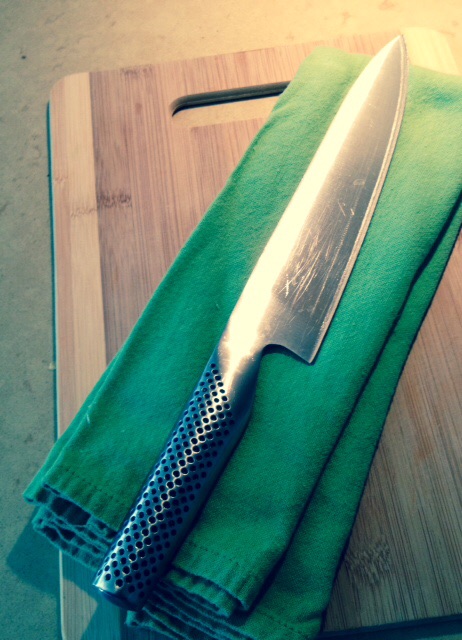
My knife never sings but hums instead when withdrawn from its block, a metallic whisper so modest only the wielder may hear it. Or perhaps the dog, who seems to enjoy the kitchen nearly as much as I. A Japanese blade, it’s a joy to hold, perfectly balanced, stainless steel-molybdenum alloy, blade and handle of one piece, bright, untarnished, and so sharp as to slide through, rather than awkwardly rupture and divide, its next task on the board.

We’ve never counted the chopped and rendered onions, the fine dice, slender rings and discarded skins, but if we could gather all the corpses we’ve produced together over the years, we’d form a monument to our work, cooperation of metal and man, a Waterloo mound in memory of the bulbs laid there, the planning involved, the missteps and serendipity, and the tears shed along the way.

The blade doesn’t care. It is. It works. It moves things, it lifts, it parts them, and in return is cleansed, and later, in the quiet room, maintains its edge with a silvery rasp, angled steel on steel in a circular motion, over and over, until finally it hums its way back into the block. But it never sings.

image

“Onions” last appeared here in December 2019. Hmm. This reminds me (again) that I need to sharpen knives…

Alas, my bout with COVID-19 has rendered me incapable of, or unwilling to, cut into onions. Parosmia has reared its ugly head, and now onions, garlic, bacon, peppers, arugula and hoppy ales among other beloved foods emit odors resembling a mix of raw sewage, mildewed peat moss and burnt wood. Ah, 2020!

Bent


Bent

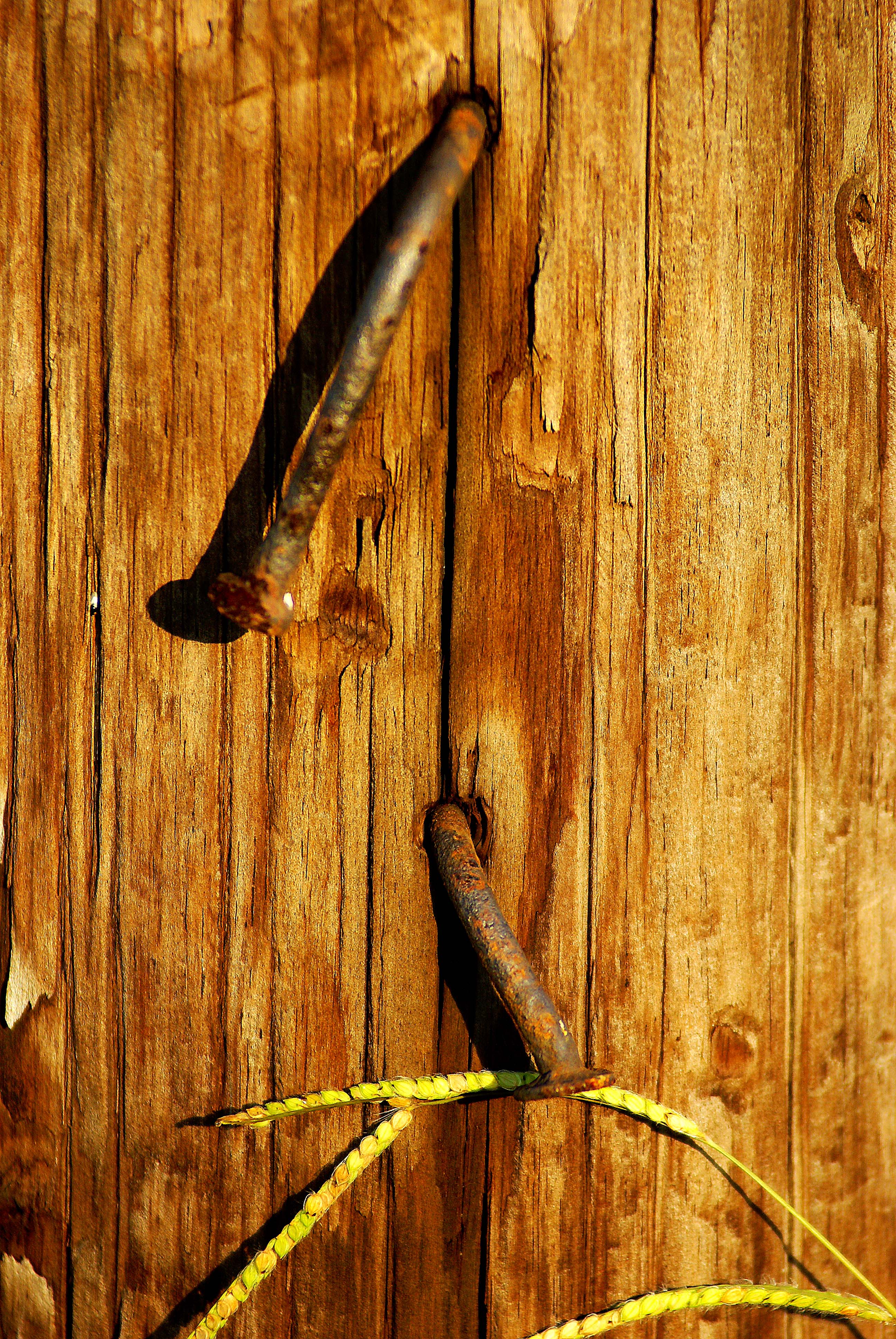
We’ve seen some version of the nail
curled over, the head angled at 90 degrees
or parallel to its body, just above

the penetration point. Three years ago
a tornado powered a single straw stem
through the oak’s bark and into its trunk,

illustrating the Old English beonet, for
“stiff grass,” and sadly conjuring the image
of a blade affixed to a firearm’s muzzle, the

etymology of which lies elsewhere, in Gascony.
And when we consider mental inclination,
signifying deflected, turned, or not straight,

we might also include an earlier past participle
meaning “directed in course.” But even the
tree’s armor could not deter the twister’s

wrath, and the hammer, no matter my aim
or purpose, seems intent upon glancing off
the nail, twisting it, leaving us, again, bent.


“Bent” first appeared in the print publication Ristau: A Journal of Being in January 2018.


The Art of Flight

DSC_1050


The Art of Flight

What wings accumulate is not air
but space, an exemplar

of restraint defied. I listen
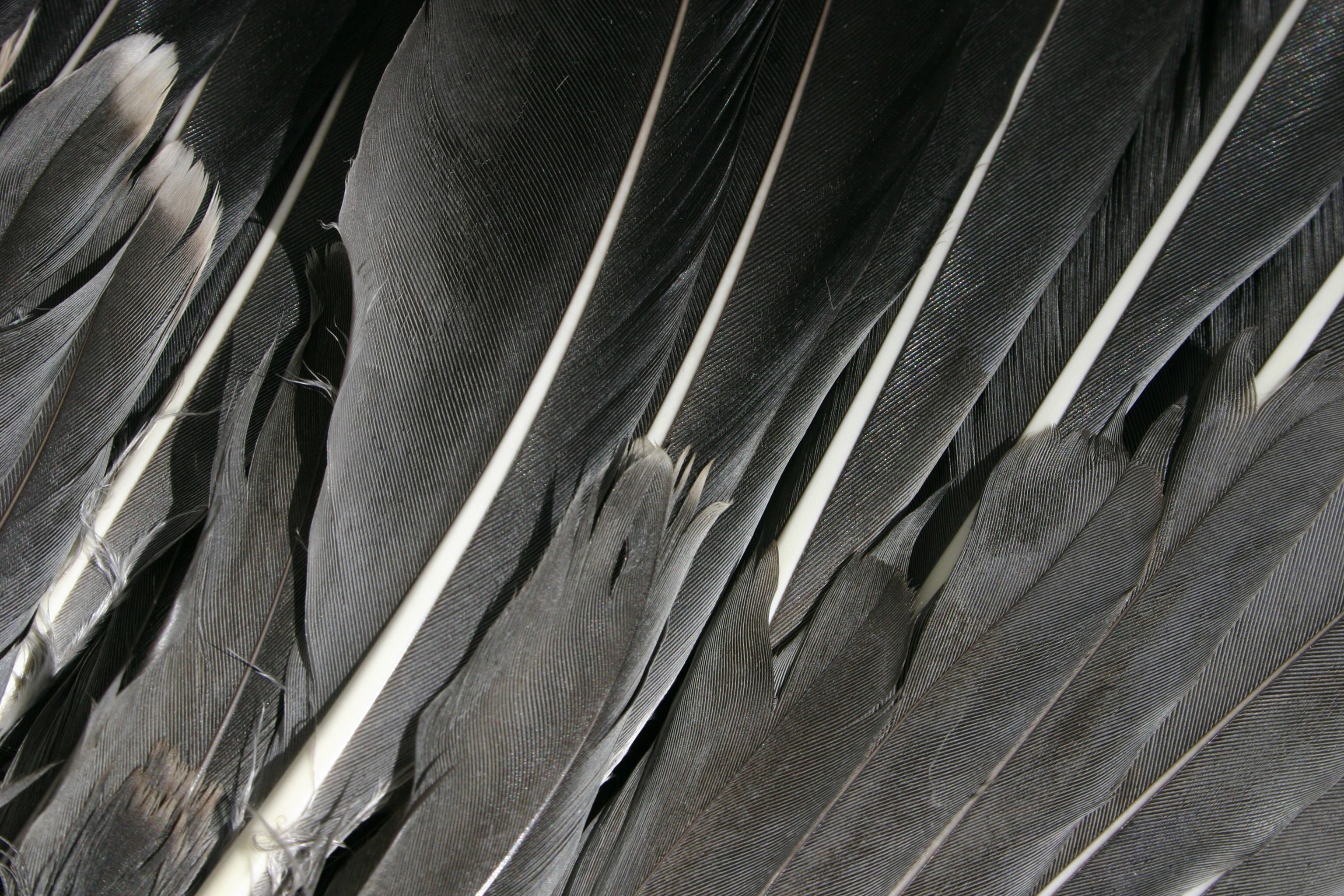
and hear feathers

ruffling in the shadows,
a vibration that swells

until it becomes flight or
regret, the retrieval of our

bodies from this dream of ascent.
The art of flight is one of

disturbance, of angles and lift
and touching what can’t be seen.

What we hold carries no meaning.
The beauty lies in the gathering.


file000141329806


I wrote this piece in the mid-80s, and posted it here in 2015. I’d forgotten about it, until I found the original moldering in a box of old papers. It’s okay, for an artifact from another life…

In Gathering Light

In Gathering Light

1

I sit in darkness
my back to the words
gouged in stone

and wonder what
phrase the stars will
utter tonight,

what wisdom
one finds in dreams

or the widening circles
of the hole that was
there
in water,

in earth, in the common tongue
of all things.

The tree speaks
a different language.
I hear

whispers, a bone-flute’s
whistle, the sound of metal
striking dirt striking

wood,
but nothing, no words
I can gather.

2

I have lost my shadow
among the weeds
of this place.

Somewhere
it wanders,

a thin, grey shape
waiting for light to give birth

to the blackness
I call friend,

itself, shadow.
My fingertips trace
the lines, hoping

to draw something
from the stone –
an unknown word,

the druid’s
small bag of dreams,
the lyrics of the stars.

* * *

Another poem, another artifact from the mid-80s, rediscovered last year.

Bonsai

Bild


Bonsai

no feature enhanced
but beauty of
the whole and

its container the
tree is not
deprived and grows

as it must
though slowly like
a wave which

gathers itself for
years there is
no completion only

process a lapse
which presumes the
most delicate design


Asia_tree240000

Originally published in Aileron in 1988, “Bonsai” first appeared on the blog in December 2014.


Love, Scattered (Cento)

image


Love, Scattered (Cento)

I cull and offer this and this,
and these last definite whorls

or later star or flower, such
rare dark in another world,

outdistancing us, madness
upon madness, the crest

and hollow, the lift and fall,
ah drift, so soft, so light,

where rollers shot with blue
cut under deeper blue as the

tide slackens when the roar of
a dropped wave breaks into it,

and under and under, this
is clear—soft kisses like bright

flowers— why do you dart and
pulse till all the dark is home?

I am scattered in its whirl.


* * *

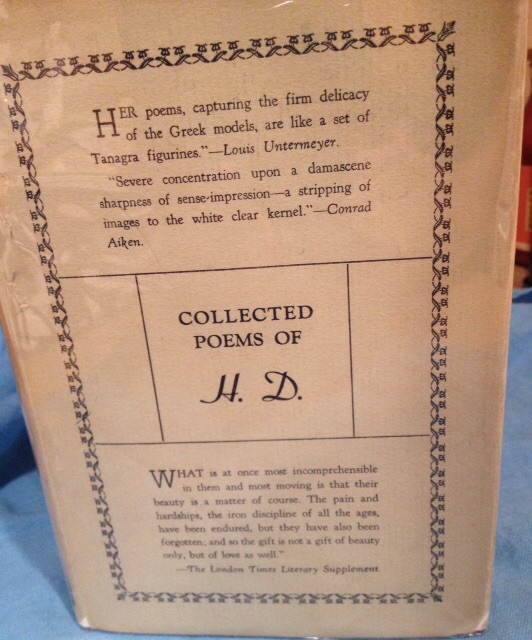
This cento is composed exclusively of lines taken from fifteen pages in the Collected Poems of H.D., 6th printing, 1945. Hilda Doolittle is a fascinating figure in 20th century American poetry. You might look at the Poetry Foundation’s biography for further information:

http://www.poetryfoundation.org/bio/h-d

image


Memorial Day, 2015


Memorial Day, 2015

I turn away from the sun, and drink.
Every window is dark.
No one hears my song, not even the guitar.
When the rain pauses the grackle rests on the cedar picket.
Etymology: from Latin memorialis, of or belonging to memory,
leading to home and family, their connotations.
Remembering is simple, she says. But forgetting…
The coral snake slips by, unseen.
Nothing lives in my shadow.


* * *

“Memorial Day, 2015” first appeared at Picaroon Poetry  in July 2017. Many thanks to editor Kate Garrett, for taking this piece.


Awakened, He Turns to the Wall (Cento), with Recording

cell


Awakened, He Turns to the Wall (Cento) 

Then, everything slept.
Where were you before the day?

You see here the influence of inference,
whereby things might be seen in another light,

as if the trees were not indifferent, as if
a hand had suddenly erased a huge

blackboard, only, I thought there was
something even if I call it nothing,

like the river stretching out on its
deathbed. No one jumps off.


* * *

A cento is composed of lines from poems by other poets. This originated from pieces by: Larry Levis, Jacques Roubaud, Lorine Niedecker, Gustaf Sobin, Denise Levertov, Elizabeth Spires, William Bronk, Vicente Huidobro, Ingebord Bachmann

For further information and examples of the form, you might peruse the Academy of American Poets site: http://www.poets.org/poetsorg/text/poetic-form-cento


erase


Japanese Gardens

file3011293816499


Japanese Gardens

how natural the
lines falling so
purely as if

with a single
stroke we walk
through the opening

and see space
the white center
composed of sand

and gravel later
a gate opens
to another garden

its lantern and
stone so carelessly
arranged so deliberate


file3041292222348

“Japanese Gardens” first appeared here in January 2015.