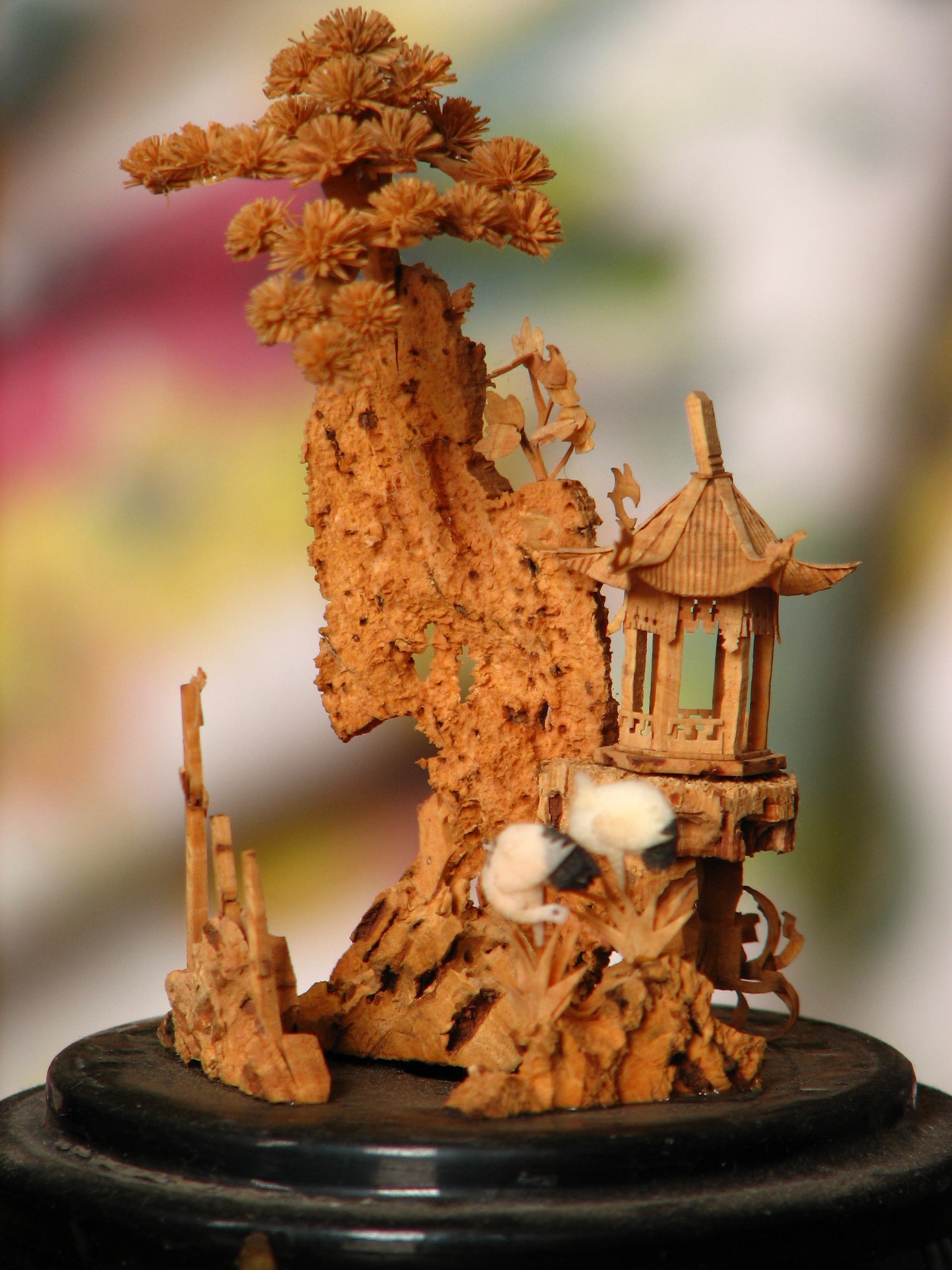
Laolao Pavilion (after Li Po)

file0001681287329


Another attempt at adapting Li Po. A note on Chinese-poems.com stated “at this time, the breaking of a willow twig was part of formal leave-taking.”


Laolao Pavilion (after Li Po)

Where do more hearts break under heaven?
This sad pavilion, where visitors part,
the spring wind whispers bitter goodbyes
and willow twigs never mend.

Transliteration from Chinese-poems.com:

Heaven below damage heart place
Laolao see off visitor pavilion
Spring wind know parting sorrow
Not send willow twig green.


file000171156221

First posted here in June 2014.

Track (after Tranströmer)

file000826525674(1)


Track (after Tranströmer)

2 p.m.: Sunlight. The subway flows
beneath us. Flecks of darkness
shimmer madly on the wall.

As when a man cracks a window into a dream,
remembering everything, even
what never occurred.

Or after skimming the surface of good health,
all his nights become ash, billowing clouds,
strong and warm, suffocating him.

The subway never stops.
2 o’clock. Filtered sunlight, smoke.


* * *

I’ve been dipping into Friends, You Drank Some Darkness, Robert Bly’s 1975 translations of Harry Martinson, Gunnar Ekelöf and Tomas Tranströmer, and I couldn’t resist playing with one of my favorite poems. A different darkness, a separate space, another landscape…

This first appeared here in April 2015.

N Is Its Child


N Is Its Child

If darkness produces all, from where do we obtain nothing?

As a line becomes the circle, becomes a mouth, becomes identity.

In mathematics, n signifies indefinite; in English, negation.

The no, the non, the withdrawal, the taking away.

A heart with trachea represented zero in Egyptian hieroglyphs.

My mouth forms the void through the displaced word.

Conforming to the absent, the missing tongue serves soundlessness.

Aural reduction, the infinite unclenched: n plus n.

Shiva, creator and destroyer, defines nothingness. As do you.

One and one is two, but zero and zero is stasis.

Pythagoreans believed that all is number, and numbers possess shape.

The letter N evolved from a cobra to its present form.

One may double anything but zero.

Unspoken thought, disorder. The attenuated voice swallowing itself.


* * *

N Is Its Child” was first published in Issue 4 of ReservoirI am grateful to editor Caitlin Neely for accepting this piece.


Between

between


Between

1

Living between, we watch what flows below us shed itself.

And what remains after the drought subsides?

I don’t recall the instance of assignation, of color-imprinted
awareness and stones erupting from the earth,

nor the paper’s texture and the faint odor of chemicals reacting,
but in this moment I embrace bitter coffee, the wrecked-nerve

hammer-strikes pulsing from hip to ankle, squealing brakes
and the rain shallowing morning’s ridge as if to say

enjoy me now
for I may never return
.

2

Faith flickers in the wind, darting among the weeds.

Risen from payment, penalty, punishment, revenge, the word pain
establishes justification where none need exist.

Interpreting light and sound, scent and heat, we converse.

The dog shivers in bed and I lay a towel over her,
affixing content to involuntary movement.

Stepping through space, crossing the stream.

Those things we don’t know.

Three feet below me the snake’s head ripples towards the far side,
a V of turbulence dissecting the calm.

Everything that can be contained contains us as we in turn
envelop one another. I take your hand and press forward.

3

Connected, we part, only to return and part again.

My hand stopped inches away and the diamondback slithered off
under the workbench, seeking peace.

Abandoned skin, abandoned words. Even the cactus grows thirsty.

The paradox of becoming what you are not. Today, sitting hurts
and standing provides little relief.

In one of two halves I find myself. In the other, your laughter rings.

Like rumblings of earthen discontent or the hiss of air
exiting waterless pipes, we emerge, aimless, exhausted.

Inhabiting one world, we seek others.


* * *

“Between” appeared in Clade Song, one of my favorite poetry journals, in August 2016. 


Biography (Cento)

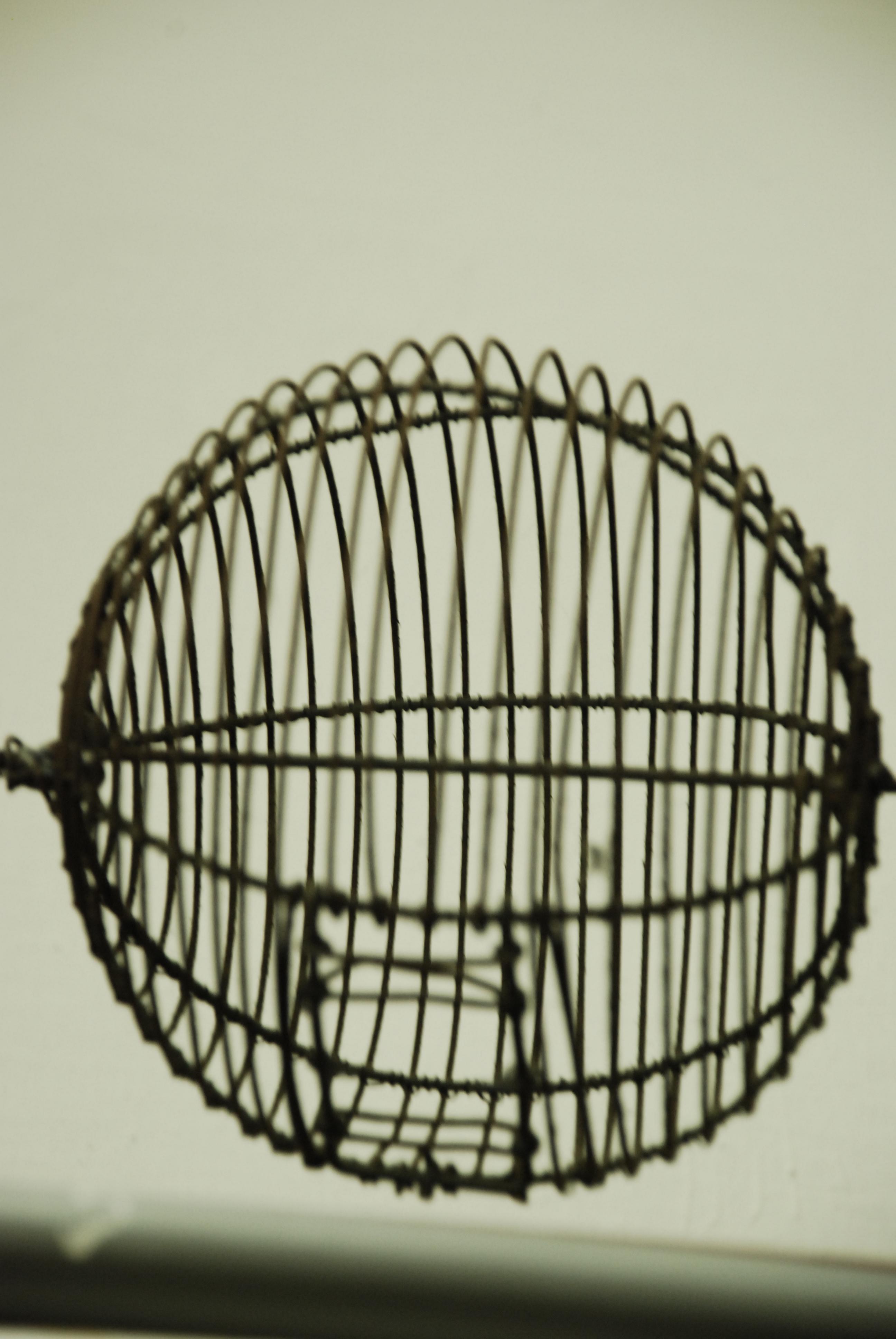
cage


Biography (Cento) 

I am becoming
one of the old

men, but you,
you are earth.

Where is the moment
that lingers,

the static of lost
voices and the feel

of the cleft in the bark.
Ask me anything.

Why am I
grown so cold?

Have you been here?
Thinking

is wind in a cage;
it does not say anything.


* * *

Credits:

James Wright, Cesare Pavese, Ruth Ellen Kocher, HD, Eduardo C. Corral,
Adelaide Crapsey, Denise Levertov, Blaga Dimitrova, Jacques Roubaud,

* * *

A cento is composed of lines from poems by other poets.

For further information and examples of the form, you might peruse the Academy of American Poets site: http://www.poets.org/poetsorg/text/poetic-form-cento


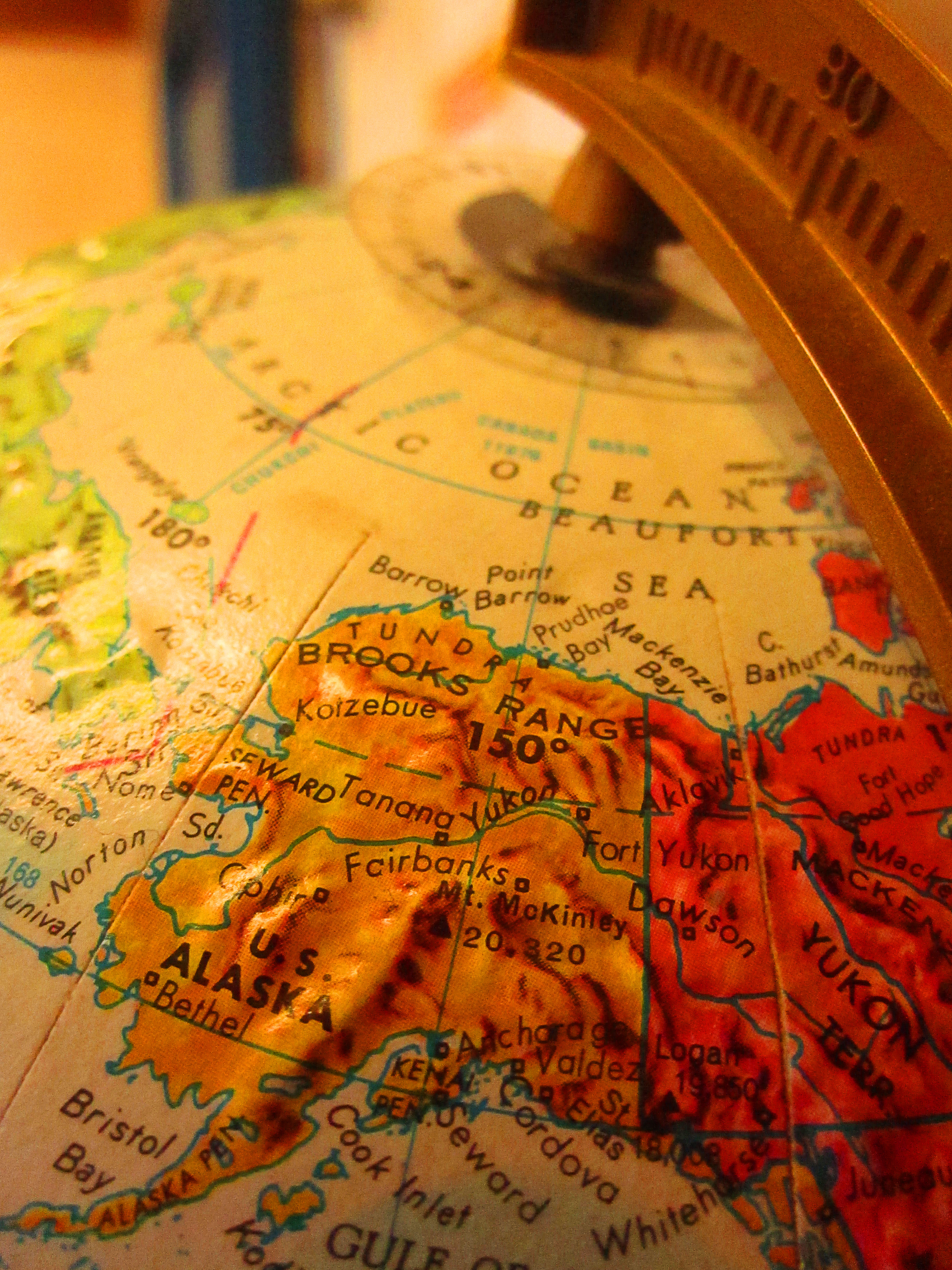
globe

This first appeared here in September 2016.


Self-Portrait with Orbit

planet231


Self-Portrait with Orbit

An arced path around a central point, bound to but held apart,
as in night’s returning grace, or standing waves.

In periapsis, you reach out as I slowly withdraw.

Gravity does not prevent departure but prolongs it.

The acceleration of a body is equal to the sum of the gravitational forces,
divided by its mass. I rise from the chair but can’t escape.

Not circular but elliptical.

Where falling away and curving from never meet.

Realizing that I am neither focus nor center, I discover place
in symmetry, in flow and subtraction.

A cloud obscures the sun and you close your eyes.

I wither at the thought of scaling or relative size, or your departure.

In the simplest Klemperer rosette, four bodies cycle their dances,
heavy, light, heavy, light, in a rhombic configuration.

My arteries fill in opposition to desire.

Wanting you, I absolve weight and listen, accept my place.


old man grammo - upsidedown


“Self-Portrait with Orbit” last appeared on the blog in October 2017, and is included in The Circumference of Other, my offering in the Silver Birch Press publication, IDES: A Collection of Poetry Chapbooks, available on Amazon.


With These Nine Figures

zero sign

With These Nine Figures

   … and with the sign 0…any number may be written.

                                                                 Leonardo of Pisa (Fibonacci)

We attain from emptiness and the Sanskrit shoonya, from safira and sifr, zero.
As in unoccupied, as in void, as in what brims the homeland of null.
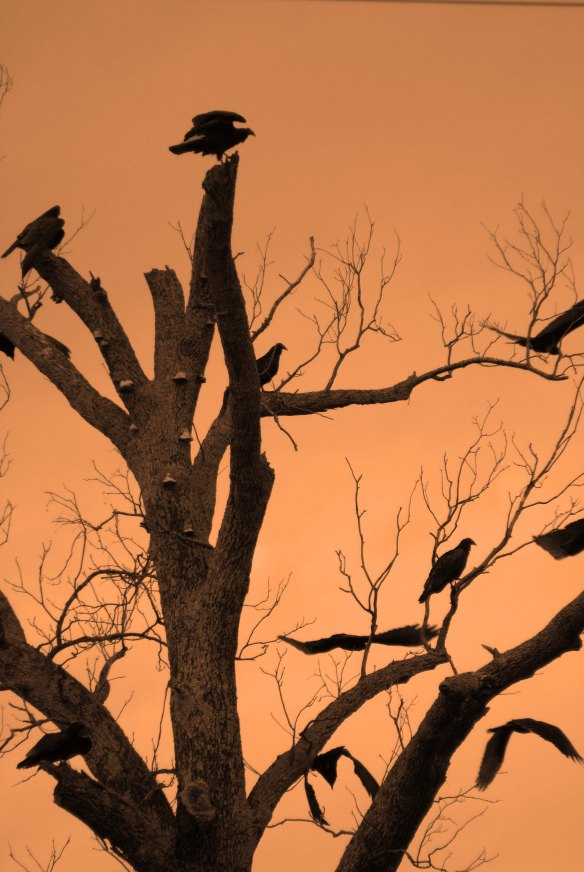
I once counted thirty-four black vultures orbiting my neighbor’s hill.
Despite appearing in Mayan codices, they neither sing nor cipher.
Fibonacci’s Book of the Abacus introduced the decimal system to Europe.
Regarding the tyranny of mathematics, is nothing something?
From alterity to belonging, its provenance assumes an absence of being.
Which is not to suggest xenophobia or superiority in order.
Whether depicted by empty space, wedges, or hooks, it held place.
Representation not of the object, but of its purpose, its path.
Black vultures do not smell carrion, but pillage from those that can.
Obliterative in the west wind, subtractive, unbound, they spiral.
Are the circlers in the sky symptomatic or merely symbolic?
Comparing negative infinity to its positive sister, I observe their way.

* * *

“With These Nine Figures” originally appeared, with a companion recording, in Clade Song in summer, 2013. I had asked a friend for five or six words to use in a poem. She provided tyranny, emptiness, xenophobia, pillage and at least one other that I’ve forgotten. But it wasn’t nothing.

SONY DSC

Senate (Tritina)

Senate (Tritina)

Not imposition, but welcome.  The way
cooperation welcomes coercion, turning the
tenor of the intended phrase, opening

the statement to interpretation, opening
a point without dissension, in the way
of politics, agreeing which fact will shape the

morning, which truth will determine the
next word and the subsequent, as if opening
the issue, claiming to have found the way,

one way, the only, but never actually opening.


* * *

A tritina might best be described as the lazy poet’s sestina, consisting of ten rather than 39 lines, with the end words of the first stanza repeating in a specific pattern in the subsequent two stanzas. The last line includes all three end words.

The patterns:
abc
cab
bca
The last line uses the end words in sequence following the pattern of the first stanza.

This first appeared on the blog in March 2017.


Which is an Eye or a Bowl, a Dream

eyes3


Which is an Eye or a Bowl, a Dream

Or well-placed mirror in a sunburnt room, shivering through shifted
images: that hand, blackened and stout, opened like a dark peony;
the tattooed chin; shovel and torch; hook and owl. You say no one
chooses one fist over another, that bread’s rise completes its cycle
and begins anew, pressed flat and rounded. Take this heart and seal
its chambers. Note the anterior descent. Compression, lesion. Plaque.
Consequence. And your friend, who slept, never to awaken. Lying
in that strange bed, you taste salt, acknowledge change, whisper
to no one: audible house…audible tree, knowing that time’s limit
remains unclear. The air swirls and you accept this new light.


Note: “Audible house…audible tree” is from Jane Hirshfield’s “Not Moving Even One Step,” from The Lives of the Heart.

bowlnhashi

That Number Upon Which the Demand Lieth


That Number upon Which the Demand Lieth

Overcoming duality, yet binding: the trinity.
Beyond the contrast of two, it initiates the concept of many.
Albertus Magnus claimed that three lives in all things.

Becoming; being;
disappearing.

In Old Saxon, the month of May is named trimilki, season of three milkings.
Number as quality depends upon the visual field.
The ancient Egyptian sign for the plural requires three strokes.

Points; lines;
angles.

Lao-tzu said the triad produces all.
Acronyms, sports, and traffic lights reflect our ternary culture.
The devil may appear in the form of a three-legged hare.

Witness; testament;
tribute.

Representing the unknowable: I, you, and the beyond.
The figure of completion, the number of the cube.
A Sumerian number sequence began “man, woman, many.”

Curse; liturgy;
blessing.

The scale as a succession of thirds.
Imperfection implies the concealment of perfection.
Shiva’s number, his eyes, his braids, his place.

Root; third;
fifth.

The triangle in Euclidean space.
I walk the three roads to the commonplace, preferring rhetoric.
Three to through, it penetrates the personal, unhinges that door.

The law; the land;
the world to come.


“That Number upon Which the Demand Lieth” was published in Posit: A Journal of Literature and Art in September 2017. I am grateful to editor Susan Lewis for taking this piece.