Katharsis

OLYMPUS DIGITAL CAMERA

KATHARSIS

The questions, as always: which rocks to ignore, who will
place them, and how to defy the laws of mathematics.

Note: you will create two separate walls to build one.
You will measure length and depth. You will weigh consequence.

Dig a shallow trench, and set your first two foundation stones
at a slight angle, high points on the outside, low ends meeting

in the middle. Count your failures and multiply them by 100.
Let gravity share the burden, then discard every one. Take

care in selecting your stones. Scorpions lurk in the dark,
underneath. Wear heavy gloves. Use leverage. Seek balance.

Avoid the smooth and rounded, as they too readily relinquish
their footing. Select hard-angled, rough pieces. Accept

faults, and work with them. Stack carefully — the two walls
should lean inward, touching, each bearing the other’s

weight. Work alone, but think to the future, with strength in
mind. Be deliberate. One stone, followed by another. Repeat.
pen

“Katharsis” was drafted during the August 2015 Tupelo Press 30/30 Project. Many thanks to Plain Jane who sponsored and provided the title.

As the Gravy Flows


As the Gravy Flows

Viscosity is always a consideration, as is definition:
traditionally a sauce composed of meat juices and
thickeners, or, a sediment of melted tallow, which
somehow brings to mind a laborer rising early after
a hard night, eating red-eye, made of fried ham
drippings and coffee, served over grits. Or perhaps
an egg gravy – a béchamel sauce flavored by bacon,
with water and milk, and an egg – ladled over butter-
rubbed biscuits. But then I picture my vegetarian
friends pushing away from plates of this fine repast,
and not wishing to deny them or those following a vegan
lifestyle, we turn to roasted vegetables with broth, oils
and wine and a savory yeast extract. But I can’t fathom
a life without giblet gravy, which features the neck and
offal of fowl, including the liver, the taste of which may
be too strong for other recipes using giblets, an interesting
word in itself, from the Old French for a game-bird stew,
and the Middle English meaning of an inessential
appendage, or entrails, morphing to garbage. I would
never throw out an onion gravy, essentially a thick sauce
of slow-cooked onion and stock or wine, and admit to
having tasted a cream version with the consistency and
flavor of diluted paste, indicating a lack of balance in
flavor and poor roux-making technique. My favorite
would be an Italian-American buddy’s gravy, his word
for a rich ragù of sausage, braised beef and shredded
pork, red wine, tomatoes and herbs, served over pasta.
This of course stretches the definition of the word, but
language is elastic, is it not? So it flows, as does the gravy.

“As the Gravy Flows” was drafted during the August 2016 30/30 Challenge. Thank you to Lady Phoenix for sponsoring the poem and providing the title!

Poem Up at Vox Populi

My poem “Letter to Marshall from the Scarecrow’s Pocket” is live at Vox Populi, paired  with an analysis of Putin’s payoff on his financial investments in Trump’s career.

Thank you, Michael Simms, for supporting and featuring my poetry.

Night Journey (after Tu Fu)

IMGP3335

Night Journey (after Tu Fu)

Wind bends the grass along the road.
A lonely truck passes by.
Stars reach down to touch these hills
and the moon drifts behind.

No one will ever know my poems.
I am too old and ill to work.
Circling, floating, who am I
but a vulture looking down.

First posted in March, 2014.

This is not a translation, but rather a version, my “take” on a famous Tu Fu poem. I claim no abilities in translation, neither speak nor read Chinese, and instead depend upon the skills of those who have ventured into these difficult reaches. This is where the poem carries me, a middle-aged Texas hill county dweller, in the Year of the Horse, 2014.

“Night Journey” is included in my micro-chapbook, No Eye But The Moon’s, available via free download at Origami Poems Project.

Here’s the transliteration on chinese-poems.com:

Nocturnal Reflections While Traveling

Gently grass soft wind shore
Tall mast alone night boat
Stars fall flat fields broad
Moon rises great river flows

Name not literary works mark
Official should old sick stop
Flutter flutter what place seem
Heaven earth one sand gull

My goal was to retain the mood, as I understand it, of the original, and to place it into my personal context. An interesting exercise.

Prescribed


Prescribed 

Some seeds are buried, others scattered.

April’s wildflower reflects October’s rain.
Bluebonnet, fragrant gaillardia. Texas paintbrush.

Cause and effect is seldom so clear with people.

Left hand offers money, right strikes a match
and the voice sings praise without conviction.

Perhaps we are guileless,
and true motive lies in the completed deed,
underground or above,

blossoming or charred after the burn.

* * *

My poem “Prescribed” was featured in December 2017 at The Clearing, a British online magazine focusing on landscape.

Thanks to editor Michael Malay for taking this one.

“Ghazal to the Night” is Up at Eclectica

My poem “Ghazal to the Night,” is up at Eclectica.

I enjoy working with this form. It’s a bit challenging, but ultimately rewarding. For a little information on ghazals, you might read this article at poets.org. Superb examples abound in Ravishing DisUnities: Real Ghazals in English, edited by Agha Shahid Ali. The introduction alone is worth the cover price.

Bent


Bent

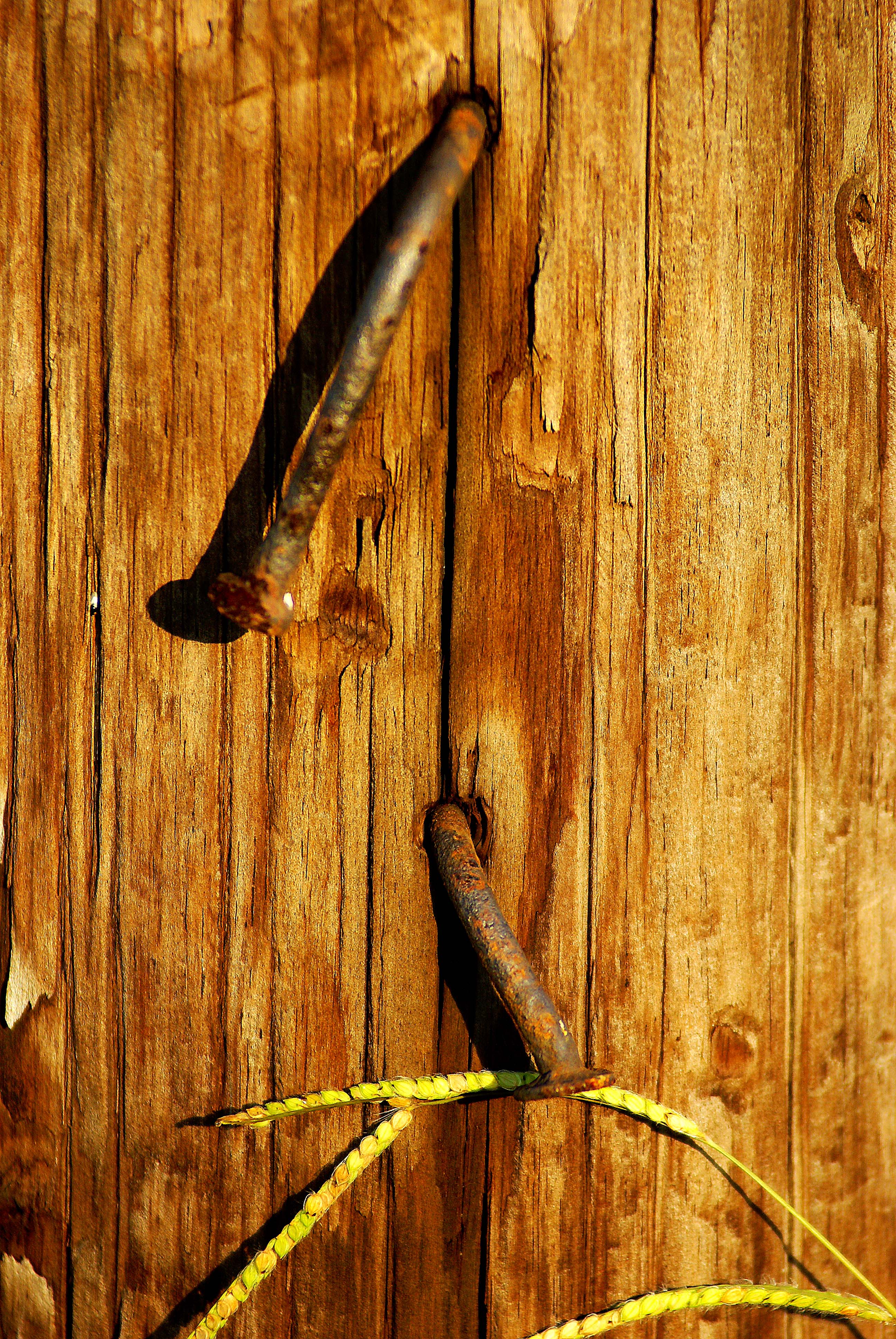
We’ve seen some version of the nail
curled over, the head angled at 90 degrees
or parallel to its body, just above

the penetration point. Three years ago
a tornado powered a single straw stem
through the oak’s bark and into its trunk,

illustrating the Old English beonet, for
“stiff grass,” and sadly conjuring the image
of a blade affixed to a firearm’s muzzle, the

etymology of which lies elsewhere, in Gascony.
And when we consider mental inclination,
signifying deflected, turned, or not straight,

we might also include an earlier past participle
meaning “directed in course.” But even the
tree’s armor could not deter the twister’s

wrath, and the hammer, no matter my aim
or purpose, seems intent upon glancing off
the nail, twisting it, leaving us, again, bent.

“Bent” first appeared in the print publication Ristau: A Journal of Being in January 2018.

Sheng-yu’s Lament (after Mei Yao-ch’en)

DSC_1243

Sheng-yu’s Lament (after Mei Yao-ch’en)

First heaven took my wife,
and now, my son.
These eyes will never dry
and my heart slowly turns to ash.
Rain seeps far into the earth
like a pearl dropped into the sea.
Swim deep and you’ll see the pearl,
dig in the earth and you’ll find water.
But when people return to the source,
we know they’re gone forever.
I touch my empty chest and ask, who
is that withered ghost in the mirror?

* * *

“Sheng-yu’s Lament” is included in my micro-chapbook, No Eye But The Moon’s, available via free download at Origami Poems Project.

The transliteration on Chinese-poems.com reads:

Heaven already take my wife
Again again take my son
Two eyes although not dry
(Disc) heart will want die
Rain fall enter earth in
Pearl sink enter sea deep
Enter sea can seek pearl
Dig earth can see water
Only person return source below
Through the ages know self (yes)
Touch breast now ask who
Emaciated mirror in ghost

SAM_0841

Ilya Kaminsky’s “Search Patrols”

Reading “Search Patrols,” I marvel that so much feeling, so many layers, can exist in so few lines. If you have time, listen to the podcast, which includes discussion of the poem as well as Kaminsky’s dramatic reading.

Even the Sotol Believes

image

Even the Sotol Believes

If we must discuss logographic systems, let us begin with fish.
And how might one mistake an entrance for a perch?

A movable rod for a desert spoon?

Today’s lesson excludes a poorly rendered door.

Hinges are merely mechanical joints, the origin of which means to hang. Concentrate there.

D is the tenth most frequently used letter in English.

Depicted on rock wall paintings, the sotol has provided food, sandals,

blankets, ropes, tools and spirits for millennia.
Slow cook the roots for three nights, crush, then ferment for seventy-two hours in

champagne yeast. Distill, then age in French oak.

We shall neither open nor close, nor mention those things that do.

Like bivalves. Bottles. Eyes. Shops. Caskets. Books. Mouths. Circuits.
Its flower stalk rises up to fifteen feet. Its leaves are long, thin and barbed.

Surrounded by orange ochre flames and black smoke, the sotol spirit appears.

Dalet will not enter our vocabulary today.

image

Originally published in Otoliths 41 (October 2013), and most recently posted here in May 2017.