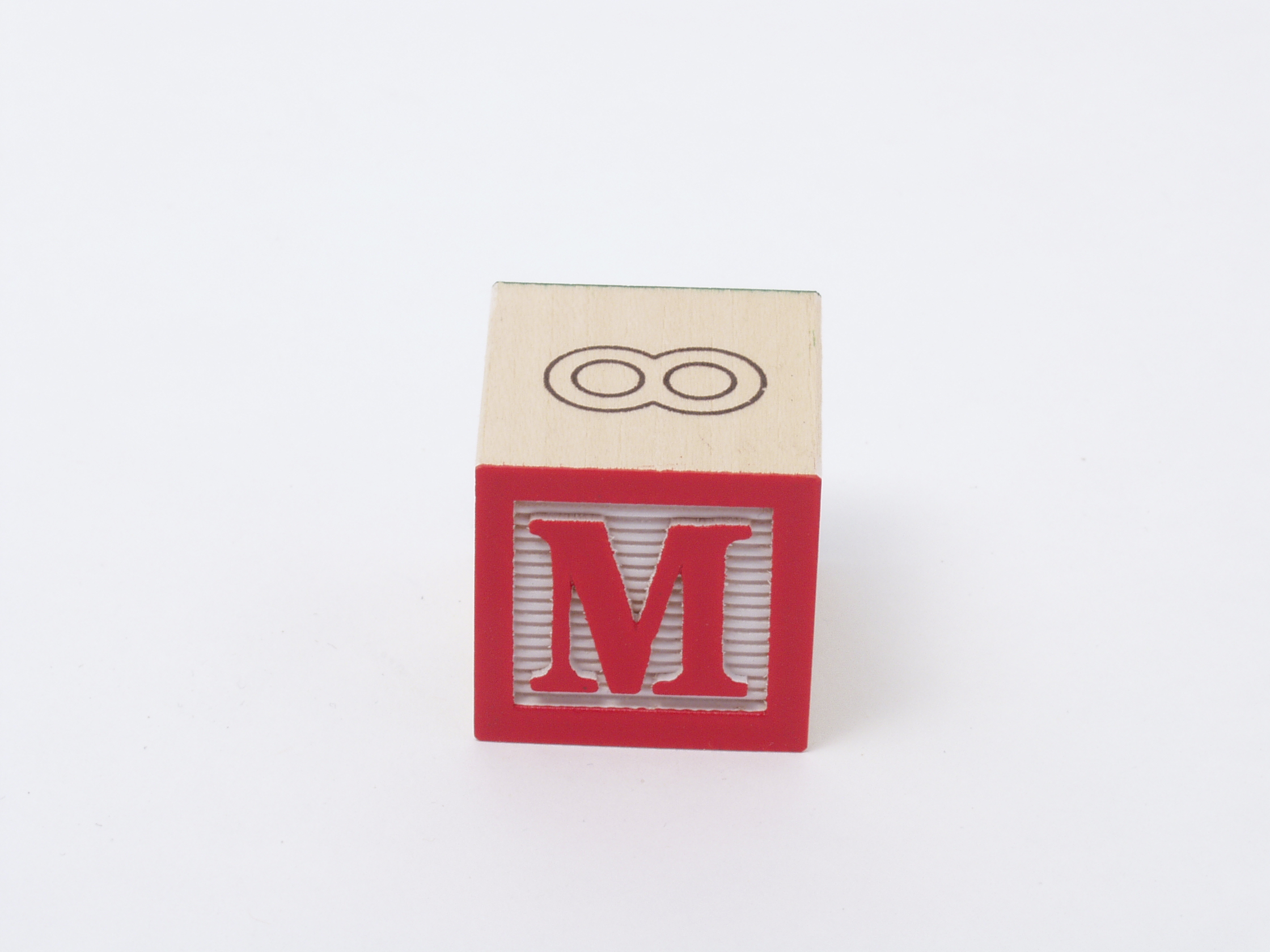
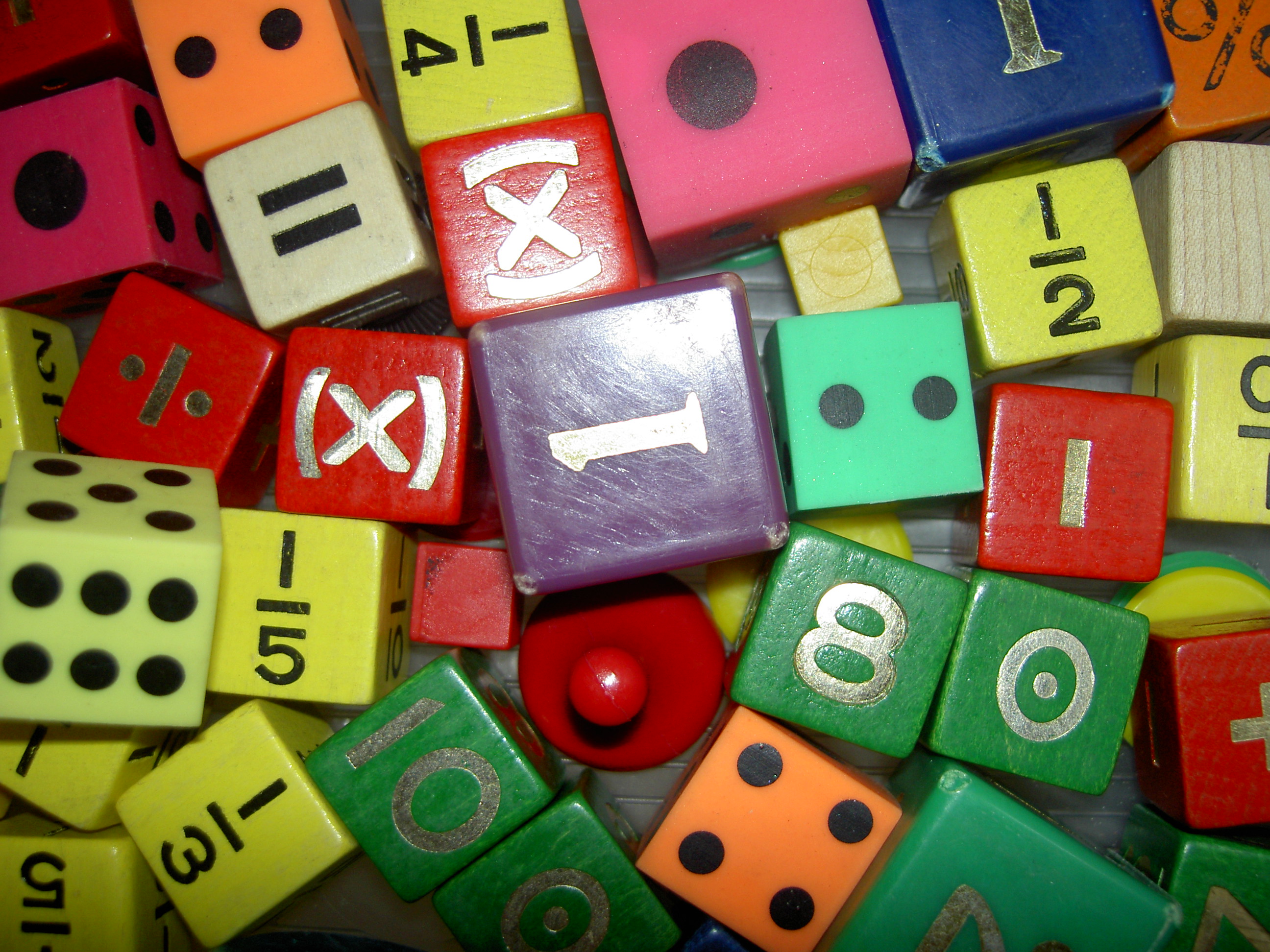
One

number-one


One

I am Brahma
the straight line, the upright being,

fire that flares,
seed without end, manifold

self beyond all
polarity, radiating sun:
the all.

Philosophers considered one a non-number,
generatrix of all that follows.

Other.

The singularity. The lone.

From the Indo-European oi-qos we achieve solitude,
while the collective meaning of one derives from the Sanskrit sam.

United in itself, it changes nothing,
becoming everything.

On its side it represents the horizon.

Alone is all-one.
The Latin non is one negated, as is the German nein.

Symbol of intellect, the Hindu moon glows wide.
Atomic number of hydrogen, magician’s numeral,

monad and eccentric, I bear the empty product.

one on side

Wind

blossoms

Wind

That it shudders through
and presages an untimely end,

that it transforms the night’s
body and leaves us

breathless and wanting,
petals strewn about,

messenger and message in one,
corporeal hosts entwined,

that it moves, that it blends,
that it withdraws and returns without

remorse, without forethought, that it
increases, expands, subtracts,

renders, imposes and releases
in one quick breath, saying

I cannot feel but I touch,
I cannot feel


“Wind” first appeared in Blue Hour Magazine and is included in my chapbook, If Your Matter Could Reform.

tree

Sheng-yu’s Lament (after Mei Yao-ch’en)

DSC_1243

Sheng-yu’s Lament (after Mei Yao-ch’en)

First heaven took my wife,
and now, my son.
These eyes will never dry
and my heart slowly turns to ash.
Rain seeps far into the earth
like a pearl dropped into the sea.
Swim deep and you’ll see the pearl,
dig in the earth and you’ll find water.
But when people return to the source,
we know they’re gone forever.
I touch my empty chest and ask, who
is that withered ghost in the mirror?

The transliteration on Chinese-poems.com reads:

Heaven already take my wife
Again again take my son
Two eyes although not dry
(Disc) heart will want die
Rain fall enter earth in
Pearl sink enter sea deep
Enter sea can seek pearl
Dig earth can see water
Only person return source below
Through the ages know self (yes)
Touch breast now ask who
Emaciated mirror in ghost
SAM_0841

Originally posted in December, 2014.

Snow with Moose

OLYMPUS DIGITAL CAMERA

Snow with Moose

Guide to the incremental, to the sifted mass. The Phoenician mem shifted
shapes, but always suggested water.

Moose likely derives from the Algonquian descriptor “he strips away.”

The Japanese character for water, mizu, evokes currents.

Moose are solitary creatures and do not form herds. A bilabial consonant,
M is a primary sound throughout the world.

The prehensile upper lip undresses branches and grabs shoots.

Wavering, I share the lack of definition, of clarity in design and choice.

The sound is prevalent in the words for mother in many unrelated tongues,
from Hindi to Mandarin, Hawaiian to Quechua, and of course English.

Eleven strokes compose the Japanese character for snow.

A smile would reveal no upper front teeth.

Long legs enable adults to manage snow up to three feet deep. Under water,
individual flakes striking the surface sound similar, despite size disparities.

It can also accurately be classified as a mineral.

Solitude to connection, dark on white. The lone traveler.

moose

From Alternative Fiction & Poetry (1987)

file8981286030058

(This first appeared in March 2014).

Quite the interesting mag back in the day. This particular issue saw the likes of Bukowski, Ivan Arguelles, Lyn Lifshin, Norm Moser, Sheila E. Murphy, and, well, me, among others. I was thinner back then, as was my poetry.

no more than
the slow grace
of light turning

the leaf so
patient in the
air and colder

now that sense
of permanence unfurled
it is not

long to wait
as Wang Wei
said in his

letter I listen
for a sound
but hear none

file000517598275

Numbers numbers numbers: NINE

Originally posted in February 2014. Due to planned festivities, I’m reposting some old favorites this week.

Numbers numbers numbers: NINE
file0002037739398

Early on in my other life I was hand-picked and hired to assist with budgets, to work with numbers. One of the higher-ups remarked that my spelling score was quite good for a “numbers person.” This amused me to no end, as I’d no inkling that a) anyone in the world considered me fluent with numbers, or b) that the mundane labor that comprised my livelihood had been noticed, much less evaluated, by someone beyond my small, three-person office (certainly no one noticed the writing I’d produced and published). More than a quarter century later, I’m still amused. And still working with numbers, which even now remain mysterious, magical, and even inspiring.

Take the number nine. Multiply it by two, and you get 18. Add the two digits that comprise 18, one and eight, and you get 9. Multiply it by three: 27. Total the two digits forming 27, and you get, yes, 9. Multiply it by four, by five, by six, by seven, eight or nine. Add the digits that comprise the sum and you return to nine. Interesting, no?

It appears everywhere. In Islamic cosmology, the universe is built of nine spheres. In Ancient Mexico, the netherworld consisted of nine layers. The magic square consists of nine parts. Beijing was designed as a center with eight streets. Hindu temple foundations contain jewels and nine distinct grains. The human body has nine openings. The number also appears in both sacrificial and healing rites. The River Styx bends nine times. I could go on (we haven’t scratched the surface), but will refrain.

But if this piece piques your curiosity, you might find this poem inspired by zero (a truly fascinating subject) of interest:

http://www.cladesong.com/okaji.withtheseninefigures.html

Another Oldie: Uccello

Due to planned festivities, I’ll not have time for regular updates this week. Instead, I’m reposting some favorites. The following was first posted in January 2014.

Originally published in 1987 in a short-lived publication called The Balcones Review, “Uccello” is the opening of a longer work. Today, as I look out my window at that same tree, I hear the birds, no longer silent.

file000687759623(1)

Uccello

the wind is what
the stillness
desires to say
each instant
collapsing into itself
like a bud
returning
to the seed

listen
the birds in my tree
are silent
as echoes
before their brief
lives are
silent

something thrashes
in the leaves
the feather
spiraling
slowly
is not only what
it is

as the candle
is more
than flame
or a moment

curling
to darkness

the question
is of clarity

I built a frame
but placed
nothing in it

the wind
blows through
quietly as if
between silences
there exists
only silence or

light
the familiar embrace

unfolding

IMG_0602

The formatting isn’t right, so I’ve provided a pdf of how the poem should look. It might be interesting to compare the two.

Uccello pdf

This Turning

turning

This Turning

what one says
depends not on
words the wind

begins it does
not end but
lends itself to

an end this
turning may be
an answer the

sound of intent
so concealed a
word displayed is

only a word
not an end
nor the beginning

magnets

Another oldie from the eighties. It seems that even my poetry was thinner then.

A Poem in Hermeneutic Chaos, Issue 11

Chaos

Many thanks to Shinjini Bhattacharjee for including one of my poems, with an audio recording, in Hermeneutic Chaos, Issue 11, alongside work by Nancy Bevilaqua, Kenzie Allen, Shannon Elizabeth Hardwick, and others. This is a lovely, well curated publication, and I’m excited to have work in it.


Self-Portrait with Orbit

planet231

Self-Portrait with Orbit

An arced path around a central point, bound to but held apart,
as in night’s returning grace, or standing waves.

In periapsis, you reach out as I slowly withdraw.

Gravity does not prevent departure but prolongs it.

The acceleration of a body is equal to the sum of the gravitational forces, divided by its mass. I rise from the chair but can’t escape.

Not circular but elliptical.

Where falling away and curving from never meet.

Realizing that I am neither focus nor center, I discover place
in symmetry, in flow and subtraction.

A cloud obscures the sun and you close your eyes.

I wither at the thought of scaling or relative size, or your departure.

In the simplest Klemperer rosette, four bodies cycle their dances,
heavy, light, heavy, light, in a rhombic configuration.

My arteries fill in opposition to desire.

Wanting you, I absolve weight and listen, accept my place.

“Self-Portrait with Orbit” is included in The Circumference of Other, my offering in the Silver Birch Press publication, IDES: A Collection of Poetry Chapbooks, available on Amazon.
old man grammo - upsidedown