Patterns

dead-dahlia(1)

Patterns

For one who moves in uncertainty, this
flower, the petals of which

gently fade, as if reason
is found in the decline of beauty
and its comforts.

But all you touch remains
touched. If silence reveals the body

of music, what can be said of darkness? Words
appear motionless until they blossom, a
pattern seldom seen yet carried to us in

all manner of conveyance. Listen,
for there is no purer voice.

Let the earth speak.

file6581268573240

“Patterns” first appeared here in March, 2015. I wrote it 30-some years ago, placed it in a folder and promptly forgot it.

Calm

DSC_0002


Calm (after H.D.)

I flow over the ground,
healing its hidden scar–
the scar is black,
the bedrock risen,
not one stone is misplaced.

I relieve the ground’s
burden with white froth,
I fill and comply—
I have thrown a pebble
into the night,
it returns to me,
settles and rises,
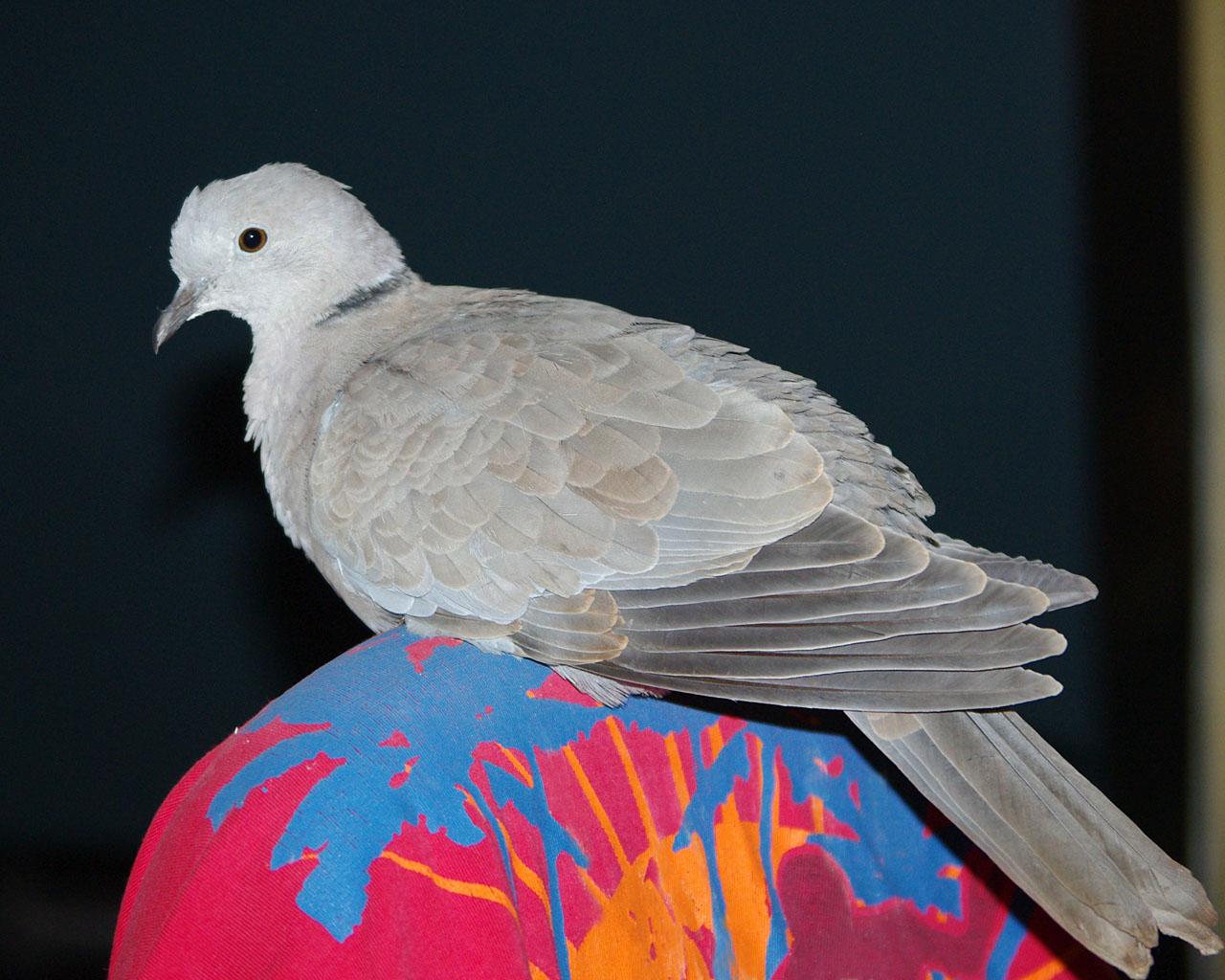
a white dove.


* * *

“Calm” is included in my micro-chapbook Only This, which is available via free download from Origami Poems Project. It made its first appearance here on the blog in March 2015, and was written as an exercise, using a poem, “Storm,” by H.D. as the launching point. I’ve tried to emulate her diction and rhythm, with mixed success. Still, it’s fun to try these on occasion.


collareddove48d1

Requiem II (with recording)

image


Requiem II

To say what becomes: this word
bends in the wind of our

breath. Is this too simple to
say? Our bodies gather yet retain

nothing. Numbers, phrases, the way
the ocean rolls. Once I saw
a whale at dusk. Or rather I saw its

tail part the water and disappear
into darkness, an answer too complex
and sweet for tongues to comprehend.

But waves seldom explain. Imagine
something nearby but beyond reach.

Think of clouds and shrines, consider light.


image


“Bittersweet” Kevin MacLeod (incompetech.com)
Licensed under Creative Commons: By Attribution 3.0 License
http://creativecommons.org/licenses/by/3.0/


Japanese Gardens

file3011293816499


Japanese Gardens

how natural the
lines falling so
purely as if

with a single
stroke we walk
through the opening

and see space
the white center
composed of sand

and gravel later
a gate opens
to another garden

its lantern and
stone so carelessly
arranged so deliberate


file3041292222348

“Japanese Gardens” first appeared here in January 2015.


Even the Sotol Believes

image


Even the Sotol Believes

If we must discuss logographic systems, let us begin with fish.
And how might one mistake an entrance for a perch?

A movable rod for a desert spoon?

Today’s lesson excludes a poorly rendered door.

Hinges are merely mechanical joints, the origin of which means to hang. Concentrate there.

D is the tenth most frequently used letter in English.

Depicted on rock wall paintings, the sotol has provided food, sandals,

blankets, ropes, tools and spirits for millennia.
Slow cook the roots for three nights, crush, then ferment for seventy-two hours in

champagne yeast. Distill, then age in French oak.

We shall neither open nor close, nor mention those things that do.

Like bivalves. Bottles. Eyes. Shops. Caskets. Books. Mouths. Circuits.
Its flower stalk rises up to fifteen feet. Its leaves are long, thin and barbed.

Surrounded by orange ochre flames and black smoke, the sotol spirit appears.

Dalet will not enter our vocabulary today.


image

Originally published in Otoliths 41 (October 2013), and most recently posted here in June 2018.


Onions

image

Onions

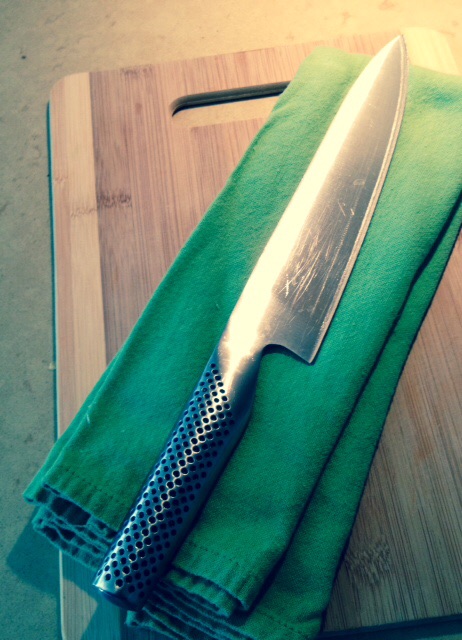
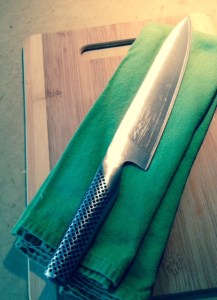
My knife never sings but hums instead when withdrawn from its block, a metallic whisper so modest only the wielder may hear it. Or perhaps the dog, who seems to enjoy the kitchen nearly as much as I. A Japanese blade, it’s a joy to hold, perfectly balanced, stainless steel-molybdenum alloy, blade and handle of one piece, bright, untarnished, and so sharp as to slide through, rather than awkwardly rupture and divide, its next task on the board.

We’ve never counted the chopped and rendered onions, the fine dice, slender rings and discarded skins, but if we could gather all the corpses we’ve produced together over the years, we’d form a monument to our work, cooperation of metal and man, a Waterloo mound in memory of the bulbs laid there, the planning involved, the missteps and serendipity, and the tears shed along the way.

The blade doesn’t care. It is. It works. It moves things, it lifts, it parts them, and in return is cleansed, and later, in the quiet room, maintains its edge with a silvery rasp, angled steel on steel in a circular motion, over and over, until finally it hums its way back into the block. But it never sings.
image

“Onions” first appeared here in 2015. Hmm. This reminds me (again) that I need to sharpen knives…

Alas, my bout with COVID-19 has rendered me incapable of, or unwilling to, cut into onions. COVID-induced parosmia is still affecting me, and onions and garlic are still difficult to eat. But at least bacon, peppers, arugula, chocolate, and hoppy ales are once again palatable. Damned pandemic!

Memorial Day, 2015


Memorial Day, 2015

I turn away from the sun, and drink.
Every window is dark.
No one hears my song, not even the guitar.
When the rain pauses the grackle rests on the cedar picket.
Etymology: from Latin memorialis, of or belonging to memory,
leading to home and family, their connotations.
Remembering is simple, she says. But forgetting…
The coral snake slips by, unseen.
Nothing lives in my shadow.


* * *

“Memorial Day, 2015” first appeared at Picaroon Poetry  in July 2017. Many thanks to editor Kate Garrett, for taking this piece.


Bonsai

Bild


Bonsai

no feature enhanced
but beauty of
the whole and

its container the
tree is not
deprived and grows

as it must
though slowly like
a wave which

gathers itself for
years there is
no completion only

process a lapse
which presumes the
most delicate design


Asia_tree240000

Originally published in Aileron in 1988, “Bonsai” first appeared on the blog in December 2014.


Wherein the Book Implies Source

book


Wherein the Book Implies Source 

And words form the vessel by which we traverse centuries, the river
stitched across the valley’s floor, easing access.

Accession by choice. Inorganic memory.

Vellum conveys its origin: of a calf.

How like an entrance it appears, a doorway to a lighted space.
Closed, it resembles a block of beech wood.

To serve as conveyance, to impart without reciprocity.

Framing the conversation in space, immediacy fades.

The average calfskin may provide three and a half sheets of writing material.
Confined by spatial limitation, we consider scale in terms of the absolute.

The antithesis of scroll; random entry; codex.

A quaternion equalled four folded sheets, or eight leaves: sixteen sides.

Reader and read: each endures the other’s role.
Pippins prevented tearing during the drying and scraping process.

Text first, then illumination.

Once opened, the memory palace diminished.


* * *
This originally appeared in April 2014 as part of Boston Review’s National Poetry Month Celebration, and is included in The Circumference of Other, my offering in the Silver Birch Press chapbook collection, IDES, published in 2015.

ides front cover 92915