Self-Portrait with Shadow

image

Self-Portrait with Shadow

Sometimes light reveals our thoughts.
Separate and unequal, we blend.

The predominant sibilant in English,
its pronunciation varies.

Sciaphobia is the fear of shadows. Last
winter the wellhead froze and we

chain-sawed our way to warmth,
synchronized in the fading light.

And which decides the other’s fate?
In the flame I detect new life, a hissing

in the cast iron box. Though ranked only 8th
in frequency of use, more words in English

begin with S, leaving additional questions.
Is hiss the opposite of shh?

The umbra is the darkest part
of the shadow, where light is completely

blocked. Not the serpent, but the bow
and a misperception. Shadows grow

in proportion to the distance
between the object blocking the light

and the projection surface. Resembling
infinity, yet missing the link. Two facets

of one darkness. A faint suggestion. Amphiscians
cast shadows in two directions. Or not at all.

This appeared on the blog in April 2015, and another version appeared in Otoliths in fall of 2013, but it appears that I’m not quite done with it. I’d been exploring our alphabet, tracing letters’ origins from hieroglyphs to present form, and attempting to merge some of those findings with disparate details. One of these days I’ll get back to it…

A Q&A and more successful examples of what I was trying to achieve can be found at Prime Number Magazine:

image

Self-Portrait with Blue

Blue


Self-Portrait with Blue

Darker shades contain black or grey. I claim
the median and the shortened spectrum, near dawn’s terminus.

In many languages, one word describes both blue and green.

Homer had no word for it.

The color of moonlight and bruises, of melancholy and unmet
expectation, it cools and calms, and slows the heart.

Woad. Indigo. Azurite. Lapis lazuli. Dyes. Minerals. Words. Alchemy. 

On this clear day I stretch my body on the pond’s surface and submerge.

Not quite of earth, blue protects the dead against evil in the afterlife, 
and offers the living solace through flatted notes and blurred 7ths.

Blue eyes contain no blue pigment.

In China, it is associated with torment. In Turkey, with mourning.

Between despair and clarity, reflection and detachment,
admit the leaves and sky, the ocean, the earth.

Water captures the red, but reflects and scatters blue.

Look to me and absorb, and absorbing, perceive.


This originally appeared in the Silver Birch Press Self-Portrait Series, and is included in The Circumference of Other, my offering in the Silver Birch Press chapbook collection, IDESpublished in October 2015.

ides front cover 92915


N Is Its Child


N Is Its Child

If darkness produces all, from where do we obtain nothing?

As a line becomes the circle, becomes a mouth, becomes identity.

In mathematics, n signifies indefinite; in English, negation.

The no, the non, the withdrawal, the taking away.

A heart with trachea represented zero in Egyptian hieroglyphs.

My mouth forms the void through the displaced word.

Conforming to the absent, the missing tongue serves soundlessness.

Aural reduction, the infinite unclenched: n plus n.

Shiva, creator and destroyer, defines nothingness. As do you.

One and one is two, but zero and zero is stasis.

Pythagoreans believed that all is number, and numbers possess shape.

The letter N evolved from a cobra to its present form.

One may double anything but zero.

Unspoken thought, disorder. The attenuated voice swallowing itself.


* * *

N Is Its Child” was first published in Issue 4 of ReservoirI am grateful to editor Caitlin Neely for accepting this piece.


Spring Night (after Wang Wei)

file4401311417052

Spring Night (after Wang Wei)

Among falling devilwood blossoms, I lie
on an empty hill this calm spring night.
The moon lunges above the hill, scaring the birds,
but they’re never quiet in this spring canyon.

Another try at an old favorite…

I consider this adaptation rather than translation, but perhaps appropriation or even remaking might be more accurate.

Here’s the transliteration from chinese-poems.com:

Person idle osmanthus flower fall
Night quiet spring hill empty
Moon out startle hill birds
Constant call spring ravine in

So many choices, none of them exactly right, none of them entirely wrong. How does one imply idleness, what words to use for “flower” (blossom? petal?), or for that matter, “fall” (descend, flutter, spiral)? And how to describe a moonrise that scares the constantly calling birds? My first attempt began:

“I lie among the falling petals”

but it seemed vague. The word “osmanthus” fattened my tongue, or so it felt, but the osmanthus americanus, otherwise known as devilwood or wild olive, grows in parts of Texas. So I brought the poem closer to home.

I considered naming the birds (quail came to mind) but decided against. In this case the specificity felt somehow intrusive.

My hope is that I’ve managed to amplify, in some small way, previous iterations, and that while the edges are still a bit blurred in morning’s first light, perhaps they’ll become slightly crisper by the evening.

file8981286030058

“Spring Night” last appeared here in February 2018.

Between

between


Between

1

Living between, we watch what flows below us shed itself.

And what remains after the drought subsides?

I don’t recall the instance of assignation, of color-imprinted
awareness and stones erupting from the earth,

nor the paper’s texture and the faint odor of chemicals reacting,
but in this moment I embrace bitter coffee, the wrecked-nerve

hammer-strikes pulsing from hip to ankle, squealing brakes
and the rain shallowing morning’s ridge as if to say

enjoy me now
for I may never return
.

2

Faith flickers in the wind, darting among the weeds.

Risen from payment, penalty, punishment, revenge, the word pain
establishes justification where none need exist.

Interpreting light and sound, scent and heat, we converse.

The dog shivers in bed and I lay a towel over her,
affixing content to involuntary movement.

Stepping through space, crossing the stream.

Those things we don’t know.

Three feet below me the snake’s head ripples towards the far side,
a V of turbulence dissecting the calm.

Everything that can be contained contains us as we in turn
envelop one another. I take your hand and press forward.

3

Connected, we part, only to return and part again.

My hand stopped inches away and the diamondback slithered off
under the workbench, seeking peace.

Abandoned skin, abandoned words. Even the cactus grows thirsty.

The paradox of becoming what you are not. Today, sitting hurts
and standing provides little relief.

In one of two halves I find myself. In the other, your laughter rings.

Like rumblings of earthen discontent or the hiss of air
exiting waterless pipes, we emerge, aimless, exhausted.

Inhabiting one world, we seek others.


* * *

“Between” appeared in Clade Song, one of my favorite poetry journals, in August 2016. 


Dark Rain Ahead, Hummingbird

image

Dark Rain Ahead, Hummingbird

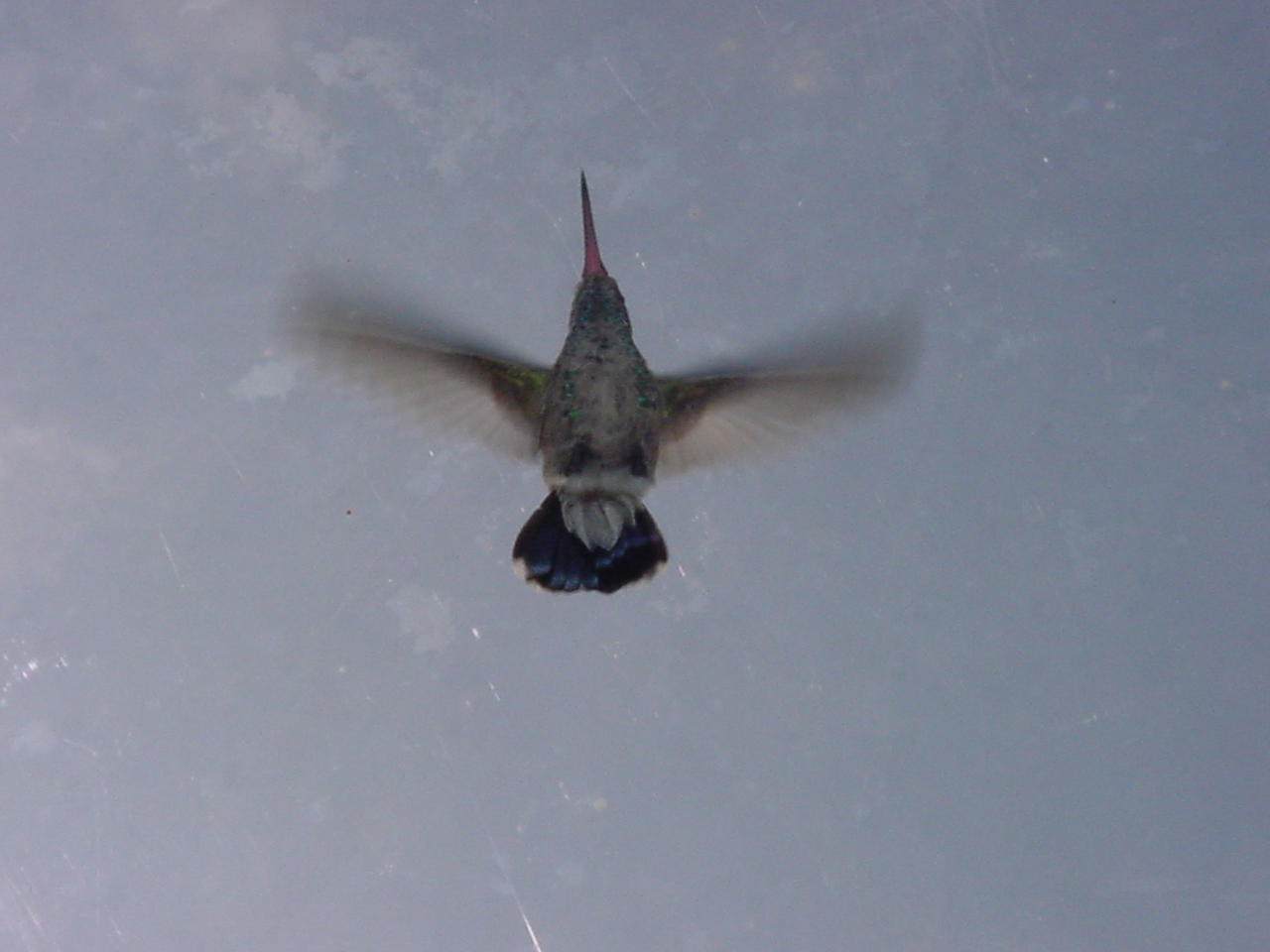
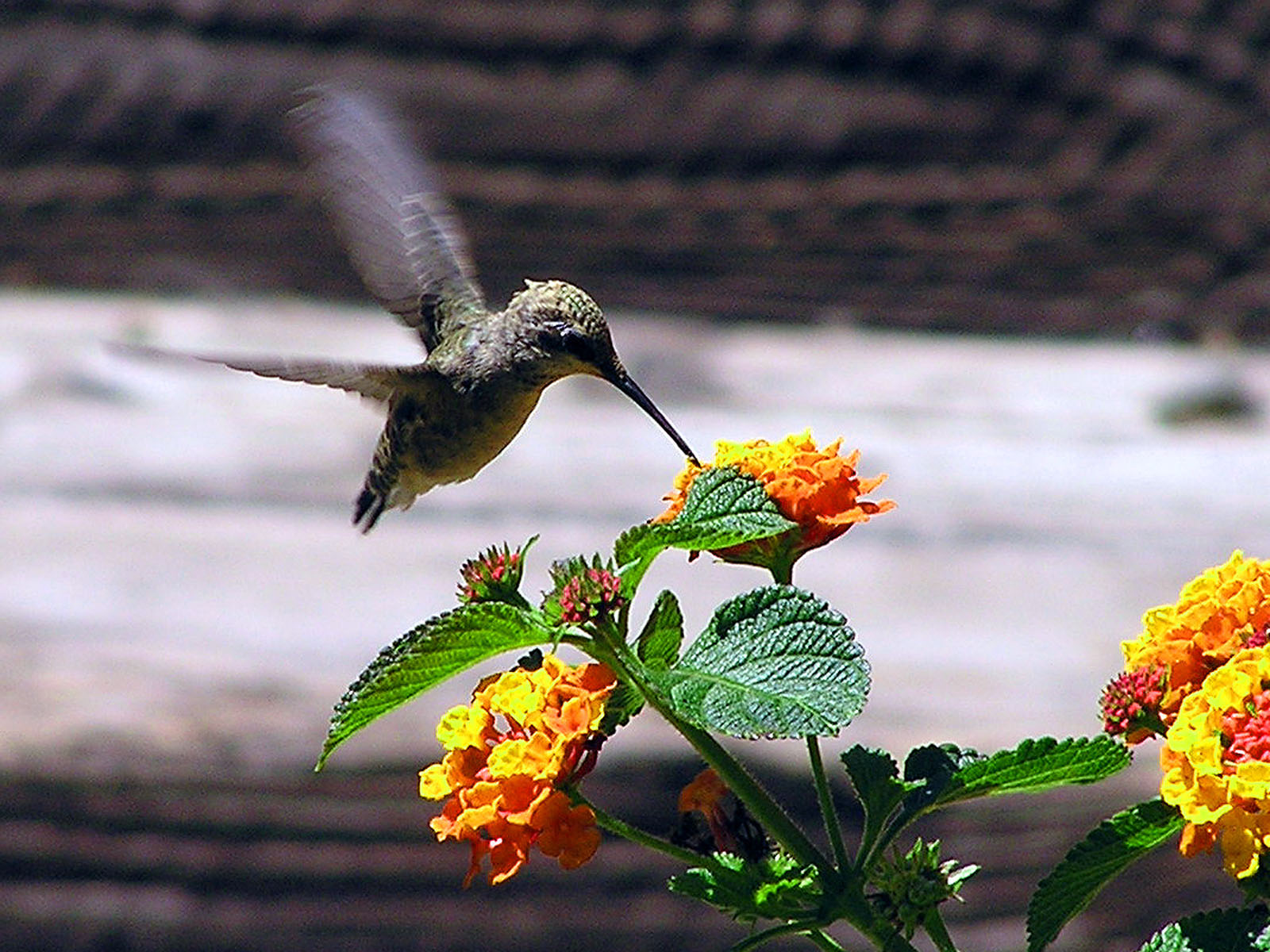
The black-chinned hummer buzzes my flowered shirt,
bringing to mind the letter H, its history of an inferior life among

letters, and a Phoenician origin signifying fence.

An aspirate dependent upon others, or a line strung between posts,

even whispered, H does not contain itself.
Disconsolate or annoyed, the bird moves on.

Do names depend upon the power of symbols, or do they power the symbols?

In the 6th century A.D., Priscian disparaged H, saying it existed only to accompany.

Clouds shade the way.
The black-chin extends its grooved tongue at a rate of 15 licks per second.

Alone, the H’s voice is barely audible.

Through the trees, across the crushed rock driveway and beyond the barbed wire

and chain link, I hear deadfall snapping under hooves.
At rest, its heart beats an average of 480 beats per minute.

Modern Greek denies its existence.

Say khet, say honor and where. Say hinge, sigh and horse. Say depth.

image

Originally published in Prime Number Magazine, one of my favorite online literary journals, in 2013,  it subsequently appeared here in June 2015.

You Are the Wind That Trusted

cave painting

You Are the Wind That Trusted

The barriers I could not place, the incomplete lines and unmouthed
verbs registered in stone, saying I am here,

as if taw were born in evil, and not the fruit of the need to mark.

At what velocity must sand scour these walls to obliterate the hand’s
intent? How may we gauge design? Galileo’s thermoscope

crudely measured temperature variation, but in 1612 Santorio added a numerical scale.

For centuries, T did not produce a miniscule and stood tall in its singular representation.

Hydrated iron oxide, mixed with bone marrow and charcoal, yields
ochre, a formula that predates writing.

Development, not invention.

T’s varying structure may be one of sequence and slippage.

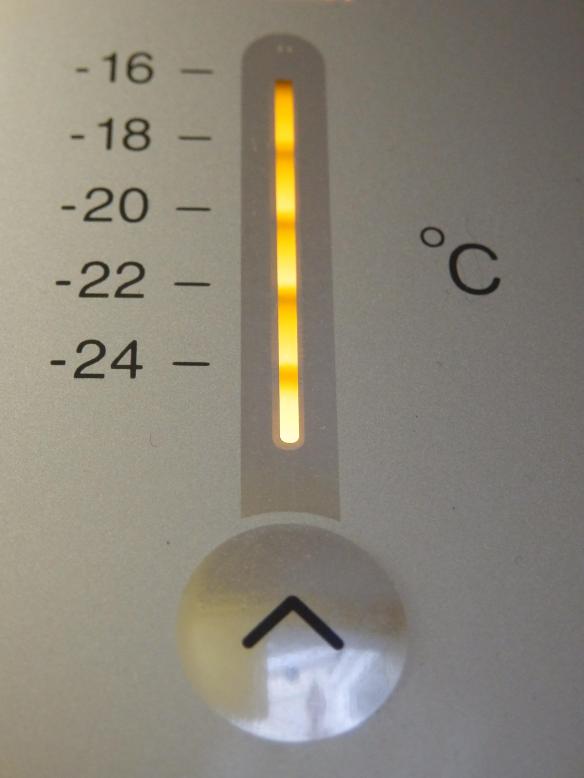
Thermoscopes were open ended tubes dependent upon air pressure.
Celsius originally proposed a scale with 0 at the boiling point.

A cruciform. The capped spike. Blended tongues.

Complexity intrudes with every step: smoke-darkened ceiling.

***

This appeared on the blog in February 2016. A slightly different version appeared in Otolith in fall 2013.

thermo

Hummingbird (3)

file0001815455590(1)


Hummingbird (3)

Arriving from nowhere,
its mouth opens

but what escapes
comes not from within

and is never complete.
Words, too, falter

in this space,
struggling to remain

aloft, challenged yet free,
an exchange

between air and wing,
of sound and thought,

occurring as it must
without design

or desire, simply
there, then gone,

a presence one notices
in its absence.


* * *

“Hummingbird (3) made its first appearance  on the blog in December 2014.

words


Elegies for the Night (2002)

OLYMPUS DIGITAL CAMERA


Elegies for the Night (2002)
                                        for W

1
You might palm a small token, damp and misshapen as the words
you expel, never admitting the dark truth.

Or the plundered life, neither black nor white, invisible yet whole.

Someone prays, yet all around silence reigns and the snow melts.

Possibilities cleansed in the light of misplaced certainty.

2
The charred wind’s fruit bears little resemblance to its predecessor.

And later, within the garden’s stones, what remains
but an acrid taste on the tongues of the speechless?

And if the bones have dispersed where might their thoughts reside?

The wind takes nothing it does not want.

The wind wants nothing.

Nothing remains.

                    I am afraid, she said. Please tell me.

3
Though the moon returns in its diminished
state, I shall not listen. Words

turn back and eat
themselves, exposing intent

behind form, consonants beneath
vowels lying in wait. Abandonment.

And further senseless
debates: gain from loss, shock and awe,
the incessant demand for others to do

not what you would do but what you would have them do.
I claim no insight,

but even the light you reveal burns unclean.

4
Despair and its siblings fall to mind.
Scarcities: clean water, air, the simplest meal

when ashes swirl and fingers burn long after
the rain. My son, my son,

and other cries lost in the sand.
If he listened what sounds could he bear,

what sights, which odors? I tremble and lie still.

* * *

“Elegies for the Night” first appeared in Boston Poetry Magazine in April 2014.


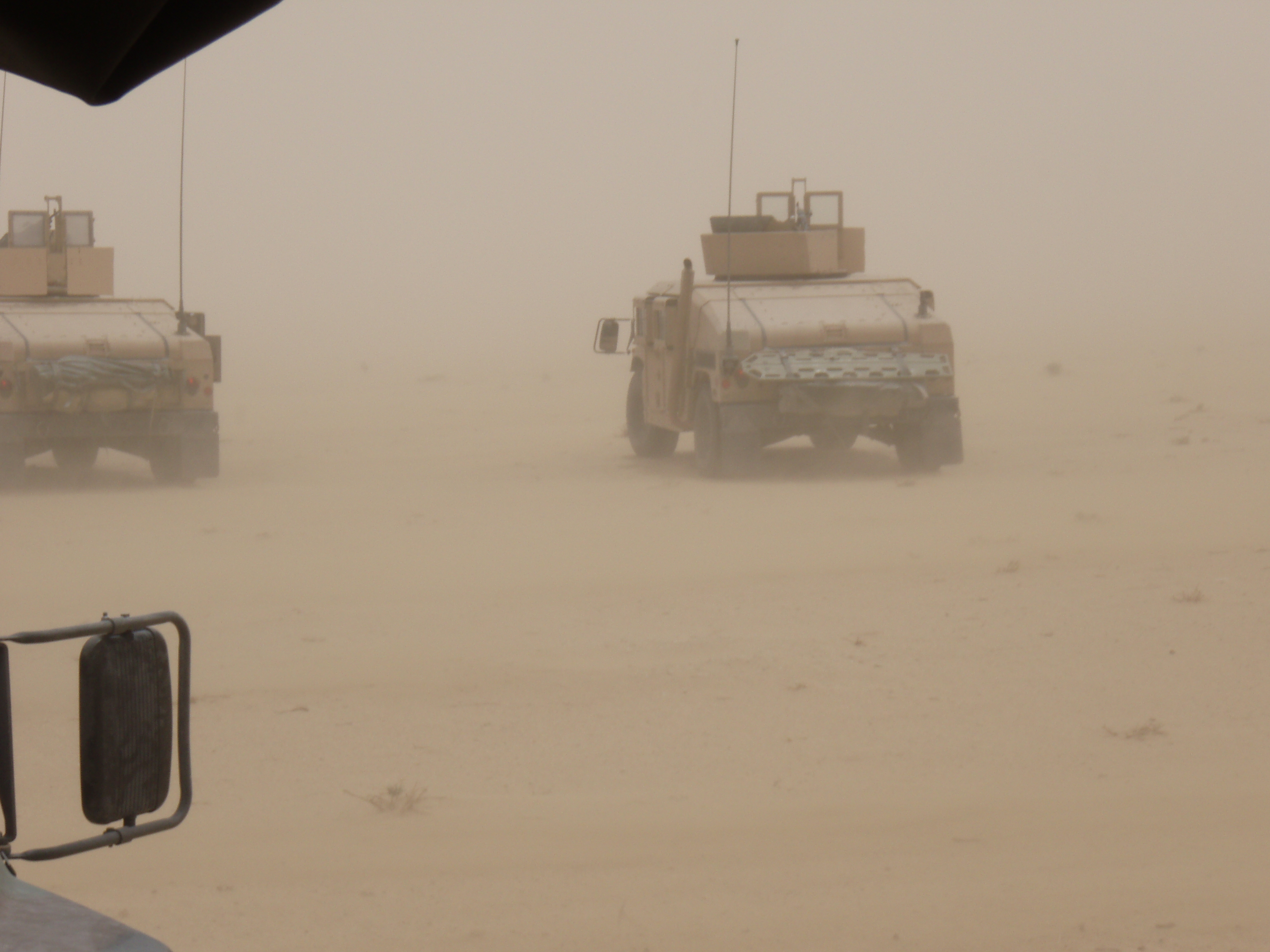
ÇØÝÇá ÈÇáÞÑÈ ãä ÇÍÏì ÇáÏÈÇÈÇÊ ÇáÕåíæäíÉ 28/8/2001

Hummingbird

file000858060241

Hummingbird

The thought makes
trembling so

incomplete, a consequence
of knowledge attained. I look out

and see leaves flitting in the dusk,
the air closing around them

like the mouth of an old well
swallowing light. Such

hunger we find difficult
to comprehend. The wind shivers

through our lives and repeats itself,
though differently each time.

Every departure is a return.

“Hummingbird” made it’s first appearance on the blog in December 2014. I wrote it in the 1980s, probably between 1987-1989.

IMG_6039