“Two Cranes on a Snowy Pine” named Panoply Magazine’s First Editor’s Choice for Issue 3

footprints

I’m delighted to report that the editors of Panoply Magazine have designated my poem “Two Cranes on a Snowy Pine” as their first Editor’s Choice for Issue 3.

A video of me reading “Two Cranes on a Snowy Pine” has been posted on Panoply Magazine’s Facebook site.

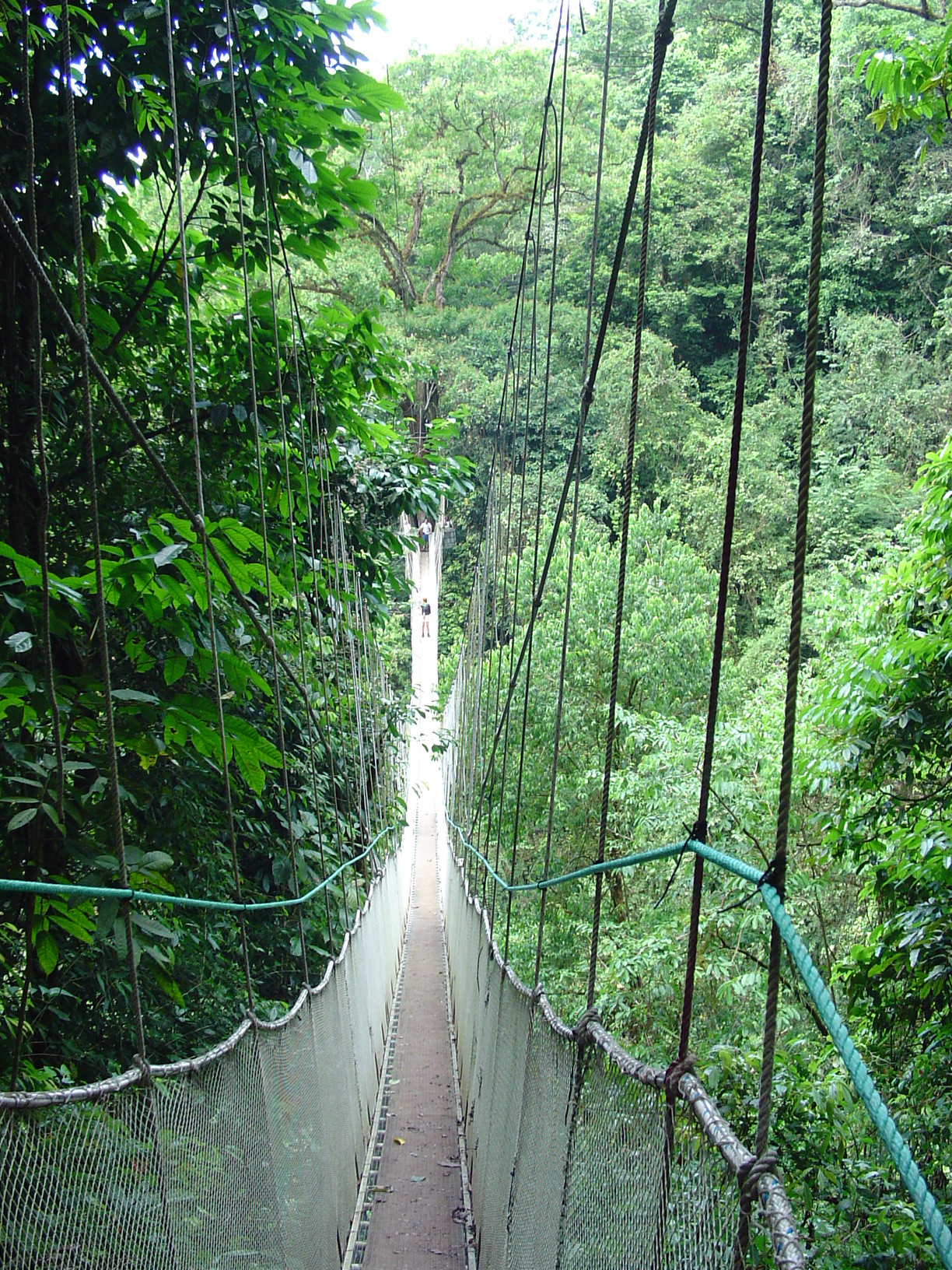
Rain Forest Bridge

bridge

Rain Forest Bridge

To cross
you must first
trust the strands

to hold.
The second tentative
step precedes
the next,

each successive one
gaining strength:
here to

there, now
to then, a summoning of
entreaties
within
one’s faith.

Vapor meets cooler air,
forming droplets,
clouding the far side.

I have feared endings
and the strictures of the unseen,

but here
in this vast
swaying,
I know

one line
bisects the void.

* * *

“Rain Forest Bridge” first appeared in Four Ties Lit Review in August, 2014.

A recording of it may be found on the Four Ties site.

rope

In the Fifth Chamber Lies the Hour’s End

pump

In the Fifth Chamber Lies the Hour’s End

To fairly allocate irrigation resources, the Persians measured time with water,
sinking a bowl in a larger vessel and tallying the count with pebbles.

And what is time but counting, determining the number of units within a set?

The sum of beats between silences and their diminishing echoes?

Its symbol in the West grew from fig and ivy leaves, while early medical
illustrations depicted pine cone-shaped organs.

In most reptilians, the aorta receives only oxygenated blood.

Qanats pump by gravity. The hagfish’s second resides in its tail.

Recognize the empty as full. Squeezed shut, we open.
Contraction and flow, ejection, inflow, relaxation.

Emotion as electrical impulse. Murmuring valves. The color red.

The fifth chamber remains silent and undetected.

The primitive fish’s chambers are arranged sequentially, but in an S-shape.
Ancients believed arteries transported air through the body.

The Buddhist figure, too, originated in leaves, symbolizing not love

but enlightenment. The ache of failure confounds us.

mechanical heart

The Sky Refutes East and West

nest

The Sky Refutes East and West
 

Here, the horizon lingers.
The open eye, the mouth’s shape.

A hoop, the circle without iris.

Does the screech owl acknowledge latitude and hemisphere?

The Semitic alphabet contained no vowels, thus O
emerged as a consonant with a pupil, morphing into a dotted ring,

and later, with the Greeks, an unembellished circle (which of course

they cracked open and placed at the end). The female lays eggs

on the remnants of earlier meals lining the bottom of her den.
If you listen at night you might hear the purring of a feathered

cat (the Texas screech owl’s call varies from that of its eastern cousins).

The difference between sphere and ball.

To pronounce the Phoenician word for eye, sing the lowest note possible,
then drop two octaves. They usually carry prey back to their nests.

Screech owls are limited to the Americas.

Coincidence and error, the circumference of other.

***

“The Sky Refutes East and West” was first published in Prime Number Magazine, and also appears in my chapbook The Circumference of Other, included in Ides: A Collection of Poetry Chapbooks (Silver Birch Press, 2015).

eastwest


Wet Grass, Weeds

dandelion

Wet Grass, Weeds

A lone raven
circling the neighbor’s oak,

an oddity in this neighborhood,

lending mystery to the afternoon,
a gateway through dandelion

fluff and the blue seeping through clouds.
A car rumbles by,
stereo hammering the air,

warnings everywhere for the wary.

carmirror

Spring Night (after Wang Wei)

file4401311417052
Spring Night (after Wang Wei)

Among falling devilwood blossoms, I lie
on an empty hill this calm spring night.
The moon lunges above the hill, scaring the birds,
but they’re never quiet in this spring canyon.

Another try at an old favorite…

I consider this adaptation rather than translation, but perhaps appropriation or even remaking might be more accurate.

Here’s the transliteration from chinese-poems.com:

Person idle osmanthus flower fall
Night quiet spring hill empty
Moon out startle hill birds
Constant call spring ravine in

So many choices, none of them exactly right, none of them entirely wrong. How does one imply idleness, what words to use for “flower” (blossom? petal?), or for that matter, “fall” (descend, flutter, spiral)? And how to describe a moonrise that scares the constantly calling birds? My first attempt began:

“I lie among the falling petals”

but it seemed vague. The word “osmanthus” fattened my tongue, or so it felt, but the osmanthus americanus, otherwise known as devilwood or wild olive, grows in parts of Texas. So I brought the poem closer to home.

I considered naming the birds (quail came to mind) but decided against. In this case the specificity felt somehow intrusive.

My hope is that I’ve managed to amplify, in some small way, previous iterations, and that while the edges are still a bit blurred in morning’s first light, perhaps they’ll become slightly crisper by the evening.

“Spring Night” made its first appearance on O at the Edges in April, 2014.

file8981286030058

Cedar Grove (after Wang Wei)

file000675350848

Cedar Grove (after Wang Wei)

I sit alone among the cedars,
play my guitar and hum.
In this dark forest
no eye spies me but the moon’s.

My take on Wang Wei’s “Bamboo Grove,” from this transliteration copied somewhere along the way:

alone sit dark bamboo among
strum lute again long whistle
deep forest man not know
bright moon come mutual shine

IMG_1533

“Cedar Grove” made its first appearance in March 2014. I adapted it to fit my circumstances…

You might find the Wikipedia entry on Wang Wei of interest.


The Fog (after H.D.)

Man in fog

 The Fog (after H.D.)

I am dead.
You avoid me.
I open like a shell.
You expose me with your breath.
What am I, heartless one?

H.D.’s poem “The Pool” was the launching point for this piece.

shell


“Agave” on poems2go

IMG_1285

My poem “Agave” is one of five featured this month on poems2go

poems2go offers poetry to take with you, tuck in your pocket, your wallet, or to share. Five poets are featured monthly and multiple copies of their poems are printed on 4″x 6″ loose-leafed paper and distributed to selected cafes and/or bookstores for patrons to peruse and take 2 go.

“Agave” was first published in Ijagun Poetry Journal, and is also included in my micro-chapbook,You Break What Falls (Origami Poems Project), available via free download.

photo(2)

Calm

DSC_0002

Calm (after H.D.)

I flow over the ground,
healing its hidden scar–
the scar is black,
the bedrock risen,
not one stone is misplaced.

I relieve the ground’s
burden with white froth,
I fill and comply—
I have thrown a pebble
into the night,
it returns to me,
settles and rises,
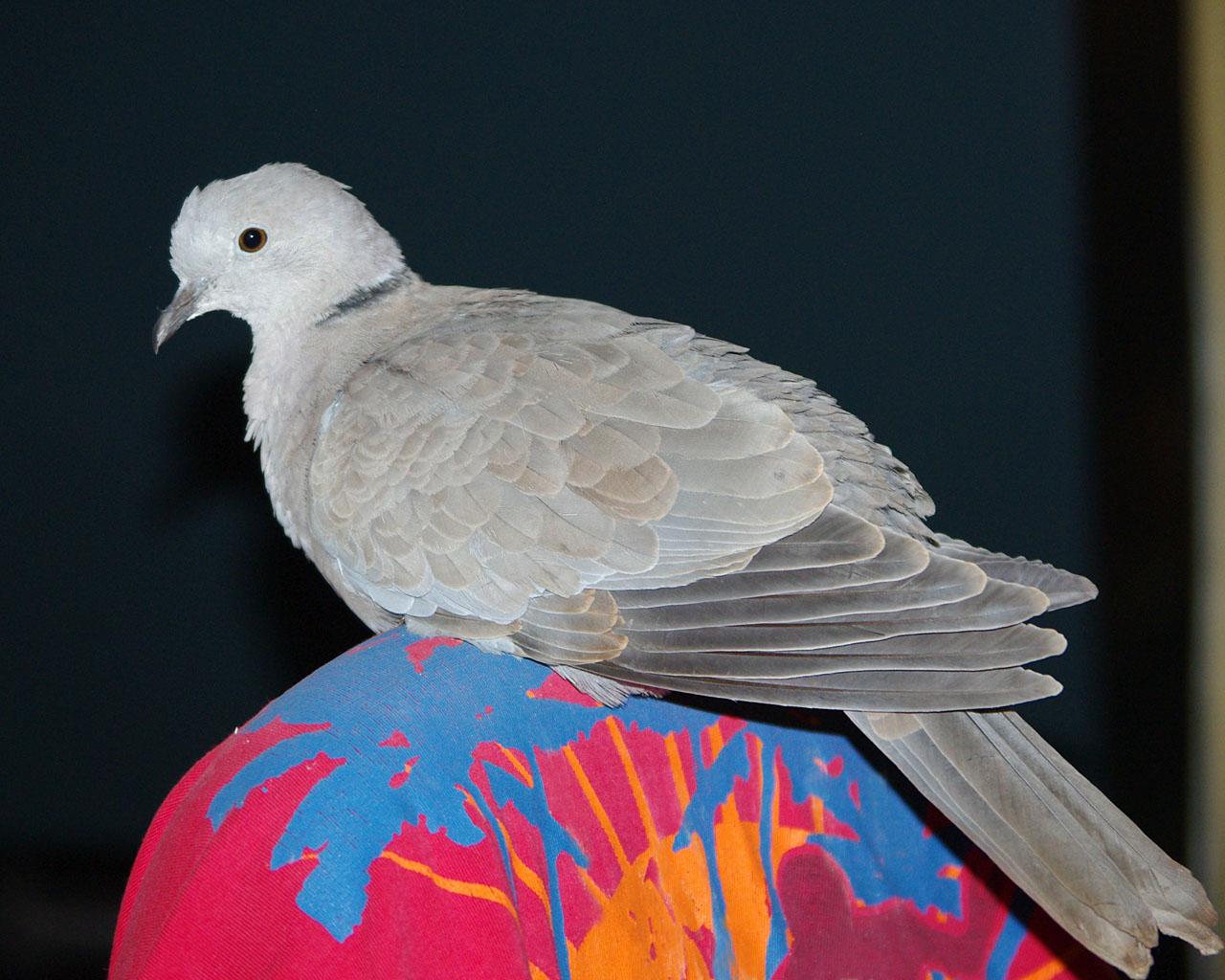
a white dove.

“Calm” made its first appearance in March 2015, and was written as an exercise, using a poem, “Storm,” by H.D. as the launching point. I’ve tried to emulate her diction and rhythm, with mixed success. Still, it’s fun to try these on occasion.

collareddove48d1