If You Were a Guitar

CRW_6222

If You Were a Guitar

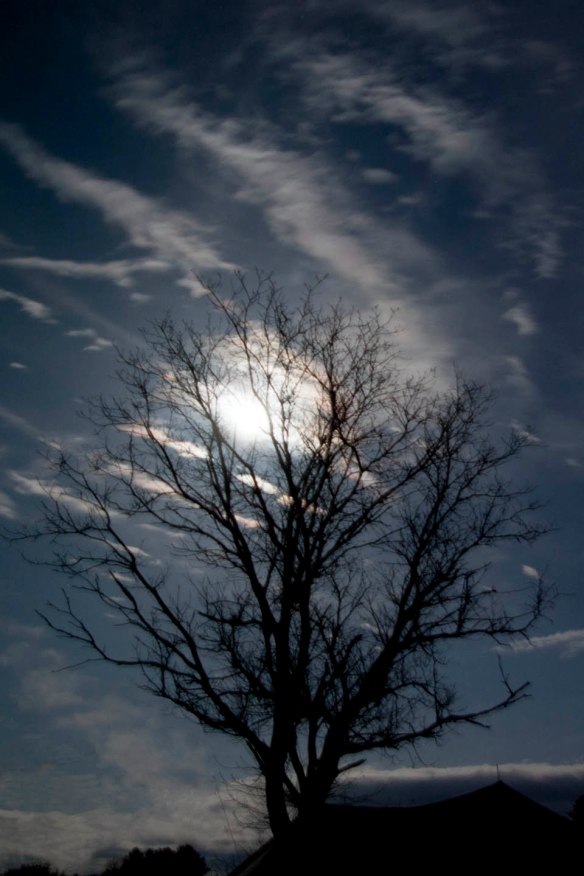
If you were a guitar I would play you
till my fingers grew rough from your body’s
touch, till the moisture in the clouds withdrew
and only music rained on. But what breeze

could retain your voice? At night my hands would
dream new chords of light and air, of pearl and
flesh and warm breath suspended over wood.
And as we slept our bodies would demand

new vowels, and the space would diminish
till nothing lay between us but the blue
groaning above night’s whispers, a finish-
ing touch to this song. When I say love, you

hear morning break. When I say nothing, my
silence shouts your name. Each breath. Every sigh.

***

I first posted a draft of this on Valentine’s Day, 2014, but the first draft was completed some 14 years before that. I’ve admitted to being a slow writer…

snail


Self-Portrait with Bruise

deepfriedbutter

Self-Portrait with Bruise

Some damages announce, others conceal.
How else may we continue

despite our best
inattentions? And which treasure
do we truly hold

closer, the blood orange
or the blade
that parts its segments? At

thirty I would have chosen
one. At forty, the other. Now,
options spread like branches among the cedars.

Ruptured vessels reveal our lapses.

***

This first appeared in Shadowtrain.

orange

Ikebana

leaf on stone

Ikebana (You without You)

Between frames, between presence and negation, authority.

If your body lies in the earth, why are you here?

Limits admired and sought: the way of the flower.

I pluck leaves from the lower half to achieve balance.

Shape and line detach, yet comprise the whole.

My father, awake in his chair, mourns quietly.

A naked twig forms one point of the scalene triangle.

Starkness implies silence, resonates depth.

Heaven, earth, man, sun and moon invoke your absence.

As you trickle through the interval’s night.

* * *

Ikebana is the art of Japanese flower arrangement.

chair

You Are the Wind That Trusted

cave painting

You Are the Wind That Trusted

The barriers I could not place, the incomplete lines and unmouthed
verbs registered in stone, saying I am here,

as if taw were born in evil, and not the fruit of the need to mark.

At what velocity must sand scour these walls to obliterate the hand’s
intent? How may we gauge design? Galileo’s thermoscope

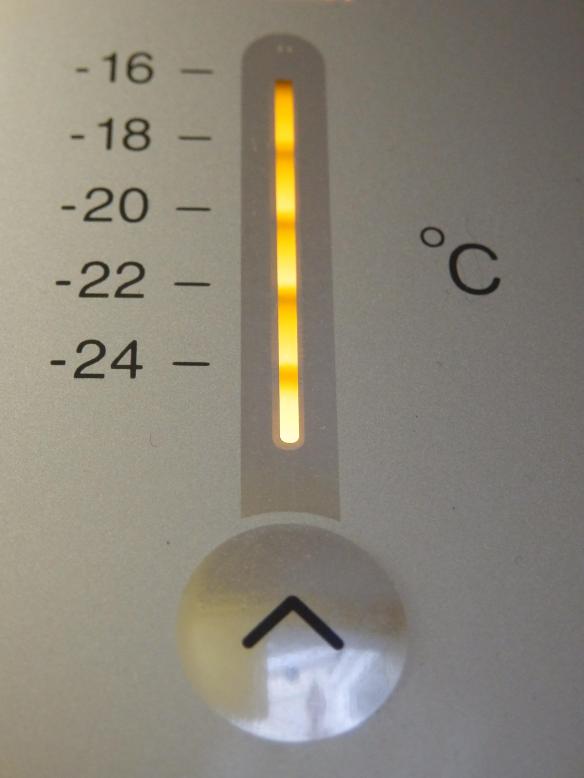
crudely measured temperature variation, but in 1612 Santorio added a numerical scale.

For centuries, T did not produce a miniscule and stood tall in its singular representation.

Hydrated iron oxide, mixed with bone marrow and charcoal, yields
ochre, a formula that predates writing.

Development, not invention.

T’s varying structure may be one of sequence and slippage.

Thermoscopes were open ended tubes dependent upon air pressure.
Celsius originally proposed a scale with 0 at the boiling point.

A cruciform. The capped spike. Blended tongues.

Complexity intrudes with every step: smoke-darkened ceiling.

***

A slightly different version of this appeared in Otolith in fall 2013.

thermo

Truchas (Elevation 8,000 Feet)

trout

Truchas (Elevation 8,000 Feet)

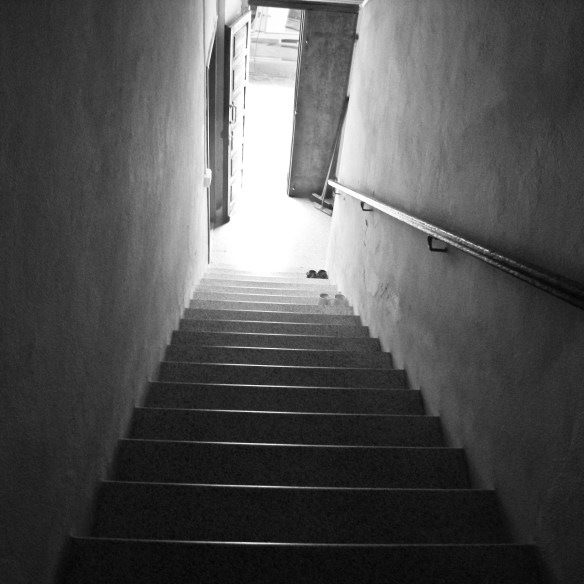
Climbing
these stairs,

I resemble
a trout

flopping
in dry air,

another gasp
and a ratcheting

heart rate, up,
out, and through

that opening,
into the pale glow.

steep

Laocoön

GREEK COLUMN LINDOS

Laocoön

This figure of complexity
persuades a lingering

glance, the two-fold
inclination entwined,

horror expressed
in tandem, the sons’

limbs compressed
as the father struggles,

realizing true
sacrifice, the inward

grasp of storm and
wrath and serpent,

his face
echoing those yet

to come, breached
walls, a city in

flames, the cries
of warnings unheeded.

the_kelpies

Laocoön, through Virgil’s Aeneid, is the source of the phrase “Beware of Greeks bearing gifts.” The poem, which first appeared in The Blue Hour Magazine, was inspired by the sculpture “Laocoön and His Sons,” which resides at the Vatican. You might find Wikipedia’s entry of interest.

Earth’s Damp Mound

OLYMPUS DIGITAL CAMERA

Earth’s Damp Mound
for P.M.

I. February 1998.

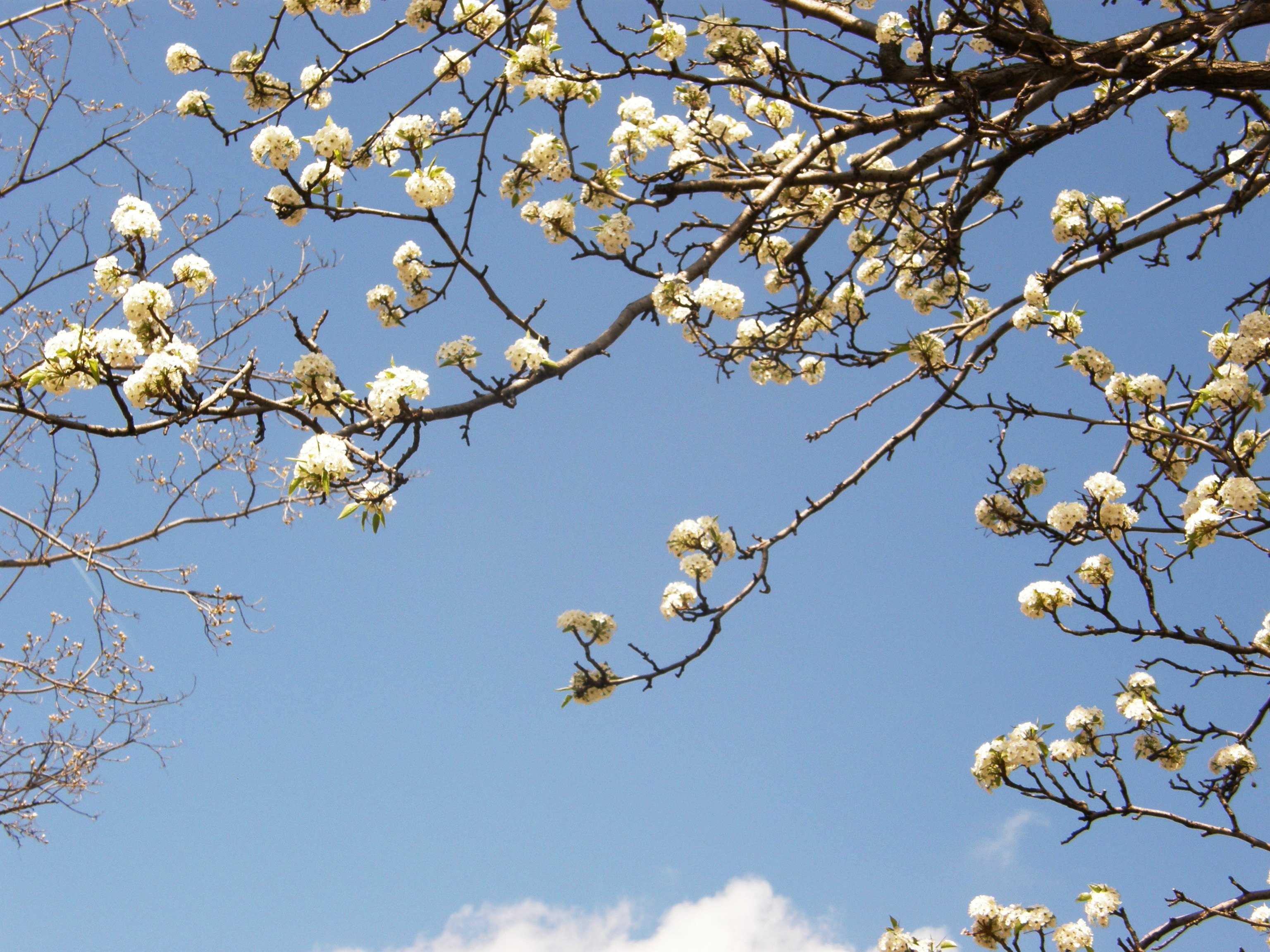
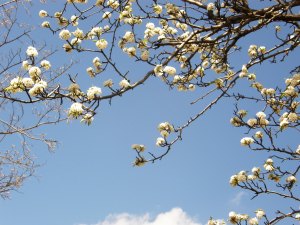
That week it rained white petals
and loss completed its

turn, the words finding themselves
alone, without measure,

without force, and no body to compare.
Though strangers spoke I could not.

Is this destiny, an unopened
mouth filled with

pebbles, a pear tree
deflowered by the wind? The earth’s

damp mound settles among your bones.


II. Count the Almonds

What bitterness
preserves your sleep,

reflects the eye’s
task along the inward thread?

Not the unspoken, but the unsayable.

Curious path, curious seed.
A shadow separates

to join another, and in the darker
frame carries the uncertain

further, past silence, past touch,
leaving its hunger alert and unfed,

allowing us our own protections.


III. The Bowl of Flowering Shadows

Reconciled, and of particular
grace, they lean, placing emphasis on balance,

on layer and focus, on depth of angle
absorbing the elegant darkness,

a lip, an upturned glance, the mirror.

What light caresses, it may destroy.
Even the frailest may alter intent.

So which, of all those you might recall,
if your matter could reform

and place you back into yourself,
would you choose? Forgive me

my selfishness, but I must know.


IV. Requiem

Then, you said, the art of nothingness
requires nothing more

than your greatest effort.
And how, seeing yours, could we,

the remaining, reclaim our
space without encroaching on what

you’ve left? One eye closes, then
the other. One mouth moves and another

speaks. One hears, one listens, the eternal
continuation. Rest, my friend. After.


Prentiss Moore influenced my reading and writing more than he ever realized. We spent many hours talking, eating, arguing, drinking, laughing. Always laughing – he had one of those all-encompassing laughs that invited the world to join in. And it frequently did. Through Prentiss I met in person one of my literary heroes, Gustaf Sobin, whose work Prentiss had of course introduced me to. Those few hours spent with the two of them driving around in my pickup truck, discussing poetry, the Texas landscape, horticulture and the vagaries of the publishing world, are hours I’ll always hold close.

Earth’s Damp Mound first appeared in the anthology Terra Firma, and is included in my chapbook, If Your Matter Could Reform.
file0001831388228

Blackbody

file0002043937378

Blackbody

1

It is a house. A small house.
A small dark house perched on the edge of town
near the river.

The river is constant.

A man enters the house, closes the door behind him.
Nothing emerges. We witness this daily.

No one emerges.
The house is dark.
A man enters.
The river is constant.

2

A pebble pierces the water’s surface.

I awaken to imperfection.

A blackbody allows all incident radiation to pass into it,
absorbing all, reflecting none.

The tensile strength of water decreases as temperature rises.

Hakuin said if you doubt fully, you will awaken fully.

Before sunrise I unshutter the window.

Angle of reflection, angle of incidence.

My doubts reinforced with coffee, I pause.

Perfect blackbodies do not exist in nature.

Opaque box with a hole.

3

There is a house. A small house.
A small dark house perched on the edge of town
near the river.

Nothing emerges.
A man enters.
The river is constant.

Blackbody was first published on Aubade Rising in May, 2014.

box

One

number-one


One

I am Brahma
the straight line, the upright being,

fire that flares,
seed without end, manifold

self beyond all
polarity, radiating sun:
the all.

Philosophers considered one a non-number,
generatrix of all that follows.

Other.

The singularity. The lone.

From the Indo-European oi-qos we achieve solitude,
while the collective meaning of one derives from the Sanskrit sam.

United in itself, it changes nothing,
becoming everything.

On its side it represents the horizon.

Alone is all-one.
The Latin non is one negated, as is the German nein.

Symbol of intellect, the Hindu moon glows wide.
Atomic number of hydrogen, magician’s numeral,

monad and eccentric, I bear the empty product.

one on side

Nine Ways of Shaping the Moon

file9781336412046(1)

Nine Ways of Shaping the Moon

                                         for Lissa

1
Tilt your head and laugh
until the night bends
and I see only you.

2
Weave the wind into a song.
Rub its fabric over your skin.
For whom does it speak?

3
Remove all stars and streetlights.
Remove thought, remove voice.
Remove me. But do not remove yourself.

4
Tear the clouds into threads
and place them in layered circles.
Then breathe slowly into my ear.

5
Drink deeply. Raise your eyes to the brightness
above the cedars. Observe their motion
through the empty glass. Repeat.

6
Talk music to me. Talk conspiracies
and food and dogs and rain. Do this
under the wild night sky.

7
Harvest red pollen from the trees.
Cast it about the room
and look through the haze.

8
From the bed, gaze into the mirror.
The reflection you see is the darkness
absorbing your glow.

9
Fold the light around us, and listen.
You are the moon in whose waters
I would gladly drown.

First posted in October 2014, “Nine Ways of Shaping the Moon” also appears in my chapbook, If Your Matter Could Reform.

file0002123668173