Empty Cup

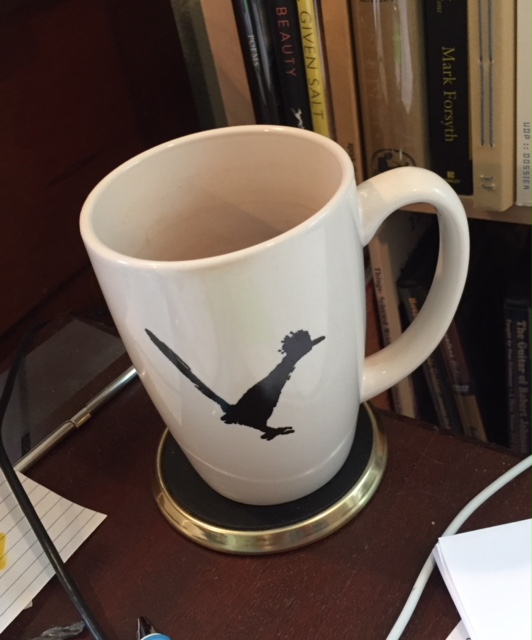
Empty Cup

I set down my cup, pour
tea and think this day, too,
may never end.

With what do we quantify love? How does grief measure us? Nine days ago I wrote “My father is dying and I’m sipping a beer.” More words followed, but I did not write them, choosing instead to let them gather where they would – among the darkening fringe at light’s edge, in that space between the shakuhachi’s notes, in the fragrance of spices toasting in the skillet. In unwept tears. Everywhere. Nowhere.

Seven days ago I wrote “My father is dead.” Again, I chose to let the unwritten words gather and linger, allowing them to spread in their own time, attaching themselves to one another, long chains of emptiness dragging through the days.

If experience reflects truth, sorrow’s scroll will unravel slowly for me, and will never stop. I feel it beginning to quiver, but only the tiniest edge emerges. I am nothing, I say. I am voice, I am loss, I am name. I am memory. I am son.

I have fifty-nine years
and no wisdom to show for it.
Never enough. Too much.

* * *

I don’t usually repeat recent posts so soon, but this one seems appropriate for Father’s Day. I miss you, Dad.

Scarecrow Dances

Scarecrow Dances

A case of the almost
tapping into the deed:

I dance in daylight,
but never on stairs

nor in countable
patterns, the wind

and birds my only
partners. When the

left arm twitches
counter to the right

hand’s frisk, my
head swivels with

the breeze, catching
my feet in pointe,

a moment endured
in humor. Luther

Robinson switched names
with his brother Bill

and became Bojangles,
but my brothers remain

nameless and silent,
flapping without desire

or intent. Why am I
as I am, born of no

mother, stitched and
stuffed, never nurtured

but left to become this
fluttering entity, thinking,

always thinking, whirling,
flowing rhythmically

in sequence, in time
to unheard music?

No one answers me.
But for now, I dance.

“Scarecrow Dances” first appeared in The Blue Nib in September 2016.

Community of Hands (Haibun)

making

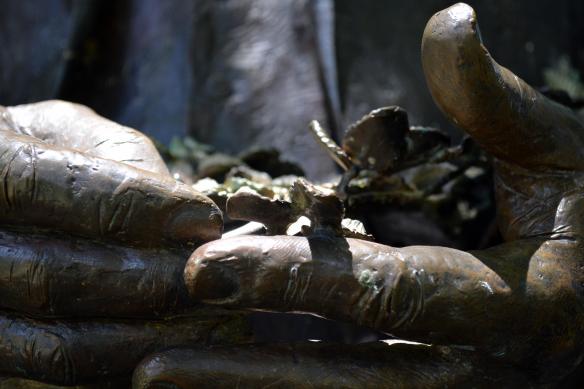
He thought much of these disembodied hands, pictured them moving to the light of the burnished lantern, weaving patterns intricate as those in the most delicate hummingbird nest, textures and shades of light with traces of webs and soft fibers of unknown origin, making knots of shadows and their companions.

*

It was not that they were so very much like his; they were hands of another sort, hands that touched nothing held by another, hands that knew no lips or wooden hearts or curves in a quiet moment, hands that knew only themselves in the community of unnatural hands.

waking to the rain
he hears a far-off whistle
oh, the neighbor’s tea!

* * *

OLYMPUS DIGITAL CAMERA

“Community of Hands” first appeared here in April 2017.

Joy Harjo’s “Everybody Has a Heartache: A Blues”

In this poem published in Poetry, Joy Harjo tells us everybody has a heartache, and that we can’t argue with hungry spirits. Of course she tells us so much more…


When to Say Goodbye

dried

When to Say Goodbye

 If all goes well it will never happen.
The dry grass in the shade whispers

while the vines crunch underfoot,
releasing a bitter odor. A year ago

I led my dog to his death, the third
in five years. How such counting

precedes affection, dwindles ever
so slowly, one star winking out after

another, till only the morning gray
hangs above us, solemn, indefinite.

Voiceless. If I could cock my head
to howl, who would understand? Not

one dog or three, neither mother nor
mentor, not my friend’s sister nor her

father and his nephews, the two boys
belted safely in the back seat. No.

I walk downhill and closer to the creek,
where the vines are still green.

In the shade of a large cedar, a turtle
slips into the water and eases away.

* * *

“When to Say Goodbye,” drafted during the August 2015 Tupelo Press 30-30 challenge, was published by Oxidant | Engine in May 2017, and subsequently nominated for a Best of the Net 2017 award.

Somewhere: 28 Rue St. Jacques

Somewhere: 28 Rue St. Jacques

Or eating spam fried rice in the courtyard
after kindergarten, and playing cowboys
with Thierry, the kid next-door. We shared toys,
but not comics. Written language was hard

to decipher, unlike the spoken. I
never captured the nuances, and lost
the rest over the years. Today the cost
eludes me, like moths fluttering by. Try

to recall that particular morning light,
how it glanced off the French snow, and the
way our mother smiled at breakfast, no trace

of sadness, yet, the lines marking our heights
rising along the wall, limbs of a tree
we’d never climb, out there, somewhere, in space.

* * *

This was originally drafted during the August 2015 Tupelo Press 30/30 Challenge. I was never satisfied with it, and didn’t see any reason to revise. But those memories are worth sharing!

Year’s End

OLYMPUS DIGITAL CAMERA

Year’s End

If I lose myself in breathing,
will the air forgive my forgetfulness?

This oak, too, will stand long after
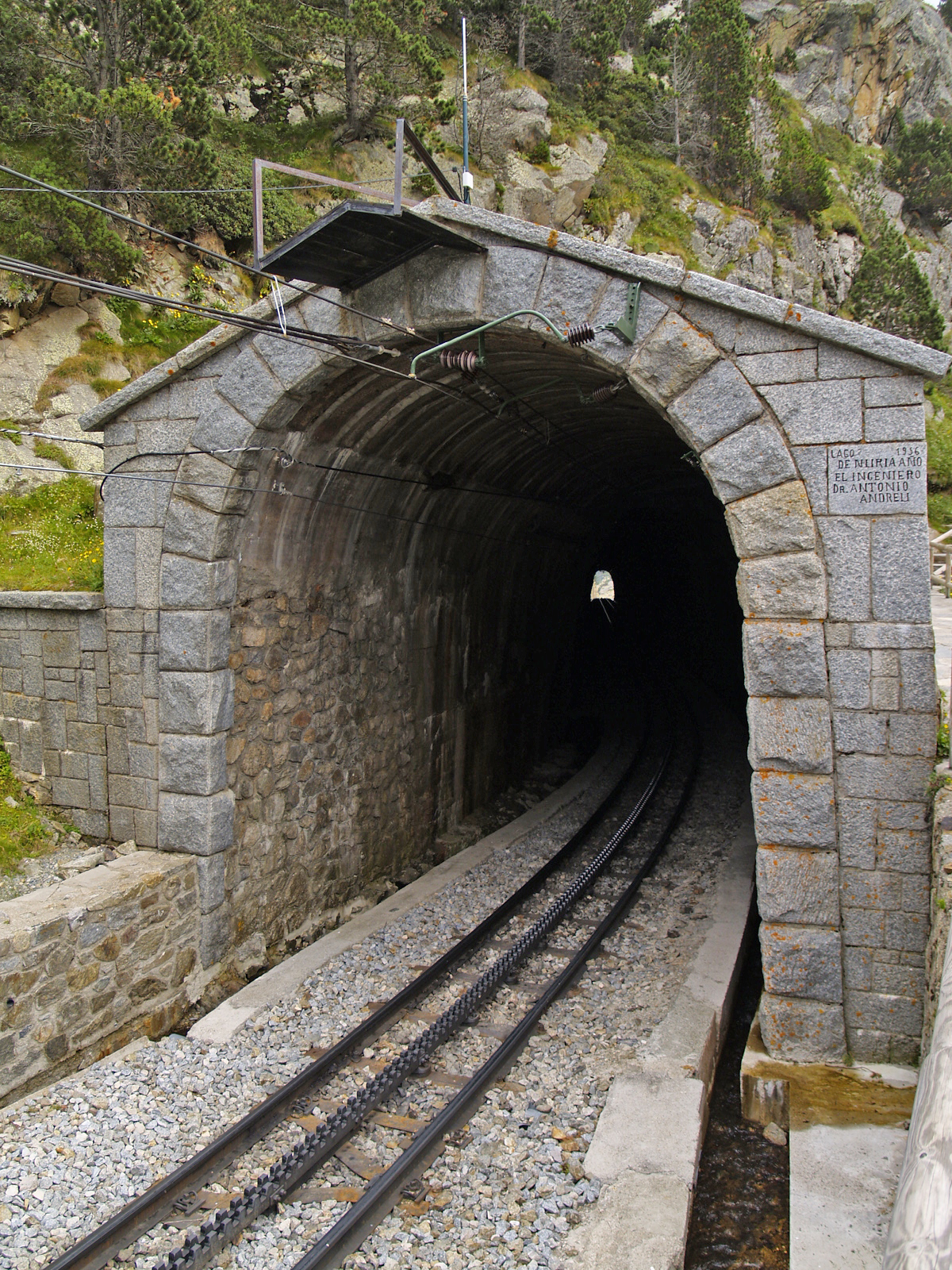
the last train exits the tunnel.

I worry that my friend may never
clamber past his lowest ambition.

Different and unabated, our words
now stumble over themselves.

Every night forms a morning somewhere:
each year, combined in our shared darkness.

* * *

“Year’s End” is included in my micro-chapbook Only This, available via free download from Origami Poems Project. Many thanks to editor Jan Keough for taking the mini-chap and offering this opportunity to so many.

night

Vesuvius

Vesuvius

When the earth shrugs,
some warnings are better
heeded. A little

smoke, some ash.
A knife point held to the chin.

Why listen at all?
The man in the big house hides in its vastness.
Surrounded, he walks alone.
People speak, but he hears only himself.

Meanwhile,
the mountain
belches

and the birds fly north
seeking firm ground
upon which to land.

* * *

“Vesuvius” was first published in The Big Windows Review in December 2017. Thanks to editor Thomas Zimmerman for accepting this piece.

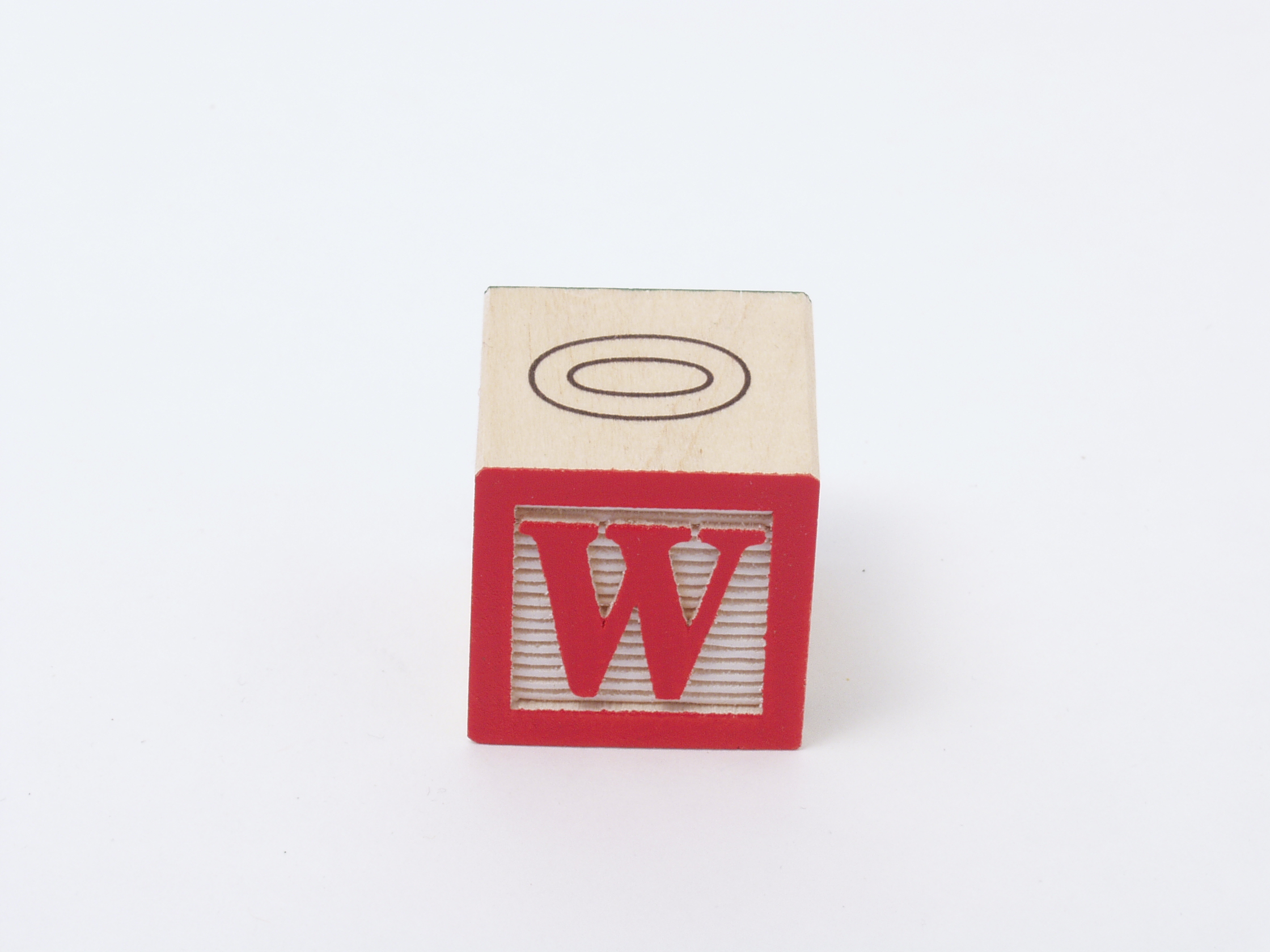
Self-Portrait with W

file7131243281016

Self Portrait with W

One might claim a double victory, or after the Roman Empire’s fall, a reclamation
from the slurred “b” and its subsequent reduction.

Survival of the rarely heard, of the occipital’s impulse.

The oak’s crook performs a similar function.

Shielding myself from adjuration, I contemplate the second family
root, weighted in weapons, in Woden, in wood.

Not rejection, but acceptance in avoidance.

The Japanese homophone, daburu, bears a negative connotation.

Original language was thought to be based on a natural
relation between objects and things.

Baudelaire’s alphabet existed without “W,” as does the Italian.

The recovery of lost perfection is no longer our aim.

When following another, I often remain silent.
As in two, as in answer, as in reluctance, reticence.

We share halves – one light, one shadowed, but both of water.

Overlapped or barely touching, still we complete.

* * *

“Self-Portrait with W” originally appeared in the Silver Birch Press Self-Portrait series in 2014, and was reprinted in my chapbook, The Circumference of Other, included in Ides, a one-volume collection of fifteen chapbooks published by Silver Birch Press and available on Amazon.com.

OLYMPUS DIGITAL CAMERA

Letter to Gierke from the Future’s Past

Letter to Gierke from the Future’s Past

Dear Ken: I’m fixated on open faucets and drained tanks,
on cracked PVC and browned grass, denial and what’s to
come, thinking of old dogs and accusations and how
the morning’s lopsided beginning has wrung out every
shred of positive emotion absorbed overnight. Then
a pinpoint emerges, swelling, until I can see, as through
a spidery windshield, tomorrow and its improbabilities.
Last weekend I built a window screen to exact measurements,
only to discover the sill tilted on the north by a quarter-inch,
and in order to install the damned thing I had to shorten
its right side, ruining the rectangle. Perfection eludes me,
even when guided by tape and square, especially in this
climate of exacerbated deterioration, which has not, alas,
excluded me – sciatic nerve, shoulders, knees, hands, etc.
But enough whining. Tea leaves predict that in a few hours
I’ll cross the creek trickling over the road, check the cisterns
and drop off tomorrow’s drinks before heading home to
swat mosquitoes and grill sage-rubbed pork kebabs while
sipping hoppy brews. That’s as far into the future as I
care to venture. The Cowboys drafted a lineman named
Taco, the weeds need mowing and my belly says noon
is fast approaching. I’d like carnitas, but have only rice
and beans, which probably signifies something far deeper
than my conscience will admit, trials I’ll never face. A
thunderstorm looms in the forecast, but my left ankle says
it ain’t happening. What do your mended bones claim?
Mine usually plead the fifth, but hey, they’re careful,
these days, and with good reason. Take care. Bob

* * *

“Letter to Gierke from the Future’s Past” was featured at Vox Populi in December 2017.