Scarecrow Considers the Afterlife (with recording)

Scarecrow and Friends


Scarecrow Considers the Afterlife

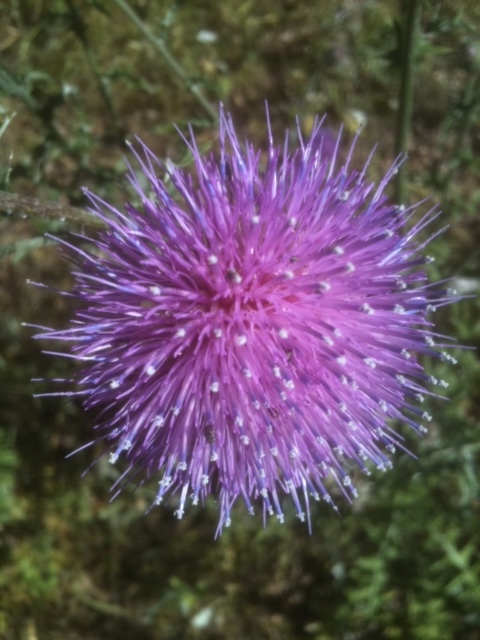
Gathering threads, I join them with a central
knot, producing a sunburst flower or constellation
of ley lines spreading forth and connecting their
tenuous truths – megalith to fjord, solstice to
dodmen and feng shui, suppositions entwined
and spat out. And who’s to say which alignment
stands taller than the next, which rut, which energy,
defines our direction? When I cease to be, will I
remain or dissipate, return in another form or
explode and scatter throughout the universe, the
residue of me sizzling along the starways for eternity
or perhaps just the next twenty minutes. It is clear
that I possess no heart, no internal organs. My spine
is lattice, my skin, fabricated from jute. Eviscerate
me and straw will tumble out. I do not bleed. Yet
the crows consult me in secret and conduct their
daily mercies, and I think and dance and dream
and wonder and hope. Oh, what I hope.


* * *

This was first published at Eclectica in July 2016, with two companion pieces.

My Essay “Thirty-Five Years Later, I Raise My Hand” is featured on Alison McGhee’s excellent Words by Winter podcast.

I’m delighted to report that this essay is featured in Alison McGhee’s Words by Winter podcast.

If you haven’t listened to Alison’s podcasts, you’re in for a treat! Yes, they focus on poetry, but there’s much more. Spend some time with her.

Thirty-Five Years Later, I Raise My Hand

In spring 1983 I enrolled in a poetry writing course thinking it might help improve my short fiction. I was a history major by default, had never taken a course in poetry, but believed, with absolutely no evidence, that I could write fiction. At the time I would have been hard-pressed to name five contemporary poets, even counting my professor. To be honest, the class struggled to hold my attention. Only about a quarter of the students seemed interested in writing, and the instructor was a bit, uh, tired. But for the first time in my life I read, really read, poetry. I fell in love with Galway Kinnell, Ai, James Wright and Carolyn Forche, to name just a few of my early enthusiasms. I wanted to write like them. So I wrote. And wrote. And wrote. Most of it was laughably bad, but somehow I managed to win an undergraduate poetry contest, which suggested that hope existed. Maybe someday, I thought, one of my poems will be published. This radical idea had never occurred to me before. Publication seemed to be the privilege of special people, and a lifetime of gathered fact revealed that I was unequivocably nothing special.

Early on in the semester, perhaps even in the first class, the professor asked how many of us thought we’d still be writing poetry in twenty years. I didn’t raise my hand. I didn’t know where I’d be in six months, much less what I’d be doing in twenty years. Since I’d realized late in the game that teaching was not for me, I had no job prospects, and few marketable skills, despite experience in chugging beer, manning sound-powered phones on a ship’s helicopter tower, scraping barnacles and bending rules. The world was limited. The world was limitless.

Another gray day

dividing the old and young

Oh, this aching hip!

* * *

The Resonance of No (with recording)

dishes


 The Resonance of No

Yes, yes, we’ve heard. The dishwasher wastes less
and cleans better. But Kenk­ō believed in the beauty
of leisure, and how better to make nothing
while standing with hands in soapy water, thoughts
skipping from Miles Davis’s languid notes to the spider
ascending to safe shelter under the sill (after I blow
on her to amuse myself), washing my favorite knife
and wondering if I should hone it, not to mention
my skills on the six-string or the potato peeler.
And if I linger at the plates, even the chipped one,
admiring their gleam after hot water rinses away
the soap residue, who could question the quick gulp
of ale or the shuffle of an almost-but-not-quite
dance step-or-stumble while arranging them on the
ribbed rack, back-to-back, in time to Coltrane’s
solo. Then the forgotten food processor’s blade
bites my palm, and I remember that I’ve outgrown
the dark suit, the cut branches still need bundling
and none of the words I’ve conjured and shaped
over decades and miles will extend their comfort
when I stand at my father’s grave this week or next.


“The Resonance of No,” was published in December 2016 in Gravel, and is included in my chapbook, From Every Moment a Second.

Daniel Schnee wrote about this poem here.

Music Credit: Cool Vibes Kevin MacLeod (incompetech.com)
Licensed under Creative Commons: By Attribution 3.0 License
http://creativecommons.org/licenses/by/3.0/


All the Little Pieces

broken-glass


All the Little Pieces

How to rewind
broken,

the subtle shift of shard
and floor

laid between night’s
fall

and the morning’s first
glow. Take this

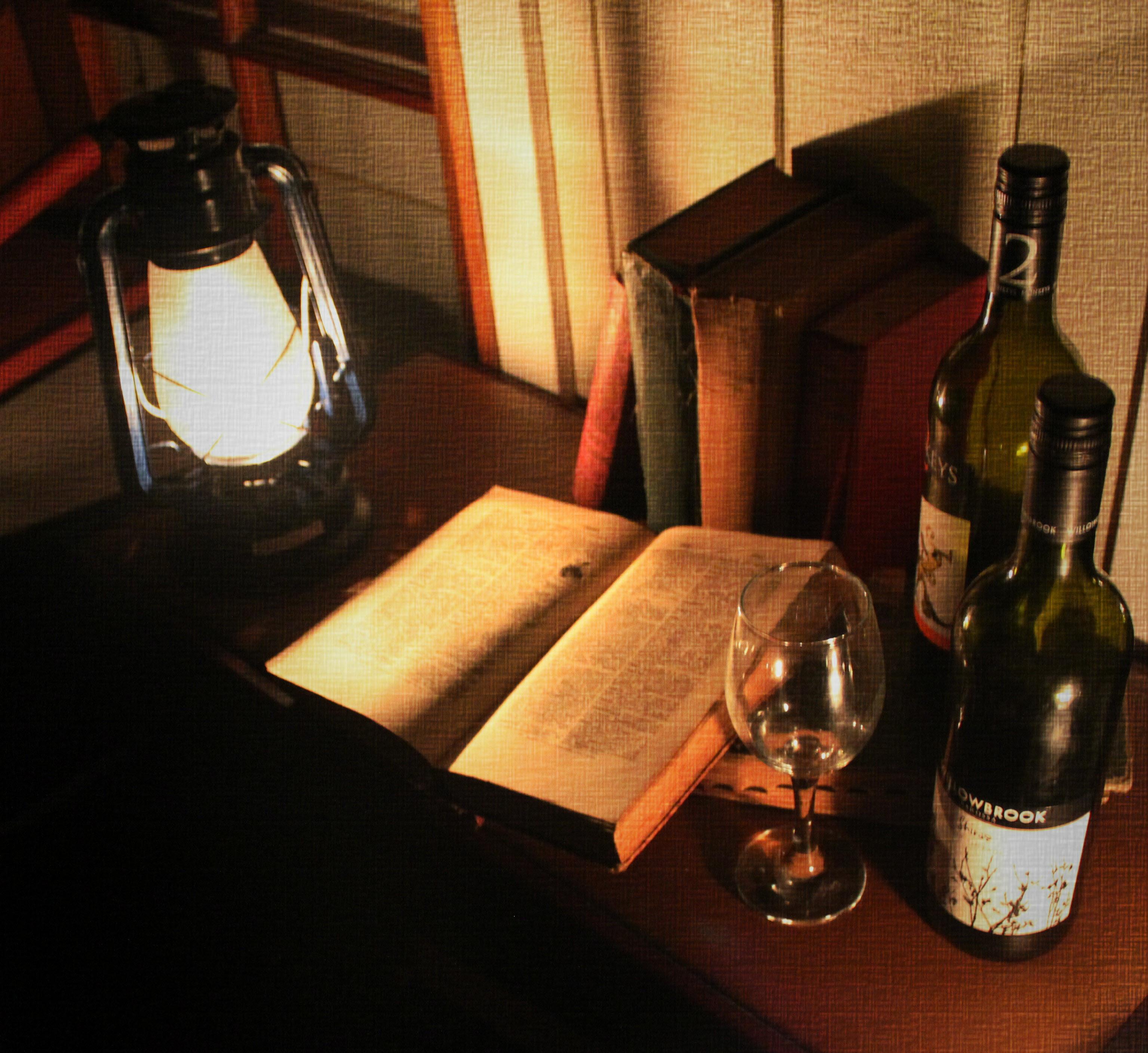
lantern. Set it
on the wall. Remove

the glass. Do not
light the candle.

Wait.


lantern


When to Say Goodbye (with recording)

dried


When to Say Goodbye

 If all goes well it will never happen.
The dry grass in the shade whispers

while the vines crunch underfoot,
releasing a bitter odor. A year ago

I led my dog to his death, the third
in five years. How such counting

precedes affection, dwindles ever
so slowly, one star winking out after

another, till only the morning gray
hangs above us, solemn, indefinite.

Voiceless. If I could cock my head
to howl, who would understand? Not

one dog or three, neither mother nor
mentor, not my friend’s sister nor her

father and his nephews, the two boys
belted safely in the back seat. No.

I walk downhill and closer to the creek,
where the vines are still green.

In the shade of a large cedar, a turtle
slips into the water and eases away.


* * *


“When to Say Goodbye,” drafted during the August 2015 Tupelo Press 30-30 challenge, was published by Oxidant | Engine in May 2017, and subsequently nominated for a Best of the Net 2017 award.


Interview Up at Tistelblomma

Quote

Last November, Jenny Enochsson, editor of Tistelblomma, an online journal based in Sweden, asked me a few questions

Wherein the Book Implies Source

book


Wherein the Book Implies Source 

And words form the vessel by which we traverse centuries, the river
stitched across the valley’s floor, easing access.

Accession by choice. Inorganic memory.

Vellum conveys its origin: of a calf.

How like an entrance it appears, a doorway to a lighted space.
Closed, it resembles a block of beech wood.

To serve as conveyance, to impart without reciprocity.

Framing the conversation in space, immediacy fades.

The average calfskin may provide three and a half sheets of writing material.
Confined by spatial limitation, we consider scale in terms of the absolute.

The antithesis of scroll; random entry; codex.

A quaternion equalled four folded sheets, or eight leaves: sixteen sides.

Reader and read: each endures the other’s role.
Pippins prevented tearing during the drying and scraping process.

Text first, then illumination.

Once opened, the memory palace diminished.


* * *
This originally appeared in April 2014 as part of Boston Review’s National Poetry Month Celebration, and is included in The Circumference of Other, my offering in the Silver Birch Press chapbook collection, IDES, published in 2015.

ides front cover 92915

Poem Up at Vox Populi


My poem “Something Felt” is featured at Vox Populi. I am grateful to Michael Simms for his support, and am thrilled to be a regular contributor to this lively publication.


It was 10 A.M. When the Angel Said You Have to Go Now

OLYMPUS DIGITAL CAMERA

It was 10 A.M. When the Angel Said You Have to Go Now

Forgive me for seeking clarity, but do you have a specific
destination in mind, or are you saying, with a little less
force, get lost, go away, I’m done with you, or might you
merely be suggesting that I go forth? And what exactly is
your position on, oh, let’s just say the afterlife and the
journey there? As for turning, you certainly did,
offering both in sequence, again and yet again, to my
great appreciation. Butter. You must explain your fetish
and how the room exuded pale gold and sweet after
one little death, as if a honeyed light had oozed in beneath
the door, and, in kissing the carpet, released endorphins
and cool warmth, and love-moths frantically flapping
to dry our sweat without the slightest chill. It’s the little
things, my mother always said, never considering size,
but meaning those thoughtful touches, the fresh flowers,
a plate of cheese and fruit, and yes, the tenor sax moaning
in the alcove. I’ll go, but you know this is my apartment.


“It was 10 a.m. When the Angel Said You Have to Go Now” was originally drafted during the August 2016 Tupelo Press 30-30 fundraiser, thanks to d. ellis phelps, who sponsored and provided the title. It was subsequently published in Atlanta Review in May 2020. 

Black Lilies


Black Lilies

Flensing words, slicing deeper: all, nothing,
red to redder. Their skin, paling to nothing.

I speak today but you hear yesterday.
Black lilies in the chill of nothing.

Drifted apart, the two halves reconcile.
Yellowed, whitened. Older. Both stitched in nothing.

How many words have we lost to morning? Shredded
syllables sparring for sound. The nothing of nothing.

A coated voice, turquoise and calm, spreading across the room.
Buttered light. Pleasantries, unfolding. You, being nothing.

The language of night sleeps unformed in my bed.
I remember your hand on my cheek; flesh forgets nothing.


* * *

A near-ghazal, “Black Lilies” first appeared in ISACOUSTIC* in January 2018.