Helsinki (with recording)

Helsinki

Helsinki

An editor said never start a poem at a window,
so instead I’m looking at the door,

which is made of glass. We are to avoid rain,
too, but it streaks the pane in such delicious

patterns that I can’t help but pretend to be someone else
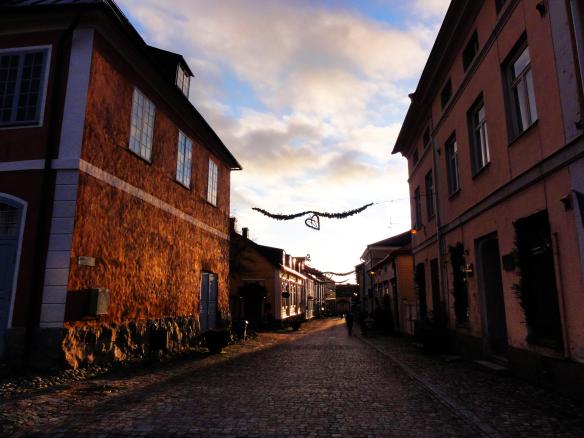
in a foreign city, perhaps Helsinki, sipping black coffee

with a mysterious woman younger than my daughter
(who also does not exist), whose interests

in me are purely literary, although she straightens
my collar with lingering, scented fingers. Garden

memories and birds must never populate our lines,
but corpses are fine, as are tube tops and bananas

and any combination thereof. I finish my coffee
and wander alone through cobblestone streets,

stepping over clichés when possible, kicking them
aside when my hip joint argues, or simply accepting

their useful limitations when nothing else works.
Unknown and lacking credentials, I shrug, go on

past the closed doors behind which unseen bodies
perform the most bizarre and sensual solo dances,

or not, and shadows cook sausages over fire
and the grease spattering onto the tiled counters

issues a fragrance that awakens neighborhood dogs
and maybe a dozing stall-keeper at the market

where cloudberries are sometimes found.
I know little of Finland, and less of myself,

and then there’s poetry, which remains a blank
frame, a frosted pane I’ll never truly unlatch.

* * *

My poem “Helsinki” was first published at Panoply. It was inspired in part by a Facebook thread on which editors commented on what caused them to instantly reject poems. One said beginning a poem at a window was cause for rejection. Hence the first line.

Obsession: Books, or, Poetry Finds Me

photo 2

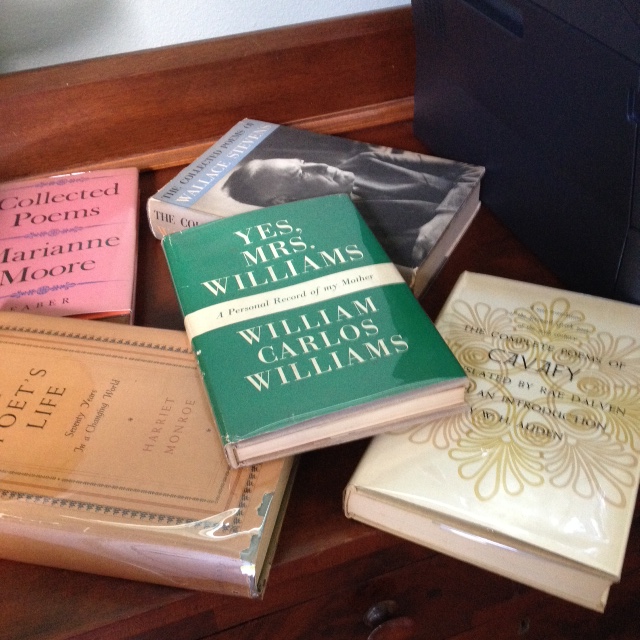
In another life books framed my days. I slept with them, dreamt about them, woke to their presence stacked by the bed and in various corners throughout the house, read them, handled them, discussed their merits with friends, co-workers, beer-drinking buddies, bartenders, customers, strangers, relatives, and even enemies. Traced my fingers slowly down their spines, identified some by odor alone, others by weight and feel. Bought, sold, cleaned, lent, skimmed, traded, gave, borrowed, collected, repaired, preserved, received. Traveled to acquire more, returned home to find still others languishing in never-opened, partially read or barely touched states. There were always too many. There were never enough.

The relationship began innocently. I’ve been an avid reader since the age of five, and over the years developed a knack for uncovering uncommon modern first editions. I’d walk into a thrift shop and spot a copy of William Kennedy’s first novel, The Ink Truck, snuggling up to Jane Fonda’s workout book, for a buck. Or at a small town antique store, something especially nice, perhaps a near-fine first edition of Cormac McCarthy’s Outer Dark, would leer at me from a dark shelf – $1.50. John Berryman’s Poems (New Directions, 1942) found me at a garage sale, for a quarter. Good Will yielded Pynchon’s Gravity’s Rainbow. There were others, of course. Many others.

I partnered with a few like-minded friends and opened a store, and when that didn’t work out, started my own home-based book business, which eventually expanded into a small brick-and-mortar shop, a true labor of love. And I mean labor. The forlorn space we rented was cheap and had housed for years a low-end, illicit massage parlor. Cleaning it out was, oh, shall we say interesting? I’ll never forget the furry massage table, the naked lady lamp or the various implements left behind after the joint was finally forced to close. But we hauled out the filthy carpeting, stripped and refinished the hardwood floors, fixed, painted and patched what we could, and hid what we couldn’t. It was exhausting, but well worth the toil.

My work schedule ran from Monday through Sunday, a minimum of eighty hours a week – in a seven-year period, I took off only two long weekends. It consumed me, but in the end I emerged mostly intact, a little more aware of my proclivities, of an unhealthy tendency to immerse myself wholly into an enthusiasm, to the detriment of family and friends. When we sold our store’s wares, I embraced the change; some dreams simply deplete you. But the itch remained.

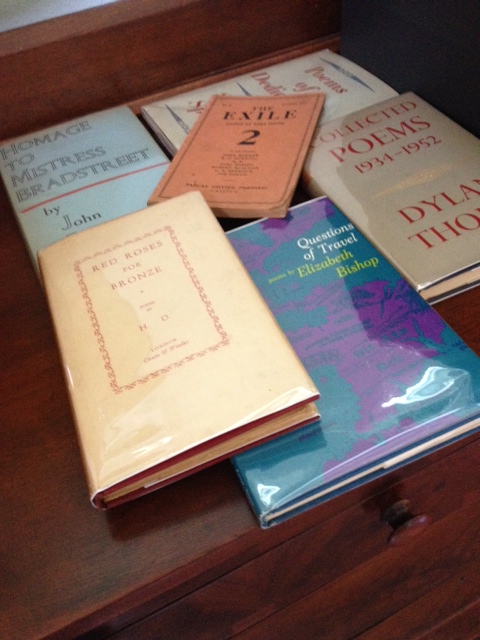
Just a few weeks ago I found myself perusing an accumulation of books in a storage facility across the street from a junk shop in Llano, Texas, a small county seat an hour’s drive west of my home on the outskirts of Austin. The shop’s owner had purchased an English professor’s estate, and judging by the collection, the professor had specialized in poetry. My first thought was “I want it all,” but reason set in (I could very well imagine my wife’s reaction were I to arrive home with a trailerful of books) so I glanced over the criticism, fiction, drama, essays and biographies, and concentrated on the poetry. In the end I walked away with thirty-one books, including H.D.’s Red Roses for Bronze (Chatto & Windus, 1931), Randall Jarrell’s Little Friend, Little Friend, Elizabeth Bishop’s Collected Poems and Questions of Travel, a brace of Berrymans – His Toy, His Dream, His Rest and Homage to Mistress Bradstreet – both the U.S. and U.K. first editions, which differ – and Love & Fame. A good haul, to say the least, but one that left me only partially satisfied and contemplating a return. But I remain resolute. So far.

As I said, the itch remains…

* * *

This first appeared here in April 2015, and yes, the itch is still there. The pandemic has prevented me from haunting used bookstores as I’d imagined I would. But someday…
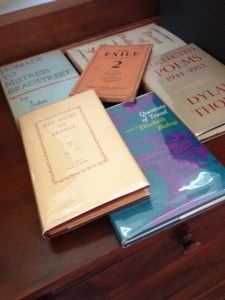
photo 1(1)

Self-Portrait as Two Halves


YinYang


Self-Portrait as Two Halves

No epiphanies in these woods,
no prayers yanked about,
currying favor from the loneliest
god of a fruitless tree, its DNA
unraveling at thought’s speed.
Never having greeted us,
the other world waves good
riddance and this one turns its
back, both torn in equal measure
yet admitting no guilt through
their narrowed eyes. Oh, to be
whole in this splintered self.


“Self-Portrait as Two Halves” first appeared in The Dew Drop in November 2020.

Bent


Bent

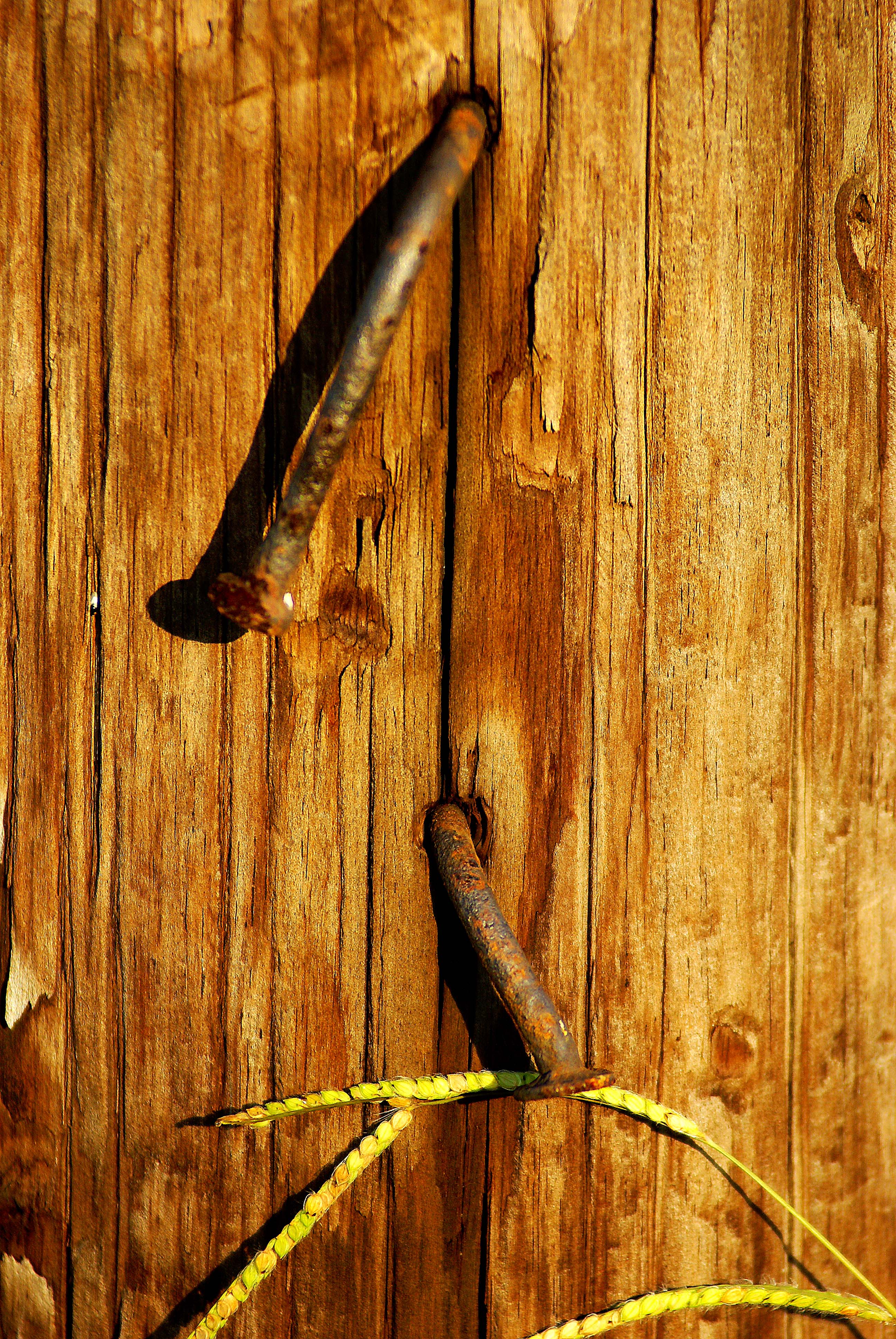
We’ve seen some version of the nail
curled over, the head angled at 90 degrees
or parallel to its body, just above

the penetration point. Three years ago
a tornado powered a single straw stem
through the oak’s bark and into its trunk,

illustrating the Old English beonet, for
“stiff grass,” and sadly conjuring the image
of a blade affixed to a firearm’s muzzle, the

etymology of which lies elsewhere, in Gascony.
And when we consider mental inclination,
signifying deflected, turned, or not straight,

we might also include an earlier past participle
meaning “directed in course.” But even the
tree’s armor could not deter the twister’s

wrath, and the hammer, no matter my aim
or purpose, seems intent upon glancing off
the nail, twisting it, leaving us, again, bent.


“Bent” first appeared in the print publication Ristau: A Journal of Being in January 2018.


Self-Portrait as Window

window

Self-Portrait as Window

When you look through me
which darkness illuminates
your vision, outlining the
ghosts of never was and not
yet? Or do your eyes glare
back in silent terror, knowing
the power of liquid made
solid, of light transformed to
electricity and by inference
these words or the shades
drawn by voice command?
Transparent, elusive, evident,
I stand alone, clear. Hidden.

“Self-Portrait as Window” first appeared in The Dew Drop in November 2020.

Boxcar

boxcars


Boxcar

Whose voice lingers
among the gathered stones,

raised then lowered as if
to ensnare followers?

This is not the issue.
Nor should we speak of paper

shuddering in the wind
and the dense glare of shovels

in the night underfoot.
Pray that the road continues

beyond the next curve
or increment of time.

Trust in motion,
the reticence of trees.


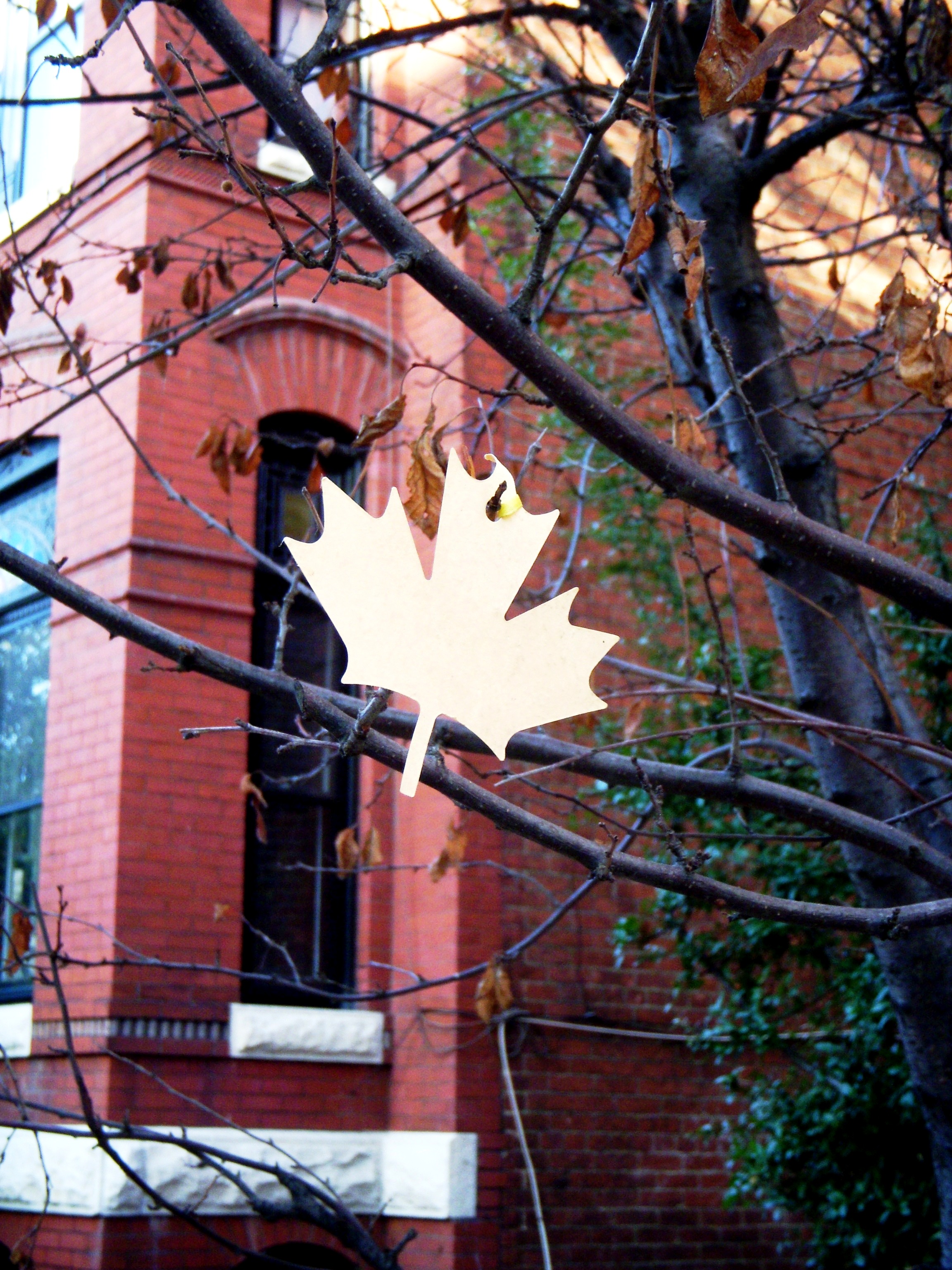
paper leaf

“Boxcars” first appeared here in November 2015. It had been moldering in a folder for three decades when I uncovered it. I have no idea what originally sparked it.

Sometimes Love is a Dry Gutter


Sometimes Love is a Dry Gutter 

Or a restless leaf, a footprint.

Is fault on a blameless day,
scrawled on a washed-out sky.

My friend’s music orbits his home,
worms through the cracks
in the bluest lines, ever new

and permanent, staining even his hope
long after the lights stutter away.
And the rain’s attenuated sorrows?

They’re coming, he says. Like goats
through a fence. Like lava. Like tomorrow.


* * *

“Sometimes Love is a Dry Gutter” was first featured at Vox Populi in January 2017. I’m grateful to editor Michael Sims for supporting my work.


Scarecrow Dreams


Scarecrow Dreams

If by night I move without aid,
what then? Precious flesh, precious
bone, never mine to lose – the difference
between nothingness and no thing. A
pity that my friends fly at the merest
movement, but when the air’s breath
stills, they sing and rattle among the
grain, scribing their days in song
and footprints, seeking the available
on the ground. And what scrolls lower
than the sound of sunflowers turning?
The laughing daughter runs around
my lattice spine, scattering joy like so
many seeds, and when my hollow
fingers clench, the earth quivers, or
so it seems. Then midnight returns
and I disengage and stalk about,
scaring rodents and their predators,
hooting in harmony with the owls
reveling in the night air, remembering
the holy shirt, a yellow glove, corn
silk’s gleam at noon and the warmth
of your fingers against my burlap skin.
I do not breathe, I say, but I exist. By
morning what joins me but the tune
of yet another bird, unseen, melodious,
the pulse of morning’s dew. Eternity.
How my straw tongue longs to sip it.


“Scarecrow Dreams” first appeared in the summer 2017 edition of Eclectica. Many thanks to poetry editor Jen Finstrom, for publishing several of my scarecrow poems.

Memorial Day, 2015


Memorial Day, 2015

I turn away from the sun, and drink.
Every window is dark.
No one hears my song, not even the guitar.
When the rain pauses the grackle rests on the cedar picket.
Etymology: from Latin memorialis, of or belonging to memory,
leading to home and family, their connotations.
Remembering is simple, she says. But forgetting…
The coral snake slips by, unseen.
Nothing lives in my shadow.


* * *

“Memorial Day, 2015” first appeared at Picaroon Poetry  in July 2017. Many thanks to editor Kate Garrett, for taking this piece.


Awakened, He Turns to the Wall (Cento), with Recording

cell


Awakened, He Turns to the Wall (Cento) 

Then, everything slept.
Where were you before the day?

You see here the influence of inference,
whereby things might be seen in another light,

as if the trees were not indifferent, as if
a hand had suddenly erased a huge

blackboard, only, I thought there was
something even if I call it nothing,

like the river stretching out on its
deathbed. No one jumps off.


* * *

A cento is composed of lines from poems by other poets. This originated from pieces by: Larry Levis, Jacques Roubaud, Lorine Niedecker, Gustaf Sobin, Denise Levertov, Elizabeth Spires, William Bronk, Vicente Huidobro, Ingebord Bachmann

For further information and examples of the form, you might peruse the Academy of American Poets site: http://www.poets.org/poetsorg/text/poetic-form-cento


erase