Letter to Marshall from the Scarecrow’s Pocket


Letter to Marshall from the Scarecrow’s Pocket

Dear Daniel: How fortunate we are to tap into this medium of ether
and zeros and ones and all the combinations employed in our paperless
context. I am drawn to the concept of text as textile, as an entity
woven into the fabric of communication. Who knew that simple lines,
dots, dashes and squiggles would someday depict so well our
abstract beginnings and fingered desires, from counted goats and
jars of oil to the tattoo on a beloved’s inner thigh. The gap between
thought and graphic representation, whether on paper or glowing
screen, seems heightened these days, in spite of their ubiquitous
presences. I scratched my name onto the frozen creek’s surface,
only to watch it subsume as the mercury rose. I report this only
because you’ve scribed too well that feeling of treading on uncertain
surfaces, of words expanding in meaning and dragging us along
separate byways, fork into fork, under and through what we
never considered. That is our fate – to emerge from the pocket,
folded, wrinkled and smudged, smelling of makkoli and fish
markets and unwritten phrases stored in rice jars, our personal
creases expanding as we inspect the characters found there, some
crimped, others elongated, still others nearly invisible but apparent
through indentation. Translate these and what have you but a history
of glorious failures and unfelt victories in marks, on white,
somehow of note, if only to oneself. Success is a stranger’s smile,
an omelet cooked to order and eaten with gusto. It pulses
in the doing, in the unsteady drip from the faucet with a desiccated
washer, and the ink staining the page symbol by line. I know only
what I know, which ain’t much, but I keep trying to learn, to
cobble together these odd symbols into assemblages greater than
myself. As if anyone would notice. Say hello to the marred, the
cracked and disheveled of Jeju, and I’ll return the favor from
my hideaway in the Texas hills. As always, believe. Bob.


“Letter to Marshall from the Scarecrow’s Pocket” first appeared on Vox Populi in July 2018. I am grateful to Michael Simms for publishing this piece (and others).
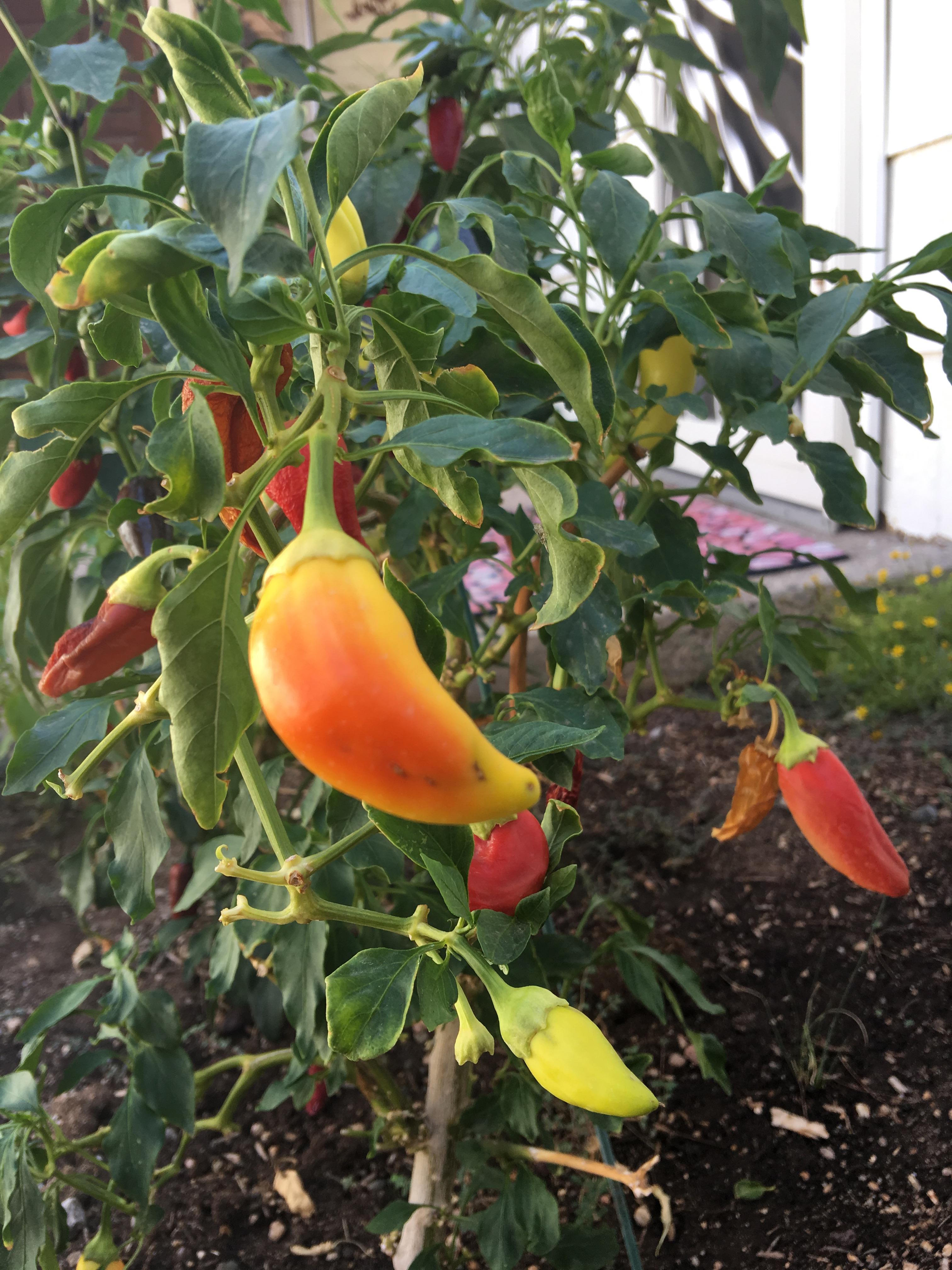


Self-Portrait as Compost


Self-Portrait as Compost

Beneath the surface find warmth,
the fruit of decay and mastication,
of layered mixes and intermingled
juices. Disintegrated or whole,
still I strive to speak. Bits of me
meld, to be absorbed slowly; I
process and am processed: here,
within the pepper bush’s deep red
berries, there among the dianthus.
Scattered, deliberately placed,
having been, I shall emerge again,
forever changed, limitless, renewed.


* * *


“Self-Portrait as Compost” was first published in Issue 125 of Right Hand PointingThank you to editors Dale Wisely, Laura M. Kaminski, F. John Sharp and José Angel Araguz for taking this piece.


Which Poet, Which Beer (4)


I come here to sit quietly, emerging from my shack, if only briefly, to eavesdrop and observe, to sip beer and participate in the world of commerce. Ah, yes. The grocery store. If only all of them housed craft-beer bars. I place cilantro and shallots in my basket, add arugula, asparagus and a lime, and wander over to the fish case where two small fillets of Chilean sea bass, the commercial name for Patagonian toothfish, catch my eye.

Finally at the bar, I order Lone Pint Brewery’s Zeno’s Pale Ale, and overhear a disquisition on hydration and landscaping, and a conversation on war and snipers and gratitude. The ale arrives with a light, lacey head, exudes a bready malt profile upfront, and a pine-citrus punch at the back. I can’t quite uncover the truth of the flavor, but enjoy the search, and amidst the swirling combination of voices and beer I somehow think of Veronica Golos’ “Snow in April,” a ghazal in her stunning book Vocabulary of Silence.

“Has my flock of flowers died? An ambush, a bullet-shot
of cold. Undone beneath the snow, what’s truth, in April?”

What is the sniper’s truth? What gratitude might we find within April’s layers? I have no answers, only more questions, and with more questions comes thirst.

My second beer is a curious blend of old and new – a Belgian-style quadrupel that, don’t laugh, smells a bit like a cola, but in a good way. Unibroue’s Trois Pistoles is dark brown, let’s call it mahogany, with a fruity but mellow flavor and a toasty malt finish. And well balanced – with an alcohol content of 9%, it’s strong, but not too strong. Historical undercurrents flow through this brew, yet it also brings with it an appreciation of the new and popular, which leads to thoughts of one of my favorite poets, Frank Bidart, whose work often refers to and resonates with historical figures (in the book at hand, Watching the Spring Festival, Tu Fu and Catullus come to mind), and his poem “Sanjaya at 17,” referencing an American Idol contestant:

“There is a creature, among all others, one,
within whose voice there is a secret voice
which once heard
unlocks the door that unlocks the mountain.”

Today the mountain does not swing open for me. Perhaps a second Trois Pistoles might have done the trick, but instead, knowing I have to prepare dinner, starting with a compound butter of shallot, cilantro, garlic and lime zest, I request a mere taste of Founder’s Breakfast Stout, because, well, the idea of stout for breakfast has a certain appeal, though in my case would not be practical, as it would likely put me to sleep. And yes, it contains both chocolate and coffee (Sumatra and Kona), tastes a bit smoky, is smooth and luxurious in the mouth, and makes me long for a lonely, cold winter’s night in a far-off country, a fire crackling with just a hint of madness, and the full moon leering down at all of us, but particularly the dead genius that was Thomas James, whose poem “Wild Cherries,” from his one and only book Letters to a Stranger, ends:

I watch you eat, tasting yourself perhaps,
Some bitterness that is a part of you,
And I accept it gratefully. When you smile,
I see you dying in that single instant.
Walking back home, into ourselves, we enter
A far-off country neither of us wanted.”

Oh, those things we want and don’t want. To feel. To write. To cook, to sing. To share. To love. To be alone. To be numb. To do nothing. To do everything…


This first appeared on the blog in September 2017.


Window Open, Closed

black-curtains2


Window Open, Closed

We enter daylight in the shape
of praise, little words

billowing through wire mesh. Across
the highway a busboy questions time

and the concept of never, while
someone plucks leaves from the bay

tree and plans her day. Roger Bacon
longed to manipulate the inner essence

of inanimate objects, to harness their force,
and a lonely man swallows prescription drugs

deliberately, releasing their attributes over time.
My eyes redden from juniper pollen as the moon

spins invisibly above our roofs, tugging at the
clouds. I once traced in a building of music

the organ’s sound to the woman I longed
to attract. Now, the window prevents the passage

of solids, but waves penetrate. I spread my fingers
across the glass, but feel no vibrations. Distant

sirens announce a procession of cause and intent,
of carelessness and indecision. Somewhere a voice rises.


* * *

This originally appeared during Bonnie McClellan’s 2015 International Poetry Month celebration, and is included in The Circumference of Other, my offering in the Silver Birch Press chapbook collection, IDES, available on Amazon. A recording of the poem may be found on Bonnie’s site.

ides front cover 92915


Summer 1966: After France & Remembering Bobby, Who One Day Would Learn to Multiply and Divide, Write Love Poems, Define Home, Fight Unfairly and Live with as Much Gusto as a 7-Year Old. Perhaps.


Summer 1966: After France & Remembering Bobby,
Who One Day Would Learn to Multiply and Divide,
Write Love Poems, Define Home, Fight Unfairly and
Live with as Much Gusto as a 7-Year Old. Perhaps.

From left coast to right, or the wide arc between,
which place claimed you? In New York you marveled
at the building’s backs scratched by clouds, and all your
pale cousins in Baltimore spoke strangely and couldn’t fathom
your nuclear family’s private lingo, while the drive to Texas
and its red ants and iced tea blossomed into adventures between
pages in the back seat of the VW bug. By the second week you
learned that Texans sweat as much as the French, and swear even
more, that you couldn’t fight one twin without taking on the other,
sometimes both at once. There was no question of fairness then,
just brotherhood, but the librarian would slip you the choicest
donated fiction, and you played baseball every day in the vacant lot
until sundown called the players home to black and white body
counts and cigarette commercials on the three channels received.
Sometimes you lay in bed under the half-light of the whirring
fan blades, and dreamt of heroes and ornithopters, zebras
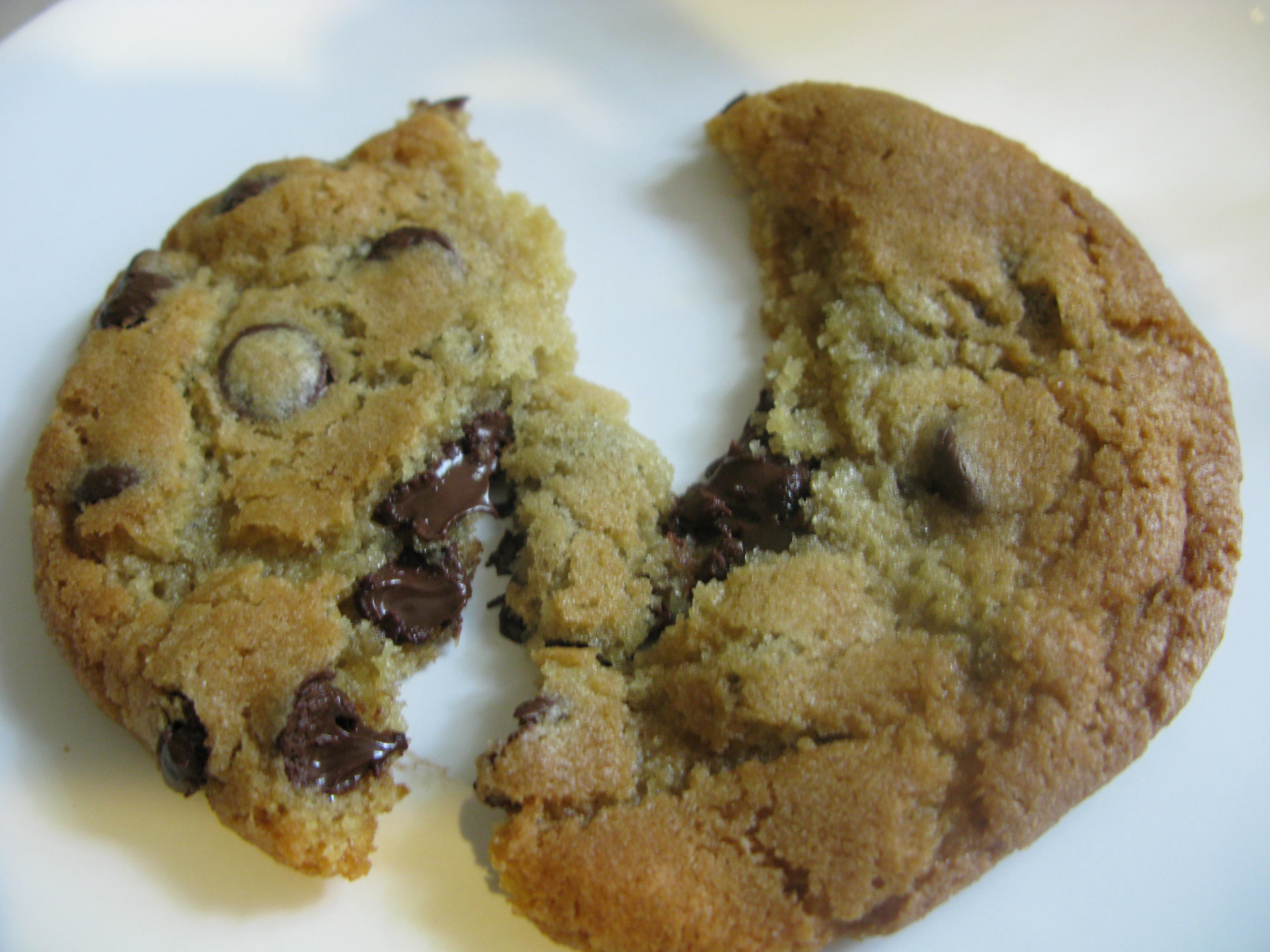
and the scent of chocolate chip cookies in the oven. Other nights
you wondered how words could rest so calmly on one page yet
explode off the next, or why a man would climb a tower in Austin
to kill fourteen people when opportunities for mayhem and murder
burgeoned across the sea. Wasn’t living a matter of simple
subtraction? One by one the days parted and you walked through
that dwindling heat, eyes squinting, questions in hand, emerging
fifty years later having suffered additions and division and the
cruelties of love and success, honor and truth, still asking why
and how, home or house, where it went, your shoulders slumping
under the heft of those beautiful, terrible summers stacked high
like so many life-gatherings of unread books awaiting a bonfire.


This was first published in theSilver Birch Press “Moving” series, and an earlier version titled “Bonjour, Texas” appeared on the blog A Holistic Journey.


Glass with Memory

lamp


Glass with Memory

When I remember you
glass comes to mind,
but nothing so transparent
as an unclothed thought

or warmth trickling in
through the pipes or
under the haze of
the second night’s sheet,

no two alike except
in appearance, but under
the lamp’s unconscious glare
I find warmth spreading

across the hard surface,
telling me all is
not lost, that smoothness
persists beyond our reflection.


glass


“Glass with Memory” made its first appearance on the blog in February 2017.


A Word Bathing in Moonlight (with recording)

mind


A Word Bathing in Moonlight

You understand solitude,
the function of water,
how stones breathe
and the unbearable weight
of love. Give up, the voice says.
Trust only yourself.
Wrapped in light, you
turn outward. Burst forth.


“A Word Bathing in Moonlight” first appeared in Eclectica in July 2017.

moonlight

“Thinking Music” Kevin MacLeod (incompetech.com)
Licensed under Creative Commons: By Attribution 3.0 License
http://creativecommons.org/licenses/by/3.0/

Not Blame Your Pleasure

bike


Not Blame Your Pleasure

Because vision limits options, I close my eyes.

Becoming urges patience.

The morning after I didn’t die, I took breakfast in bed.

Arrival stamps the difference between waiting and choice.

Expectation, too, extends its squeeze, rendering sleep impossible.

I ride the bike and go nowhere, or walk steadily, covering the same ground.

Which will claim me first? An occlusion, gravity or unchecked growth?

Anticipation replaces one sigh with another: I have three falls from two roofs.

A friend has named me executor of his estate, and now the race is on.

The path to the void seems straight only near its end.

My ashes will one day soil someone’s morning.


ladder

“Not Blame Your Pleasure” first appeared here in November 2015.


Poet’s Pantry

file3911233869642


In my sliver of the world, poetry and cooking share many qualities. When I step into the kitchen, I often have only a vaporous notion of what’s for dinner. A hankering for roasted poblano peppers, the need to use a protein languishing in the refrigerator, the memory of an herbal breeze wafting down a terraced hill near Lago d’Averno, Hell’s entrance, according to Virgil, or even a single intriguing word, may spark what comes next. But the success of what follows depends upon the ingredients at hand, on how we’ve stocked the pantry. Good products beget better results. Let’s take my desire for roasted poblanos. What to do with them? Poking around, I uncover an opened package of goat cheese, a bit of grated grana padano and some creme fraiche, and I immediately think pasta! Looking further I spot arugula, a lemon, a handful of pecans, some cherry tomatoes. Dinner: Pappardelle with a roasted poblano and goat cheese sauce, garnished with toasted pecans, served with an arugula and cherry tomato salad dressed with a lemon vinaigrette. Simple, when you’ve stocked a solid base of quality components.

My writing employs a similar process. Anything – a vague sense of uneasiness, a particular word, the sunlight slanting through the unfortunate dove’s imprint on my window, articles or books I’ve read or perused on a myriad of subjects – may launch a poem. But what truly makes the poem, what bolsters, fills and completes, what ignites and catapults it arcing into the firmament? The pantry’s contents.

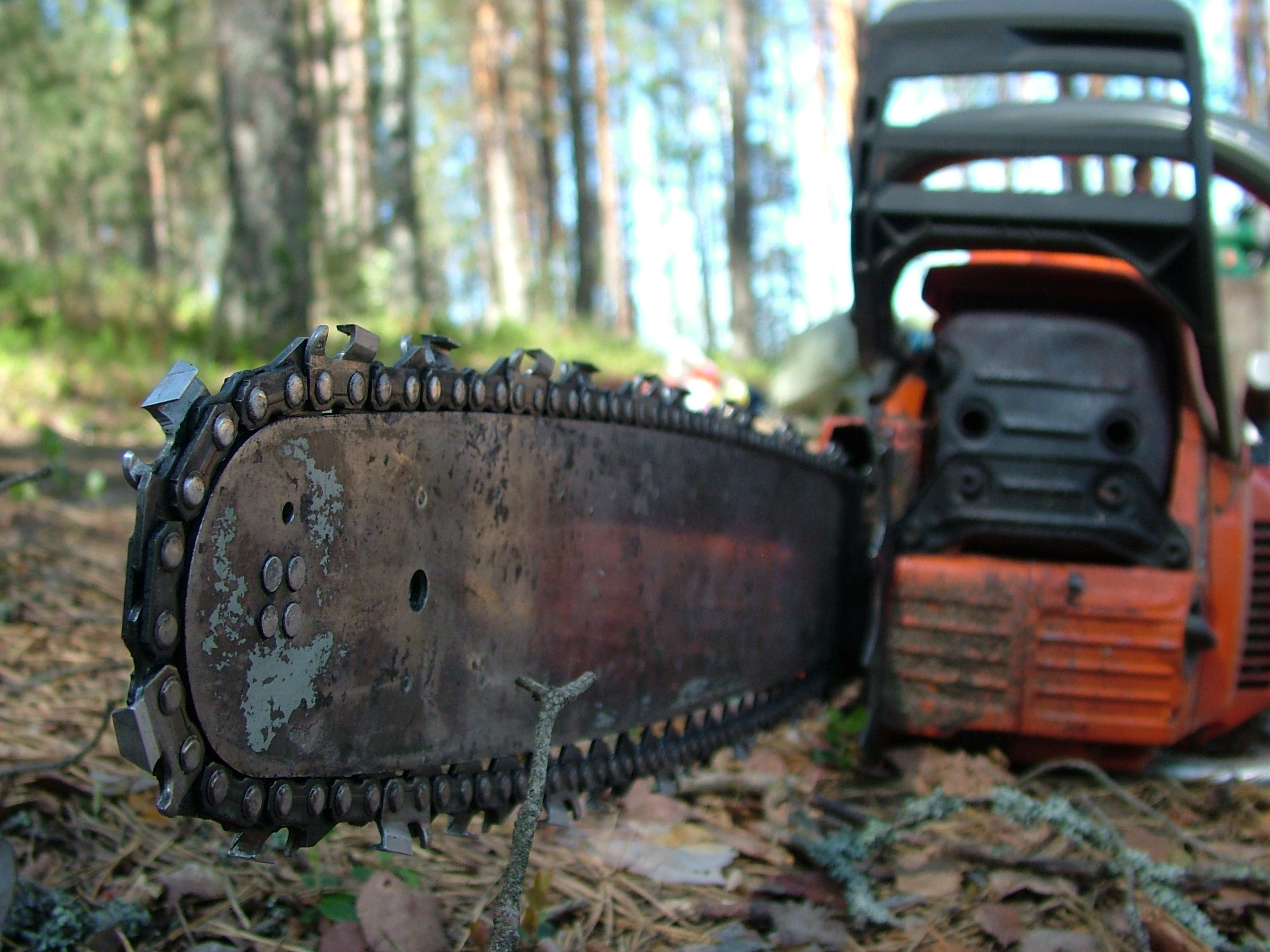
Everyone’s needs differ, and I wouldn’t presume to inflict my peculiar sensibilities on anyone, but if you cracked open my burgeoning poetry pantry’s door, you’d certainly unearth dictionaries and a thesaurus, fallen stars, books on etymology and language, curiosity, a guitar or mandolin, at least one window (sometimes partially open), conversations floating in the ether, various empty frames, wind, dog biscuits and dirty socks, a walking stick, sunlight and shadows, more books on such subjects as ancient navigation, the history of numbers, the periodic table, alchemy and olives. You might also spy reams of paper, unspoken words, coffee cups, a scorpion or two, scrawled notes on index cards, wandering musical notes, a pipe wrench, wood ear mushrooms and salvaged fragments of writing, failed ideas moldering in clumps on the floor, a few craft beers and empty wine bottles, a chain saw, and most important of all, a bucketful of patience.

(I cannot over-emphasize the bucket’s contents…)

This is just to say (no, I didn’t eat the plums) that the best equipped poets stock their pantries with the world and all its questions, with logic, with faith, persistence, emotion, science, art, romance and yes, patience. Line your kit with every tool you can grasp or imagine. Keep adding to it. Read deeply. Listen. Breathe. Listen again. Converse. Look outward. Further, past the trees, around the bend and beyond the horizon’s curve, where the unknown lurks. Look again. Don’t stop. Continue.

And if after all this you’re wondering what basks in my kitchen pantry:

photo(13)

This last appeared here in November  2018.

Countdown, #3: How to Write a Poem (with recording)

My last five posts of 2019 are reruns of five of the most viewed posts on this site during the year.


How to Write a Poem

Learn to curse in three languages. When midday
yawns stack high and your eyelids flutter, fire up

the chain saw; there’s always something to dismember.
Make it new. Fear no bridges. Accelerate through

curves, and look twice before leaping over fires,
much less into them. Read bones, read leaves, read

the dust on shelves and commit to memory a thousand
discarded lines. Next, torch them. Take more than you

need, buy books, scratch notes in the dirt and watch
them scatter down nameless alleys at the evening’s first

gusts. Gather words and courtesies. Guard them carefully.
Play with others, observe birds, insects and neighbors,

but covet your minutes alone and handle with bare hands
only those snakes you know. Mourn the kindling you create

and toast each new moon as if it might be the last one
to tug your personal tides. When driving, sing with the radio.

Always. Turn around instead of right. Deny ambition.
Remember the freckles on your first love’s left breast.

There are no one-way streets. Appreciate the fragrance
of fresh dog shit while scraping it from the boot’s sole.

Steal, don’t borrow. Murder your darlings and don’t get
caught. Know nothing, but know it well. Speak softly

and thank the grocery store clerk for wishing you
a nice day even if she didn’t mean it. Then mow the grass,

grill vegetables, eat, laugh, wash dishes, talk, bathe,
kiss loved ones, sleep, dream, wake. Do it all again.


* * *

“How to Write a Poem,” is included in Indra’s Net: An International Anthology of Poetry in Aid of The Book Bus, and has appeared on the blog as well.

All profits from this anthology published by Bennison Books will go to The Book Bus, a charity which aims to improve child literacy rates in Africa, Asia and South America by providing children with books and the inspiration to read them.

Available at Amazon (UK) and Amazon (US)