Helsinki (with recording)

Helsinki

Helsinki

An editor said never start a poem at a window,
so instead I’m looking at the door,

which is made of glass. We are to avoid rain,
too, but it streaks the pane in such delicious

patterns that I can’t help but pretend to be someone else
in a foreign city, perhaps Helsinki, sipping black coffee

with a mysterious woman younger than my daughter
(who also does not exist), whose interests

in me are purely literary, although she straightens
my collar with lingering, scented fingers. Garden

memories and birds must never populate our lines,
but corpses are fine, as are tube tops and bananas

and any combination thereof. I finish my coffee
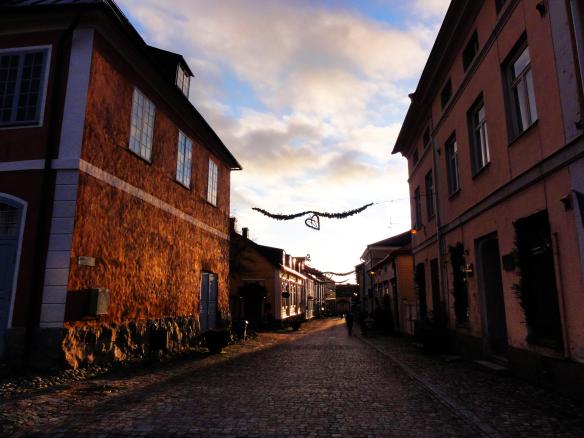
and wander alone through cobblestone streets,

stepping over clichés when possible, kicking them
aside when my hip joint argues, or simply accepting

their useful limitations when nothing else works.
Unknown and lacking credentials, I shrug, go on

past the closed doors behind which unseen bodies
perform the most bizarre and sensual solo dances,

or not, and shadows cook sausages over fire
and the grease spattering onto the tiled counters

issues a fragrance that awakens neighborhood dogs
and maybe a dozing stall-keeper at the market

where cloudberries are sometimes found.
I know little of Finland, and less of myself,

and then there’s poetry, which remains a blank
frame, a frosted pane I’ll never truly unlatch.

* * *

My poem “Helsinki” was first published at Panoply. It was inspired in part by a Facebook thread on which editors commented on what caused them to instantly reject poems. One said beginning a poem at a window was cause for rejection. Hence the first line.

Poems in Oxidant | Engine’s BoxSet Series, Vol. 2


“Letter to Wright” is included in my collection of twelve poems found in Volume 2 of Oxidant | Engine’s BoxSet Series. I’m proud to have my work appearing alongside that of such luminaries as José Angel Araguz, Dorothy Chan, John Sibley Williams and others.

At $12, the BoxSet is a steal, featuring ten poets, each with 10-15 pages of poetry. Where else can you purchase ten discrete collections at that price?

* * *


Letter to Wright from Between Gusts

Dear Tami: The wind here speaks an undiscovered language:
diffident, it lurks in the background, stuttering, fingering
everything, shifting directions, mocking us, barely noticeable
until it gets pissed off and BLOWS! Then, shit happens. Pickle
jars appear in purses. Love notes remain unwritten. Shingles
flap across the lawn and idiots are elected to office (nothing new,
I know). When I was a kid I marveled at those fortunates who
lived under the same roof for years, for decades, entire lives, while
my family rolled around the globe, collecting vaccination scars
like postcards or nesting dolls. How interesting, I thought then,
to know and be known, to avoid the perpetual newcomer’s
path. Having shared this house with my wife and various dogs,
birds, rodents, insects and arachnids for thirty-three years, I now
know this – home is not a stationary edifice. No cornerstone
defines it any better than fog rubbing the juniper’s tired back,
or courting mayflies announcing warmth’s arrival in their brief
pre-death interludes. Desire is a feckless mistress; after obtaining
the prize, we miss the abandoned and wonder what might have
been. When you arrive at your new town remember this: no one
is stranger to you than yourself. I speak from experience, having
absorbed differences at one end only to watch them emerge
hand-in-hand at the other, like newborn twins or nearly forgotten
reminders of an uncle’s kindness in a year of typhoons and sharp
replies and rebuilt lives. Home is a smile, a lover’s sleepy touch
at 3 a.m., or the secret knock between childhood friends reunited
after decades. It lives in soft tissue, not steel, and breathes water
and air, flame and soil and everything between. But it can’t exist
without your mind and body lugging it around. I would like to
tell you what the wind is saying, but it’s singing different tunes
these days, and my translation skills begin and end in that still
place between gusts, floating in the twilit air like so many empty
pockets. These are the only words I have. Not much to hang a hat
on, and I apologize for my shortcomings and inability to expound
with clarity. I speak in poetry, but mean well. May your moons
be bright and your winds wild yet gentle, even if you can’t fathom
their meaning. I’ll keep trying if you will. All the best, Bob.


“Letter to Wright from Between Gusts” was published at The Lake in August 2017. Many thanks to editor John Murphy for accepting this piece, and to T.S. Wright for inspiring it.


A Step Closer


A Step Closer

The difference in here
and there, a step closer to infinity
swallowing the clover and wild onion.

Not knowing, you shift purpose to intent.

Following the sun,
the flower sips light all day,
pausing only when I walk between.


“A Step Closer” was published in Sleet Magazine in August 2018. I am grateful to editor Susan Solomon for taking this piece.


Poem in Brave Voices


My poem “The Gift” was published in Brave Voices in January 2019. I somehow missed it…

Many thanks to Audrey Bowers and her editorial staff for taking this piece.


Q&A with Poet Robert L. Penick

Robert L. Penick’s writing has been published in numerous literary journals. His poetry chapbook, Exit, Stage Left, won the 2018 Slipstream chapbook contest. The former editor of Chance Magazine, he has most recently been editing and publishing Ristau: A Journal of Being. He lives in Louisville, Kentucky.

Would you mind sharing a bit about your background? How and why did you come to writing? How has being a non-academic framed your work?

I grew up in a very blue-collar environment, was the first—and the last person in my family to go to college, and really took to writing around age 14.  A number of different factors instilled a sense of “otherness” in me, a sense of not fitting in, or wanting to fit in, with the available demographics.  I believe not being the product of an academic writing program has helped me mold my own peculiar voice, since I had no one indoctrinating me with what writers I should like.  There are a lot of folks slogging their way through Michel Houellebecq, for example, because some professor told them that’s good writing. I disagree.  The best are the ones that connect with you, plain and simple. I worked in the court system with the mentally ill and victims of domestic violence, and I believe that had a more valuable impact on what I do than 1,000 workshops.

Your chapbook, Exit Stage Left,won the 2018 Slipstream Annual Poetry Contest. Can you tell us something about its genesis?

Exit, Stage Leftwas a selection of poems from a full-length book project I have called The Art of Mercy  that I haven’t been able to get published.  Mercyis 70 pages, with each of the 70 poems having been published in one journal or another.  I flipped through it and chose 25 pieces that I thought hung together well and sent it off. Some of those pieces go back fifteen years, and I didn’t realize that the overriding theme was one of aging and mortality until I actually had the finished book in my hands.  A fine Kentucky poet, James Still, said in effect that young poets write of death and older poets write of life.  I see life/death, happy/sad, and love/hate as being sides of the same coin.

(Note from RO: To read three poems from this collection, or to order the book, click here. It’s a bargain at $10, with superbly crafted pieces of loss, hope and humanity.)

Would you offer up some of your artistic influences. What draws you to that work?

The writer having the biggest impact on me was John Steinbeck.  Many people dismiss him as sentimental, but you know what?  People are sentimental, just naturally so.  I remember finishing the last page of The Grapes of Wrath, putting the book down and just walking around the house wringing my hands.  I love getting that connection to basic humanity.  Ray Bradbury is the only science fiction author I’ve enjoyed, because those aren’t sci-fi stories, they’re stories about real people with real hearts and hopes and dreams.  Except for the robots, I guess.  Currently I’m on a Nabokov kick, reading his short stories.  That the man could write that well in his third language is astounding.  Recently, I found Richard Wright’s story, “The Man Who Lived Underground,” and was moved by its drama and precision.  

If you were a poetic form, which would you be?

I would be…an accident report.  “Subject took the off ramp at too great a speed and went through the guardrail into the lake.  After being checked by EMS, subject was transported to Metro Corrections, charged with having a lack of common sense.”

You’ve edited and published literary journals. Could you explain what crosses your mind when reviewing poems for possible inclusion in one?

Why am I doing this?  There is a danger in putting out a literary journal, in that you get bludgeoned by bad writing, and that can damage your own craft.  I’ve always said that writing a poem is like playing the harmonica; anyone can do it, but not many can do it well.  But a lot of folks buy their harmonica, then go straight to the Wednesday night open mic at the corner bar without putting the time in to learn. With writing, it’s a matter of finding your natural voice, being able to spot what doesn’t work, avoiding cliches and such.

What themes or traits will readers find in your work?  

I go for humanity more than anything, working often with characters who are socially isolated in some way, finding meaning in the day-to-day.  You have to be entertaining—for goodness sake, don’t bore people—but if you can slip some kindness in there, it’s a win.

 And your creative process? Could you offer us a glimpse into how your poems develop from first glimmer to fully realized piece? Do you follow a regular writing routine? Write in public or in solitude? 

I pick up a lot of ideas when I’m out.  I haven’t been able to write at home lately, so I scribble in coffee houses and fast food joints.  I’m that odd guy in the corner.  Last month, I’m at Burger King, and there’s maybe three other guys there, each eating alone.  I thought, “We should all squeeze into one booth together; we wouldn’t look so pathetic.” That became a poem called “BK,” about how every solitary person still has their childhood train set running through their past. Habit-wise, I wish I could be one of those folks that did their two or three hours a day, but that flow state is getting harder the older I get.  I get a cup of coffee and, if I get 200 words down on a story, that’s a good day.  It’s like pulling teeth, but I’m a fairly conscientious dentist. 

What advice would you offer to a writer just starting out?

Realize that the product is separate from you and don’t be stung by constructive criticism.  If a person is restoring a car and you point out the brake line is leaking, he or she will likely thank you.  But many writers are threatened by good criticism.  At the same time, be selective about what advice you take.  Many people will have no idea what you’re trying to do, and many writers (I’ve done this) will unconsciously try to make your writing more like their own.  You’re at a good point when you can hand a piece to someone you respect and say, “what’s the weak link in this?” 

Do you have any projects in process?

Three big things on my dance card right now: The Art of Mercy that I mentioned, Redemption, a gritty novel that may be too dirty for today’s market, and a collection of flash fiction I’m putting together. Flash gets a bad rap, mainly because much of it are merely fragments, but I think I’ve  done some impressive work with the 300 word story.  I’ve had perhaps 25 of them published (many are linked from my website, theartofmercy.net) and I’d like to get a book of them.  It’s funny, I’ve had work in 150 different literary journals, but it’s difficult finding a house that will do a full-length book for me.  Alas.  We can always find something to cry about, if we choose.

 

Laocoön

GREEK COLUMN LINDOS


Laocoön

This figure of complexity
persuades a lingering

glance, the two-fold
inclination entwined,

horror expressed
in tandem, the sons’

limbs compressed
as the father struggles,

realizing true
sacrifice, the inward

grasp of storm and
wrath and serpent,

his face
echoing those yet

to come, breached
walls, a city in

flames, the cries
of warnings unheeded.


the_kelpies

Laocoön, through Virgil’s Aeneid, is the source of the phrase “Beware of Greeks bearing gifts.” The poem, which first appeared in The Blue Hour Magazine, was inspired by the sculpture “Laocoön and His Sons,” which resides at the Vatican. You might find Wikipedia’s entry of interest. Originally posted on the blog in February 2016.

Self-Portrait as Border


Self-Portrait as Border

Some rivers shift course, but
I stand firm, a nexus of rejection,
that line denoting separation of north
and good, evil and south, dark and
white. Welcoming no one, I stand
guard, opposing all with my flag
of diminishment. Squint, and you
still can’t see me. Your bare feet
won’t stir my dust. I am nowhere,
but remain here — that feeling of
prideful despair, strong, resolute,
inflexible foe to all who dare cross.


“Self-Portrait as Border” first appeared in October 2018 in Minute Magazine. Many thanks to the editors for taking my poem.


Two Poems in Voices


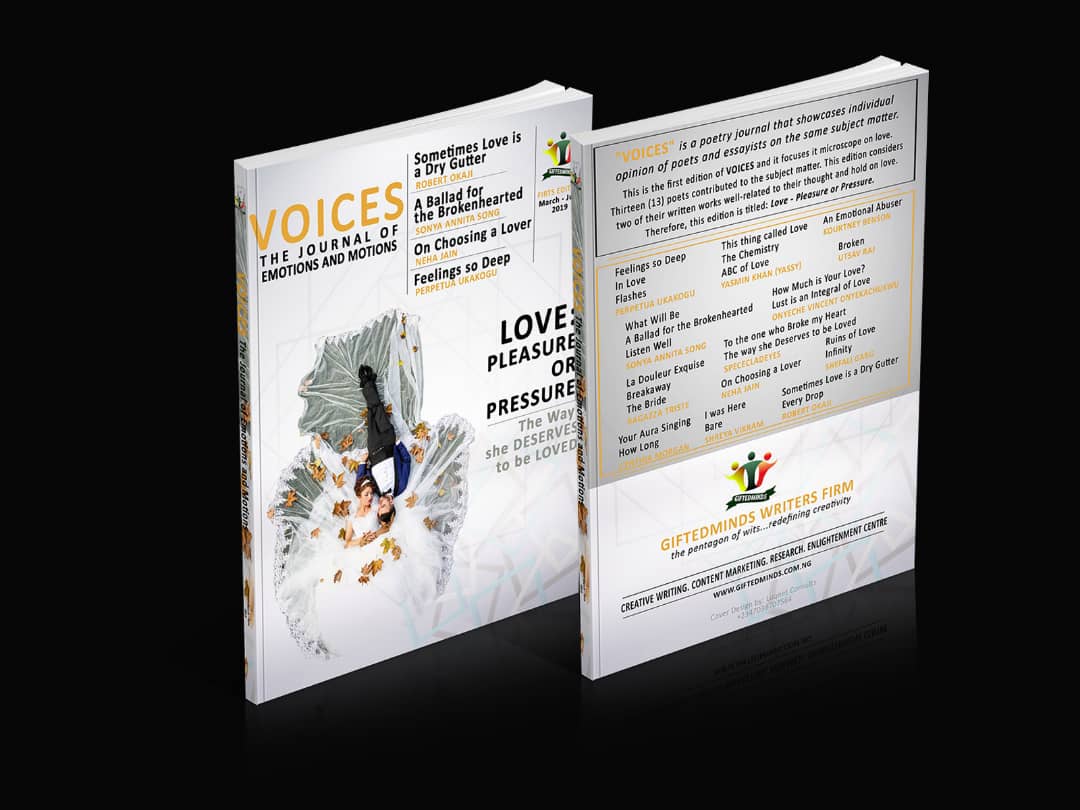
I’m delighted to report that my poems “Sometimes Love is a Dry Gutter” and “Every Drop” are included in the new Nigerian publication Voices: The Journal of Emotions and Motions. Thank you, Victor Eshameh, for selecting these pieces.


Listening to Cicadas, I See Charlottesville (Ghazal, with recording)


Listening to Cicadas, I See Charlottesville (Ghazal)

Shedding one coat, you live in the red, apart
from the rest. Never together, forever apart.

In this sun-drenched field, the cracks drill deeper,
wider, dribbling soil and small lives, expanding, apart.

What falls truer than any words released from this man?
Once divided, never again to touch, always apart.

The electric shrill fluctuates pitch, in unison. Hundreds
of tymbals, shredding dusk, now together, then apart.

You narrow your eye to a slit, but still see the entire
spectrum. Wing clicks, stridulation. Whole yet apart.

Shearing syllables, I learn the language of half-truth.
What is my name? I reach for that fragment. It falls apart.


How to Write a Poem (with recording)


How to Write a Poem

Learn to curse in three languages. When midday
yawns stack high and your eyelids flutter, fire up

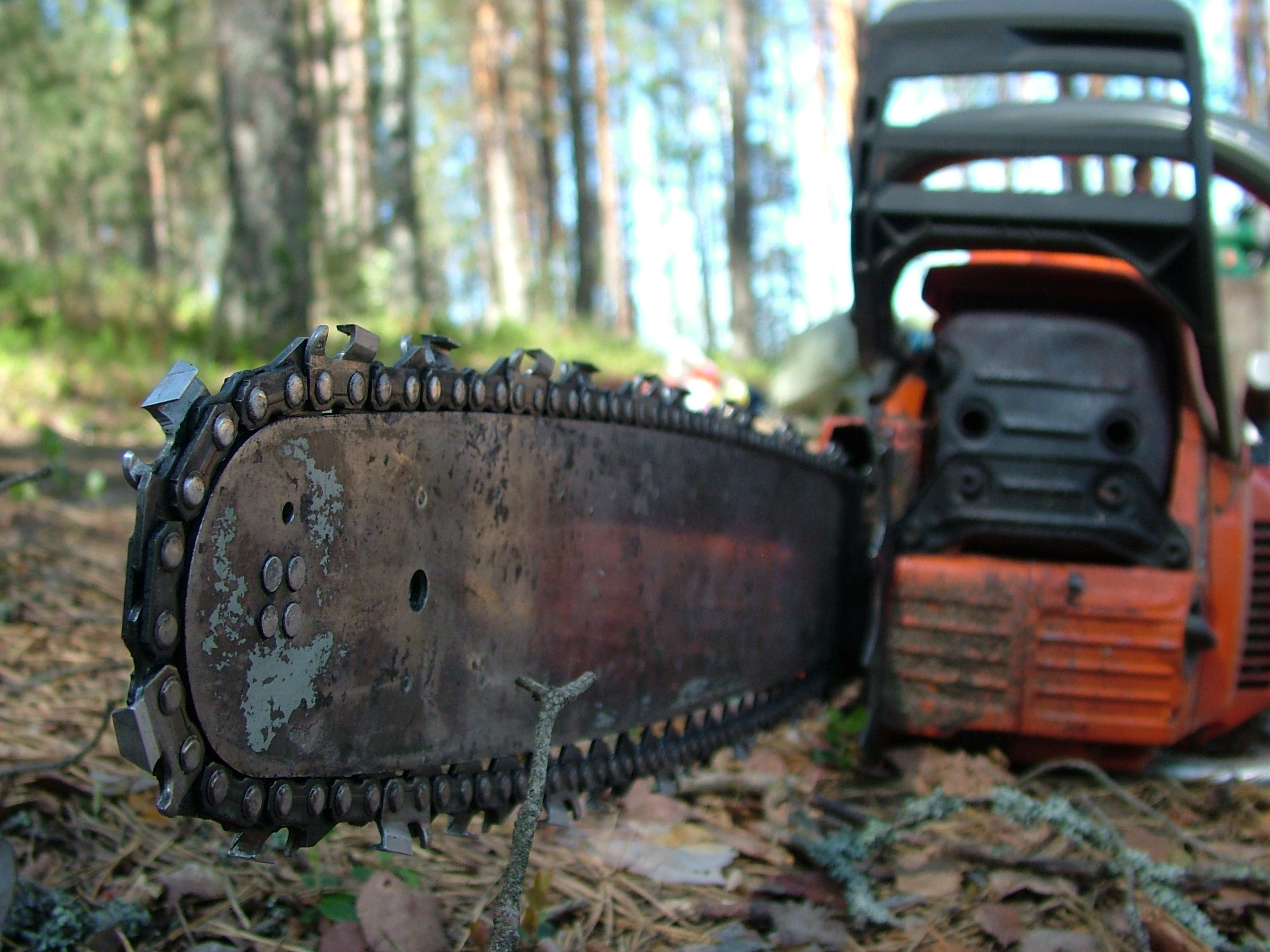
the chain saw; there’s always something to dismember.
Make it new. Fear no bridges. Accelerate through

curves, and look twice before leaping over fires,
much less into them. Read bones, read leaves, read

the dust on shelves and commit to memory a thousand
discarded lines. Next, torch them. Take more than you

need, buy books, scratch notes in the dirt and watch
them scatter down nameless alleys at the evening’s first

gusts. Gather words and courtesies. Guard them carefully.
Play with others, observe birds, insects and neighbors,

but covet your minutes alone and handle with bare hands
only those snakes you know. Mourn the kindling you create

and toast each new moon as if it might be the last one
to tug your personal tides. When driving, sing with the radio.

Always. Turn around instead of right. Deny ambition.
Remember the freckles on your first love’s left breast.

There are no one-way streets. Appreciate the fragrance
of fresh dog shit while scraping it from the boot’s sole.

Steal, don’t borrow. Murder your darlings and don’t get
caught. Know nothing, but know it well. Speak softly

and thank the grocery store clerk for wishing you
a nice day even if she didn’t mean it. Then mow the grass,

grill vegetables, eat, laugh, wash dishes, talk, bathe,
kiss loved ones, sleep, dream, wake. Do it all again.


* * *

“How to Write a Poem,” is included in Indra’s Net: An International Anthology of Poetry in Aid of The Book Bus, and has appeared on the blog as well.

All profits from this anthology published by Bennison Books will go to The Book Bus, a charity which aims to improve child literacy rates in Africa, Asia and South America by providing children with books and the inspiration to read them.

Available at Amazon (UK) and Amazon (US)