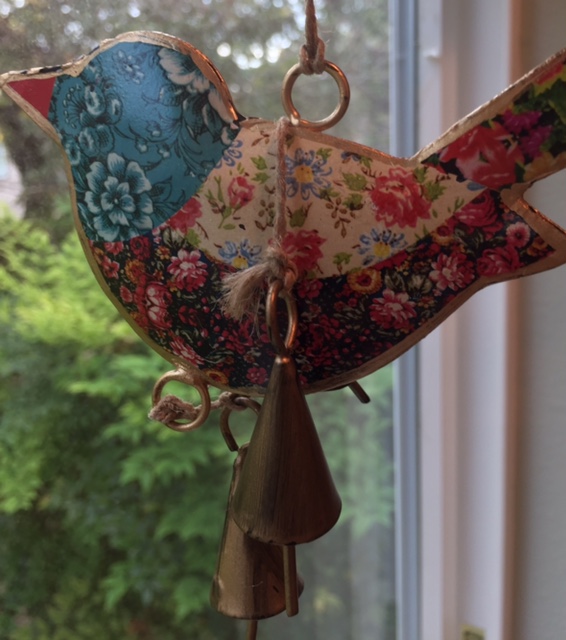
Agave

photo(2)

Agave

It might deceive.
Or like a cruel

window, live its life
unopened,

offering a view
yet reserving the taste

for another’s
tongue, ignoring

even the wind.
The roots, as always, look down.

* * *

This first appeared in Ijagun Poetry Journal in December 2013, was featured in poems2go in April 2016, and is also included in my micro-chapbook, You Break What Falls, available for download from the Origami Poems Project: http://www.origamipoems.com/poets/236-robert-okaji

image


Poem Up at The Green Light


My poem “Houston” has been published at The Green Light. Many thanks to editors Caitlin and Ash for taking this piece!


Earth’s Damp Mound

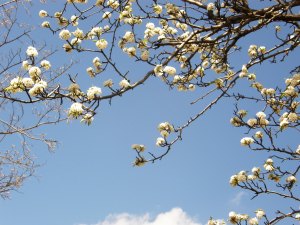
OLYMPUS DIGITAL CAMERA

Earth’s Damp Mound
for P.M.

I. February 1998.

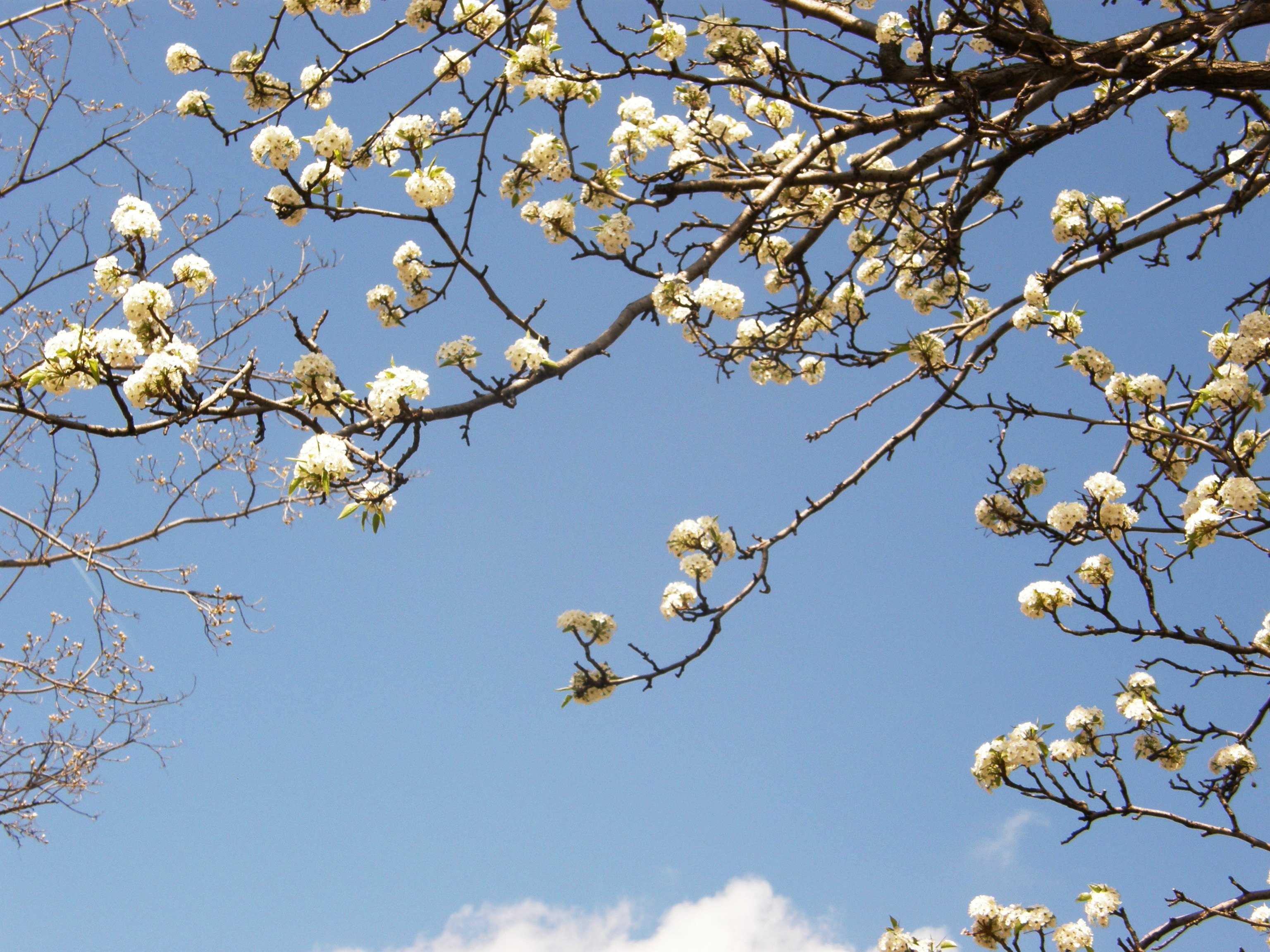
That week it rained white petals
and loss completed its

turn, the words finding themselves
alone, without measure,

without force, and no body to compare.
Though strangers spoke I could not.

Is this destiny, an unopened
mouth filled with

pebbles, a pear tree
deflowered by the wind? The earth’s

damp mound settles among your bones.


II. Count the Almonds

What bitterness
preserves your sleep,

reflects the eye’s
task along the inward thread?

Not the unspoken, but the unsayable.

Curious path, curious seed.
A shadow separates

to join another, and in the darker
frame carries the uncertain

further, past silence, past touch,
leaving its hunger alert and unfed,

allowing us our own protections.


III. The Bowl of Flowering Shadows

Reconciled, and of particular
grace, they lean, placing emphasis on balance,

on layer and focus, on depth of angle
absorbing the elegant darkness,

a lip, an upturned glance, the mirror.

What light caresses, it may destroy.
Even the frailest may alter intent.

So which, of all those you might recall,
if your matter could reform

and place you back into yourself,
would you choose? Forgive me

my selfishness, but I must know.


IV. Requiem

Then, you said, the art of nothingness
requires nothing more

than your greatest effort.
And how, seeing yours, could we,

the remaining, reclaim our
space without encroaching on what

you’ve left? One eye closes, then
the other. One mouth moves and another

speaks. One hears, one listens, the eternal
continuation. Rest, my friend. After.


Prentiss Moore influenced my reading and writing more than he ever realized. We spent many hours talking, eating, arguing, drinking, laughing. Always laughing – he had one of those all-encompassing laughs that invited the world to join in. And it frequently did. Through Prentiss I met in person one of my literary heroes, Gustaf Sobin, whose work Prentiss had of course introduced me to. Those few hours spent with the two of them driving around in my pickup truck, discussing poetry, the Texas landscape, horticulture and the vagaries of the publishing world, are hours I’ll always hold close.

Earth’s Damp Mound last appeared here in April 2018. It was first published in the anthology Terra Firma, and is included in my chapbook, If Your Matter Could Reform.
 

file0001831388228

The Three Disappointments of Pedro Arturo


The Three Disappointments of Pedro Arturo

The difficulty lies in denying the rest,
pretending the denouement remains unknotted
like that length of rope looped over the branch,
unable to serve its purpose. I regret nothing,
but often wish that I had dangled my feet
in the stream more often and felt the trout
wriggle by in their fluency of motion. Last year
my daughter claimed that as a half-mortal
what pulsed through her heart was not blood
but ichor, the life-force of gods, and when I
stated that her mother was from Muleshoe and
not Olympus, and that I may have been the
product of divine intervention, but was neither
god nor blessed creature, she spat wine in my
face, laughed, grabbed my keys and chugged off
in the cherry-red Karmann Ghia I’d dubbed
La Gloria Roja. I’ve not seen that car again, but
I swear I’ve heard its custom klaxon ah-woo-gah
in strange small towns between train stops
and the lonely fields stretching out into the
blackness like memories losing traction. But
mostly I find myself in this house of books
and empty bottles, maintaining space and time,
herding shadows into their oblong boxes,
contemplating nooses and love, courage and
mortality, and the inability to step up, to swallow
what I most crave and do what must be done.


* * *

“The Three Disappointments of Pedro Arturo” was drafted during the August 2016 Tupelo Press 30-30 challenge, and was published in Main Street Rag in October 2017. I was fortunate to have two sponsors for the poem – Clyde Long, who provided three words (denouement, ichor and claxon) and Paul Vaughan, who offered the title. One never knows what will come of these sponsored pieces…

To the Lovely Green Beetles Who Carried My Notes into the Afternoon


To the Lovely Green Beetles Who Carried My Notes into the Afternoon

Such beauty should not be bound,
thus I tied loose knots,

knowing you would slip free
and shed my words

as they were meant,
across browned lawns,

just over the cedar fence
or at the curb’s edge,

never to be assembled,
and better for it.


* * *

This appeared in riverSedge Volume 29, Issue 1, released in October 2016, and is included in my chapbook, From Every Moment a Second. I first encountered riverSedge in 1983, and vowed that one day my poetry would be published in this journal. It took a while…

Misery (Recording)


“Misery” is the Third section of the fifth poem in I Have a Bird to Whistle (7 Palinodes), my new chapbook.


The book is available here to U.S. residents for $7.50, shipping included.

Non-U.S. purchasers can order it directly from me by emailing aBirdtoWhistle@yahoo.com.


Cedar (Recording)


“Cedar” is the second section of the fifth poem in I Have a Bird to Whistle (7 Palinodes), my new chapbook.


The book is available here to U.S. residents for $7.50, shipping included.

Non-U.S. purchasers can order it directly from me by emailing aBirdtoWhistle@yahoo.com.


Gulf

gulf

Gulf
for M.V.

Which looms wider, its sky or water? The birds, here, too,
reconvene in greater streaks. This morning I stomped around
Paisano, examining the grasses and soil, the rocks and various
configurations of clouds, and listened to experts discuss
prescribed burns and how the land’s contours can determine
sequence and efficacy. The mockingbird whose territory
we occupy has disappeared. Perhaps he’s just moved on.
I heard a red-bellied woodpecker yesterday, but never saw it,
and of course the rattlers at the ranch are still underfoot, just
less apparent this time of year. I looked closely, as always,
but never spied one. What else did I miss? The rich people
on the bluffs bulldoze habitat, poison creeks and erect their
Italianate villas, caring not a whit for the breeding warblers
or the landscape, although they might pony up a few bucks
for an environmental charity if sucked-up to properly. Given
a choice between the two, I’d pick the snakes every time;
they don’t smile or offer spiked drinks and stories of their
conquests, and usually warn before striking. Even a minor
deity might take offense and crack open a new fault in the
earth between this place and theirs, widening it by inches
with each presumption, every falsehood, whether shaded
in unrelated facts or illogic, until that shifting space could
be spanned solely by a bridge planked with truth and good
manners, and, yes, by mutual consent. Looking back, I
find many examples of these bridges collapsing in utero,
but we keep trying. Your story of the gulf coast storm
reminded me of weeks spent on calm water, and seeing,
no matter where I turned, blue meeting blue, from horizon
to horizon, the sky never broken by bird or cloud, born
anew each day, always looking between, never down.


“Gulf” was published in West Texas Literary Review in March 2017.

Texas (Recording)


“Texas” is the first section of the fifth poem in I Have a Bird to Whistle (7 Palinodes), my new chapbook.


The book is available here to U.S. residents for $7.50, shipping included.

Non-U.S. purchasers can order it directly from me by emailing aBirdtoWhistle@yahoo.com.


Diverting Silence


Diverting Silence

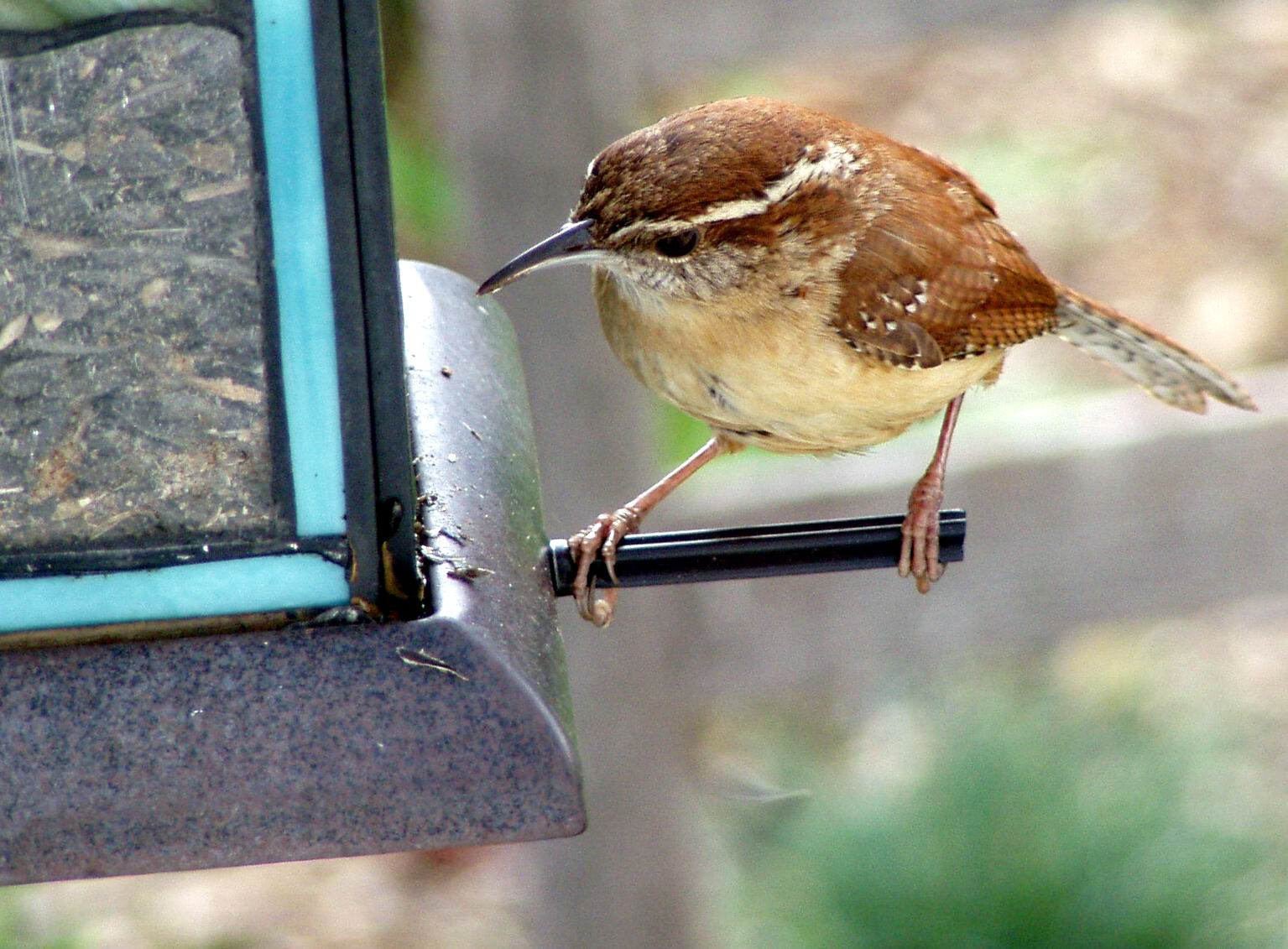
Wren canyons down the morning’s edge, proclaiming dawn.
Unpapered, unfettered, fearless, he abides.

I say “he,” but sexual dimorphism is not apparent in the species.
Accepting signals, we process and choose, freighting gender aside.

Listening requires contextual interpretation, as does belief.
Shrilling to the porch screen, he spears a moth, veers outward.

An acquaintance claims birds are soulless, existing only to serve God.
As temple bells exist solely to announce, and rain, to water lawns.

Faith’s immensity looms in the absence of proof.
Spherical and hollow, suzu bells contain pellets.

The search for truth without error does not preclude fact.
Even tongueless bells ring.


“Diverting Silence” was published in Taos Journal of International Poetry & Art in February 2017.