And All Around, the Withered

And All Around, the Withered

I total the numbers printed
on passing boxcars,

multiply by seven, then add two,
subtracting every third odd number,

only to find, in the end, myself
tethered to this empty platform,

spelling hapless with integers,
acknowledging Zahlen and

the infinite. Sometimes gravel, too,
calls to me and I observe space

in the path’s patterns, constellation
stacked upon constellation,

multi-dimensional galaxies
expanding in one swooping arc,

heroic eagles and exploding stars
complicit in their deeds and forever

locked in sequence, yet when I explain
my vision, the words emerge

as convex polyhedrons or inverted,
drooled gasps, and people turn aside.

That boy’s two bricks shy a full load, they
say. The lights are on but nobody’s home.

“And All Around, the Withered” was published in Steel Toe Review in January 2017.

Letter to Schnee from the Stent’s Void


Letter to Schnee from the Stent’s Void

Dear Dan: I’ve been trying to revive that dream,
the one in which the rare Texas bird sings “cuckoo, y’all,”
before shimmering through the night’s shrilling heart
and wakefulness, as you clamber up the balcony to join me
in knocking back Japanese single malt, chilled soba and Doritos.
The distance between earth and a first floor balcony may vary,
but the fall’s impact can’t ache so much as what never was or won’t
be. My mother’s family hovers out there in the World of Darkness,
while I stumble through my days under the Texas sun, rice grains
trickling from holes in my pockets, studding the way between
there and here, back and forth, between us and them, now and
maybe. I confess that communication doesn’t come naturally
to me. I’m reticent and slow on the uptake, and enjoy my time
as a shaded diminishment with only occasional forays
into the light. So much to learn, so little capacity. I could spend
hours watching the spider working among the unread books,
while my mandolin languishes in its case and the earth
keeps spinning, spinning, holding us in place. What tunes
have I forgotten, which remain unsung? The wire mesh tube
in my heart cleared the way from a numbered life, and now
I roll along in words, which bear their own bags of worry.
But I’ve learned to empty and stack the burlap on the floor near
the resonator, and the sacks magically replenish themselves
every night. So it goes. Empty, refill. Like a glass of Hibiki,
or blood pumped through our anterior descending veins.
Tonight rice and peppers will fill my belly, with fish, a mango
cream sauce, and a bitter ale, which I would share with you,
perhaps in another dream, or better yet, in person, under
stars announced by mythical birds on a warm night with
laughter in the breeze. No ladder needed. Come on up. Bob.


“Letter to Schnee from the Stent’s Void” was first published in Lost River in August 2018. Many thanks to editor Leigh Cheak for publishing this piece.


To the Lovely Green Beetles Who Carried My Notes into the Afternoon


To the Lovely Green Beetles Who Carried My Notes into the Afternoon

Such beauty should not be bound,
thus I tied loose knots,

knowing you would slip free
and shed my words

as they were meant,
across browned lawns,

just over the cedar fence
or at the curb’s edge,

never to be assembled,
and better for it.


* * *

This appeared in riverSedge Volume 29, Issue 1, released in October 2016, and is included in my chapbook, From Every Moment a Second. I first encountered riverSedge in 1983, and vowed that one day my poetry would be published in this journal. It took a while…

We Call the Neighbor’s Fat Burro Donkey Hotei, but His Name is Cantinflas

file000560125690

We Call the Neighbor’s Fat Burro Donkey Hotei, but His Name is Cantinflas

Certainty grows in corners, away from light.
From his mouth issues the breath we take, the words we keep.

Enjoy the collusion of shape and sound.
We share the hummingbird’s taste for sweet, but not its fierceness.

Its heart beats 1,200 times a minute,
and you ask me how best to bury money.

Hotei’s name means cloth sack, and comes from the bag he carried;
a man of loving character, he possessed the Buddha nature.

What we own cannot be held.
Most plastics are organic polymers with spine-linked repeat units.

The space you’ve left expands exponentially.
Left in the rain, the bell grows.

Christen me at your own peril. Agaves flower once then die.
Fluency in silence.

I dropped my pants when the scorpion stung my thigh.
The wind takes nothing it does not want.

After vulcanization, thermosets remain solid.
The Cantinflas character was famous for his eloquent nonsense.

Vacuum wrap the bills in plastic, place them in pvc.
Having mastered imperfection, I turn to folly.

Not the thing itself, but the process laid bare and opened.
Hoping to hide, the scorpion scuttled under a boot.

Thought to action, whisper to knife: which is not a curse?
The wind wants nothing; the burro sings his loneliness.


This first appeared here in May 2015. My failures often lead to success. I’ve never quite completed this piece, and don’t know that I ever will. But the first draft (nearly five years ago) set me off on a new path, one that has served me well. What more can I ask?
 
 
file2751313196905


Earth’s Damp Mound

OLYMPUS DIGITAL CAMERA

Earth’s Damp Mound
for P.M.

I. February 1998.

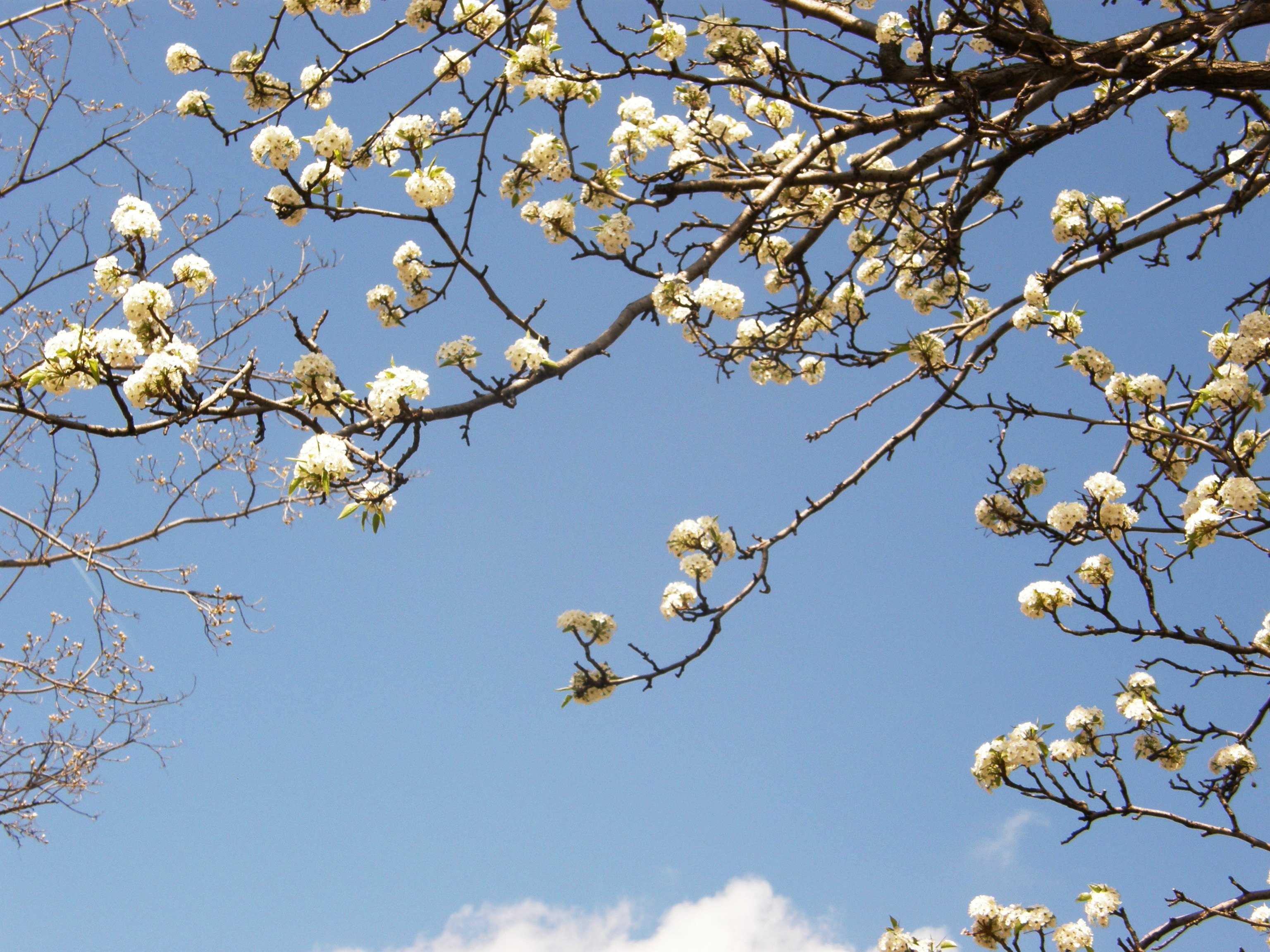
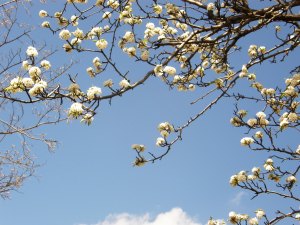
That week it rained white petals
and loss completed its

turn, the words finding themselves
alone, without measure,

without force, and no body to compare.
Though strangers spoke I could not.

Is this destiny, an unopened
mouth filled with

pebbles, a pear tree
deflowered by the wind? The earth’s

damp mound settles among your bones.


II. Count the Almonds

What bitterness
preserves your sleep,

reflects the eye’s
task along the inward thread?

Not the unspoken, but the unsayable.

Curious path, curious seed.
A shadow separates

to join another, and in the darker
frame carries the uncertain

further, past silence, past touch,
leaving its hunger alert and unfed,

allowing us our own protections.


III. The Bowl of Flowering Shadows

Reconciled, and of particular
grace, they lean, placing emphasis on balance,

on layer and focus, on depth of angle
absorbing the elegant darkness,

a lip, an upturned glance, the mirror.

What light caresses, it may destroy.
Even the frailest may alter intent.

So which, of all those you might recall,
if your matter could reform

and place you back into yourself,
would you choose? Forgive me

my selfishness, but I must know.


IV. Requiem

Then, you said, the art of nothingness
requires nothing more

than your greatest effort.
And how, seeing yours, could we,

the remaining, reclaim our
space without encroaching on what

you’ve left? One eye closes, then
the other. One mouth moves and another

speaks. One hears, one listens, the eternal
continuation. Rest, my friend. After.


Prentiss Moore influenced my reading and writing more than he ever realized. We spent many hours talking, eating, arguing, drinking, laughing. Always laughing – he had one of those all-encompassing laughs that invited the world to join in. And it frequently did. Through Prentiss I met in person one of my literary heroes, Gustaf Sobin, whose work Prentiss had of course introduced me to. Those few hours spent with the two of them driving around in my pickup truck, discussing poetry, the Texas landscape, horticulture and the vagaries of the publishing world, are hours I’ll always hold close.

Earth’s Damp Mound last appeared here in April 2018. It was first published in the anthology Terra Firma, and is included in my chapbook, If Your Matter Could Reform.
 

file0001831388228

Creek Haibun

Creek Haibun

The creek’s waters flow so quickly that I make little headway in my attempt to cross. A water moccasin slips by, and my left boot takes on water. This is not real, I say. We’ve had no rain and I would not be so foolish as to do this. Asleep? Perhaps, but I’ve passed the halfway point and have no choice but to move forward. I slip and nearly pitch headfirst into the dark current. Lightning stitches the sky.


dreaming, the snake

swims against floodwaters

oh, what have I lost?


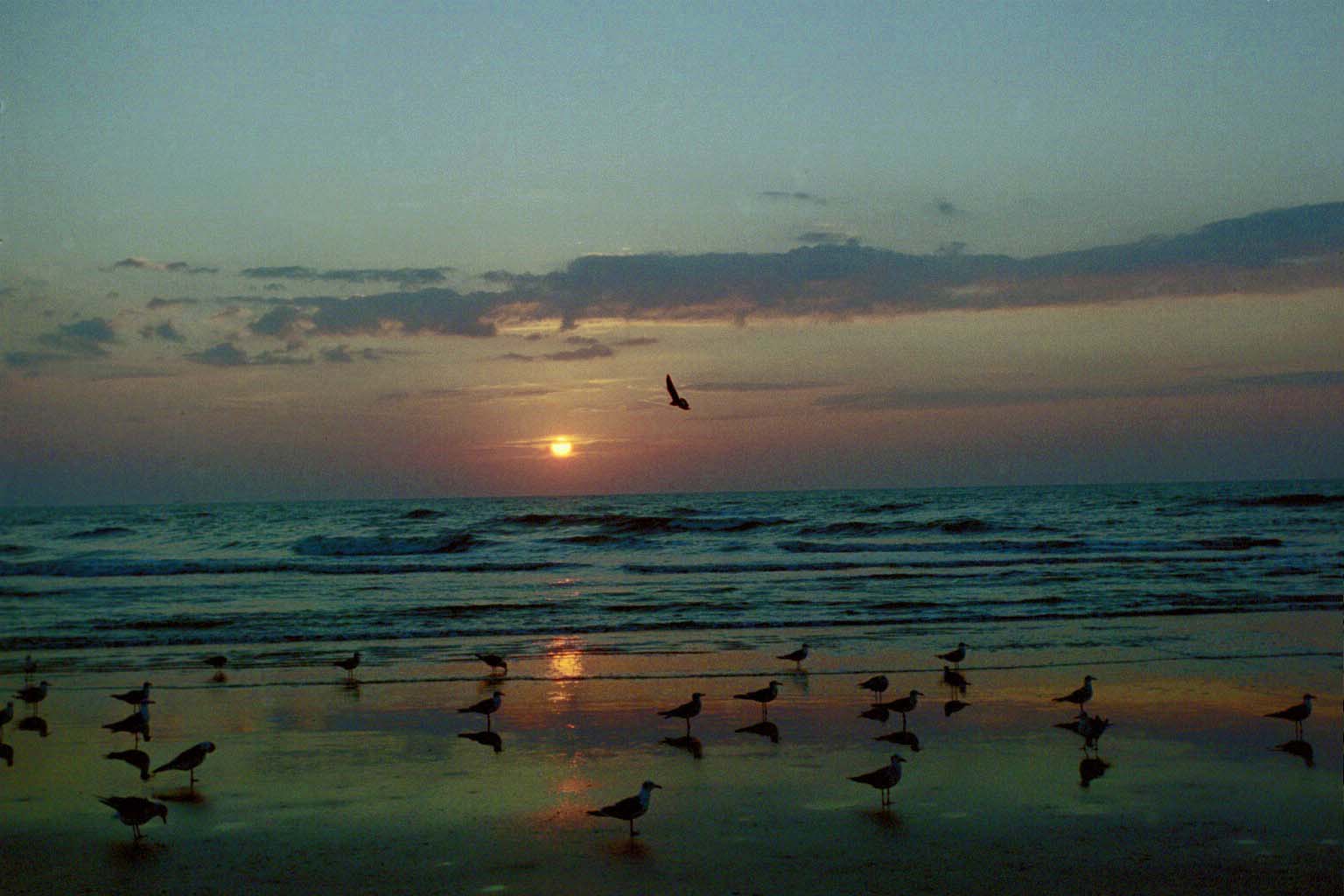
Gulf

gulf


Gulf
for M.V.

Which looms wider, its sky or water? The birds, here, too,
reconvene in greater streaks. This morning I stomped around
Paisano, examining the grasses and soil, the rocks and various
configurations of clouds, and listened to experts discuss
prescribed burns and how the land’s contours can determine
sequence and efficacy. The mockingbird whose territory
we occupy has disappeared. Perhaps he’s just moved on.
I heard a red-bellied woodpecker yesterday, but never saw it,
and of course the rattlers at the ranch are still underfoot, just
less apparent this time of year. I looked closely, as always,
but never spied one. What else did I miss? The rich people
on the bluffs bulldoze habitat, poison creeks and erect their
Italianate villas, caring not a whit for the breeding warblers
or the landscape, although they might pony up a few bucks
for an environmental charity if sucked-up to properly. Given
a choice between the two, I’d pick the snakes every time;
they don’t smile or offer spiked drinks and stories of their
conquests, and usually warn before striking. Even a minor
deity might take offense and crack open a new fault in the
earth between this place and theirs, widening it by inches
with each presumption, every falsehood, whether shaded
in unrelated facts or illogic, until that shifting space could
be spanned solely by a bridge planked with truth and good
manners, and, yes, by mutual consent. Looking back, I
find many examples of these bridges collapsing in utero,
but we keep trying. Your story of the gulf coast storm
reminded me of weeks spent on calm water, and seeing,
no matter where I turned, blue meeting blue, from horizon
to horizon, the sky never broken by bird or cloud, born
anew each day, always looking between, never down.


“Gulf” was published in West Texas Literary Review in March 2017.


Dry Well


Dry Well 

I trace the symbols.

In the dirt, among the grubs and crooked
weeds. Writing of loss. Of missing things.

Wondering if words will fill my mouth
with wool or grit. With pebbles and salt.

If truth is what I want.


* * *


“Dry Well” first appeared in Vox Populi in August 2019. I’m grateful to editor Michael Simms for his steadfast support.


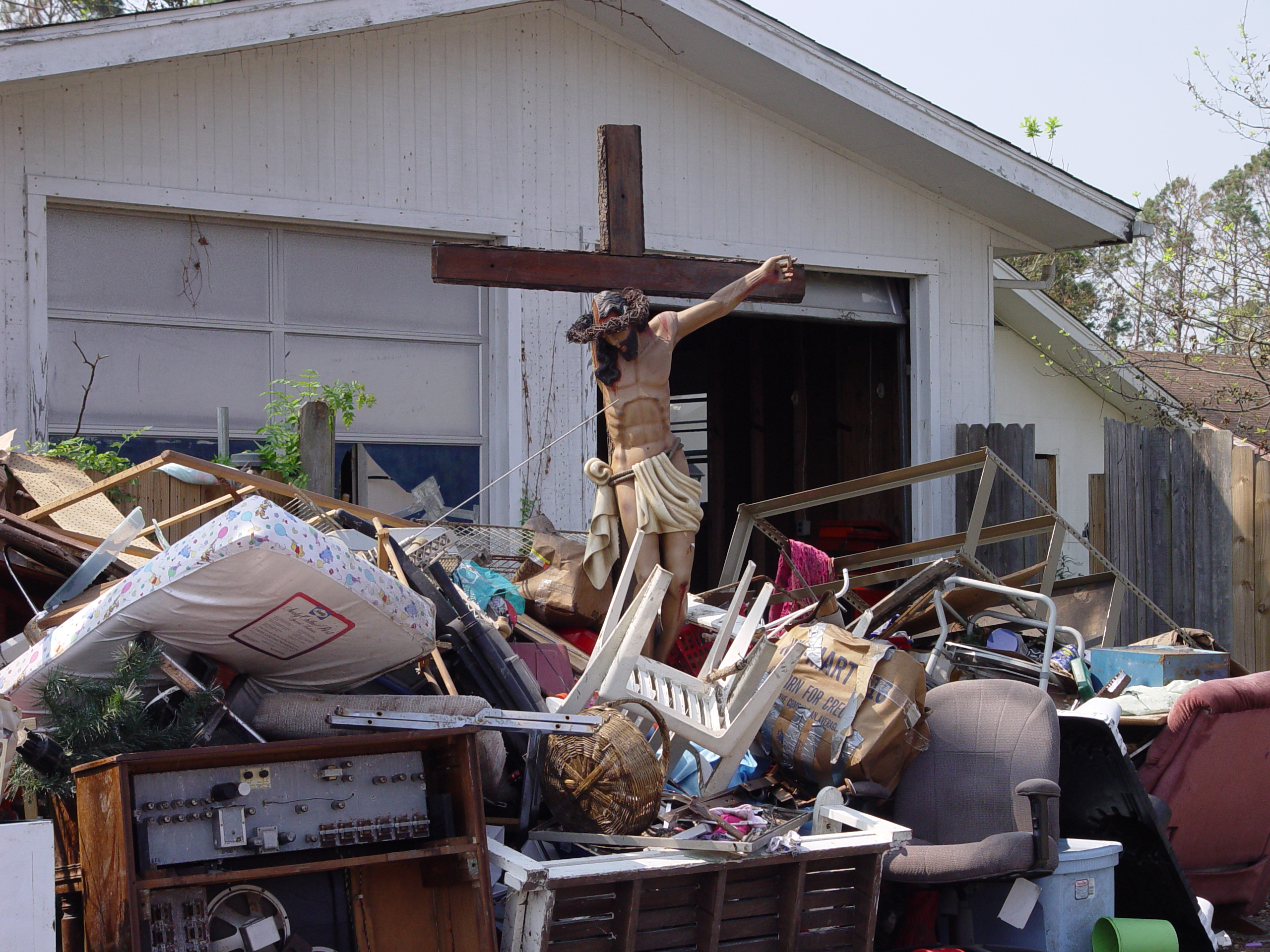
Galveston, 1900

file901235706072

Galveston, 1900

First the wind, then a tide like no other
uprooting the calm,

a visage tilted back in descent
as if listening for the aftermath.

And later, the gardener’s lament
and the building’s exposed ribs,

light entering the eternal
orchard, nine children tied to a cincture.

Not even the earth could retain its bodies,
and the sea remanded those given to its care.

file0001863093325

“Galveston, 1900” first appeared here in January 2015.

Letter to Geis from This Side of the Glass


Letter to Geis from This Side of the Glass

Dear Greg: I can’t help but think about windows, their
function, their meanings, intended and otherwise, how
they block some entities but allow others entrance. A
black vulture feather lies just on the other side of this
pane, but the laws of material and physics prevent me
from reaching through and claiming it. Maybe I’d
sharpen the end, dip it into squid ink and write letters.
Or not. Cephalopods are scarce in the hill country,
unlike carrion birds, wild hogs and scorpions, and frankly,
ballpoint pens require less maintenance. Lately, the
opaque has redirected my attention — no matter which
government agency speaks, I feel surrounded by their
pseudomorphs, those little indistinct clouds of mucus and
dark pigment released to confuse and numb me. A common
occurrence, I hear, and all the more frightening for it. I
think of where we’re headed, collectively and individually,
and even knowing that our destination remains unchanged
offers small comfort. One foot at a time, the steps matter,
and though it appears we won’t share those planned brews
in Bandera, I’ll chuckle over our last meeting there and
dream up a conversation about futility and compromise,
and yes, success. I’ve just spent twenty minutes trying to
help a yellow jacket escape. It wouldn’t leave the glass even
after I left the door ajar, allowing a fly to enter. Instead,
it gazed out at the hazy morning, seeking a way through
refraction’s oblique path. Finally, shepherded with my bare
hand, it reluctantly skittered to the jamb, and I coaxed it
the final few inches by pushing it with the door. Such
are my days. A little faith, some hope, luck and a great
unknowing. This window seems cloudy, or is it just
my eyes? I miss you, buddy, as do the hills and the sky
and everything nestled and bustling between.  Bob


This first appeared in May 2020 in the Taos Journal of International Poetry & Art. D.G. Geis was a friend, a larger than life  poet, and a fellow Texan. We were both finalists for the Slippery Elm poetry prize in 2017, and after learning that we didn’t win, decided to have a “losers’ lunch” in Bandera, Texas, the closest town to our respective rural properties. Much laughter ensued, and we made plans to get together for a beer in the coming months. Alas, that was not to be.