Vision in Far Infrared


Vision in Far Infrared

Considering the implications of dust and cold gas, the expanding
universe and cryostats, I climb the stairs and shiver.

Thermal infrared may propagate in a vacuum, but we require
oxygen and warmth. Pillows and a sense of humor help, too.

What will come of the images captured by the Herschel telescope
in the next eon and those following? These maelstroms, blossoming.

I look up from my front porch and see the streetlight’s glare
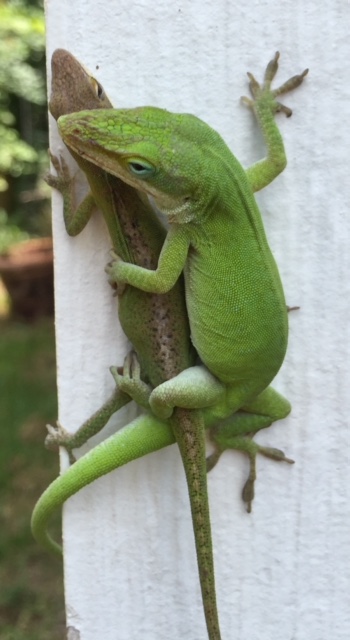
rather than stars. Yesterday, lizards coupled on my shack’s wall.

Nebulosity in vision, in politics. Look through this eyepiece to find
horseheads and archers, bright flames and clouds. Or nothing.

Red and yellow filaments could indicate newly forming low-mass
stars. The visible is only one component of perception.

Hubble observes in multiple spectra, but not the far infrared.
Even the long-reaching may be overcome by inadequacies.

Do not forget the body’s warmth. Remember black lights and purpose,
the tangible thought. Recall that we exist at rest, ever in motion.


* * *

“Vision in Far Infrared” was drafted during the August 2016 Tupelo Press 30/30 Challenge. I am grateful to Angela for sponsoring the poem and providing the title and these three words: nebulosity, eon, maelstrom.

 

Ode to Being Placed on Hold

phone


Ode to Being Placed on Hold

The music rarely
entertains,
but I find
peace between
the notes,
sometimes,
and embrace
the notion that
I’ve been inserted
in that peculiar
capsule between
speech and the
void, imagining
myself somewhere,
floating, free
of care and
gravity,
beer can
satellites
orbiting my head,
with bites of
pungent cheeses
and baguette
circling in
their wake,
a gift, you see,
like rain in
August or
a warm voice
saying hello.


* * *

“Ode to Being Placed on Hold” was drafted during the Tupelo Press 30-30 marathon in August 2015. Many thanks to Mary “marso” of the blog “marsowords” who sponsored and provided the title. The poem has also appeared here several times.


cheese


Aftermath


Aftermath 

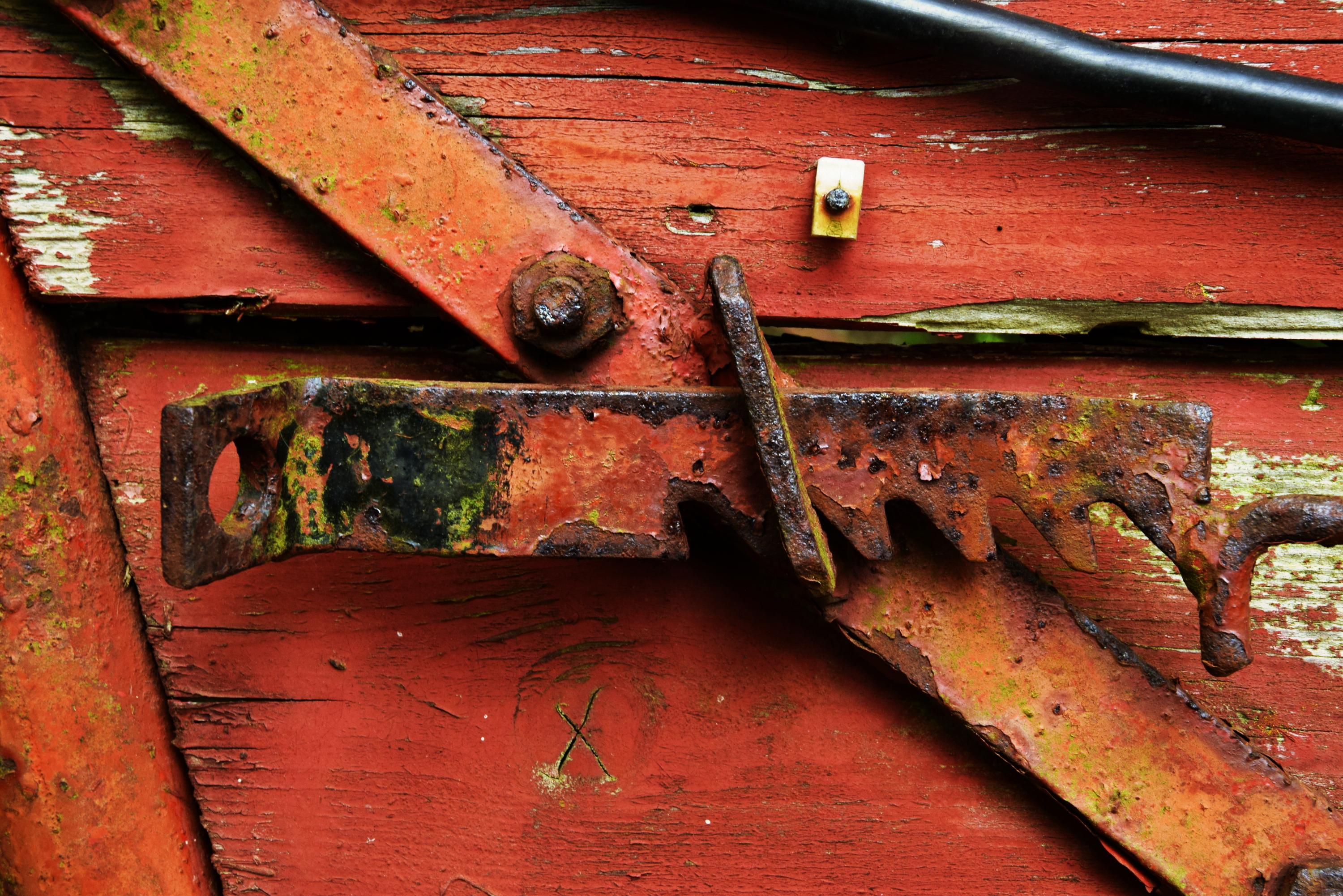
   rust. Being one phase of corruption, a matter of
resolve. When I surrender, the implication is of giving
over, moving above, allowance. Delivering despite
the steady flaking away at what colors me intact.
The quiet evening had lulled me to this inevitability:
when oxides subsume the original metal, the expansion
may result in catastrophe. Yesterday’s arc, tomorrow’s
trial. Failure’s bloom.


* * *


“Aftermath” first appeared in the print publication Sheepshead Review. Thank you to Audrey Schultz and staff for taking this poem.

Night Journey (after Tu Fu)

IMGP3335

Night Journey (after Tu Fu)

Wind bends the grass along the road.
A lonely truck passes by.
Stars reach down to touch these hills
and the moon drifts behind.

No one will ever know my poems.
I am too old and ill to work.
Circling, floating, who am I
but a vulture looking down.

First posted in March, 2014.

This is not a translation, but rather a version, my “take” on a famous Tu Fu poem. I claim no abilities in translation, neither speak nor read Chinese, and instead depend upon the skills of those who have ventured into these difficult reaches. This is where the poem carries me, a middle-aged Texas hill county dweller, in the Year of the Horse, 2014.

“Night Journey” is included in my micro-chapbook, No Eye But The Moon’s, available via free download at Origami Poems Project.

Here’s the transliteration on chinese-poems.com:

Nocturnal Reflections While Traveling

Gently grass soft wind shore
Tall mast alone night boat
Stars fall flat fields broad
Moon rises great river flows

Name not literary works mark
Official should old sick stop
Flutter flutter what place seem
Heaven earth one sand gull

My goal was to retain the mood, as I understand it, of the original, and to place it into my personal context. An interesting exercise.

Prayer


Prayer

Death does not choose you at random.
It approaches at your pace, rumbling
downhill or floating in the air,
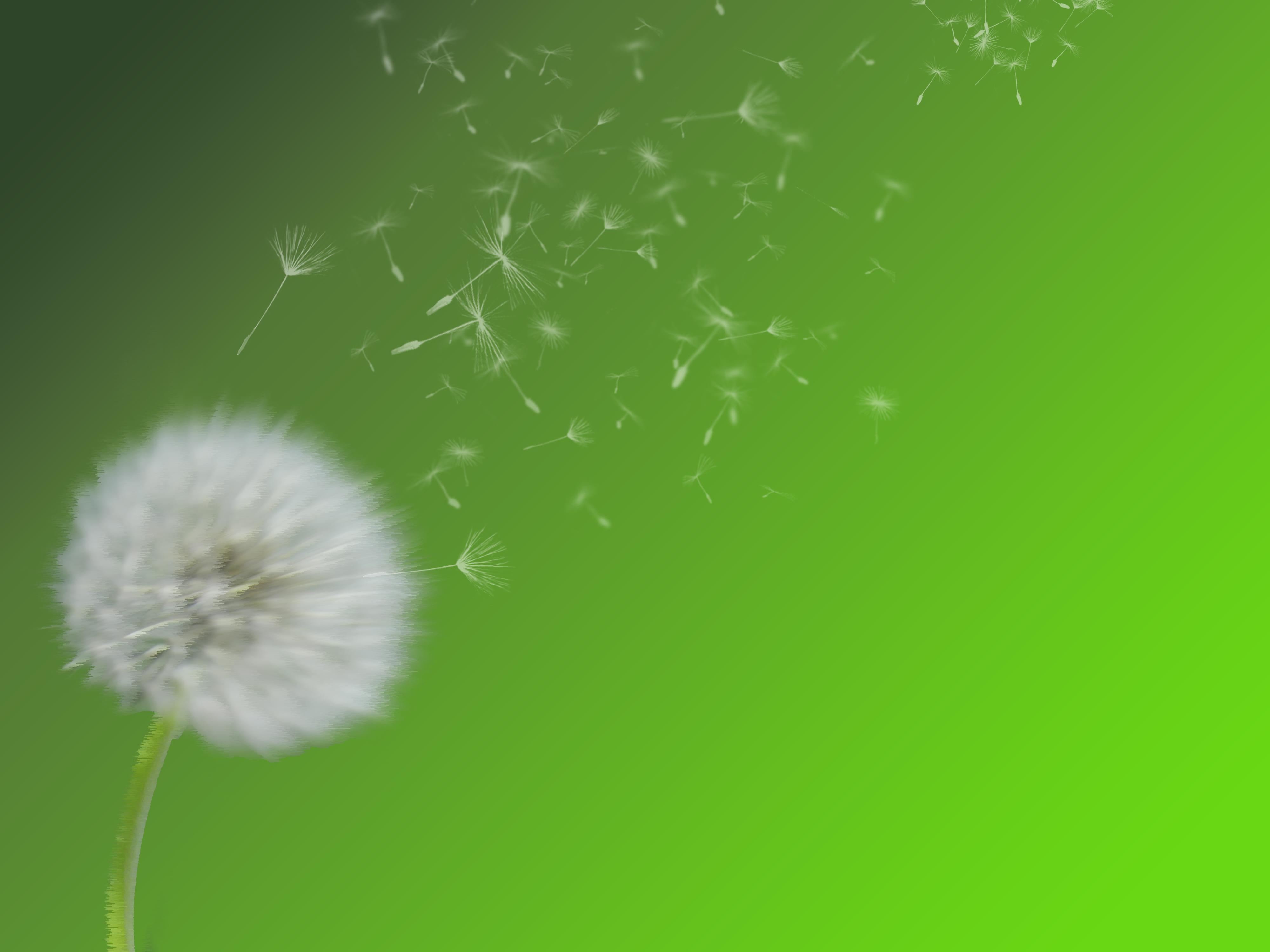
debris or dandelion fluff,
concealed yet evident.
Listen: a small cloud bumps another,
merging into one larger being —
can you hear its ecstasies?
All the world’s souls, gathered.

Elegy


Elegy  

1. Adrift

I count more graves than people in my sleep,
but nothing turns more quickly

than an empty wind
in a place whose memory has died.

And all manner of departure: What you have left is you
without you
. As if it could be different, as if decades

could withdraw and draft a blueprint of motive and action,
returning them, returning you, to that point

across the sea where the ship has not yet arrived.
If you ask she will say it does not matter. If you ask.


2. Parentheses

To be within, yet without, as in the unuttered phrase.

It is time the stone made an effort to flower,

to render the void clear and resolute, the diction of
separation divided by decades and your ocean.

The language of silence, drawn near.


3. From the Other Side

Sometime becomes never and steps around a desolate corner,
and all we have left is our field

awash in stone, remnants of the unspoken.
I have no memory of you. Nor you, of me,

but the strands do not lie, and unraveled,
expose the imperfect blends

that compose my love. A leaky roof. The last word.
A pity to put up at all

but there is rain.


4. Another Night

Of all the hours which were the longest?
The earth trembled around me

and I lay still, bearing witness to
the uncertain malice of its

shrug, shoulders brought to
fore, then returned,

and finally, released. If,
after this half-century, words

could reform in your mouth,
what denial would issue?

Ashes, washing ashore.


5. Bridge

And seeing you only as the shadow of an

ending whose voice lies
in an uncommon past, how
may we recognize the very shape we share?

The bridge’s fate is loneliness,
knowing that one side

decries the other’s
call, that separation affords new light:

they are between
comfort and space, between words and a smile,

between nothingness and sorrow,
two points, beginning and end,

reaching, in opposition, towards each other.


Notes:

“What you have left is you without you” is from Edmond Jabes’s “At the Threshold of the Book” in The Book of Questions: Volume I, translated by Rosemary Waldrop.

“It is time the stone made an effort to flower” is from Paul Celan’s poem Corona,” included in Poems of Paul Celan translated by Michael Hamburger.

“A pity to put up at all but there is rain” is from Basho’s Back Roads to Far Towns, translated by Cid Corman and Kamake Susumu.

Albert Huffsticklers poem “Bridges” which appeared in The Balcones Review in 1987, begins “They are between…”

“Elegy” first appeared on Underfoot Poetry in October 2017.


If You Drop Leaves


If You Drop Leaves

If you drop leaves when she walks by,
does that signify grief for those
cut down early,

or merely drought?
How easily we abandon and forget.

Yet a whiff of lemon verbena or the light
bouncing from a passing Ford
can call them back,

tiny sorrows ratcheted in sequence
above the cracked well casing

but below the shingles
and near the dwindling shade
tracing its outline on the lawn.

And what do you whisper
alone at night within sight
of sawn and stacked siblings?

Do you suffer anger by way
of deadfall or absorption,

bark grown around and concealing
a penetrating nail, never shedding
tears, never sharing one moment

with another. Offered condolences,
what might you say? Pain earns no
entrance. Remit yourselves.


* * *

“If You Drop Leaves” was published at Bad Pony in November 2017. Many thanks to editor Emily Corwin for taking this piece.

While Reading Billy Collins at Bandera’s Best Restaurant, Words Come to Me


While Reading Billy Collins at Bandera’s Best Restaurant, Words Come to Me

And having no other paper at hand,
I scrawl on a dollar bill, “I want to speak
the language of smoke.” My invisible friend
interrupts. That is a white man’s dilemma.

 At least you have a dollar and a pen.
“But I’m only half-white,” I reply, “with half
the privilege.” Then you must bear double
the burden,
he says. This version of math

twists my intestines into a Gordian knot,
as does the concept of half equals twice,
or in terms I might better comprehend,
one beer equals four when divided by color

or accent and multiplied by projection.
The unsmiling waitress delivers my rib-eye
as I’m dressing the salad, and the check appears
just after the first bites of medium-rare beef

hit my palate, certainly before I can answer the
never-voiced question “would you like dessert?”
Cheese cake, I would have said. Or cobbler. And I
seldom turn down a second beer. This too, I’m told,

is another example of my unearned entitlement. I
contemplate this statement, scribble a few other
phrases on bills, drop them on the table, and walk out,
wondering which direction to take, which to avoid.

* * *

“While Reading Billy Collins at Bandera’s Best Restaurant, Words Come to Me” was a finalist  for the 2017 Slippery Elm Prize in Poetry. It was published in Slippery Elm (print only) in December 2017. You may be amused to hear that shortly after the winner was announced, I had lunch in Bandera with one of the other finalists in this competition, D.G. Geis, but not at the restaurant featured in the poem. The photo is of a local bar, not the eatery, but it offers some of the flavor of the town.

Poetry Readings

Airport Reading

Over the past three decades, I’ve participated in public readings in some interesting places: bars, cafes, auditoriums, bookstores, churches, classrooms, in people’s homes, in various arts facilities, on a river bank and, of course, online. But until this week, I’d never read at an airport. Now that was truly different! I am grateful to Brick Street Poetry and Indianapolis Airport Authority for this amazing opportunity.

Letter to Gierke from the Future’s Past


Letter to Gierke from the Future’s Past

Dear Ken: I’m fixated on open faucets and drained tanks,
on cracked PVC and browned grass, denial and what’s to
come, thinking of old dogs and accusations and how
the morning’s lopsided beginning has wrung out every
shred of positive emotion absorbed overnight. Then
a pinpoint emerges, swelling, until I can see, as through
a spidery windshield, tomorrow and its improbabilities.
Last weekend I built a window screen to exact measurements,
only to discover the sill tilted on the north by a quarter-inch,
and in order to install the damned thing I had to shorten
its right side, ruining the rectangle. Perfection eludes me,
even when guided by tape and square, especially in this
climate of exacerbated deterioration, which has not, alas,
excluded me – sciatic nerve, shoulders, knees, hands, etc.
But enough whining. Tea leaves predict that in a few hours
I’ll cross the creek trickling over the road, check the cisterns
and drop off tomorrow’s drinks before heading home to
swat mosquitoes and grill sage-rubbed pork kebabs while
sipping hoppy brews. That’s as far into the future as I
care to venture. The Cowboys drafted a lineman named
Taco, the weeds need mowing and my belly says noon
is fast approaching. I’d like carnitas, but have only rice
and beans, which probably signifies something far deeper
than my conscience will admit, trials I’ll never face. A
thunderstorm looms in the forecast, but my left ankle says
it ain’t happening. What do your mended bones claim?
Mine usually plead the fifth, but hey, they’re careful,
these days, and with good reason. Take care. Bob


* * *

“Letter to Gierke from the Future’s Past” was featured at Vox Populi in December 2017.