Follow Tim Miller on three distinctive jaunts at Isacoustic!
Deep History & Old Childhood: 3 New Poems at Isacoustic
11

Follow Tim Miller on three distinctive jaunts at Isacoustic!

Scarecrow Sings the High Lonesome
Nothing about me shines or sparkles. If asked,
I would place myself among the discarded —
remnant cloth and straw, worn, inedible,
useless, if not for packaging intended to
convey a certain message, which I of course
have subverted to “Welcome, corvids!” Even
my voice lies stranded in the refuse, silent
yet harmonious, clear yet strangled, whole
and unheard, dispersed, like tiny drops of
vapor listing above the ocean’s swell, enduring
gray skies and gulls and those solemn rocks
bearing their weight against the white crush.
Why do I persist? What tethers a shadow
to its body? How do we hear by implication
what isn’t there? Bill Monroe hammered
his mandolin, chopping chords, muting,
droning, banging out incomplete minors
to expectant ears, constructing more than
a ladder of notes climbing past the rafters
into the smoky sky. What I sing is not
heard but implied: the high lonesome, blue
and old-time, repealed. Crushed limestone
underfoot. Stolen names, borrowed sounds.
Dark words subsumed by light, yellowed,
whitened, faded to obscurity, to obscenity.
“Scarecrow Sings the High Lonesome” first appeared in Crannóg, in June 2017.

Memoir (Cento)
Your hands touched
everything. Will you
be a fountain
or a sea?
A woman sleeps next to me
on the earth. Now
nothing else keeps my eyes
in the cloud.
Each rock is news.
* * *
A cento is composed of lines from poems by other
poets. This cento originated from pieces in:
77 Poems, Alberto de Lacerda
Because the Sea is Black, Blaga Dimitrova
Body Rags, Galway Kinnell
Song of the Simple Truth, Julia de Burgos
Love Poems, Anne Sexton
For further information and examples of the form, you might peruse the Academy of American Poets site: http://www.poets.org/poetsorg/text/poetic-form-cento
This last appeared on the blog in May 2016.
Presenting the someday-to-be Nobel laureate, Daniel Paul Marshall! 😁

Shadow’s Tale
If I call,
will you
reply?
Questions
left unwritten
shape
themselves
like words
we see
but don’t
read. Signs
fade then
reappear,
and the oaks
droop
in the still
heat.
No rain
again. If
you call,
will I
reply?

“Shadow’s Tale” first appeared here in June 2015.
Charlotte Hamrick has three spectacular poems in Isacoustic!
Yes! These three poems by Daniel Paul Marshall!
Daniel Paul Marshall lives on the island of Jeju, where he runs a guesthouse & bar that he built with his wife. He has had poems published in a few journals, including Four Ties Lit Review, The Contemporary Haibun Online, Underfoot, and The High Window.
danielpaulmarshall.com
∞
A handful of prayers & the day’s work is done.
Time to sip expensive Yemeni coffee
& build an online presence with their iPhones
& cheap | superimposed wisdom they’ve yet to fully grasp
the complexity of. Seeing them | it tires me
to hear people defend Buddhism as a philosophy not a faith |
as if that somehow discounts them from the usual charges
pitched against contesting branches of ideology.
It is an ideology: has drawbacks & is led by powerful men
with slot machine eyes & a thirsty wallet.
Their cartoon image | bright crystal-ball heads |
View original post 490 more words
The Simplest Coercion
Each portrait betrays a similar
attraction: faces
swallowed by the artist’s
eye, his sight being
beyond optic, that assumption
inherent in every expression
but one. Yet this, the self-
portrait, reveals a hint
of secrets – an unwillingness
to confront,
the simplest coercion.

This first appeared on the blog in May 2015.
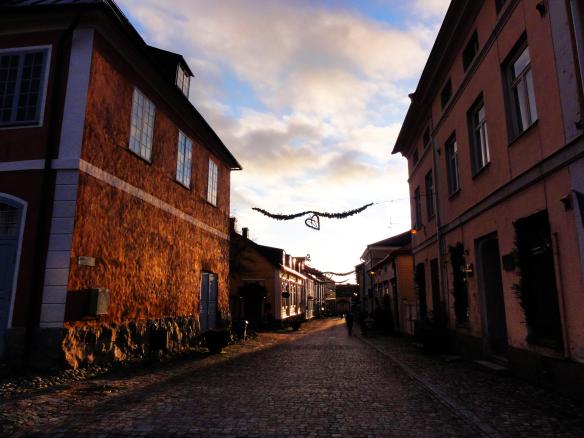
My poem “Helsinki” is live at Panoply. It was inspired in part by a Facebook thread on which editors commented on what caused them to instantly reject poems. One said beginning a poem at a window was cause for rejection. Hence the first line.


 O at the Edges