Even the Sotol Believes

image


Even the Sotol Believes

If we must discuss logographic systems, let us begin with fish.
And how might one mistake an entrance for a perch?

A movable rod for a desert spoon?

Today’s lesson excludes a poorly rendered door.

Hinges are merely mechanical joints, the origin of which means to hang. Concentrate there.

D is the tenth most frequently used letter in English.

Depicted on rock wall paintings, the sotol has provided food, sandals,

blankets, ropes, tools and spirits for millennia.
Slow cook the roots for three nights, crush, then ferment for seventy-two hours in

champagne yeast. Distill, then age in French oak.

We shall neither open nor close, nor mention those things that do.

Like bivalves. Bottles. Eyes. Shops. Caskets. Books. Mouths. Circuits.
Its flower stalk rises up to fifteen feet. Its leaves are long, thin and barbed.

Surrounded by orange ochre flames and black smoke, the sotol spirit appears.

Dalet will not enter our vocabulary today.


image

Originally published in Otoliths 41 (October 2013), and most recently posted here in June 2018.
 

Dreaming That My Legs Won’t Move, I Think of Debts


Dreaming That My Legs Won’t Move, I Think of Debts

And all of our losses,
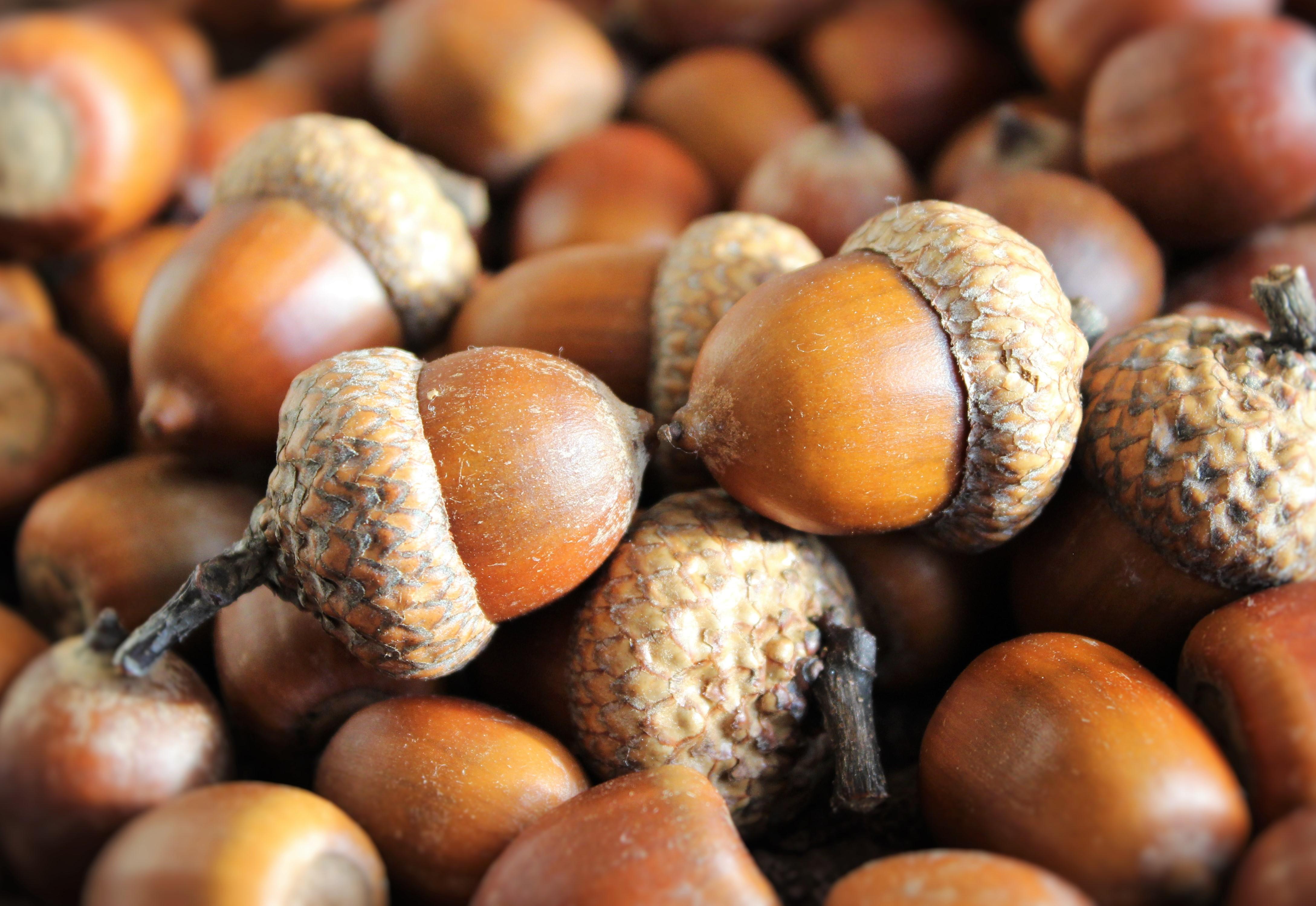
fallen like acorns to be gathered and
buried for safe keeping in the hours
when laughter fails and eyes close.

My blood is a tense whisper
and I remain half, which is of course
false. You drift across the scuffed
boards and light the candle,

snuffing one darkness, sparking
a second, opening a new quiet behind
yet another shade. What blurs

yesterday more than tomorrow?
Accepting my place, I observe the unlighted
corner, look for movement, wait.


“Dreaming That My Legs Won’t Move, I Think of Debts” was published in October 2019 at Mason Street Review’s Community Room PageI’m grateful to the Newark Public Library and the editors of Mason Street for taking this piece.

Recording of Requiem II

image


Requiem II

To say what becomes: this word
bends in the wind of our

breath. Is this too simple to
say? Our bodies gather yet retain

nothing. Numbers, phrases, the way
the ocean rolls. Once I saw
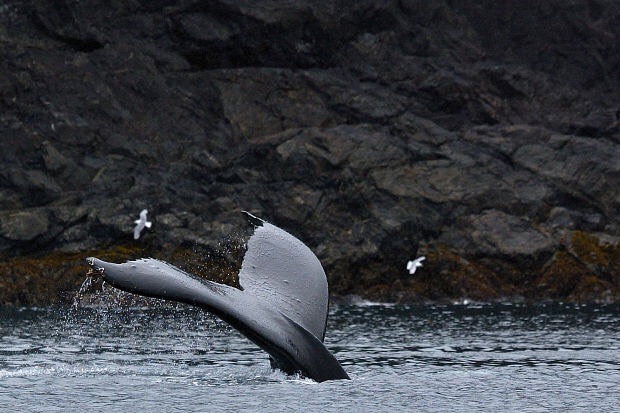
a whale at dusk. Or rather I saw its

tail part the water and disappear
into darkness, an answer too complex
and sweet for tongues to comprehend.

But waves seldom explain. Imagine
something nearby but beyond reach.

Think of clouds and shrines, consider light.


image


“Bittersweet” Kevin MacLeod (incompetech.com)
Licensed under Creative Commons: By Attribution 3.0 License
http://creativecommons.org/licenses/by/3.0/


The Fullness That Precedes

image


The Fullness That Precedes

it is not
the moon but
rain that attracts

me to this
place no faint
light no shadow

but the fullness
that precedes its
history that of

magic from nothing
to nothing by
which one may

discern perfection a
cloud the solitary
note of distraction


image


Written in the 80s, “The Fullness That Precedes” first appeared here in May 2015.

His Softness (with recording)

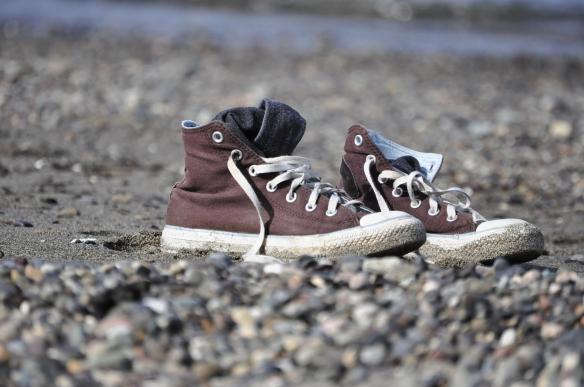
shoes


His Softness

What name would survive
had you not stepped into the water

that day? Memory assigned
a separate word, another given,

and the face I’d placed with you
appeared in front of me

fifteen years later, in another
setting, miles away

and still breathing. How
may I honor you

if not by name? I recall
the gray ocean and how

umbrellas struggled in
the wind, and reading

in the weekly newspaper
a month after

that you had never emerged.
Now your name still lies there,

somewhere, under the surface,
unattached yet moving with

the current, and I,
no matter how I strain,

can’t grab it. Time after time,
it slips away. Just slips away.


.* * *

“His Softness” was published in January 2016 in the inaugural edition of MockingHeart Review.


Ode to Being Placed on Hold

phone


Ode to Being Placed on Hold

The music rarely
entertains,
but I find
peace between
the notes,
sometimes,
and embrace
the notion that
I’ve been inserted
in that peculiar
capsule between
speech and the
void, imagining
myself somewhere,
floating, free
of care and
gravity,
beer can
satellites
orbiting my head,
with bites of
pungent cheeses
and baguette
circling in
their wake,
a gift, you see,
like rain in
August or
a warm voice
saying hello.


* * *

“Ode to Being Placed on Hold” was drafted during the Tupelo Press 30-30 marathon in August 2015. Many thanks to Mary “marso” of the blog “marsowords” who sponsored and provided the title. The poem has also appeared here several times.


cheese


Thunderstorm Below the Mountain

image


Thunderstorm Below the Mountain
(after Hokusai)

Lacking humility, I take without thinking.
How far we’ve come, to look below for
lightning, the valleys shaken
with thunder, answers

like pebbles flung outward,
each to its own arc, separate
yet of one source, shaded into the question.

Is it for the scarcity of reach,
the reverse view through the bamboo rings
well out of sight, that

breath in the wave’s tuck or
smoke mingling with the clouds
and figures collecting salt,

that I edge myself closer, again,
to this place? To be nothing
presumes presence in absence.
Lacking humility, I accept without thinking.


image

“Thunderstorm Below the Mountain” first appeared here in March 2016.


Two Poems Up at Lamplit Underground


My poems “The End of Something” and “Poem Ending with a Whimper” have been published in Volume 3 of Lamplit Underground. Thank you, Janna Grace, for taking these pieces.

Lamplit Underground is a beautifully illustrated publication. Please take a look!


Letter to Schwaner from the Toad-Swallowed Moon


Letter to Schwaner from the Toad-Swallowed Moon


Dear Jeff: The glow here betrays our fantasies,

and between day and night and that uncertain

moment when neither holds sway, I have gained

a toehold on consequence. Who knew darkness

could shine so? Last November the surgeon

incised my belly six times but no light oozed

out and little crept in. I say little, but feel

a peculiar radiance emanating from my middle

which I can only attribute to the moon, although

the medical professionals would say it’s just

gas. But what do they know of Sheng-Yu or

Li Ho, of jade wheels and spilled cups? Last

night, to honor our marching sisters, I looked

to the cloud-filled sky and toasted them and

our ancestors, the poets and scapegoats, friends,

allies, compatriots, Five White and Jackboy,

shedding a solitary tear of joy in the process.

We won’t label the other tears, but I shudder

at our country’s current course and how the

bulging wallets of the rich continue swelling

at the expense of the poor and unhealthy,

the elderly, the unacknowledged, and those

living on the fringes, in colored shadows.

If we meet in person on some desolate, moon-

free road in a country that could never be,

how will I know you but from the ghosts and

smiles sparkling in the surrounding fog,

and the little voices singing their sad tune

of happiness into the night. This is where

we stand today, but tomorrow? Look for me

on that bench. I’ll be the full-bellied fellow,

the one with an eclipse leaking from his shirt

in a six-point pattern, two glasses in hand,

wine uncorked, ready for reptiles and politicians,

mirth and causation and good conversation

in brightness or tenebrous calm, whichever

needs replenishing more. But bring another

bottle. Or two. Talking makes me thirsty. Bob.


* * *

My poem “Letter to Schwaner from the Toad-Swallowed Moon” was first published at The Hamilton Stone Review in October 2017. Much gratitude to editor Roger Mitchell for taking this piece.


Scarecrow Pretends

scarecrowfield

Scarecrow Pretends

How may I claim another’s earth for myself? My perpetual
stance invites occlusion of the senses and a certain disregard
for dignity; I flap in the breeze and bits of me scatter across
the fields. Sze asks if we know a bird’s name in ten
languages do we know any more about the bird. I say no,
but I am a species of stitched remnants and expectation,
a race of one. Genderless, my hollow name holds no secrets,
no history. If I called myself Hudson would anyone recognize
my stuffing for what it is not? What flows through my clothing
but rags, straw, the useless and unwanted. Insects and their feces.
The unearned, the unwarranted. The underclass. Folly. Design.
Gift by delusion. Does attracting more crows than I deter negate
my existence? And which am I? A river? A man? An effigy, one
perception, or another? I do not frighten, but welcome. Speak
louder, that we may ignore our insignificance, our true names.


“Scarecrow Pretends” was published in The Slag Review in January 2017, and a few months later was mentioned in an article in the Long River Review’s blog: “Scarecrow Pretends: Robert Okaji’s Metallurgy.