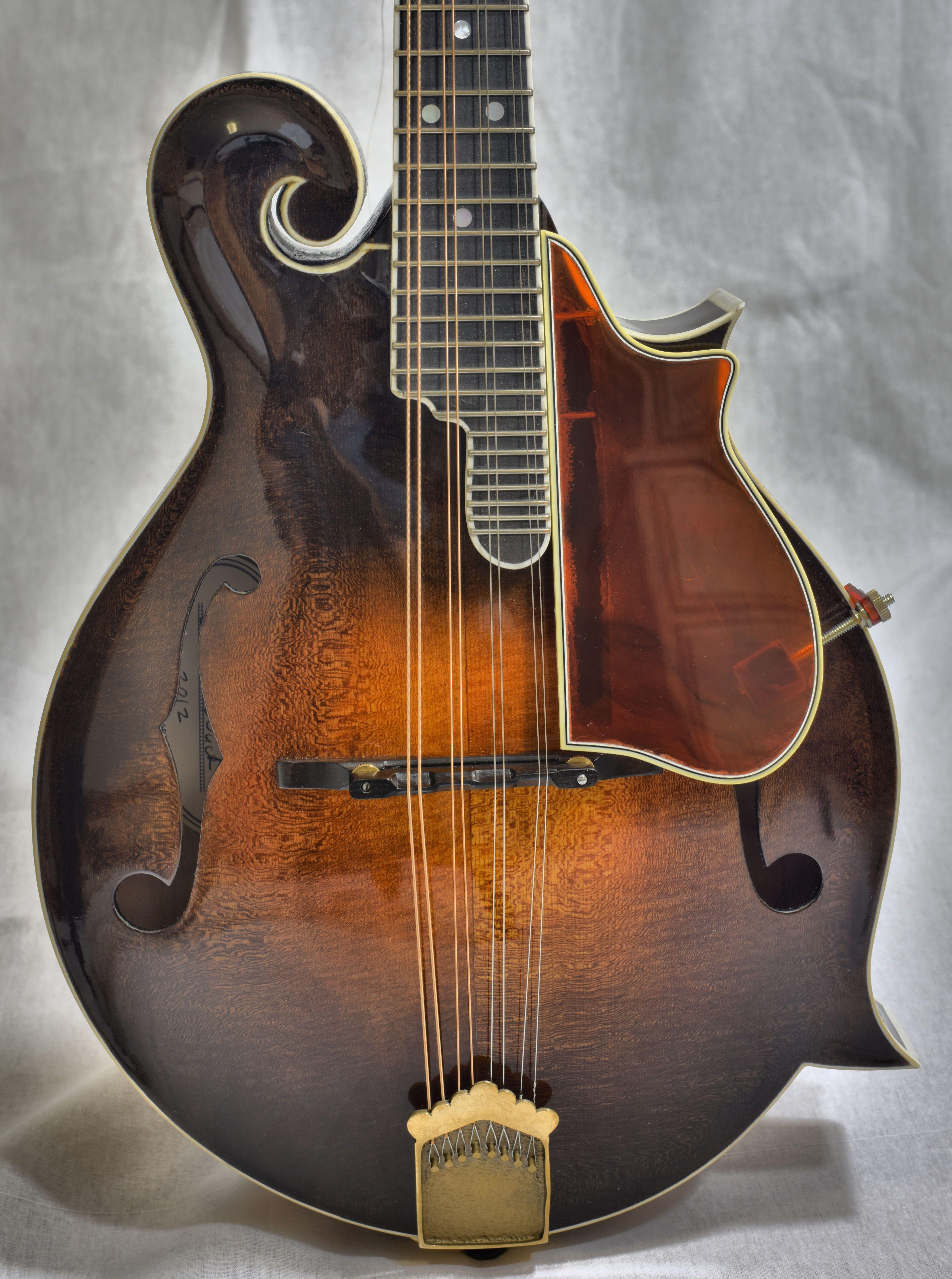
Tuning the Beast


Tuning the Beast

I prepare contingencies for all outcomes. No.
I’ve prepared for this: a body. A key. As if

that cloth draped a leg. Not a leg
but the representation of a limb.

Another fragment, brought forth and opened.
Not a limb, an arrow, perhaps, pointing to the sea.

An oar, brought inland and unrecognized
for its purpose, directed or aimless. No, not an oar.

A neck, polished, and a chamber, with strings.
Repetition, fixation. Position. Intent.

I pluck and strum, pick and stroke, maintaining
space, steel above wood, bending notes,

moving sound in time, purposefully, from
this place to that, the left hand, creating,

conversing. The right, reasoning, controlling,
burning its past to the present, allowing,

preventing, rendering beat, consistent
motion, shaping only this moment, this now.

“Tuning the Beast” was drafted during the August 2015 30-30 Challenge, thanks to Sunshine Jansen’s sponsorship. It subsequently appeared in The Blue Nib in September 2016.


The Logic of Tinai in Akam Poetry

What little I know of Tamil poetry, I learned from Nazir and his blog. Here he discusses the concept of “tinai,” which resonates with me. So much to learn, so little time…

Nazir's avatarClassical Tamil Poetry

Image result for lord murugan in palani

Picture courtesy: http://www.palanimurugantemple.tnhrce.in

The Tolkappiam, in Porulatikaram, begins by identifying seven tinais out of which the middle five (“naduvan aintinai”) constitute the “world rimmed by the sea” (“padutirai vaiyam”) (Verse 1 and 2). These five tinais become known as kurinchi, mullai, palai, neidal and marutam. Then it goes on to make magisterial pronouncements designating the time and place as mutal, meaning first. The gods, the food, the animals, trees, birds, occupations, the musical instrument and melody, the flowers, the water source are the karu or things embryonic to the mutal. The human mood appropriate to each tinai is the uri. The tinai, identified by an emblematic flower and sharing certain specific geographic features, becomes a vehicle for the mutal, the karu and the uri. In other words, the tinai encapsulates the mutal, the karu and the uri. By doing so, it becomes a spatial, temporal, spiritual, gastronomic, biological, occupational and emotional…

View original post 4,003 more words

Laolao Pavilion (after Li Po)

file0001681287329

Another attempt at adapting Li Po. A note on Chinese-poems.com stated “at this time, the breaking of a willow twig was part of formal leave-taking.”

Laolao Pavilion (after Li Po)

Where do more hearts break under heaven?
This sad pavilion, where visitors part,
the spring wind whispers bitter goodbyes
and willow twigs never mend.

Transliteration from Chinese-poems.com:

Heaven below damage heart place
Laolao see off visitor pavilion
Spring wind know parting sorrow
Not send willow twig green.

file000171156221

First posted here in June 2014.

Letter from Insomnia

image

Letter from Insomnia

Accepting Li Po’s tragedy,
apocryphal or not,

we embrace her imperfect
reflection
rippling in the breeze,

but manage to surface.

I once thought I would name a child Luna
and she would glow at night

and like Hendrix, kiss the sky.
But that was whimsy

and only candles light this room
at this hour
on this particular day
in this year of the snake.

And what fool would reach for a stone orbiting at
1,023 meters per second?

There are clouds to consider, the stars
and the scattering rain

and of course wine
and the possibilities within each glass
and the drops therein.
We must discuss these matters

under her gaze, where smallness gathers.

* * *

This originally appeared in Middle Gray in October, 2013. It was written in response to a poem my friend Michael sent me, replying to this poem.

image


Video: The Story of Zero

Fellow numbers nerds: A great little video about zero! It also fits in quite nicely with my poem “With These Nine Figures,” which I posted last week.
https://robertokaji.com/2017/09/20/with-these-nine-figures-2/

Vox Populi's avatarVox Populi

.

This short animated video produced by the Royal Institution of Great Britain illustrates the history of the mathematical concept of zero.

Today, zero signifies an absence of value as well as being a number in its own right. But this dual role evolved gradually, and zero still doesn’t act like other numbers. Can you divide by zero, for example? With animation by Andrew Khosravani, Dr. Hannah Fry explains how zero came about, from its origins in ancient civilizations, through the resistance it faced from the Roman numeral system, to being the cornerstone of calculus.

Email subscribers may click on the title of this post to watch the video.

.

39-845x321

View original post

A Word is Not a Home


A Word is Not a Home

A word is not a home
but we set our tables

between its walls,
cook meals, annoy

friends, abuse ourselves.
Sometimes I misplace

one, and can’t find
my house, much less

the window’s desk
or the chair behind it.

But if I wait, something
always takes form in the fog,

an arm, a ribcage, a feathered
hope struggling to emerge.

Inept, I take comfort
in these apparitions,

accept their offerings,
lose myself in mystery,

find shelter there
in the hollowed curves.

Poem Nominated for Best of the Net

My poem “When to Say Goodbye” has been submitted to the Best of the Net 2017 anthology by the editors of Oxidant Engine. I’m honored to be nominated alongside one of my favorite poets, Khaty Xiong.

Recording of “Self-Portrait with Umeboshi”

file0001818876295(1)


Self-Portrait with Umeboshi

Our resemblance strengthens each day.

Reddened by sun and shiso,
seasoned with salt,

we preside, finding
comfort in failure. Or does
the subjugation of one’s flavor for another’s

define defeat? The bitter, the sour, the sweet
attract and repel

like lovers separated by distances
too subtle to see.
Filling space becomes the end.
What do you learn when you look through the glass?

Knowing my fate, I say fallen. I say earth.


Ah, simplicity! When I was a child my mother would occasionally serve rice balls in which a single mouth-puckering umeboshi rested at the center. These have long been a favorite, but I admit that umeboshi might be an acquired taste. Commonly called “pickled plums,” ume aren’t really plums but are more closely related to apricots. I cherish them.

“Self-Portrait with Umeboshi” first appeared in the Silver Birch Press Self-Portrait Series (August 2014), was included in the subsequent print anthology, Self-Portrait Poetry Collection, and also appears in my chapbook, If Your Matter Could Reform.


file0001977442406

Music: “Senbazuru” Kevin MacLeod (incompetech.com)
Licensed under Creative Commons: By Attribution 3.0 License
http://creativecommons.org/licenses/by/3.0/

Recording of “Door”

door

Door 

What would you conceal?
Or open to. Could you unfurl

your fist to daylight
and shudder loss away — one key,

one digit, one death — presuming the universe
and all its hinges available for inspection

behind yet another unlatched presence.
And this spinning disk,

how shall we step off? Every moon
sheds its coat. Listening, I turn the knob.

mooncoat

“Door” first appeared on the blog in September 2016.

Summer 1966: After France & Remembering Bobby, Who One Day Would Learn to Multiply and Divide, Write Love Poems, Define Home, Fight Unfairly and Live with as Much Gusto as a 7-Year Old. Perhaps.

Summer 1966: After France & Remembering Bobby,
Who One Day Would Learn to Multiply and Divide,
Write Love Poems, Define Home, Fight Unfairly and
Live with as Much Gusto as a 7-Year Old. Perhaps.

From left coast to right, or the wide arc between,
which place claimed you? In New York you marveled
at the building’s backs scratched by clouds, and all your
pale cousins in Baltimore spoke strangely and couldn’t fathom
your nuclear family’s private lingo, while the drive to Texas
and its red ants and iced tea blossomed into adventures between
pages in the back seat of the VW bug. By the second week you
learned that Texans sweat as much as the French, and swear even
more, that you couldn’t fight one twin without taking on the other,
sometimes both at once. There was no question of fairness then,
just brotherhood, but the librarian would slip you the choicest
donated fiction, and you played baseball every day in the vacant lot
until sundown called the players home to black and white body
counts and cigarette commercials on the three channels received.
Sometimes you lay in bed under the half-light of the whirring
fan blades, and dreamt of heroes and ornithopters, zebras
and the scent of chocolate chip cookies in the oven. Other nights
you wondered how words could rest so calmly on one page yet
explode off the next, or why a man would climb a tower in Austin
to kill fourteen people when opportunities for mayhem and murder
burgeoned across the sea. Wasn’t living a matter of simple
subtraction? One by one the days parted and you walked through
that dwindling heat, eyes squinting, questions in hand, emerging
fifty years later having suffered additions and division and the
cruelties of love and success, honor and truth, still asking why
and how, home or house, where it went, your shoulders slumping
under the heft of those beautiful, terrible summers stacked high
like so many life-gatherings of unread books awaiting a bonfire.

This was first published in theSilver Birch Press “Moving” series, and an earlier version titled “Bonjour, Texas” appeared on the blog A Holistic Journey.