My poems “Do Not Retain Me In An Urn,” “Pinot Noir” and “Hotel of my Future” are live at Salamander Ink Magazine, a Nigerian publication. Thank you, founder/editor Salam Wosu for taking these pieces.
“Celan, 1970” first appeared in October 2015. One of the most influential (and difficult) European poets of the 20th century, Paul Celan survived the horror of World War II but never escaped its shadow. A brief biography may be found here.
First heaven took my wife,
and now, my son.
These eyes will never dry
and my heart slowly turns to ash.
Rain seeps far into the earth
like a pearl dropped into the sea.
Swim deep and you’ll see the pearl,
dig in the earth and you’ll find water.
But when people return to the source,
we know they’re gone forever.
I touch my empty chest and ask, who
is that withered ghost in the mirror?
Heaven already take my wife
Again again take my son
Two eyes although not dry
(Disc) heart will want die
Rain fall enter earth in
Pearl sink enter sea deep
Enter sea can seek pearl
Dig earth can see water
Only person return source below
Through the ages know self (yes)
Touch breast now ask who
Emaciated mirror in ghost
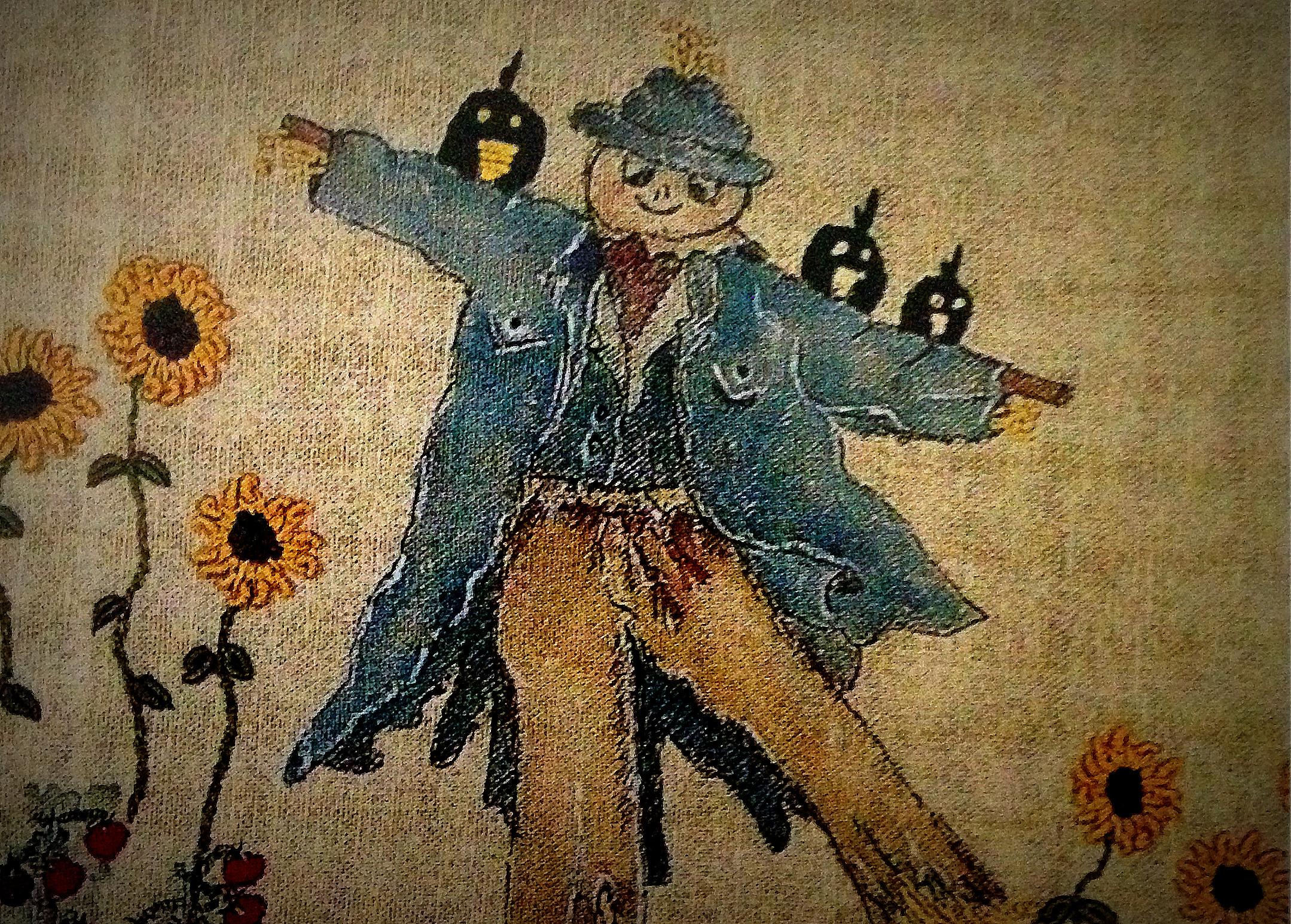
Gathering threads, I join them with a central
knot, producing a sunburst flower or constellation
of ley lines spreading forth and connecting their
tenuous truths – megalith to fjord, solstice to
dodmen and feng shui, suppositions entwined
and spat out. And who’s to say which alignment
stands taller than the next, which rut, which energy,
defines our direction? When I cease to be, will I
remain or dissipate, return in another form or
explode and scatter throughout the universe, the
residue of me sizzling along the starways for eternity
or perhaps just the next twenty minutes. It is clear
that I possess no heart, no internal organs. My spine
is lattice, my skin, fabricated from jute. Eviscerate
me and straw will tumble out. I do not bleed. Yet
the crows consult me in secret and conduct their
daily mercies, and I think and dance and dream
and wonder and hope. Oh, what I hope.
* * *
This was first published at Eclectica in July 2016, with two companion pieces.
Yes, yes, we’ve heard. The dishwasher wastes less
and cleans better. But Kenkō believed in the beauty
of leisure, and how better to make nothing
while standing with hands in soapy water, thoughts
skipping from Miles Davis’s languid notes to the spider
ascending to safe shelter under the sill (after I blow
on her to amuse myself), washing my favorite knife
and wondering if I should hone it, not to mention
my skills on the six-string or the potato peeler.
And if I linger at the plates, even the chipped one,
admiring their gleam after hot water rinses away
the soap residue, who could question the quick gulp
of ale or the shuffle of an almost-but-not-quite
dance step-or-stumble while arranging them on the
ribbed rack, back-to-back, in time to Coltrane’s
solo. Then the forgotten food processor’s blade
bites my palm, and I remember that I’ve outgrown
the dark suit, the cut branches still need bundling
and none of the words I’ve conjured and shaped
over decades and miles will extend their comfort
when I stand at my father’s grave this week or next.








 O at the Edges