And All Around, the Withered

And All Around, the Withered

I total the numbers printed
on passing boxcars,

multiply by seven, then add two,
subtracting every third odd number,

only to find, in the end, myself
tethered to this empty platform,

spelling hapless with integers,
acknowledging Zahlen and

the infinite. Sometimes gravel, too,
calls to me and I observe space

in the path’s patterns, constellation
stacked upon constellation,

multi-dimensional galaxies
expanding in one swooping arc,

heroic eagles and exploding stars
complicit in their deeds and forever

locked in sequence, yet when I explain
my vision, the words emerge

as convex polyhedrons or inverted,
drooled gasps, and people turn aside.

That boy’s two bricks shy a full load, they
say. The lights are on but nobody’s home.

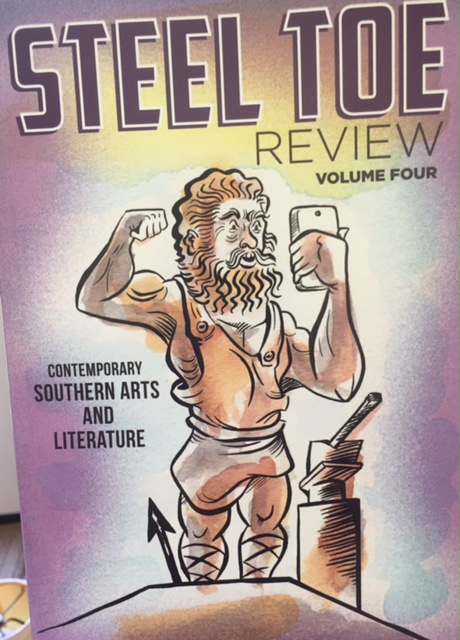
“And All Around, the Withered” was published in Steel Toe Review in January 2017.
Nocturne with a Line after Kees

country

Nocturne with a Line after Kees

I close my eyes and see nothing but rain.
And after, take pity

for what turns beyond sight: the wretched
flower, a hiss from the road. Last night the wind
stole sleep from my body,

leaving me alone, wordless, listening
for her next breath. An alchemist,

I transmute the memories of old wounds laid open.

*****

This first appeared in Ijagun Poetry Journal, in December 2013.

Antique pharmacy

Trains

file0001582779533


Trains

1

In the marrowbone of night,
your song parts the fog.

I never knew the secrets entrusted there.

I never knew that cinders and steel
could lie so passionately

and still believe that the watchman’s hours
would evaporate and leave us scratching for more.

I have stolen time.

The windows remain closed and shuttered.
Even the wind turns away.

The track narrows.

You call.

Again.

2

Sometimes song seems the only respite,
the rhythm of clashing cars

and moments stretched beyond the next bend
to that point where light winks out.

We both know this lonely tunnel.

Payment is due.

I have always exited alone.

3

Another evening, and red smoke completes the horizon.

Your ribs stretch for distance,
and while I cannot see their end,
I know by sound
their lot.

Sing for me.
It is not
too close.

“Trains” was originally published in Lightning’d Press (Issue 8) in Spring of 2014, was reprinted on Aubade Rising in April, 2015, and has appeared here several times. It is also included in my chapbook, If Your Matter Could Reform.

track

Reach

Stephanie L. Harper’s poem sizzles!

stephanielharper's avatarSLHARPERPOETRY

 Reach_firelines

Reach 

Reach for me, for I am
not made of this
fleshy shell; I am deeper.

Reach to the beyond-bone of me,
to the warm & ancient
dark of me.

Find where all my unsaying
resides & swells nameless,
& with your tongue, teach me
to speak. Reach
into the buried of me, stoke
& survey the embers
of my death-preceded devouring,
score my borders,
& till my soil nitrogenous.

Then let me be a sieve for your waters,
& for the salt of your deep,
the belly of hope.

STEPHANIE L. HARPER

View original post

Poem Nominated for Best of the Net

My poem “Missing Loved Ones,” the first draft of which came to being during the 2016 August 30-30 challenge, has been nominated by Eclectica for Best of the Net. Many thanks to poetry editor Jen Finstrom for her generosity and encouragement, and to my longtime friend, Emily Bailey, for sponsoring the poem and providing the title.

Apricot Wood

clouds

Apricot Wood

I built a frame of apricot
wood. This was for you. The clouds float
through it even as I sleep. You wrote
once of wild herbs gathered and brought
to a lovely girl, an offering not
of passion but of some remote
desire to hear a word from the throat
of the Lord Within Clouds. I thought
of this as I chiseled the wood.
Last night it rained. I listened to
it from my bed by the open
window, hoping that the clouds would
not leave. This morning two birds flew
by. It is raining again.

file8641239202119

Originally penned in the 1980s, “Apricot Wood,” is included in my chapbook , If Your Matter Could Reform, and was featured on Autumn Sky Poetry Daily in March 2015

Self-Portrait with Blue

Blue

Self-Portrait with Blue

Darker shades contain black or grey. I claim
the median and the shortened spectrum, near dawn’s terminus.

In many languages, one word describes both blue and green.

Homer had no word for it.

The color of moonlight and bruises, of melancholy and unmet
expectation, it cools and calms, and slows the heart.

Woad. Indigo. Azurite. Lapis lazuli. Dyes. Minerals. Words. Alchemy. 

On this clear day I stretch my body on the pond’s surface and submerge.

Not quite of earth, blue protects the dead against evil in the afterlife, 
and offers the living solace through flatted notes and blurred 7ths.

Blue eyes contain no blue pigment.

In China, it is associated with torment. In Turkey, with mourning.

Between despair and clarity, reflection and detachment,
admit the leaves and sky, the ocean, the earth.

Water captures the red, but reflects and scatters blue.

Look to me and absorb, and absorbing, perceive.

This originally appeared in the Silver Birch Press Self-Portrait Series, and is included in The Circumference of Other, my offering in the Silver Birch Press chapbook collection, IDESpublished in October 2015.

ides front cover 92915

Recording of “Self-Portrait with Umeboshi”

file0001818876295(1)

Self-Portrait with Umeboshi

Our resemblance strengthens each day.

Reddened by sun and shiso,
seasoned with salt,

we preside, finding
comfort in failure. Or does
the subjugation of one’s flavor for another’s

define defeat? The bitter, the sour, the sweet
attract and repel

like lovers separated by distances
too subtle to see.
Filling space becomes the end.
What do you learn when you look through the glass?

Knowing my fate, I say fallen. I say earth.

Ah, simplicity! When I was a child my mother would occasionally serve rice balls in which a single mouth-puckering umeboshi rested at the center. These have long been a favorite, but I admit that umeboshi might be an acquired taste. Commonly called “pickled plums,” ume aren’t really plums but are more closely related to apricots. I cherish them.

“Self-Portrait with Umeboshi” first appeared in the Silver Birch Press Self-Portrait Series (August 2014), was included in the subsequent print anthology, Self-Portrait Poetry Collection, and also appears in my chapbook, If Your Matter Could Reform.

file0001977442406

Music: “Senbazuru” Kevin MacLeod (incompetech.com)
Licensed under Creative Commons: By Attribution 3.0 License
http://creativecommons.org/licenses/by/3.0/

Tell it Slant: How to Write a Wise Poem, essay by Camille Dungy

OLYMPUS DIGITAL CAMERA

Few essays on writing poetry grab me by the collar, slam me against the wall, and say “Listen, dammit!” But this one did.

Camille Dungy’s words sear through the fog. She tells it slant. She tells it true. She explains how some masters have done it. If you’ve not read her poetry, seek it out. You’re in for a treat. If you have the good fortune to attend a lecture or reading by her, do so. She’s energetic, wise and kind. She knows.

http://www.poetryfoundation.org/article/247926

Last posted in April 2017.

Cedar Grove (after Wang Wei)

file000675350848

Cedar Grove (after Wang Wei)

I sit alone among the cedars,
play my guitar and hum.
In this dark forest
no eye spies me but the moon’s.

My take on Wang Wei’s “Bamboo Grove,” from this transliteration copied somewhere along the way:

alone sit dark bamboo among
strum lute again long whistle
deep forest man not know
bright moon come mutual shine

IMG_1533

“Cedar Grove” made its first appearance here in March 2014. I adapted it to fit my circumstances…

You might find the Wikipedia entry on Wang Wei of interest.