Tell it Slant: How to Write a Wise Poem, essay by Camille Dungy

OLYMPUS DIGITAL CAMERA


Few essays on writing poetry grab me by the collar, slam me against the wall, and say “Listen, dammit!” But this one did.

Camille Dungy’s words sear through the fog. She tells it slant. She tells it true. She explains how some masters have done it. If you’ve not read her poetry, seek it out. You’re in for a treat. If you have the good fortune to attend a lecture or reading by her, do so. She’s energetic, wise and kind. She knows.

http://www.poetryfoundation.org/article/247926

FIrst posted here in 2014..


Thirty-Five Years Later, I Raise My Hand

Thirty-Five Years Later, I Raise My Hand

In spring 1983 I enrolled in a poetry writing course thinking it might help improve my short fiction. I was a history major by default, had never taken a course in poetry, but believed, with absolutely no evidence, that I could write fiction. At the time I would have been hard-pressed to name five contemporary poets, even counting my professor. To be honest, the class struggled to hold my attention. Only about a quarter of the students seemed interested in writing, and the instructor was a bit, uh, tired. But for the first time in my life I read, really read, poetry. I fell in love with Galway Kinnell, Ai, James Wright and Carolyn Forche, to name just a few of my early enthusiasms. I wanted to write like them. So I wrote. And wrote. And wrote. Most of it was laughably bad, but somehow I managed to win an undergraduate poetry contest, which suggested that hope existed. Maybe someday, I thought, one of my poems will be published. This radical idea had never occurred to me before. Publication seemed to be the privilege of special people, and a lifetime of gathered fact revealed that I was unequivocably nothing special.

Early on in the semester, perhaps even in the first class, the professor asked how many of us thought we’d still be writing poetry in twenty years. I didn’t raise my hand. I didn’t know where I’d be in six months, much less what I’d be doing in twenty years. Since I’d realized late in the game that teaching was not for me, I had no job prospects, and few marketable skills, despite experience in chugging beer, manning sound-powered phones on a ship’s helicopter tower, scraping barnacles and bending rules. The world was limited. The world was limitless.

Another gray day

dividing the old and young

Oh, this aching hip!


* * *

A song from that time:


Letter from Insomnia

image


Letter from Insomnia

Accepting Li Po’s tragedy,
apocryphal or not,

we embrace her imperfect
reflection
rippling in the breeze,

but manage to surface.

I once thought I would name a child Luna
and she would glow at night

and like Hendrix, kiss the sky.
But that was whimsy

and only candles light this room
at this hour
on this particular day
in this year of the snake.

And what fool would reach for a stone orbiting at
1,023 meters per second?

There are clouds to consider, the stars
and the scattering rain

and of course wine
and the possibilities within each glass
and the drops therein.
We must discuss these matters

under her gaze, where smallness gathers.


* * *

This originally appeared in Middle Gray in October, 2013. It was written in response to a poem my friend Michael sent me, replying to this poem.


image


Chill (Cento)

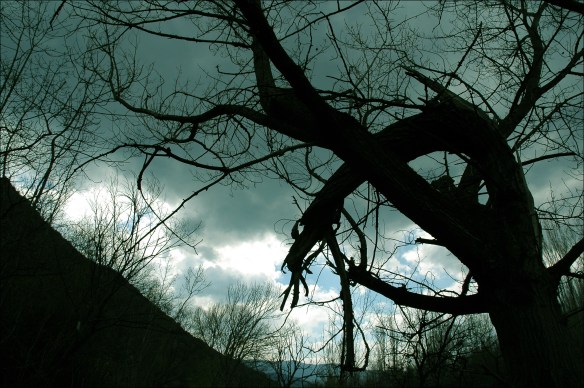
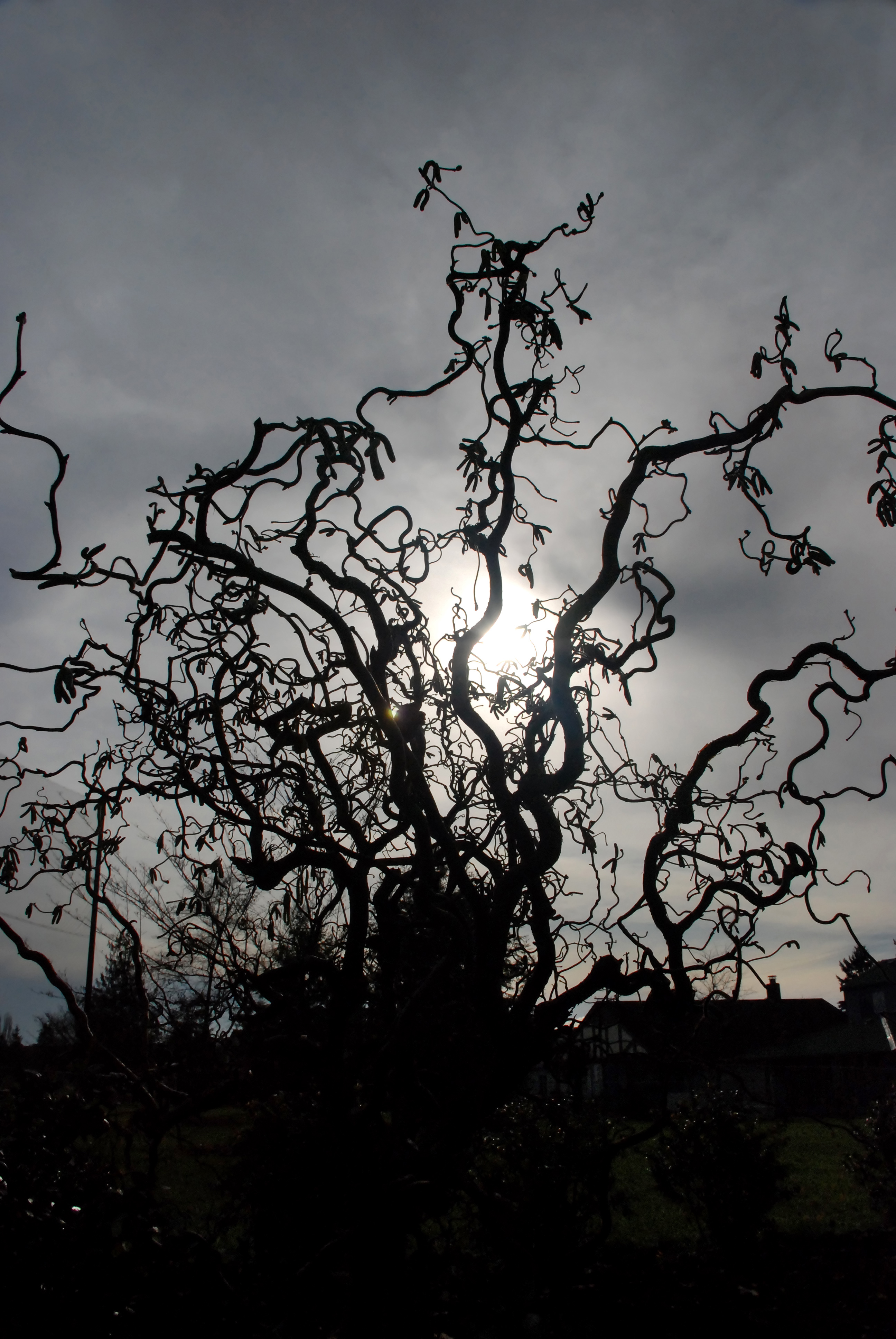
silhouette


Chill (Cento) 

I shiver a little, with the evening,
and you print a shadow like a thin twig.

Wait for my death, then hear me again.
He believes a pomegranate is a thesaurus,

the thundercloud, tomorrow’s puddle. Is
this hunger unlike that of others?

When a drowning man calls out,
his voice follows him downstream.

Why am I grown so cold?


A cento is composed of lines borrowed from other poets. “Chill” owes its existence to: James Wright, H.D., Ingeborg Bachmann, Eduardo C. Corral, Blaga Dimitrova, Forrest Gander, Yusuf Komunyakaa, and Adelaide Crapsey.

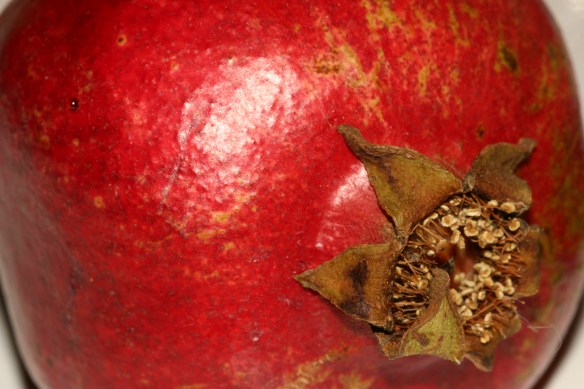
pom.jpg

“Chill” first appeared on the blog in March, 2016, and was subsequently published in Long Exposure in October 2016.


Awaiting Thunder, He Dreams


Awaiting Thunder, He Dreams

If all our voices were to meet in the atmosphere
what could the rain achieve?

When we give nothing we have nothing.

Is it enough to listen?

Wisps and heaps, ripples and sheets.

Accumulated, dispersed, fingers
unknotting death’s
grip, steps taken around the flames,

in caution, in delight,
imagining the greatest undoings.


“Awaiting Thunder, He Dreams” was first published in Red River Review, in August 2018.


Yellow, Lost (with recording)


Yellow, Lost

The forgotten poem, existing in title only: Yellow.

Which is a bruise at three weeks, or memory’s shade in autumn.

In what black folder does it hide? In which blinding light?

I take comfort in primaries, lose sleep at the edges.

Where fraying begins and annotation dwindles to scrawled lines.

Above the bones and flesh of the Egyptian gods. Above my books.

Within these lost minutes. Those moons, bereaved. The hours.

Desire germinates even after our rainless decades. Yellow, again.

The color of sulfur (the devil’s realm) or the traitor’s door.

Of cowardice and warning. Of aging and decay.

How to recover what’s sifted away, the residue of our loves?

Each day more bits break off, never to be reattached.

But you, I blend with the sky, perfecting trees, the grass.


* * *

“Yellow, Lost” was published in wildness, Issue no. 10, in October 2017. wildness is an imprint of Platypus Press, which published my work Interval’s Night, a mini-digital chapbook, in December 2016 in their 2412 series. If you’re not familiar with wildness, check it out. In fall 2016 Poets & Writers named it in their article Nine New Lit Mags You Need to Read.


With Guitar in Hand


With Guitar in Hand

for Stephanie

With guitar in hand I observe the green beetles bumbling about,
the way they careen and crash and flail aimlessly, but to a purpose.

Sometimes I attempt one note, only to strike another, or plucking
three strings simultaneously, focus on the discordant one,

which is, of course, me. How do we live the right song?
Which casual arrangement sends us plummeting to the grass,

hearts racing? I recall thinking “this cannot be,” yet could not,
would not, turn away. I bang out a minor seventh, sing a few

words, adjust my arthritic grip. Yesterday I couldn’t form
the chord shapes I desired. Today the hands float along the

fretboard, unimpeded. I wish you were here. I wish
I could shift time signatures with neurotransmissions,

that we were somewhere else, out of the way, alone
but for birds chirping in the branches by the window.

I wish my flawed tunes could merge with moonlight
and compose pearlescent pieces, and that you would

sing them to me from the threshold of our shared lives. I want
everything, but cherish what we can hold in these wondrous

times. I think of your hair and eyes, how my heart
flutters to the floor and refuses to rise until your smile

unwraps the day’s gift to me, defying Newton’s third law,
offering unheard chords. I listen to your silences, as I do

your words, knowing the value of each. Gazing at your
photo, I speak your name, set down the guitar. Make music.


“With Guitar in Hand” was originally published in the print anthology Epiphanies and Late Realizations of Love in February 2019.


Which Poet, Which Beer (4)


I come here to sit quietly, emerging from my shack, if only briefly, to eavesdrop and observe, to sip beer and participate in the world of commerce. Ah, yes. The grocery store. If only all of them housed craft-beer bars. I place cilantro and shallots in my basket, add arugula, asparagus and a lime, and wander over to the fish case where two small fillets of Chilean sea bass, the commercial name for Patagonian toothfish, catch my eye.

Finally at the bar, I order Lone Pint Brewery’s Zeno’s Pale Ale, and overhear a disquisition on hydration and landscaping, and a conversation on war and snipers and gratitude. The ale arrives with a light, lacey head, exudes a bready malt profile upfront, and a pine-citrus punch at the back. I can’t quite uncover the truth of the flavor, but enjoy the search, and amidst the swirling combination of voices and beer I somehow think of Veronica Golos’ “Snow in April,” a ghazal in her stunning book Vocabulary of Silence.

“Has my flock of flowers died? An ambush, a bullet-shot
of cold. Undone beneath the snow, what’s truth, in April?”

What is the sniper’s truth? What gratitude might we find within April’s layers? I have no answers, only more questions, and with more questions comes thirst.

My second beer is a curious blend of old and new – a Belgian-style quadrupel that, don’t laugh, smells a bit like a cola, but in a good way. Unibroue’s Trois Pistoles is dark brown, let’s call it mahogany, with a fruity but mellow flavor and a toasty malt finish. And well balanced – with an alcohol content of 9%, it’s strong, but not too strong. Historical undercurrents flow through this brew, yet it also brings with it an appreciation of the new and popular, which leads to thoughts of one of my favorite poets, Frank Bidart, whose work often refers to and resonates with historical figures (in the book at hand, Watching the Spring Festival, Tu Fu and Catullus come to mind), and his poem “Sanjaya at 17,” referencing an American Idol contestant:

“There is a creature, among all others, one,
within whose voice there is a secret voice
which once heard
unlocks the door that unlocks the mountain.”

Today the mountain does not swing open for me. Perhaps a second Trois Pistoles might have done the trick, but instead, knowing I have to prepare dinner, starting with a compound butter of shallot, cilantro, garlic and lime zest, I request a mere taste of Founder’s Breakfast Stout, because, well, the idea of stout for breakfast has a certain appeal, though in my case would not be practical, as it would likely put me to sleep. And yes, it contains both chocolate and coffee (Sumatra and Kona), tastes a bit smoky, is smooth and luxurious in the mouth, and makes me long for a lonely, cold winter’s night in a far-off country, a fire crackling with just a hint of madness, and the full moon leering down at all of us, but particularly the dead genius that was Thomas James, whose poem “Wild Cherries,” from his one and only book Letters to a Stranger, ends:

I watch you eat, tasting yourself perhaps,
Some bitterness that is a part of you,
And I accept it gratefully. When you smile,
I see you dying in that single instant.
Walking back home, into ourselves, we enter
A far-off country neither of us wanted.”

Oh, those things we want and don’t want. To feel. To write. To cook, to sing. To share. To love. To be alone. To be numb. To do nothing. To do everything…


This first appeared on the blog in September 2017.


Late Night (after Li Po)

file0001588704472


The moon smiles upon my bed.
I consider frost and ice,
and raising my head, the bright sky.
Lying back, I think of home.


Once again, I’ve attempted to shiver myself into a timeless piece. I can only hope that my version does not offend.


The transliteration from Chinese-Poetry.com follows:

Bed before bright moon shine
Think be ground on frost
Raise head view bright moon
Lower head think home


file000656391838(1)

This originally appeared here in March 2014.

Parting from Wang Wei (after Meng Haoran)

P1010508


Parting from Wang Wei (after Meng Haoran)

These quiet days are ending
and now I must leave.

I miss my home’s fragrant grasses
but will grieve at parting – we’ve

eased each other’s burdens on this road.
True friends are scarce in life.

I should just stay there alone, forever
behind the closed gate.


* * *

“Parting from Wang Wei” is included in my micro-chapbook, No Eye But The Moon’s, available via free download at Origami Poems Project.

The transliteration on Chinese-poems.com reads:

Quiet end what wait
Day day must go return
Wish seek fragrant grass go
Grieve with old friend separated
On road who mutual help
Understanding friend life this scarce
Only should observe solitude
Again close native area door

file5971307479422