Memory and Closets


Memory and Closets

1

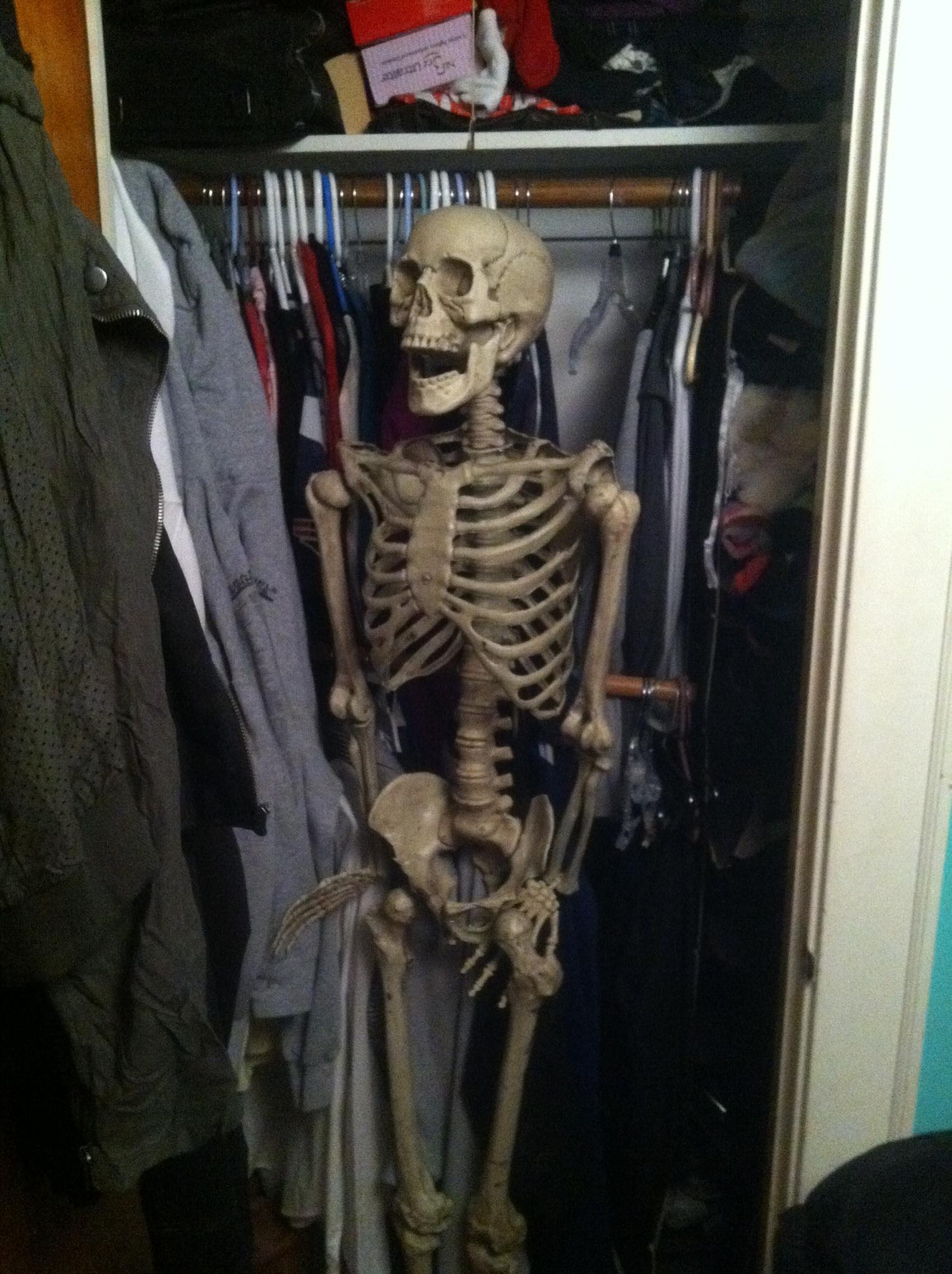
She came with the house.
A skull, spinal column, ribcage, tibia,

scapula – the list goes on, not quite to 206,
even including an extra lumbar vertebra.

Edna (long story) attended Halloween parties
and convivial gatherings, dressed in finery.

Silk suited her best, with linen falling just
behind. And hats! That green fedora,

like a parrot perched on a smiling egg,
never spoke, but stirred the conversation.

2

Old boots, worn left heel explaining the damaged meniscus.
Portable record player. Scratched vinyl.
Shopping bag of VHS tapes. Two empty scotch bottles.
The 30-year old suit that hasn’t been worn in 28 years.
Yellowed newspaper clippings of diet recipes.
The lost carton of wrapping paper.
A cheap guitar case, sans guitar.

3

If memory could speak, what would it not say?

Who else has rubbed this dust across his skin?

Only death is irrevocable.

In this darkness I find you.

Fearing withdrawal, we grow closer.

Things, and more things.

Everything we need travels with us.

Always.


* * *

This was originally drafted during the August 2016 Tupelo Press 30-30 challenge, and subsequently published in The Quiet Letter in April 2017. It’s original title, sponsored by Darryl Williams, was “Cleaning Out Closets in Anticipation of Moving Closer to Children.”

You can find The Quiet Letter’s 2018 interview with me here.

Bottom, Falling


Bottom, Falling

Through that window you see another bird
rising, unlabeled, unwanted, yet noticed.
A limb’s last leaf. The boy’s breath.
Like the morning after your father died,
when temperature didn’t register
and heat shallowed through the morning’s
end. Still you shivered. Glass. Wind.
Night’s body. How to calibrate nothing’s
grace? Take notes. Trace its echo. Try.


“Bottom Falling” was published in Into the Void in October 2016, and is included in my chapbook, From Every Moment a Second.

While Reading Billy Collins at Bandera’s Best Restaurant, Words Come to Me


While Reading Billy Collins at Bandera’s Best Restaurant, Words Come to Me

And having no other paper at hand,
I scrawl on a dollar bill, “I want to speak
the language of smoke.” My invisible friend
interrupts. That is a white man’s dilemma.

 At least you have a dollar and a pen.
“But I’m only half-white,” I reply, “with half
the privilege.” Then you must bear double
the burden,
he says. This version of math

twists my intestines into a Gordian knot,
as does the concept of half equals twice,
or in terms I might better comprehend,
one beer equals four when divided by color

or accent and multiplied by projection.
The unsmiling waitress delivers my rib-eye
as I’m dressing the salad, and the check appears
just after the first bites of medium-rare beef

hit my palate, certainly before I can answer the
never-voiced question “would you like dessert?”
Cheese cake, I would have said. Or cobbler. And I
seldom turn down a second beer. This too, I’m told,

is another example of my unearned entitlement. I
contemplate this statement, scribble a few other
phrases on bills, drop them on the table, and walk out,
wondering which direction to take, which to avoid.


* * *

“While Reading Billy Collins at Bandera’s Best Restaurant, Words Come to Me” was a finalist last fall for the Slippery Elm Prize in Poetry. It was published in Slippery Elm (print only) in December 2017. You may be amused to hear that shortly after the winner was announced, I had lunch in Bandera with one of the other finalists in this competition, D.G. Geis, but not at the restaurant featured in the poem. The photo is of a local bar, not the eatery, but it offers some of the flavor of the town.

Shadow’s Tale

image


Shadow’s Tale

If I call,
will you
reply?

Questions
left unwritten
shape
themselves

like words
we see
but don’t
read. Signs

fade then
reappear,
and the oaks

droop
in the still
heat.
No rain

again. If
you call,
will I
reply?


image

“Shadow’s Tale” first appeared here in June 2015.

Driving without Radio

trash-in-tree


Driving without Radio

One minute you’re sipping coffee at the stoplight,
and the next you find yourself six miles

down the road, wondering how you got there,
just two exits before the French bakery

and your favorite weekday breakfast taco stand.
Or while pondering the life of mud,

you almost stomp the brakes when a 40-year old
memory oozes in — two weeks before Thanksgiving,

the windshield icing over (inside), while most definitely
not watching the drive-in movie in Junction City, Kansas,

her warm sighs on your neck and ear, and the art
of opening cheap wine with a hairbrush. How many

construction barrels must one dodge to conjure these
delights, unsought and long misfiled? You turn right

on 29th Street and just for a moment think you’ve seen
an old friend, looking as he did before he died,

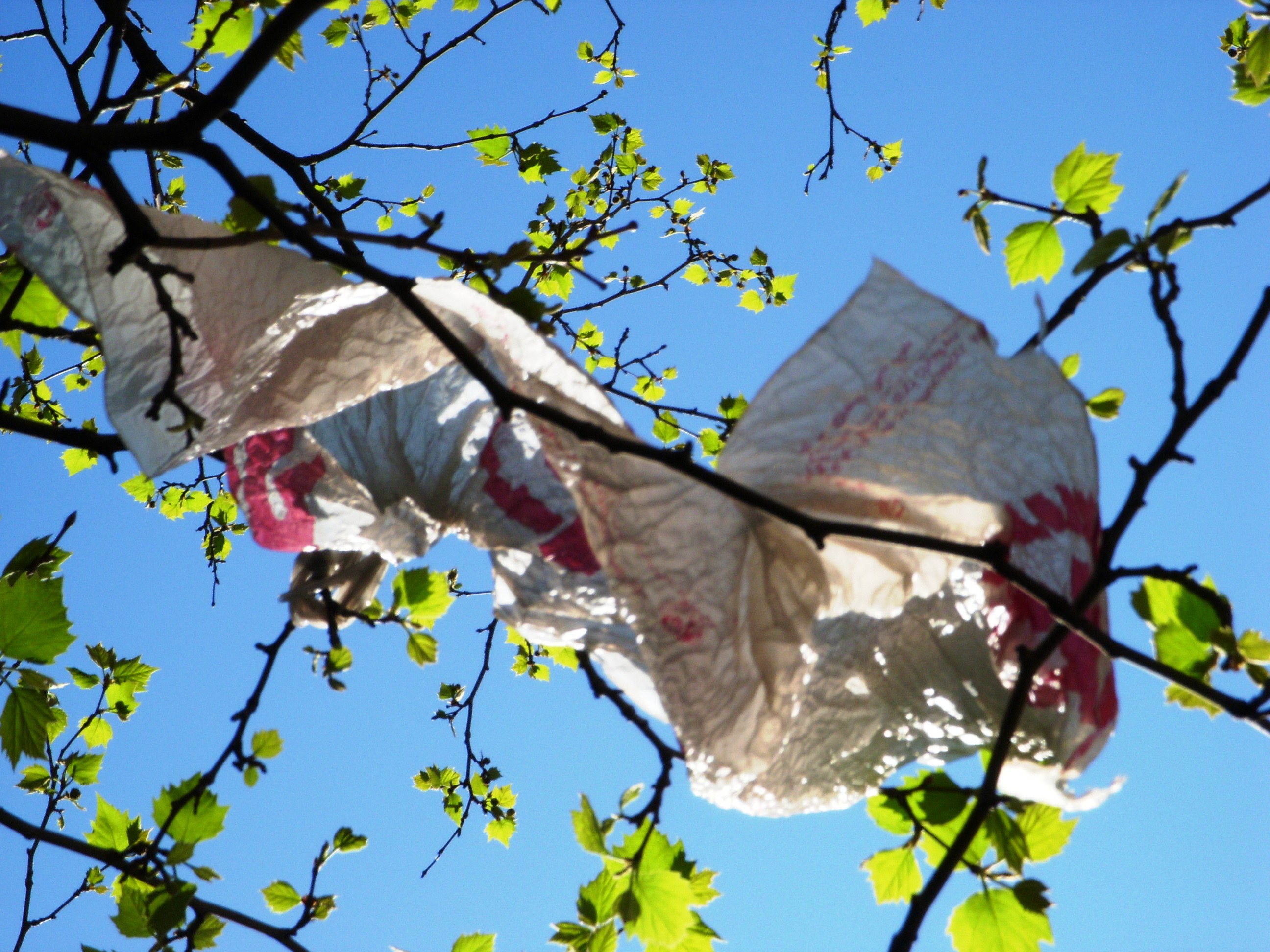
but better, and happier, and of course it’s just a trash bag
caught in a plum tree, waving hello, waving goodbye.


“Driving without Radio” was published at Split Rock Review in November 2016. Many thanks to editor Crystal Gibbins for providing a home for this one.


Buddha’s Not Talking


Buddha’s Not Talking


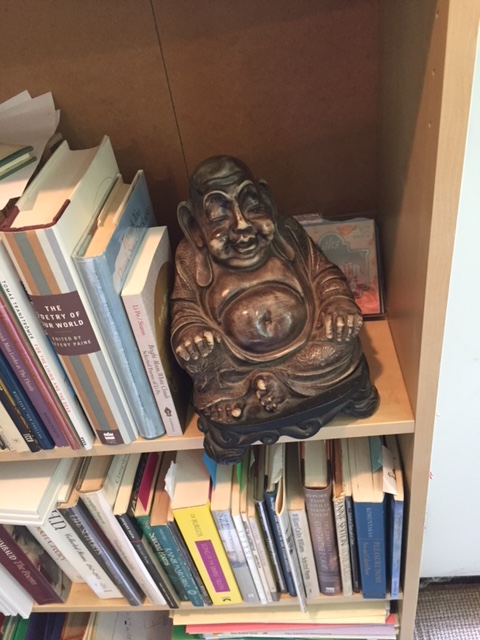
He looks out from the shelf while I consider
manure, sharp knives and the hagfish’s second
heart, or whether odors differ in texture when a dog

retraces his steps through the park, and do they really
lose themselves or just quickly shed their pasts,
forever moving towards now. Sometimes I say hello,

but truthfully we seldom interact, unless I bump his
shoulder when retrieving one of the books leaning
against him, and then it’s only a quick “sorry” on my

part, and a stare on his, perhaps a slight nod if
I’ve not yet had coffee. I fear I’ll never grasp
the difference in having and being, that my true

nature has splattered on a trail and the dogs will
sniff it and lift their legs in acknowledgment,
or perhaps acceptance of the infinite, with wisdom

far beyond my reach, before moving on to disquisitions
about soil and fragrance and the need to justify art
with decimal points. Yesterday I roasted chicken, moved

books, sipped ale. Today I’ll sweep, discard papers and
wonder if I’ll become what I think, whether reincarnation
will be cruel or kind. Either way, Buddha’s not talking.


* * *

“Buddha’s Not Talking” first appeared in July 2017 at Blue Bonnet Review.
With gratitude to editor Cristina Del Canto for taking this piece.

Tuning the Beast


Tuning the Beast

I prepare contingencies for all outcomes. No.
I’ve prepared for this: a body. A key. As if

that cloth draped a leg. Not a leg
but the representation of a limb.

Another fragment, brought forth and opened.
Not a limb, an arrow, perhaps, pointing to the sea.

An oar, brought inland and unrecognized
for its purpose, directed or aimless. No, not an oar.

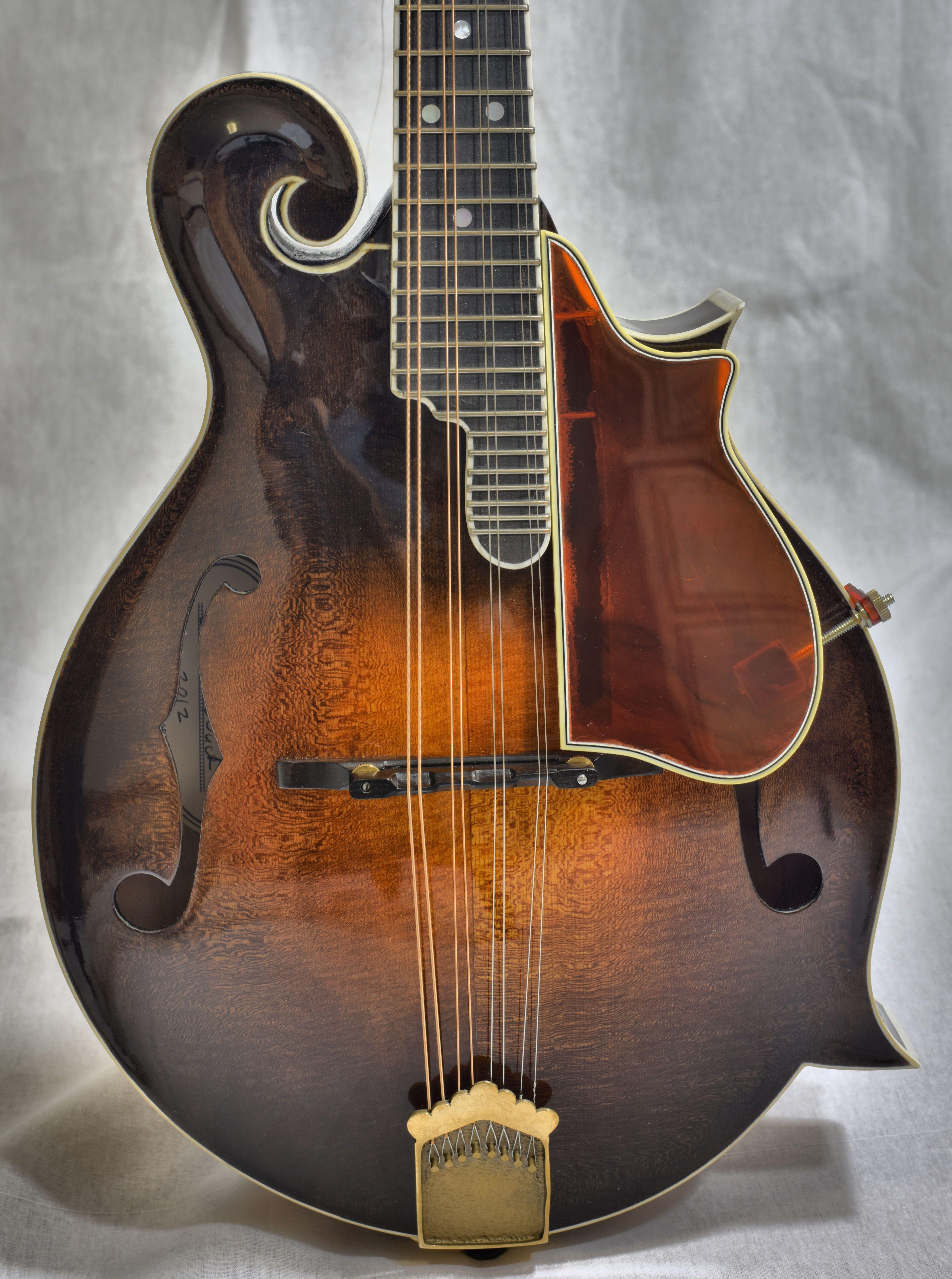
A neck, polished, and a chamber, with strings.
Repetition, fixation. Position. Intent.

I pluck and strum, pick and stroke, maintaining
space, steel above wood, bending notes,

moving sound in time, purposefully, from
this place to that, the left hand, creating,

conversing. The right, reasoning, controlling,
burning its past to the present, allowing,

preventing, rendering beat, consistent
motion, shaping only this moment, this now.


“Tuning the Beast” was drafted during the August 2015 Tupelo Press 30-30 Challenge, thanks to Sunshine Jansen’s sponsorship. It subsequently appeared in The Blue Nib in September 2016.


Apricot Wood (with recording)

clouds


Apricot Wood

I built a frame of apricot
wood. This was for you. The clouds float
through it even as I sleep. You wrote
once of wild herbs gathered and brought
to a lovely girl, an offering not
of passion but of some remote
desire to hear a word from the throat
of the Lord Within Clouds. I thought
of this as I chiseled the wood.
Last night it rained. I listened to
it from my bed by the open
window, hoping that the clouds would
not leave. This morning two birds flew
by. It is raining again.


file8641239202119


Originally penned in the 1980s, “Apricot Wood,” is included in my 2015 chapbook, If Your Matter Could Reform. It was first published in 1986, in SPSM&H, a publication devoted to sonnets, and was featured on Autumn Sky Poetry Daily in March 2015. It’s interesting to look at my writing from this period. Some pieces seem to have been written by a stranger, long ago and far, far away. This one somehow seems closer. 


A Brief History of Babel

image


A Brief History of Babel


Borders, windows.
Sound.

Trudging up the steps, I am winded after six flights,
my words smothered in the breathing.

The Gate of God proffers no favors.
When the spirit gives me utterance, what shall I say?

Curiously, no direct link exists between Babel and babble.

A collective aphasia could explain the disruption. One’s
inability to mouth the proper word, another’s
fluency impeded by context.

A stairway terminating in clouds.

Syllable by twisted syllable, dispersed.

Separated in symbols.
And then,
writing.

To see the sunrise from behind a tree, you must face
east: higashi, or, a discrete way of seeing
the structure of language unfold.
Two characters, layered. One
thought. Direction.
Connotation. The sun’s
ascent viewed through branches
as through the frame
of a glassless
window.

Complexity in simplicity.
Or the opposite.

I have no desire to touch heaven, but my tongues reach where they will.

Who can know what we say to God, but God?

And the breeze winding through, carrying fragments.


* * *


My poem, “A Brief History of Babel,” was drafted during the August 2015 Tupelo Press 30-30 challenge, and was subsequently published at Bonnie McClellan’s International Poetry Month celebration in February 2017.


My Mother’s Ghost Scrubs the Floor at 2 a.m.


My Mother’s Ghost Scrubs the Floor at 2 a.m.

Even in death she scraps the easy path, choosing thorns and rocks
over blossoms and a groomed walkway. On hands and knees,
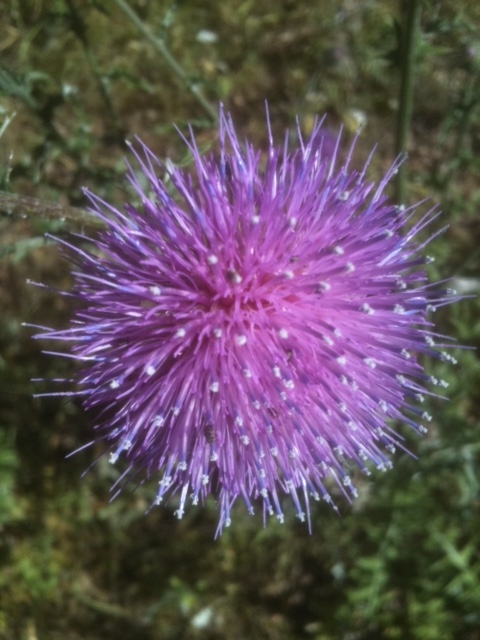
scouring the floor with ghost water and a scrub brush made of ancient

thistles, her pale figure flares yellow in the kitchen. Mom, you don’t
have to do this, I say. You’re dead, and besides, I have a swiffer
in the garage. I can almost hear her humming a Ray Charles

song from an album back in the sixties, and I notice that the water
in the transparent bucket remains clear and at the same level no matter
how often she dips into it. What do you say to one who never replies?

We’ve long splashed through that puddle of contention, and though
wary of repetition’s erosive qualities, I resort to ritual, drop a piece of
kombu into a pot of water, bring it to a boil, remove it from the heat,

sift in a handful of dried bonito flakes and a few drops of soy sauce,
stirring it a few times. Then I strain the liquid, spoon in some miso,
add chopped green onion and a few cubes of tofu. I ladle this into two

black and red laquer bowls and set them on opposite sides of the table.
Hours later, the glow from the kitchen has faded, but I fidget and lie
awake, pain pulsing from hip to knee, and wonder if surgery is impending,

whether I should hire someone to temporarily mow the grass. How do
we reconcile reality with desire, with emotional drought and flood-swollen
creeks and the inability to draw together those things we desire most?

In the morning the floor is still dirty and the soup is where I’d left it,
at the sharp edge separating table from space, another stuttering symbol,
cold and unappetizing, smelling faintly of fish and muddy water.


“My Mother’s Ghost Scrubs the Floor at 2 a.m.” first appeared in The Indianapolis Review, and was subsequently nominated for a Pushcart Prize.