Things I Cannot Say

Hey, did she say what she couldn’t say? Read Stephanie L. Harper’s “Things I Cannot Say” to find out. And her stunning new book is available at a substantial discount during the pre-publication order period.

stephanielharper's avatarSLHARPERPOETRY

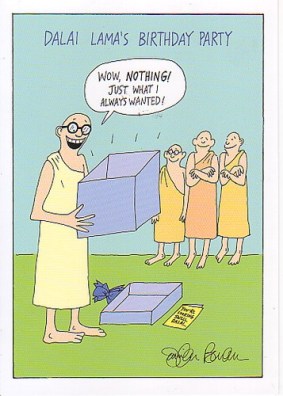
funny-dalai-lama-cartoon-birthday
Things I Cannot Say

Even when you are a one-year-old jumping out of your crib
(you have no particular reason for jumping, but you do it,
& the thud you make that’s loud but doesn’t hurt,
wakes your father, the menacing resonance of whose
footsteps approaching your room overwhelms you with terror—
your own heartbeat surging in your head—which you catalogue
into your infant consciousness as a sense of mortal danger
you will run from for the rest of your life, though you have no
language to account for it yet), you already implicitly understand
that your fear is a thing you must never talk about out loud, for
the only way its malaise living in your veins could feel worse,
would be if the words you formulated & ascribed to its being
resulted in its summary negation.

___________________________________For the same, essential reason,
you still hardly believe the amazing…

View original post 259 more words

Not Blame Your Pleasure

bike

Not Blame Your Pleasure

Because vision limits options, I close my eyes.

Becoming urges patience.

The morning after I didn’t die, I took breakfast in bed.

Arrival stamps the difference between waiting and choice.

Expectation, too, extends its squeeze, rendering sleep impossible.

I ride the bike and go nowhere, or walk steadily, covering the same ground.

Which will claim me first? An occlusion, gravity or unchecked growth?

Anticipation replaces one sigh with another: I have three falls from two roofs.

A friend has named me executor of his estate, and now the race is on.

The path to the void seems straight only near its end.

My ashes will one day soil someone’s morning.

ladder

“Not Blame Your Pleasure” first appeared here in November 2015.

Poet’s Pantry

file3911233869642

In my sliver of the world, poetry and cooking share many qualities. When I step into the kitchen, I often have only a vaporous notion of what’s for dinner. A hankering for roasted poblano peppers, the need to use a protein languishing in the refrigerator, the memory of an herbal breeze wafting down a terraced hill near Lago d’Averno, Hell’s entrance, according to Virgil, or even a single intriguing word, may spark what comes next. But the success of what follows depends upon the ingredients at hand, on how we’ve stocked the pantry. Good products beget better results. Let’s take my desire for roasted poblanos. What to do with them? Poking around, I uncover an opened package of goat cheese, a bit of grated grana padano and some creme fraiche, and I immediately think pasta! Looking further I spot arugula, a lemon, a handful of pecans, some cherry tomatoes. Dinner: Pappardelle with a roasted poblano and goat cheese sauce, garnished with toasted pecans, served with an arugula and cherry tomato salad dressed with a lemon vinaigrette. Simple, when you’ve stocked a solid base of quality components.

My writing employs a similar process. Anything – a vague sense of uneasiness, a particular word, the sunlight slanting through the unfortunate dove’s imprint on my window, articles or books I’ve read or perused on a myriad of subjects – may launch a poem. But what truly makes the poem, what bolsters, fills and completes, what ignites and catapults it arcing into the firmament? The pantry’s contents.

Everyone’s needs differ, and I wouldn’t presume to inflict my peculiar sensibilities on anyone, but if you cracked open my burgeoning poetry pantry’s door, you’d certainly unearth dictionaries and a thesaurus, fallen stars, books on etymology and language, curiosity, a guitar or mandolin, at least one window (sometimes partially open), conversations floating in the ether, various empty frames, wind, dog biscuits and dirty socks, a walking stick, sunlight and shadows, more books on such subjects as ancient navigation, the history of numbers, the periodic table, alchemy and olives. You might also spy reams of paper, unspoken words, coffee cups, a scorpion or two, scrawled notes on index cards, wandering musical notes, a pipe wrench, wood ear mushrooms and salvaged fragments of writing, failed ideas moldering in clumps on the floor, a few craft beers and empty wine bottles, a chain saw, and most important of all, a bucketful of patience.

(I cannot over-emphasize the bucket’s contents…)

This is just to say (no, I didn’t eat the plums) that the best equipped poets stock their pantries with the world and all its questions, with logic, with faith, persistence, emotion, science, art, romance and yes, patience. Line your kit with every tool you can grasp or imagine. Keep adding to it. Read deeply. Listen. Breathe. Listen again. Converse. Look outward. Further, past the trees, around the bend and beyond the horizon’s curve, where the unknown lurks. Look again. Don’t stop. Continue.

And if after all this you’re wondering what basks in my kitchen pantry:
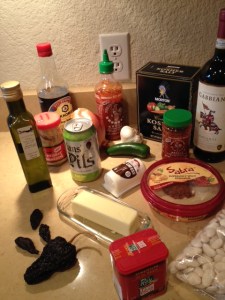
photo(13)

This last appeared here in July  2017.

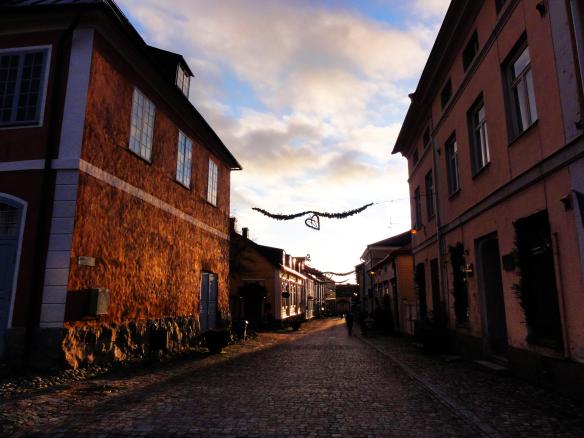
Helsinki (with recording)

Helsinki

Helsinki

An editor said never start a poem at a window,
so instead I’m looking at the door,

which is made of glass. We are to avoid rain,
too, but it streaks the pane in such delicious

patterns that I can’t help but pretend to be someone else
in a foreign city, perhaps Helsinki, sipping black coffee

with a mysterious woman younger than my daughter
(who also does not exist), whose interests

in me are purely literary, although she straightens
my collar with lingering, scented fingers. Garden

memories and birds must never populate our lines,
but corpses are fine, as are tube tops and bananas

and any combination thereof. I finish my coffee
and wander alone through cobblestone streets,

stepping over clichés when possible, kicking them
aside when my hip joint argues, or simply accepting

their useful limitations when nothing else works.
Unknown and lacking credentials, I shrug, go on

past the closed doors behind which unseen bodies
perform the most bizarre and sensual solo dances,

or not, and shadows cook sausages over fire
and the grease spattering onto the tiled counters

issues a fragrance that awakens neighborhood dogs
and maybe a dozing stall-keeper at the market

where cloudberries are sometimes found.
I know little of Finland, and less of myself,

and then there’s poetry, which remains a blank
frame, a frosted pane I’ll never truly unlatch.

* * *

My poem “Helsinki” was first published at Panoply. It was inspired in part by a Facebook thread on which editors commented on what caused them to instantly reject poems. One said beginning a poem at a window was cause for rejection. Hence the first line.

While Looking Up at a Working Wasp, I Trip

While Looking Up at a Working Wasp, I Trip

How do these things I once barely acknowledged
now snare toes or twist ankles, causing me to stumble,

spill coffee and curse. Steps, rocks, pavement, curbs.
Door sills. No matter which, without provocation.

Solitary wasps mate not in flight but in the vicinity
of their nesting area. Three years ago a female

violated our unspoken agreement of mutual
existence; my arm purpled and ballooned

to twice its normal size, and I demolished her nest
for fear that attacks would become habit. Today,

another builds in the same spot. I stoop by,
beneath notice, as she labors to make room

for eggs fertilized with stored sperm from a single
drone. Such diligence should earn rewards.

I stroll to the mailbox and marvel at their ability
to manufacture wood pulp for nests, how

certain species avoid mating with siblings
on the basis of chemical signatures, and that

they voluntarily control the sex of their offspring.
Ah, the wonders of nature! Approaching the door,

I look up and observe the growing nest with
admiration, enter the house without stumbling,

and inhale the fragrance of the perfectly arranged
lilies. The books on the table entice me, so I

pour a glass of malbec and thumb through them
with great pleasure. Soon, after sunset, she will die.

* * *

“While Looking Up at a Working Wasp, I Trip” was published in MockingHeart Review in May 2018.

Wasp

wasp

Wasp

Outward, the quest for
space and the wings’

hunger to unfold and
shed this home of dark
flesh and encompassing desire.

And each thing remembered, the broken
sheath, the flowering desert’s return,

reflects the notion of being, of intent
in action and its corollary,

the gift of living through death.

* * *

“Wasp” last appeared here in January 2017.

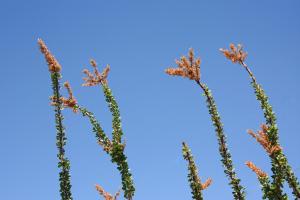
flowers-in-the-desert

Letter from the Other Side of Halfway

Read this poem, and consider ordering Stephanie L. Harper’s forthcoming chapbook!

stephanielharper's avatarSLHARPERPOETRY

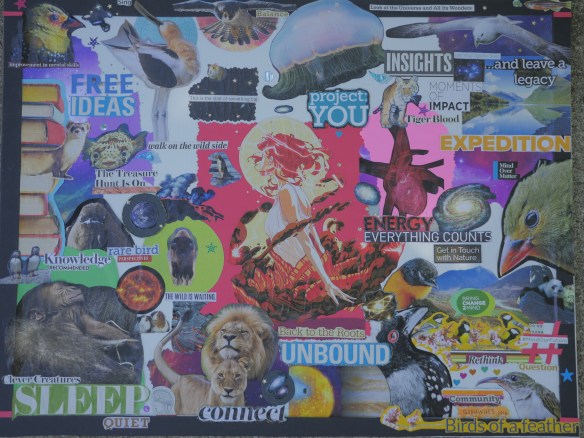
Vision Board_GISH 2016
Letter from the Other Side of Halfway

Dear Bob: In one of my former incarnations
as a starving, family-less, twenty-something Grad
Student, well before the advent of emails & texting,
when handwritten sentiments on stationery were still
in vogue, I certainly sent my share of “Dear Bob Letters.”
The recipients thereof, on the whole a far cry from being
remotely “Bob-like,” included a number of real posers,
some of whom now strut & crow on Facebook like
the ancient, hoary roosters (read: cocks) they clearly are.
As for the others (more of them than you might imagine),
they’re all dead, several by their own hands, even—a stone-
cold statistic (the seeming synchronicity of which is tough
to ignore) I frequently grapple with, sorting through conjured,
a posteriori details & associated, surreal imagery by day, &
chasing after egotistical ghosts in my über-symbolic dreams
by night, always with the conviction that…

View original post 524 more words

Poem Nominated for a Pushcart

OLYMPUS DIGITAL CAMERA

My poem, “Year’s End,” which is included in my micro-chapbook Only This, has been nominated for a Pushcart Prize. Only This is available via free download from Origami Poems Project. Thank you to Jan and Kevin Keough for this honor!

Year’s End

If I lose myself in breathing,
will the air forgive my forgetfulness?

This oak, too, will stand long after
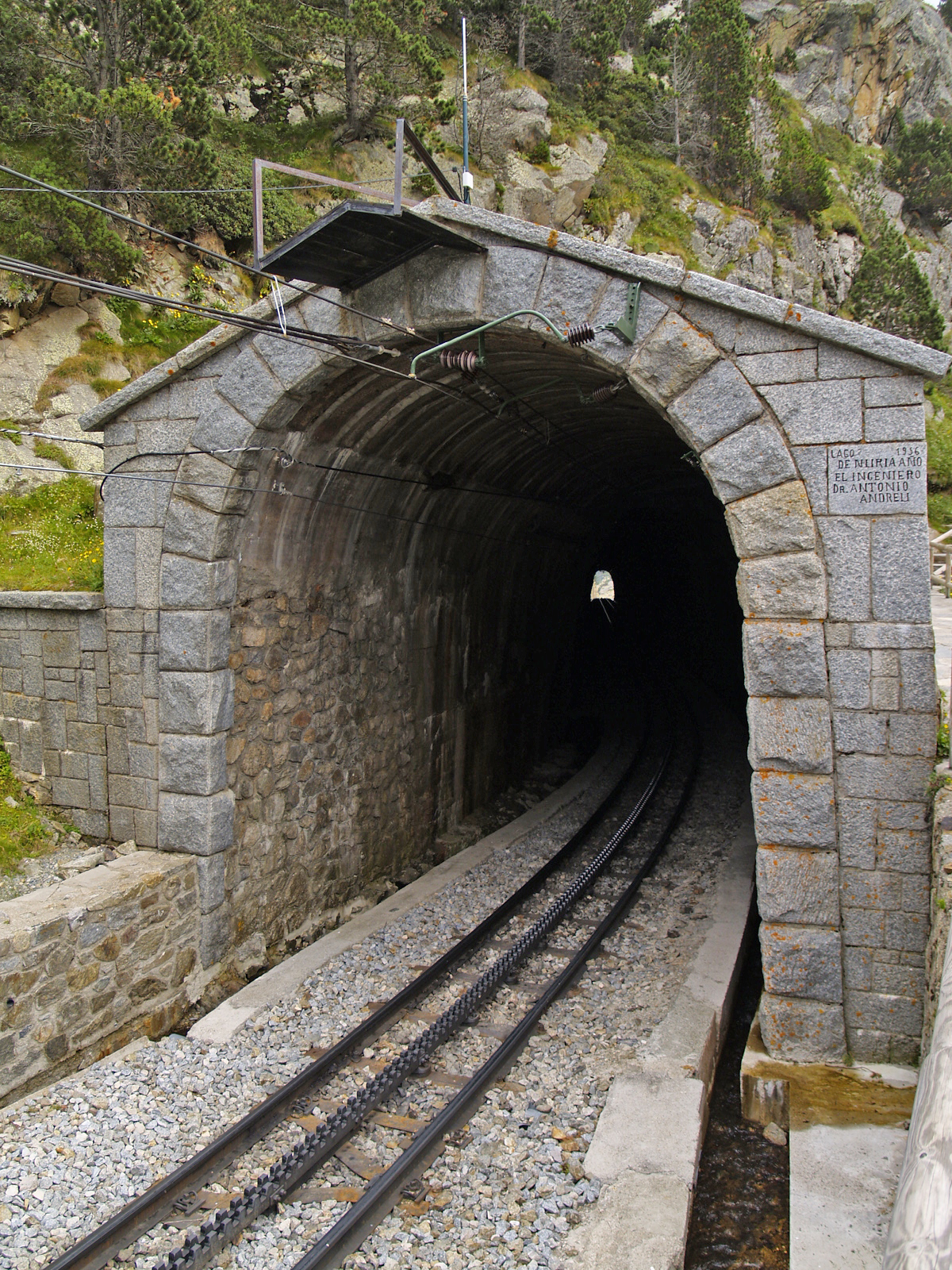
the last train exits the tunnel.

I worry that my friend may never
clamber past his lowest ambition.

Different and unabated, our words
now stumble over themselves.

Every night forms a morning somewhere:
each year, combined in our shared darkness.

* * *

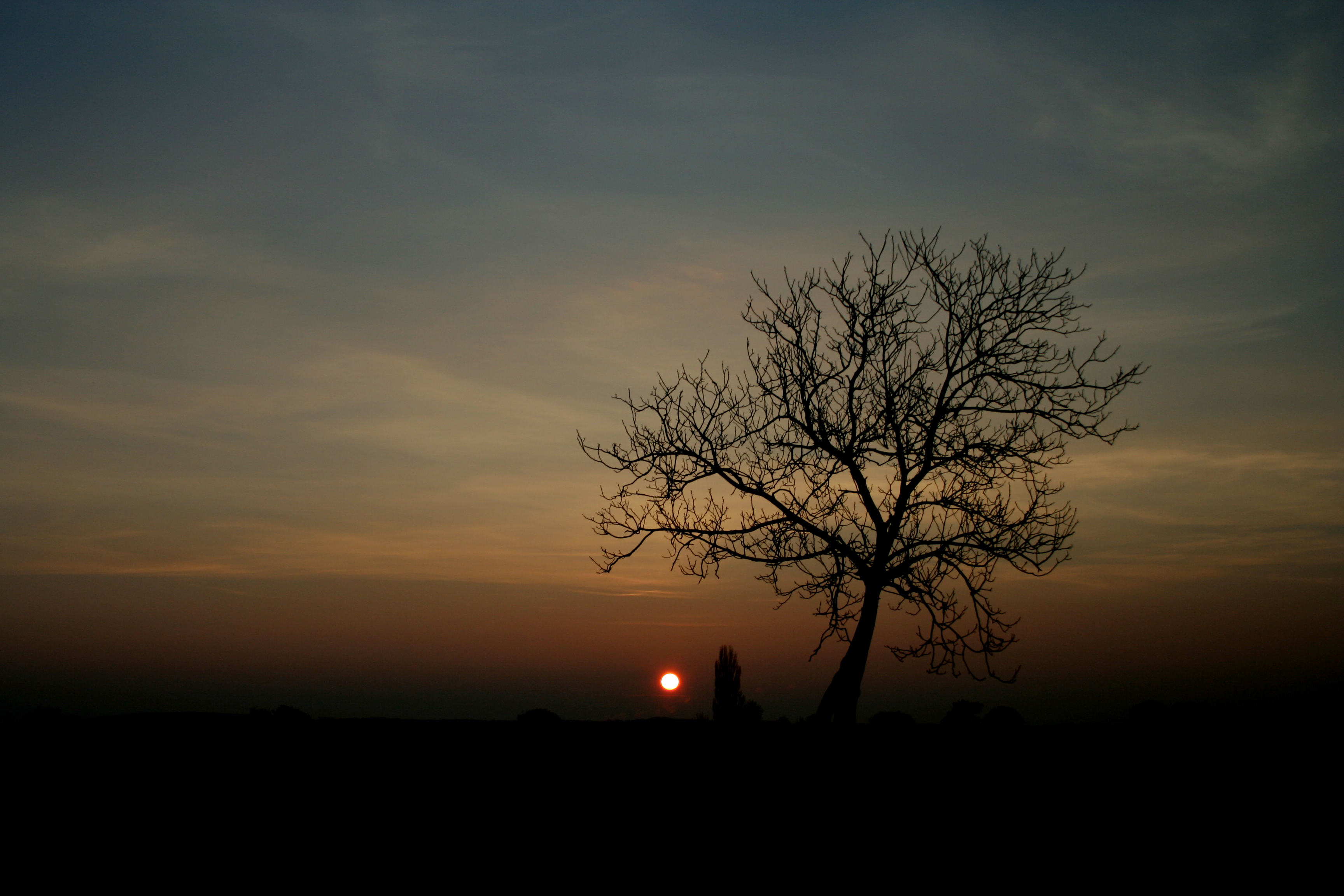
night

Poem Up at Amethyst Review

My poem “The Bitter Celebrates” is live at Amethyst Review. Thank you, Sarah Law, for taking this piece.

Poetry: Motherhood & Myth in THIS BEING DONE by Stephanie L. Harper

Read Lily Blackburn’s insightful review of Stephanie L. Harper’s This Being Done.