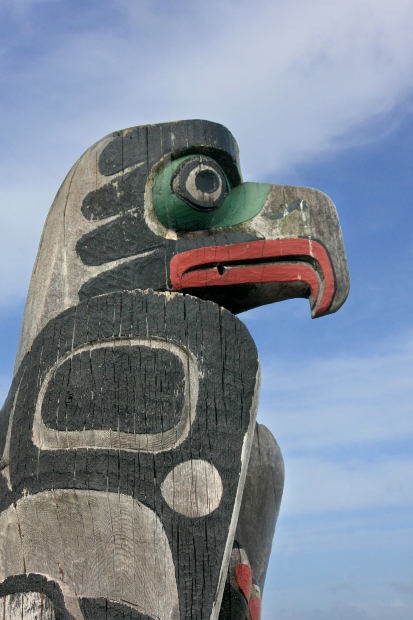
Another Bird, Rising

Another Bird, Rising

The shadow behind you slides over
the ceiling, up and gone,

a wingless silence. The drafted swirl.
One morning shifts into two, and still

you won’t give in, each moment’s
gasp another one earned, a measurable

notch on the table’s edge, quarters
in the magic purse. They all count.

Pills, chemo, radiation. Ocean to sky.
Houses to ash. Your eyes see black.

“Another Bird, Rising” first appeared in deLuge in fall 2016.

Meditation in White

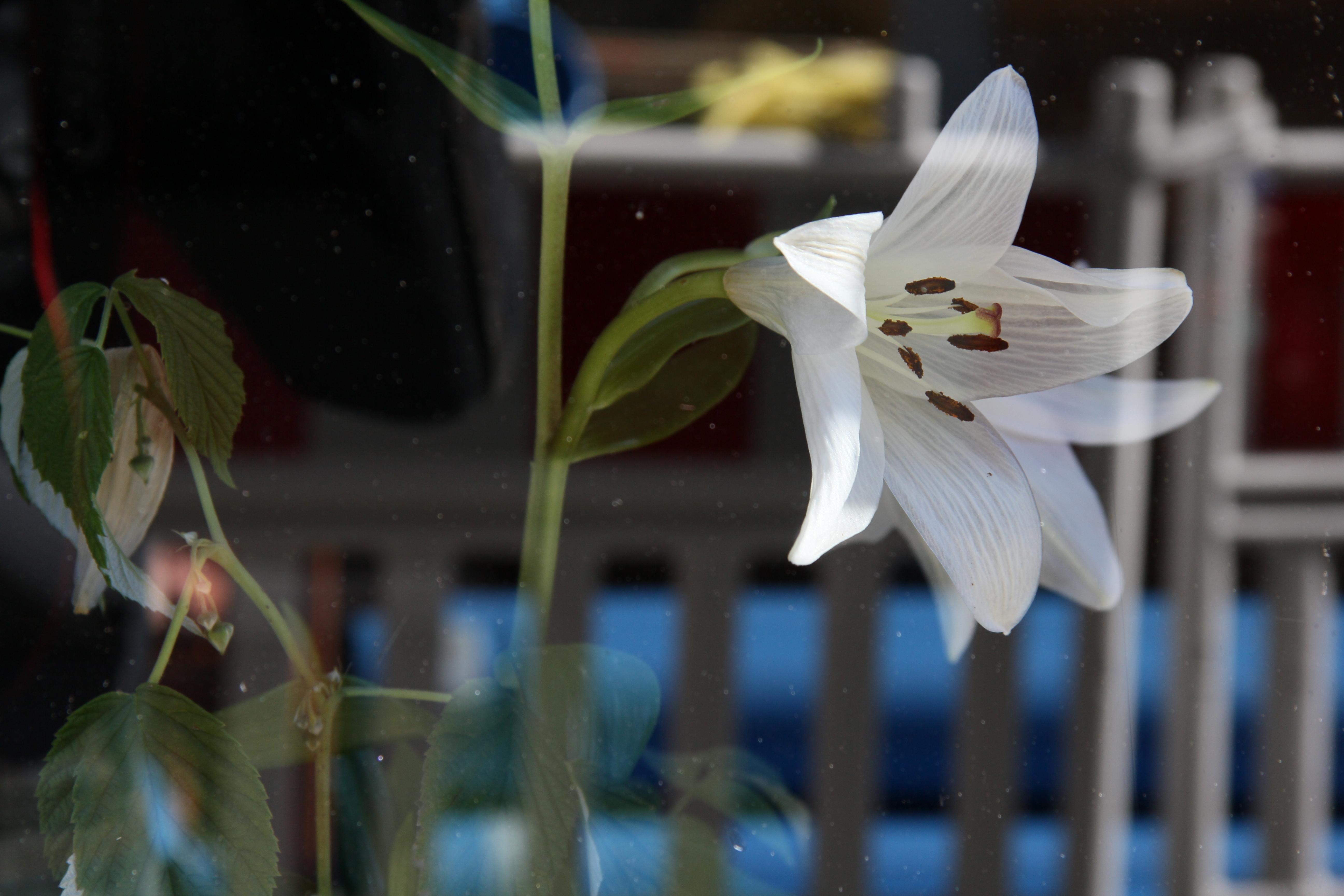
lily

Meditation in White (Lilies)

Clouds pass my high window quickly, abandoning the blue.
Indefinite mass, indeterminate, impersonal

as only intimates may know.
Though you lay there, nothing remained in the bed.

Which is the blank page’s gift, the monotone
or a suggestion of mist and stripped bones.

The nurse marked the passage with pen on paper.
Renewal, departure. A rising.

I accept the ash of suffering
as I accept our destination, the morning

and its offerings, with you in synthesis,
complete and empty, shaded in contrast,

wilting, as another opens. Laughter eases the way.

***

page

This was first published in Shadowtrain, and made its first appearance here in March 2016.

Not Blame Your Pleasure

bike

Not Blame Your Pleasure

Because vision limits options, I close my eyes.

Becoming urges patience.

The morning after I didn’t die, I took breakfast in bed.

Arrival stamps the difference between waiting and choice.

Expectation, too, extends its squeeze, rendering sleep impossible.

I ride the bike and go nowhere, or walk steadily, covering the same ground.

Which will claim me first? An occlusion, gravity or unchecked growth?

Anticipation replaces one sigh with another: I have three falls from two roofs.

A friend has named me executor of his estate, and now the race is on.

The path to the void seems straight only near its end.

My ashes will one day soil someone’s morning.

ladder

“Not Blame Your Pleasure” first appeared here in November 2015.

Palinode (salt, mask, descent)

mask


Palinode (salt, mask, descent)

Tracing the map to the swaying places, she rises
through the interior world, garnering peace by
syllable. Water, clouds and sand mark her ascent.
The expectation is return, renewal. My friend did not
awaken this morning, and tonight I praise her
passage with drink and song. Matter into spirit,
mountain into sky, redemption, freedom. We bathe in
light, reclaiming the liminal. Our tears evaporate,
leaving salt and untrod paths in our wake.

The paths in our wake delimit the future, but
everything falls. Which do we desire more, the grasp
or its release? That instant preceding fear defines a
yearning particular to its course, a cycle of regression
and progress: ancestors descend into human or
animal form, die, depart to the heavens, and return
anew. Distilled power, a bridge to the spirits, the
mask unshutters and conceals the conscious mind.
Opening my eyes, I release the sun.

I release the sun and observe the results. From sky
to soil, from above to below, to solidity. Spirit
acquires matter, disperses and regroups. Rain and
alluvion, flooded homes, the dark night of childish
laughter. Each to her own path, each to an end. Muting
the string, I touch the harmonic into the world, linking
civility to proportion, lowering dissonance. Everything
falls. Everything. From curve to angle, we resist and
rejoice. In this design parabola, she descends.


ascent

“Palinode (salt, mask, descent)” was first published in Otoliths in slightly different form.

Celan, 1970

image

Celan, 1970

From frame to door,
the obvious defers, denying

entry as if
an eye could reclaim

or separate

the fallen tear
and the river’s skin,

or return
those words to

thought, water to
stone, intent

to cold
reason,
now to before.

He stepped into release.


* * *

“Celan, 1970” first appeared in October 2015. One of the most influential (and difficult) European poets of the 20th century, Paul Celan survived the horror of World War II but never escaped its shadow. A brief biography may be found here.

image

Wasp

wasp

Wasp

Outward, the quest for
space and the wings’

hunger to unfold and
shed this home of dark
flesh and encompassing desire.

And each thing remembered, the broken
sheath, the flowering desert’s return,

reflects the notion of being, of intent
in action and its corollary,

the gift of living through death.

* * *

“Wasp” first appeared here in October 2015.

flowers-in-the-desert

Variations on a Theme

darkedinburgh_shadow

Variations on a Theme

1. The Long Night

We envy the shadow its attributes, its willingness to subside,
but what of its flesh?

I lay in the field and wept.

Think of the fragrance, the moist leaves
enveloping the still

warm body. In retrospect, I realize that I should never have left, that air
returns to voided space despite all attempts to disavow

light, that wind and rain and soil alike filter through the chest’s
cavity, that stones may bear one’s touch in perpetuity.

At nineteen, death had gifted nothing to my world.
At twenty, little else remained.

So close, so lovely.

2. The Loneliness of Shadows

Light collapsing around a point. The two-headed flower.

In my dreams, no one speaks.

Not the thing itself, the bud bursting forth, petals ablaze with color,
but rather change: the process reinforced.

Sleep seldom shows such kindness.

Or its fruit, redolent of sun and rain, withdrawn and shriveled,
and finally, ingested.

Yesterday I woke damp but unafraid.

3. Alchemy

Stones never talk, but they rise from the earth, appearing as if by invitation.

The way silence lines an unfilled
grave, which is to say as below

so above, an infinite murmur open to the night.
And other notions: transpiration.

Waste.
Sublimation. Calcination and burning.

At times I have withdrawn
like water from the air’s

body, fearful yet reckless in the act.
That evening the moon flickered and the shadows lay at our feet,

and all the words we never framed,
the bitters our tongues could not know, the wasted

music and abandoned caresses, those words,
sighed into the ground, leaving you adrift, alone.

But how else might one transform darkness to light?
Or the reverse.
huey_ef

This originally appeared in Boston Poetry Magazine in April, 2014, and was first posted here in July of 2015..

Sheng-yu’s Lament (after Mei Yao-ch’en)

DSC_1243

Sheng-yu’s Lament (after Mei Yao-ch’en)

First heaven took my wife,
and now, my son.
These eyes will never dry
and my heart slowly turns to ash.
Rain seeps far into the earth
like a pearl dropped into the sea.
Swim deep and you’ll see the pearl,
dig in the earth and you’ll find water.
But when people return to the source,
we know they’re gone forever.
I touch my empty chest and ask, who
is that withered ghost in the mirror?

* * *

“Sheng-yu’s Lament” is included in my micro-chapbook, No Eye But The Moon’s, available via free download at Origami Poems Project.

The transliteration on Chinese-poems.com reads:

Heaven already take my wife
Again again take my son
Two eyes although not dry
(Disc) heart will want die
Rain fall enter earth in
Pearl sink enter sea deep
Enter sea can seek pearl
Dig earth can see water
Only person return source below
Through the ages know self (yes)
Touch breast now ask who
Emaciated mirror in ghost

SAM_0841

Ritual

image

Ritual

Placing the dead is seldom arbitrary.
The Marquis de Sade’s grave in the forest at Malmaison
was planted with acorns so that he might be consumed by
trees, but my wife desires a shady plot in rural Texas,
where no one will claim her. In old Christian
graveyards the unclean were buried at the gospel side for
sinners. When her best friend died, she and his former lover
split a bottle of Johnny Walker Black and listened to Puccini.
The Nuer of Sudan place deformed dead babies by the river,
returning them to their true fathers, the hippos. After the fog
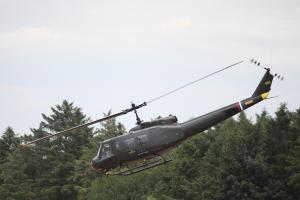
crushed Stevie Ray’s helicopter, I played Texas Flood on the juke
box and quit my job. In China, bones channel feng shui, becoming
part of the active landscape. Though she wanted her ashes to drift
in the Pacific, my mother’s body lies in a national cemetery in
San Antonio. On the northwest coast of Canada, the Kwakiutl
left their dead to the ravens, and my father has proposed
on numerous occasions that we shove a hambone up his ass
and let the dogs drag him off. I do not believe we’ll follow his
suggestion. In old England, suicides were often interred at
crossroads, impaled, to impede their restless wandering spirits.
The Torajans sometimes keep bodies wrapped in layers of absorbent
cloth in their homes for years. I’d like my incinerated, pulverized
remains released in the jet stream, if only to escape economy class for
once. Jellyroll Morton’s grave is in Section N, Lot 347, #4, in the northwest
quadrant of Calvary Cemetery, but some villagers bury stillborn
near a dwelling’s outer wall. Hugh Hefner is rumored to have acquired
the spot next to Marilyn Monroe. Placing the dead is never arbitrary.

Originally published in Middle Gray in 2013, “Ritual” was reprinted in the anthology Heron Clan IIIand is included in The Circumference of Other, my offering in IDES: A Collection of Poetry Chapbooks. It also appeared here in July 2015 – the poem that refuses to die…

For those who might be interested, a glimpse at the genesis of the poem is included in this interview conducted by Dariel Suarez, the editor of Middle Gray: http://www.themiddlegray.com/mgblog/2013/12/19/robert-okaji

image

Setting Fire to the Origami Crane

origami

Setting Fire to the Origami Crane (the one floating on Muscongus Bay) at Sunset

Who is to say which comes first, the flaming crane
or the sunset’s burst just over the horizon

and under the clouds? There are causes and causations,
an illness named bad air and another attributed to wolf

bites, neither accurate. There is the paraffin to melt,
and the folded paper resting comfortably nearby, with

a small, unopened tin of shoe polish and the sound of
tears striking newsprint. You know the myth of the

Viking burial — the burning ship laden with treasure
and the deceased clothed in all his finery. But pyres

are lighted to make ash of bodies, to ease the soul’s
transition to the heavens. Think of how disturbing

it would be to come upon the charred lumps of your
loved one washed ashore. And other myths — various

versions of the afterlife created to bend wills and
foster hope where little exists — to which have you

departed? There are no returns in your future, no more
givings, and your ashes have dispersed among the clouds

and in the water. They’ve been consumed by earth and
sky, inhaled and swallowed, digested, coughed out but

never considered for what they were. So I’ve printed
your name a thousand times on this sheet, and will

fold and launch it, aflame, watching the letters that
comprise you, once again, rise and float, mingle

and interact, forming acquaintances, new words,
other names, partnerships, loves, ascending to the end.


This was written for the August 2015 Tupelo Press 30/30 Challenge. To read the story behind the poem’s title (which I was unaware of), you might visit Jilanne Hoffman’s blog.