A Brief History of Babel

image


A Brief History of Babel


Borders, windows.
Sound.

Trudging up the steps, I am winded after six flights,
my words smothered in the breathing.

The Gate of God proffers no favors.
When the spirit gives me utterance, what shall I say?

Curiously, no direct link exists between Babel and babble.

A collective aphasia could explain the disruption. One’s
inability to mouth the proper word, another’s
fluency impeded by context.

A stairway terminating in clouds.

Syllable by twisted syllable, dispersed.

Separated in symbols.
And then,
writing.

To see the sunrise from behind a tree, you must face
east: higashi, or, a discrete way of seeing
the structure of language unfold.
Two characters, layered. One
thought. Direction.
Connotation. The sun’s
ascent viewed through branches
as through the frame
of a glassless
window.

Complexity in simplicity.
Or the opposite.

I have no desire to touch heaven, but my tongues reach where they will.

Who can know what we say to God, but God?

And the breeze winding through, carrying fragments.


* * *


My poem, “A Brief History of Babel,” was drafted during the August 2015 Tupelo Press 30-30 challenge, and was subsequently published at Bonnie McClellan’s International Poetry Month celebration in February 2017.
Japanese Gardens

file3011293816499

Japanese Gardens

how natural the
lines falling so
purely as if

with a single
stroke we walk
through the opening

and see space
the white center
composed of sand

and gravel later
a gate opens
to another garden

its lantern and
stone so carelessly
arranged so deliberate

file3041292222348

“Japanese Gardens” first appeared here in January 2015.

Gruyere

Gruyere

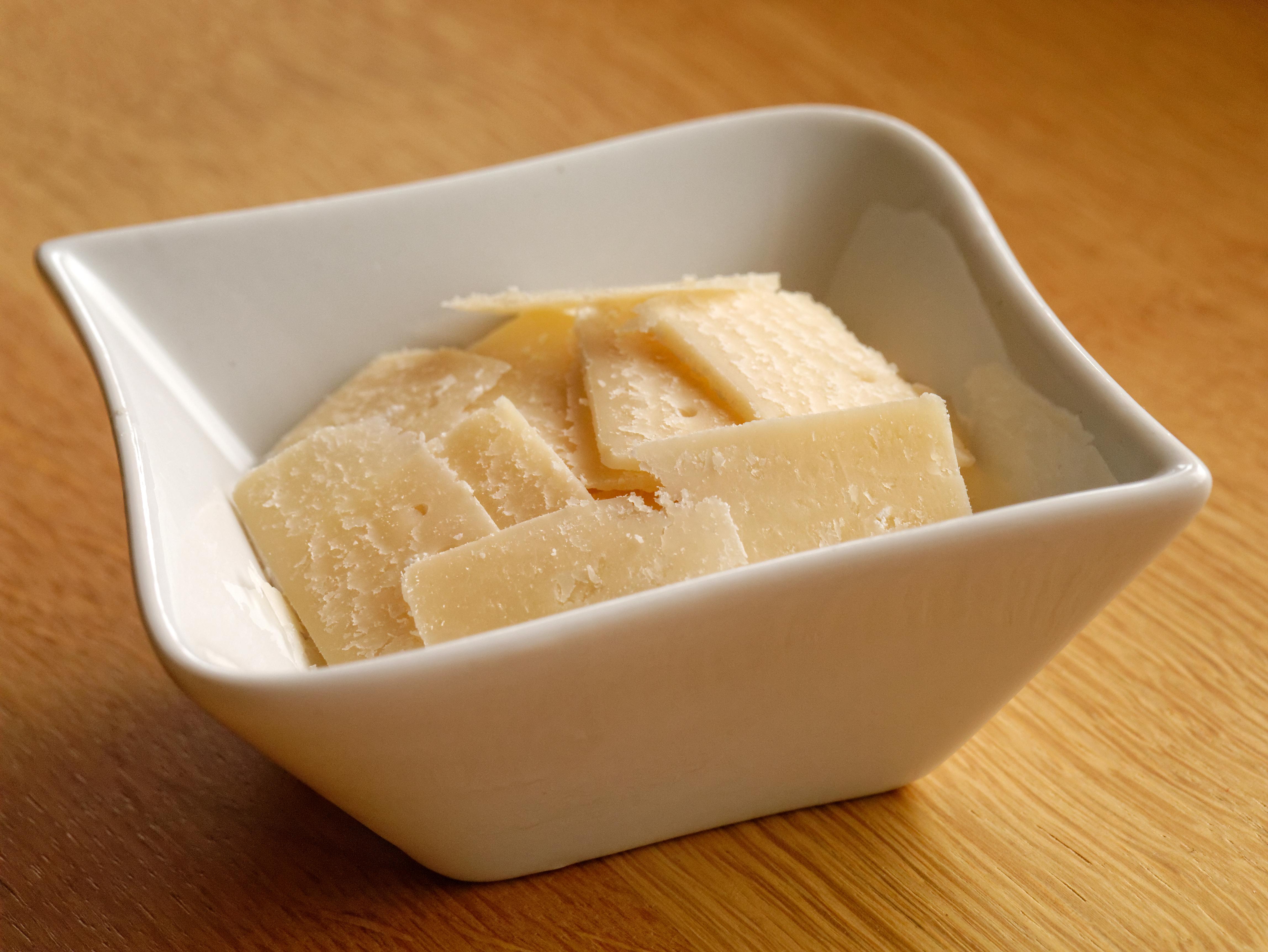
Thinking of speech and the gruyere sliver
balancing on that blade, which nouns push it over,
which hold it in place. How simplicity defies the complex.
Like the hard-crusted bread of flour, water, salt and yeast.
The elemental surge. A little steam. An incantation
born of emptiness: he speaks but says nothing
as the cheese teeters on the edge, suffering
the plight of the incomprehensible. Funny
that adding more reduces the whole, and less
flavors it. A few words, a spice. A syllable.
Milk and rennet. Verbs. A confident tongue.

From Left to Right I Ponder Politics and Poetry

From Left to Right I Ponder Politics and Poetry

In the evening I pour wine to celebrate
another day’s survival. My motions:
up to down, left to right. Glass

from cabinet, wine to mouth.
And then I return to the page.
The character for stone, ishi,

portrays a slope with a stone
at its base, and I take comfort
in knowing that as my knee aches

at the thought of climbing, ishi exists
in descent only. A volcano belches,
producing hi, fire, rising above the

cone, while earth, tsuchi, lies firm
beneath the shoots pushing up,
outward, and ame, rain,

consists of clouds and dotted
lines and the sky above. But if
wind is made of insects and

plums, do I assemble new meaning
without fact or wisdom, form
or assumed inflection, left to

down, up to right? Consider water,
its currents, its logic and needs.
Consider truth. This is how I think.

* * *

“From Left to Right I Ponder Politics and Poetry” appeared in Bonnie McClellan’s International Poetry Month celebration in February 2017.
Blackbody

file0002043937378

Blackbody

1

It is a house. A small house.
A small dark house perched on the edge of town
near the river.

The river is constant.

A man enters the house, closes the door behind him.
Nothing emerges. We witness this daily.

No one emerges.
The house is dark.
A man enters.
The river is constant.

2

A pebble pierces the water’s surface.

I awaken to imperfection.

A blackbody allows all incident radiation to pass into it,
absorbing all, reflecting none.

The tensile strength of water decreases as temperature rises.

Hakuin said if you doubt fully, you will awaken fully.

Before sunrise I unshutter the window.

Angle of reflection, angle of incidence.

My doubts reinforced with coffee, I pause.

Perfect blackbodies do not exist in nature.

Opaque box with a hole.

3

There is a house. A small house.
A small dark house perched on the edge of town
near the river.

Nothing emerges.
A man enters.
The river is constant.


box

“Blackbody” was first published on Aubade Rising in May, 2014, and appeared on the blog in February 2016.

Between

between

 Between

1

Living between, we watch what flows below us shed itself.

And what remains after the drought subsides?

I don’t recall the instance of assignation, of color-imprinted
awareness and stones erupting from the earth,

nor the paper’s texture and the faint odor of chemicals reacting,
but in this moment I embrace bitter coffee, the wrecked-nerve

hammer-strikes pulsing from hip to ankle, squealing brakes
and the rain shallowing morning’s ridge as if to say

enjoy me now
for I may never return.

2

Faith flickers in the wind, darting among the weeds.

Risen from payment, penalty, punishment, revenge, the word pain
establishes justification where none need exist.

Interpreting light and sound, scent and heat, we converse.

The dog shivers in bed and I lay a towel over her,
affixing content to involuntary movement.

Stepping through space, crossing the stream.

Those things we don’t know.

Three feet below me the snake’s head ripples towards the far side,
a V of turbulence dissecting the calm.

Everything that can be contained contains us as we in turn
envelop one another. I take your hand and press forward.

3

Connected, we part, only to return and part again.

My hand stopped inches away and the diamondback slithered off
under the workbench, seeking peace.

Abandoned skin, abandoned words. Even the cactus grows thirsty.

The paradox of becoming what you are not. Today, sitting hurts
and standing provides little relief.

In one of two halves I find myself. In the other, your laughter rings.

Like rumblings of earthen discontent or the hiss of air
exiting waterless pipes, we emerge, aimless, exhausted.

Inhabiting one world, we seek others.


* * *

“Between” appeared in Clade Song, one of my favorite poetry journals, in August 2016. 


Self-Portrait with Orbit

planet231

Self-Portrait with Orbit

An arced path around a central point, bound to but held apart,
as in night’s returning grace, or standing waves.

In periapsis, you reach out as I slowly withdraw.

Gravity does not prevent departure but prolongs it.

The acceleration of a body is equal to the sum of the gravitational forces, divided by its mass. I rise from the chair but can’t escape.

Not circular but elliptical.

Where falling away and curving from never meet.

Realizing that I am neither focus nor center, I discover place
in symmetry, in flow and subtraction.

A cloud obscures the sun and you close your eyes.

I wither at the thought of scaling or relative size, or your departure.

In the simplest Klemperer rosette, four bodies cycle their dances,
heavy, light, heavy, light, in a rhombic configuration.

My arteries fill in opposition to desire.

Wanting you, I absolve weight and listen, accept my place.

old man grammo - upsidedown

“Self-Portrait with Orbit” appeared on the blog in November 2015, and is included in The Circumference of Other, my offering in the Silver Birch Press publication, IDES: A Collection of Poetry Chapbooks, available on Amazon.

Onions

image

Onions

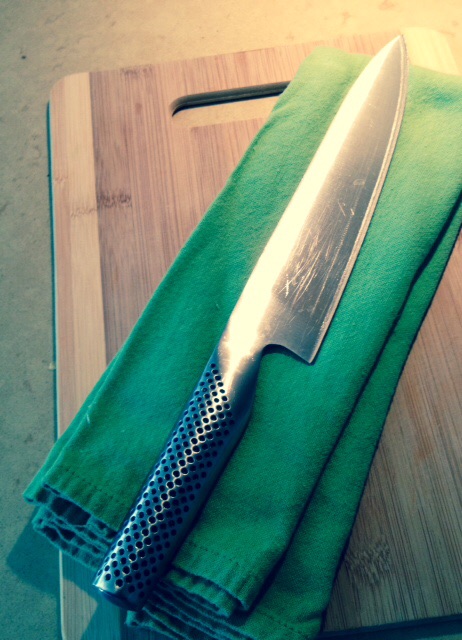
My knife never sings but hums instead when withdrawn from its block, a metallic whisper so modest only the wielder may hear it. Or perhaps the dog, who seems to enjoy the kitchen nearly as much as I. A Japanese blade, it’s a joy to hold, perfectly balanced, stainless steel-molybdenum alloy, blade and handle of one piece, bright, untarnished, and so sharp as to slide through, rather than awkwardly rupture and divide, its next task on the board.

We’ve never counted the chopped and rendered onions, the fine dice, slender rings and discarded skins, but if we could gather all the corpses we’ve produced together over the years, we’d form a monument to our work, cooperation of metal and man, a Waterloo mound in memory of the bulbs laid there, the planning involved, the missteps and serendipity, and the tears shed along the way.

The blade doesn’t care. It is. It works. It moves things, it lifts, it parts them, and in return is cleansed, and later, in the quiet room, maintains its edge with a silvery rasp, angled steel on steel in a circular motion, over and over, until finally it hums its way back into the block. But it never sings.

image

“Onions” last appeared here in September 2016. Hmm. This reminds me that I need to sharpen knives…

The Sky Refutes East and West

nest

The Sky Refutes East and West
 

Here, the horizon lingers.
The open eye, the mouth’s shape.

A hoop, the circle without iris.

Does the screech owl acknowledge latitude and hemisphere?

The Semitic alphabet contained no vowels, thus O
emerged as a consonant with a pupil, morphing into a dotted ring,

and later, with the Greeks, an unembellished circle (which of course

they cracked open and placed at the end). The female lays eggs

on the remnants of earlier meals lining the bottom of her den.
If you listen at night you might hear the purring of a feathered

cat (the Texas screech owl’s call varies from that of its eastern cousins).

The difference between sphere and ball.

To pronounce the Phoenician word for eye, sing the lowest note possible,
then drop two octaves. They usually carry prey back to their nests.

Screech owls are limited to the Americas.

Coincidence and error, the circumference of other.

***

“The Sky Refutes East and West” was first published in Prime Number Magazine, and also appears in my chapbook The Circumference of Other, included in Ides: A Collection of Poetry Chapbooks (Silver Birch Press, 2015). It made its first appearance here in May 2016.

eastwest


Poem Published in Reservoir

My poem “N Is Its Child” has  been published in Issue 4 of ReservoirI am grateful to editor Caitlin Neely for accepting this piece, which has knocked around a bit over the past four years.