Even the Sotol Believes

image

Even the Sotol Believes

If we must discuss logographic systems, let us begin with fish.
And how might one mistake an entrance for a perch?

A movable rod for a desert spoon?

Today’s lesson excludes a poorly rendered door.

Hinges are merely mechanical joints, the origin of which means to hang. Concentrate there.

D is the tenth most frequently used letter in English.

Depicted on rock wall paintings, the sotol has provided food, sandals,

blankets, ropes, tools and spirits for millennia.
Slow cook the roots for three nights, crush, then ferment for seventy-two hours in

champagne yeast. Distill, then age in French oak.

We shall neither open nor close, nor mention those things that do.

Like bivalves. Bottles. Eyes. Shops. Caskets. Books. Mouths. Circuits.
Its flower stalk rises up to fifteen feet. Its leaves are long, thin and barbed.

Surrounded by orange ochre flames and black smoke, the sotol spirit appears.

Dalet will not enter our vocabulary today.


image

Originally published in Otoliths 41 (October 2013), and posted here in October 2015.
Recording of “In Praise of Rain”

file00093561951


In Praise of Rain

Which is not to say lightning or hail.
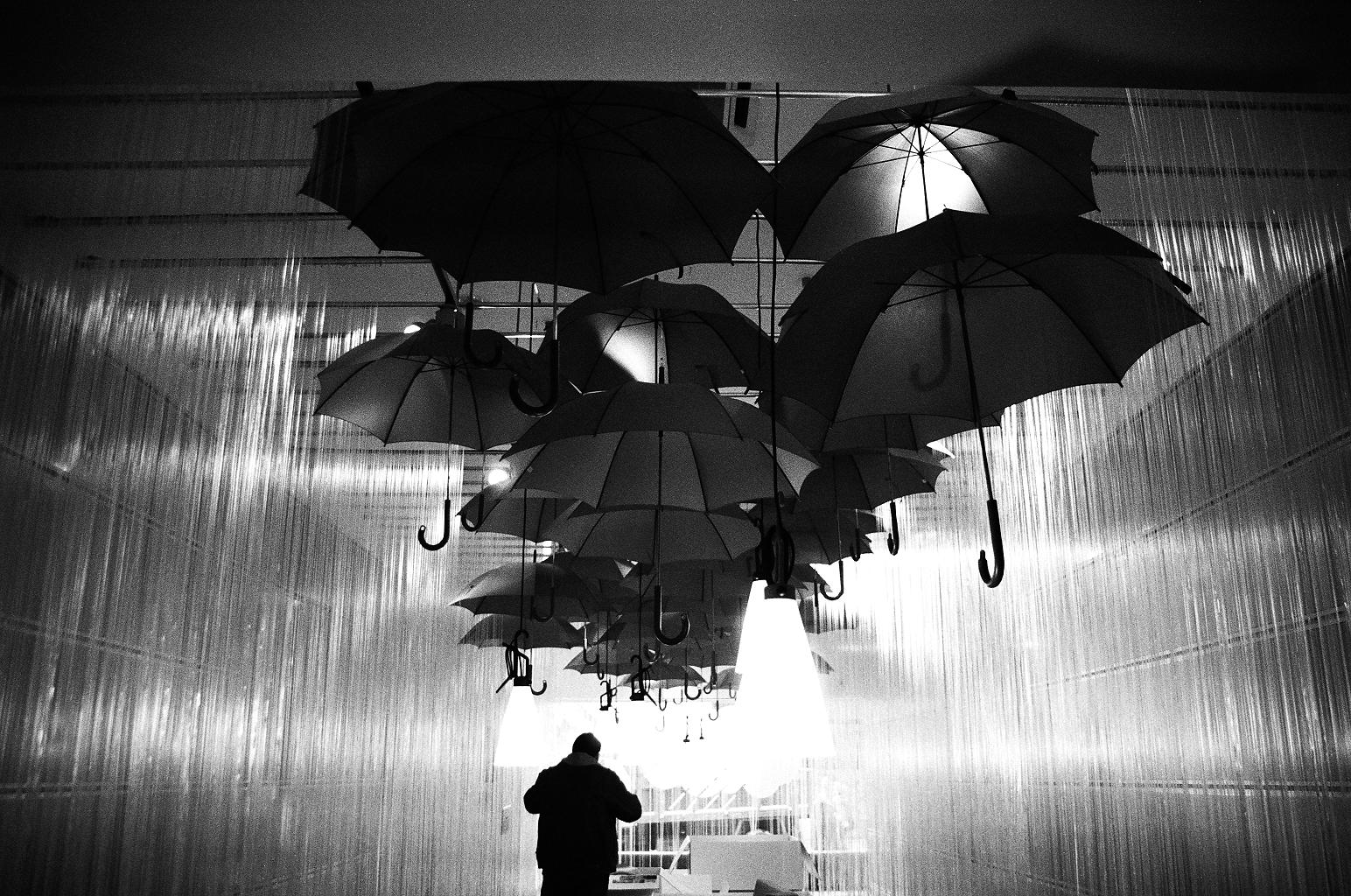
Sometimes I forget to open the umbrella

until my glasses remind me: Wake up, you’re
wet! If scarcity breeds

value, what is a thunderhead worth
in July? A light shower in August?

Even spreadsheets can’t tell us.

***

“In Praise of Rain” has appeared here several times, but this is the recording’s debut.

file8541339345592

The Color of Water

SONY DSC

The Color of Water

Eyes the color of water. The tree I cut down
returns: fallen leaves, smoke, the missing

shade, memory come to reflect
emotion. Once the blue grosbeak

hid in its branches, calling but refusing
to appear, the voice our only consolation.

Now rain streaks the empty space.
Those things we touch often bruise,

but to leave them untouched may harm us
even more. Two days ago the sky cleared.

Changes, how often we see them for what
they are not. An essential falsity. Those eyes.

Words, ever-changing. Shadows of lovers
whose bodies merge but never touch.

file731340645452

This first appeared on the blog in March 2015.

One

number-one


One

I am Brahma
the straight line, the upright being,

fire that flares,
seed without end, manifold

self beyond all
polarity, radiating sun:
the all.

Philosophers considered one a non-number,
generatrix of all that follows.

Other.

The singularity. The lone.

From the Indo-European oi-qos we achieve solitude,
while the collective meaning of one derives from the Sanskrit sam.

United in itself, it changes nothing,
becoming everything.

On its side it represents the horizon.

Alone is all-one.
The Latin non is one negated, as is the German nein.

Symbol of intellect, the Hindu moon glows wide.
Atomic number of hydrogen, magician’s numeral,

monad and eccentric, I bear the empty product.

one on side

“One” first appeared here in February 2016.

Water Witching, We Hear

dry


Water Witching, We Hear

The rattle of stalks
along dirt roads,

whispery days
sifting through
parched
light,

you say
patience, my
friend, and again,

patience.


National Poetry Month: A Few of My Favorite Poems & Poets

I love these poems and poets for various reasons – technique, beauty of language, intellect, rigor – but mostly, their words burrow into my brain and won’t quit whispering to me…

Jane Hirshfield, “Not Moving Even One Step”

Carolyn Forche, “The Colonel”

Arthur Sze: “Kintsugi”

Antonella Anedda: “A Winter Night in the City”

James Wright: “To the Saguaro Cactus Tree in the Desert Rain”

Camille Dungy, “Association Copy”

Who are your favorites? Link in the comments.

Recording of “Awakened, He Turns to the Wall (Cento)”

cell


Awakened, He Turns to the Wall (Cento) 

Then, everything slept.
Where were you before the day?

You see here the influence of inference,
whereby things might be seen in another light,

as if the trees were not indifferent, as if
a hand had suddenly erased a huge

blackboard, only, I thought there was
something even if I call it nothing,

like the river stretching out on its
deathbed. No one jumps off.

* * *

A cento is composed of lines from poems by other poets. This originated from pieces by: Larry Levis, Jacques Roubaud, Lorine Niedecker, Gustaf Sobin, Denise Levertov, Elizabeth Spires, William Bronk, Vicente Huidobro, Ingebord Bachmann

For further information and examples of the form, you might peruse the Academy of American Poets site: http://www.poets.org/poetsorg/text/poetic-form-cento

erase

Resurrection (Cento)

rocks and fog


Resurrection (Cento) 

Everything we love
returns to the ground.

Each syllable is the work of sabotage,
a breeze seeping from the heart of the rocks.

They are my last words
or what I intend my last words to be.

I think just how my shape will rise,
a miracle, anywhere light moves.

*****

A cento is composed of lines borrowed from other poets. “Resurrection” first appeared here in January 2016, and owes its existence to the poetry of Tishani Doshi, Paul Auster, Antonella Anedda, Sean Hill, Emily Dickinson, and Ruth Ellen Kocher. I urge you to seek out their work. It astounds!

ladybug

Ocean Vuong’s “Self-Portrait as Exit Wounds”


Today’s offering on the Academy of American Poets Poem-a-Day site is Ocean Vuong’s “Self-Portrait as Exit Wounds,” a superb end to a week of immigrant poems by Juan Felipe Herrera, Chen Chen, Solmaz Sharif, and Mai Der Vang.

Track (after Tranströmer)

file000826525674(1)

Track (after Tranströmer)

2 p.m.: Sunlight. The subway flows
beneath us. Flecks of darkness
shimmer madly on the wall.

As when a man cracks a window into a dream,
remembering everything, even
what never occurred.

Or after skimming the surface of good health,
all his nights become ash, billowing clouds,
strong and warm, suffocating him.

The subway never stops.
2 o’clock. Filtered sunlight, smoke.

* * *

I’ve been dipping into Friends, You Drank Some Darkness, Robert Bly’s 1975 translations of Harry Martinson, Gunnar Ekelöf and Tomas Tranströmer, and I couldn’t resist playing with one of my favorite poems. A different darkness, a separate space, another landscape…

This first appeared here in April 2015.