
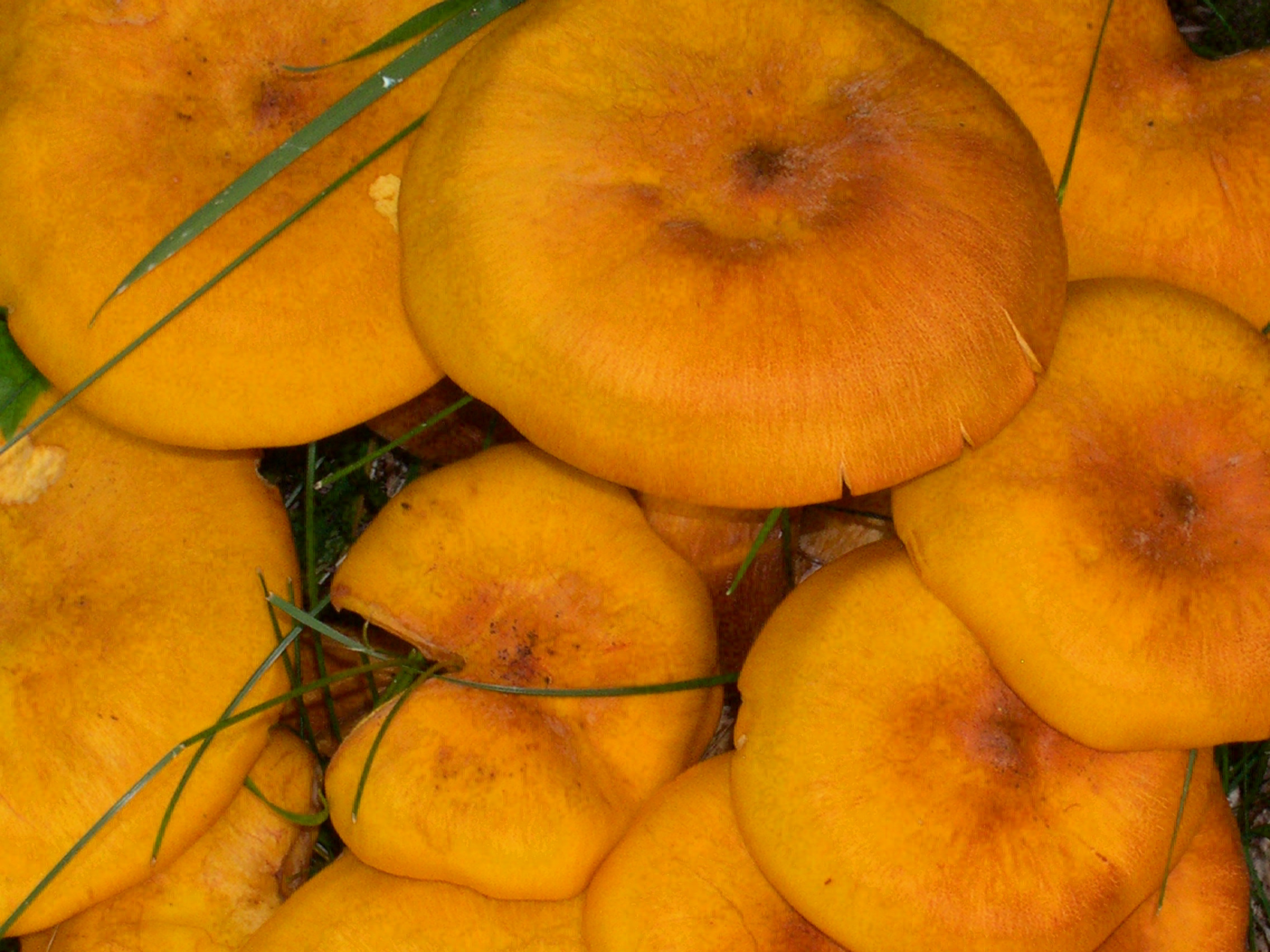
Mushrooms I Have Known
Reticent and tired, withdrawn,
dejected, I return.
Emerging overnight from nothing,
then withering back to zero.
Does light incite you?
The shade?
I walk by and say hello.
You do not speak.

Mushrooms I Have Known
Reticent and tired, withdrawn,
dejected, I return.
Emerging overnight from nothing,
then withering back to zero.
Does light incite you?
The shade?
I walk by and say hello.
You do not speak.

“Apricot Wood,” is included in my chapbook , If Your Matter Could Reform, and was featured on Autumn Sky Poetry Daily in March 2015
Apricot Wood
I built a frame of apricot
wood. This was for you. The clouds float
through it even as I sleep. You wrote
once of wild herbs gathered and brought
to a lovely girl, an offering not
of passion but of some remote
desire to hear a word from the throat
of the Lord Within Clouds. I thought
of this as I chiseled the wood.
Last night it rained. I listened to
it from my bed by the open
window, hoping that the clouds would
not leave. This morning two birds flew
by. It is raining again.


The Color of Water
Eyes the color of water. The tree I cut down
returns: fallen leaves, smoke, the missing
shade, memory come to reflect
emotion. Once the blue grosbeak
hid in its branches, calling but refusing
to appear, the voice our only consolation.
Now rain streaks the empty space.
Those things we touch often bruise,
but to leave them untouched may harm us
even more. Two days ago the sky cleared.
Changes, how often we see them for what
they are not. An essential falsity. Those eyes.
Words, ever-changing. Shadows of lovers
whose bodies merge but never touch.

This first appeared on the blog in March 2015.

* * *
A draft of this first appeared here in June 2015, with the finished piece following in May 2016. It rained yesterday, and I thought I’d record this with the sound of falling rain in the background.
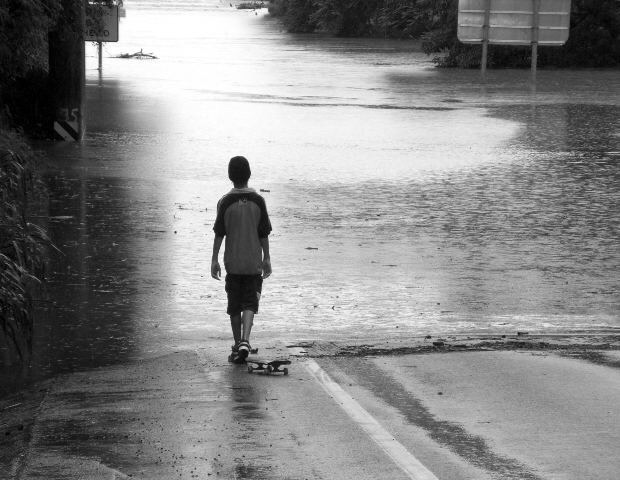
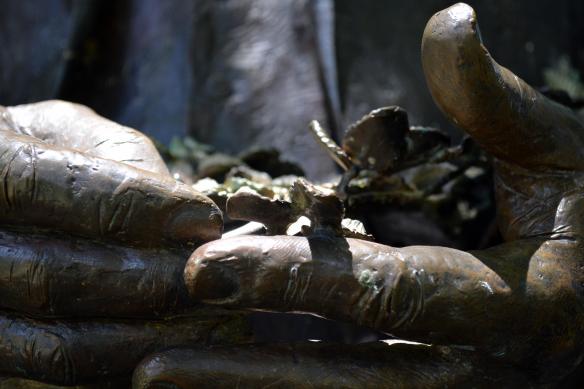
He thought much of these disembodied hands, pictured them moving to the light of the burnished lantern, weaving patterns intricate as those in the most delicate hummingbird nest, textures and shades of light with traces of webs and soft fibers of unknown origin, making knots of shadows and their companions.
*
It was not that they were so very much like his; they were hands of another sort, hands that touched nothing held by another, hands that knew no lips or wooden hearts or curves in a quiet moment, hands that knew only themselves in the community of unnatural hands.
waking to the rain
he hears a far-off whistle
oh, the neighbor’s tea!


Thunderstorm Below the Mountain
(after Hokusai)
Lacking humility, I take without thinking.
How far we’ve come, to look below for
lightning, the valleys shaken
with thunder, answers
like pebbles flung outward,
each to its own arc, separate
yet of one source, shaded into the question.
Is it for the scarcity of reach,
the reverse view through the bamboo rings
well out of sight, that
breath in the wave’s tuck or
smoke mingling with the clouds
and figures collecting salt,
that I edge myself closer, again,
to this place? To be nothing
presumes presence in absence.
Lacking humility, I accept without thinking.

“Thunderstorm Below the Mountain” first appeared here in March 2016.
Memorial Day
Arriving at this point
without knowledge of the journey,
the slow collapse and internal
dampening – the shutting down, the closing in – lost
in the shadowed veil, my eyes flutter open to find
everything in its place, yet
altered, as if viewed from a single step
closer at a different height, offering a disturbing
clarity. Looking up, I wonder that she wakes me
from a dream of dogs on this, of all days,
only to detect under me linoleum in place of the bed,
my glasses skewed from the impact,
the floor and left side of my head wet. You looked
like you were reaching for something, she says,
and perhaps I was, though with hand outstretched
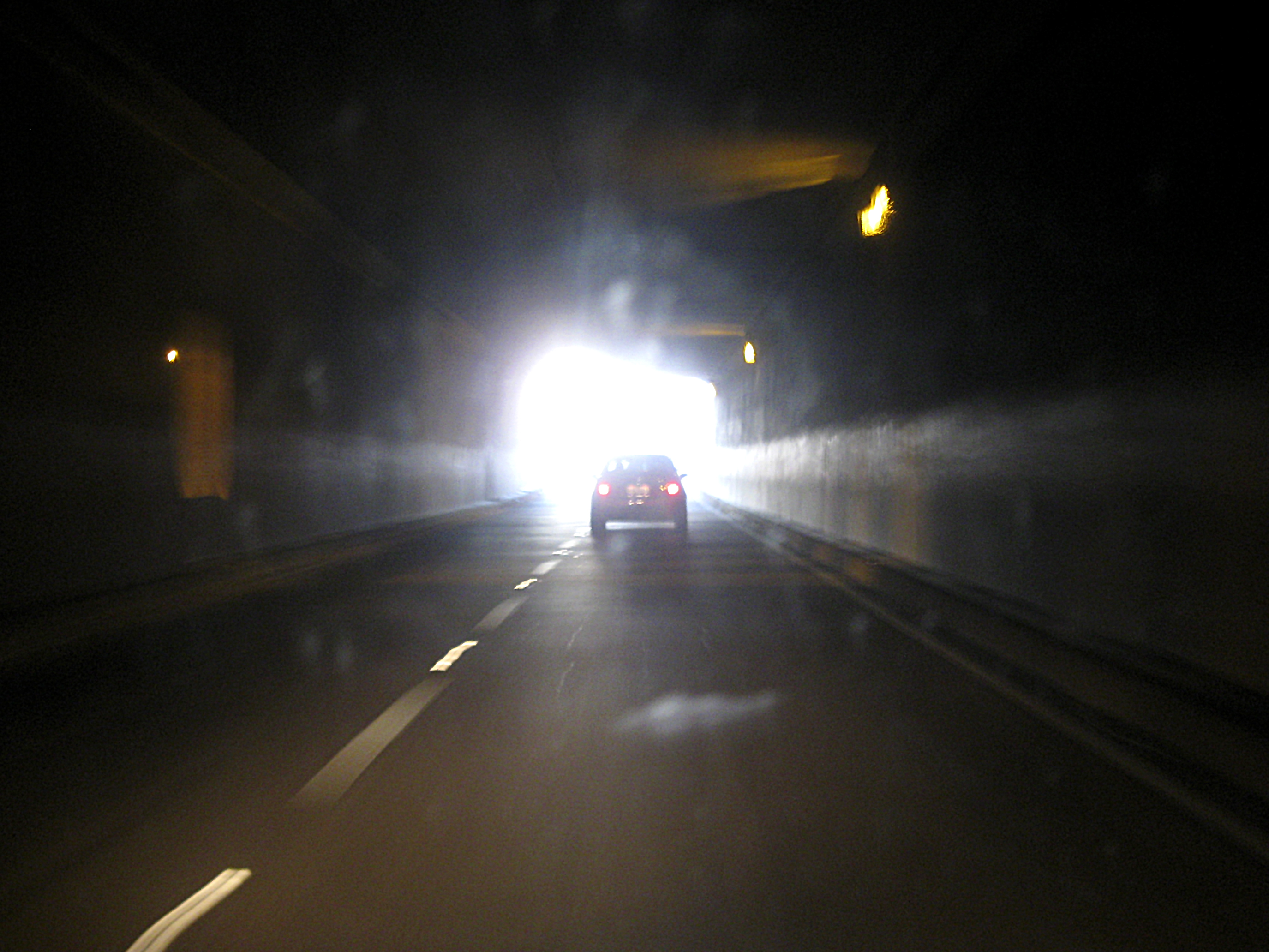
I found nothing to hold but the darkness.
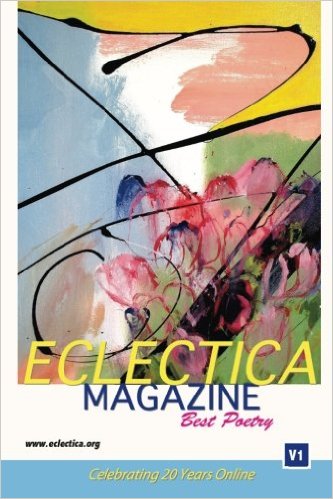
“Memorial Day” was first published in Eclectica in July 2014, and was, much to my delight, subsequently included in Eclectica Magazine’s 20th Anniversary Best Poetry Anthology.

We Call the Neighbor’s Fat Burro Donkey Hotei, but His Name is Cantinflas
Certainty grows in corners, away from light.
From his mouth issues the breath we take, the words we keep.
Enjoy the collusion of shape and sound.
We share the hummingbird’s taste for sweet, but not its fierceness.
Its heart beats 1,200 times a minute,
and you ask me how best to bury money.
Hotei’s name means cloth sack, and comes from the bag he carried;
a man of loving character, he possessed the Buddha nature.
What we own cannot be held.
Most plastics are organic polymers with spine-linked repeat units.
The space you’ve left expands exponentially.
Left in the rain, the bell grows.
Christen me at your own peril. Agaves flower once then die.
Fluency in silence.
I dropped my pants when the scorpion stung my thigh.
The wind takes nothing it does not want.
After vulcanization, thermosets remain solid.
The Cantinflas character was famous for his eloquent nonsense.
Vacuum wrap the bills in plastic, place them in pvc.
Having mastered imperfection, I turn to folly.
Not the thing itself, but the process laid bare and opened.
Hoping to hide, the scorpion scuttled under a boot.
Thought to action, whisper to knife: which is not a curse?
The wind wants nothing; the burro sings his loneliness.
This first appeared here in May 2015. My failures often lead to success. I’ve never quite completed this piece, and don’t know that I ever will. But the first draft (nearly five years ago) set me off on a new path, one that has served me well. What more can I ask?


Which is an Eye or a Bowl, a Dream
Or well-placed mirror in a sunburnt room, shivering through shifted
images: that hand, blackened and stout, opened like a dark peony;
the tattooed chin; shovel and torch; hook and owl. You say no one
chooses one fist over another, that bread’s rise completes its cycle
and begins anew, pressed flat and rounded. Take this heart and seal
its chambers. Note the anterior descent. Compression, lesion. Plaque.
Consequence. And your friend, who slept, never to awaken. Lying
in that strange bed, you taste salt, acknowledge change, whisper
to no one: audible house…audible tree, knowing that time’s limit
remains unclear. The air swirls and you accept this new light.
Note: “Audible house…audible tree” is from Jane Hirshfield’s “Not Moving Even One Step,” from The Lives of the Heart.


 O at the Edges