Palinode (translation, passway, glass)

window

Palinode (translation, passway, glass)


(translation)

What falters in translation? The dove’s silhouette resides
on the window three months after the sudden refusal. I
observe wingprints, the skull’s curve, a history of assumptions
angled in the moment of impact. And after, residue. Light’s
incident rests. One body whispers another’s shape and the
next rumbles through the narrowing passway. Traitorous,
I call it fact. I name it truth, and naming it, reverse the coat.

(passway)

I name it truth, but considered denial, root of the renegade’s
term. I have a bird to whistle and I have a bird to sing. Misperception
in flight. Betrayal’s gate, unhinged. What comes next? Sunlight
slants through the window each morning, and departs, bending
in reversal. Stones all in my pass. Dark roads. Another naming,
another transition. Trials waged in the grammar of refraction.
The deflected word.

(glass)

The deflected word reciprocates and the sky opens, outlining
its missing form. I have pains in my heart, they have taken my
appetite.
Derived from wind, from eye, from hole. Once through,
what then? Mention archetype, and my world dims. Mention
windows, and I see processions and enemies lined along the way.
Boys, please don’t block my road. We select certain paths, others
choose us. Wingprints on glass.

* * *

Notes: italicized selections are from Robert Johnson’s “Stones in My Passway.”

This piece first appeared, in slightly different form, in ditch, in January 2014, and last appeared here in July 2016.
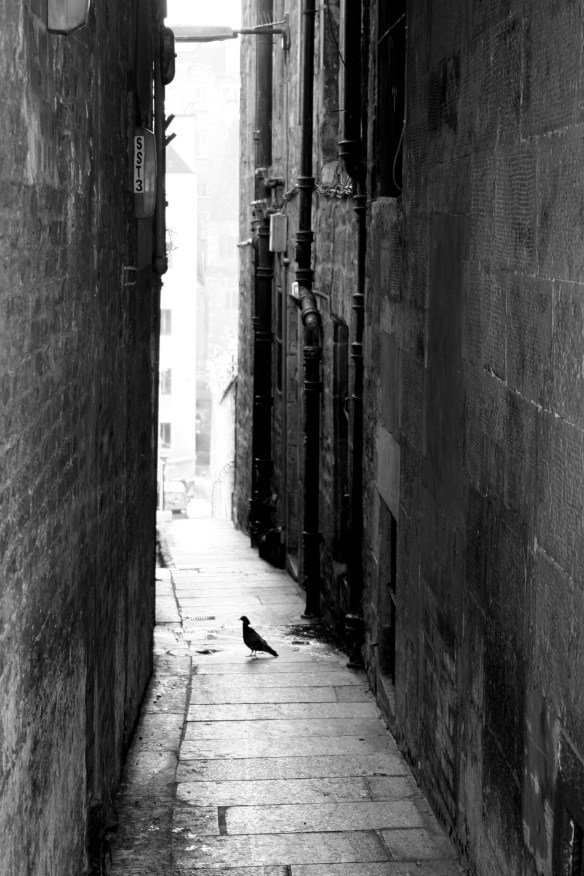
alley

Snails

Snails

How convenient to carry a home on one’s back, I
think, disregarding heft and plumbing and the shape
of rooms too hollow to feel. Yesterday a box of African
chapbooks migrated to my doorstep, and I plucked
yellowing leaves from the tomato plant by the poetry
shack. Marine snails constitute the majority of snail
species, but we count first what we can see. Everything
turns–the days buzz by like male blackchins swooping
through their pendulum air-dance, and I tally my
diminishing hours from the safety of these walls.
Heliciculture is another word for snail farming, but
reminds me of stars spiraling wildly above my roof
each night, spewing poetic fire throughout the cosmos.
The neighbor mows her lawn and I observe the wind
stepping from treetop to treetop, another sign of the
earth’s continued rotation. Their slime permeates human
cosmetics to minimize premature skin aging, and was
once used medicinally to soothe coughs (I write this
as mucus slides down my throat, a response of the
lung’s filtration system to histamines). There is much
to consider about the intricacies of harvesting slime.
Most snail species consume plants, but a few are
predatory carnivores, which leads to questions
about their prey. Cooked in butter with garlic, served
with a dry white? I spear one, contemplate texture
and move on to the next, leaving behind no visible trail.

* * *

My poem “Snails” was published on Vox Populi  in October 2017. Many thanks to founder and editor Michael Simms for giving this poem a home.

Danez Smith Reading “Say It with Your Whole Black Mouth”

This poem makes me despair that other human beings have to write poems such as this.

This poem makes me despair that I’ll never write anything so true.

Read the poem. Listen to the recording. Celebrate Danez Smith and his words.

https://www.poets.org/poetsorg/poem/say-it-your-whole-black-mouth-0


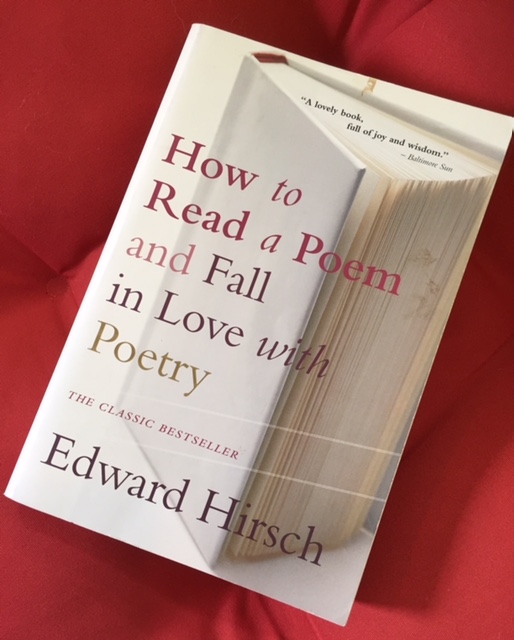
Edward Hirsch’s How to Read a Poem and Fall in Love with Poetry

In a nod to National Poetry Month, the Poetry Foundation has posted the first chapter of Edward Hirsch’s superb How to Read a Poem and Fall in Love with Poetry. One of my favorite all-time reads. If you haven’t read this book, dip into the first chapter now.

White Mules and a Column of Smoke

vinyl

White Mules and a Column of Smoke

I am thinking of a place I’ve never seen or visited,
much like Heaven or Jot ‘Em Down, Texas, but with better
beverages and the advantage of hindsight and seasoning,
a glance back or to the peripheral, with a side of memory
and sliced, pickled jalapeños topping a pile of imagination.

And how do we so clearly remember what never occurred?
That book I read in 1970 was first published three years
later. A drowned childhood acquaintance ordered a beer
and sat next to me at a party in college. The open fields
I recall from the garden walls in France, where homes stood.

If only we carried with us slide shows or grooved vinyl
to trace back our lives – photos and recordings of those daily
remembrances – detailed notes indexed on cards, or data
embedded in our palms and accessed by eye twitches.
Would such evidence improve our lives?

Which filters shutter moments and thoughts, twist them
into balloon animals we no longer recognize? False
accusations and convictions aside, can we trust what we
know to be true? That oak stands where it has for four
decades. I bleed when cut. The sky still leers above us.

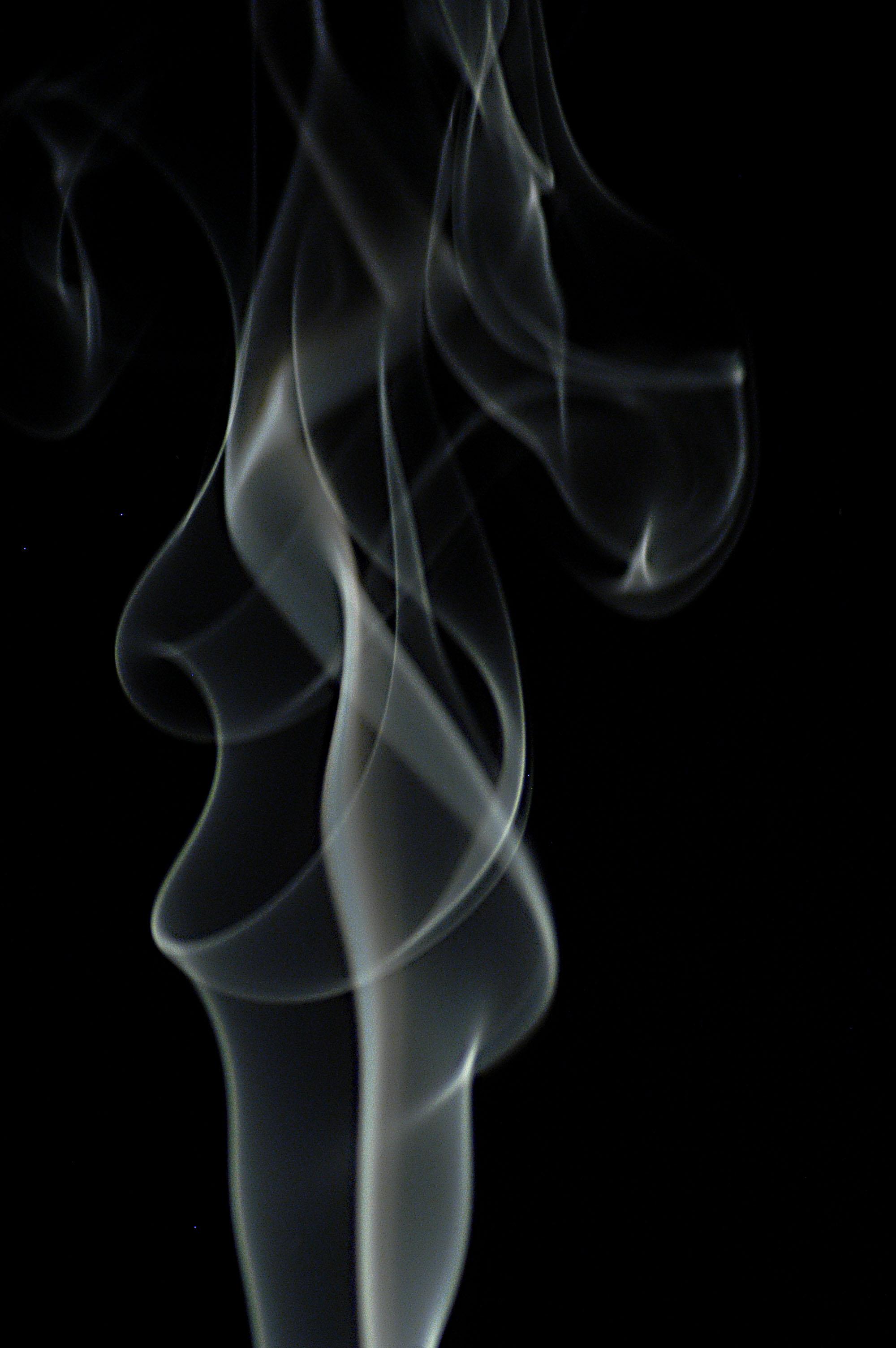
“White Mules and a Column of Smoke” was drafted during the August 2016 Tupelo Press 30/30 challenge. I am grateful to Natalie Butler, who sponsored the poem and whose photo inspired me.

Night Smoke

DSC_0206


Night Smoke

Incomplete, it rises
only to dissipate

like the griefs we shape,
somehow unnoticed,

beyond reach but felt.
Last night’s moon, the glance.

Forgotten stars, a withheld
kiss, words we never formed.

How difficult to be lost.
So easy to remain unseen.

* * *

“Night Smoke” last appeared here in June 2016.

DSC_0094

Bone to Bone

chimes


Bone to Bone

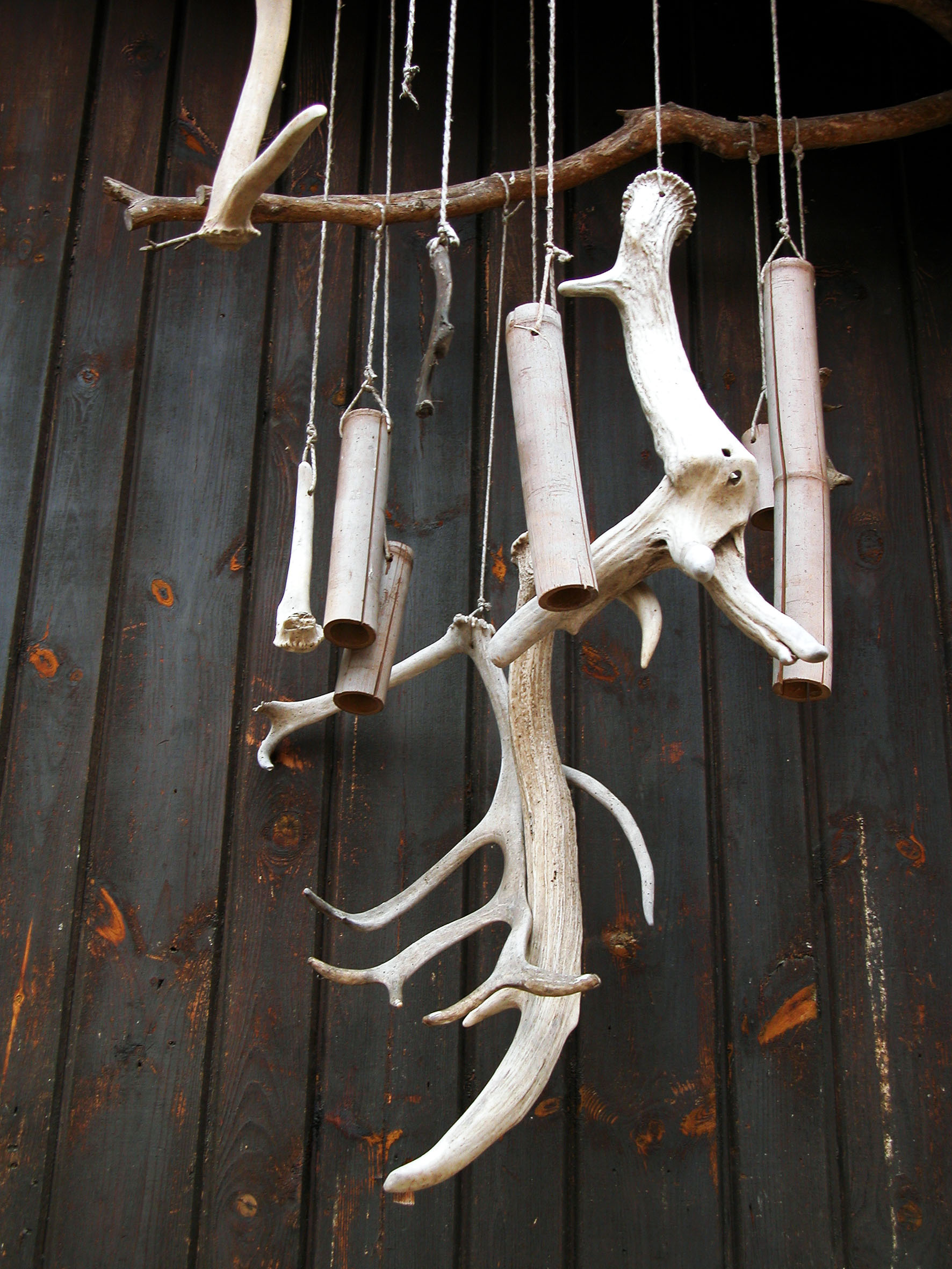
He claims two sides frame every story.

I count three,      sometimes more,

believing in          multiplicity,

threats                concealed

but never

buried.      A dust devil twists across the path.
What ascends, what dies?

Heat, ashes.       A shadow’s flesh.

The earth, restraining all.

small town

“Bone to Bone” first appeared here in June 2016.

A Brief History of Edges

map


A Brief History of Edges

This road leads nowhere. I live at its end where breezes
wilt and the sun still burns my darkened skin.

I’ve sailed to Oman, but have never seen the Dakotas.
My friend searches for the concealed parable in this truth.

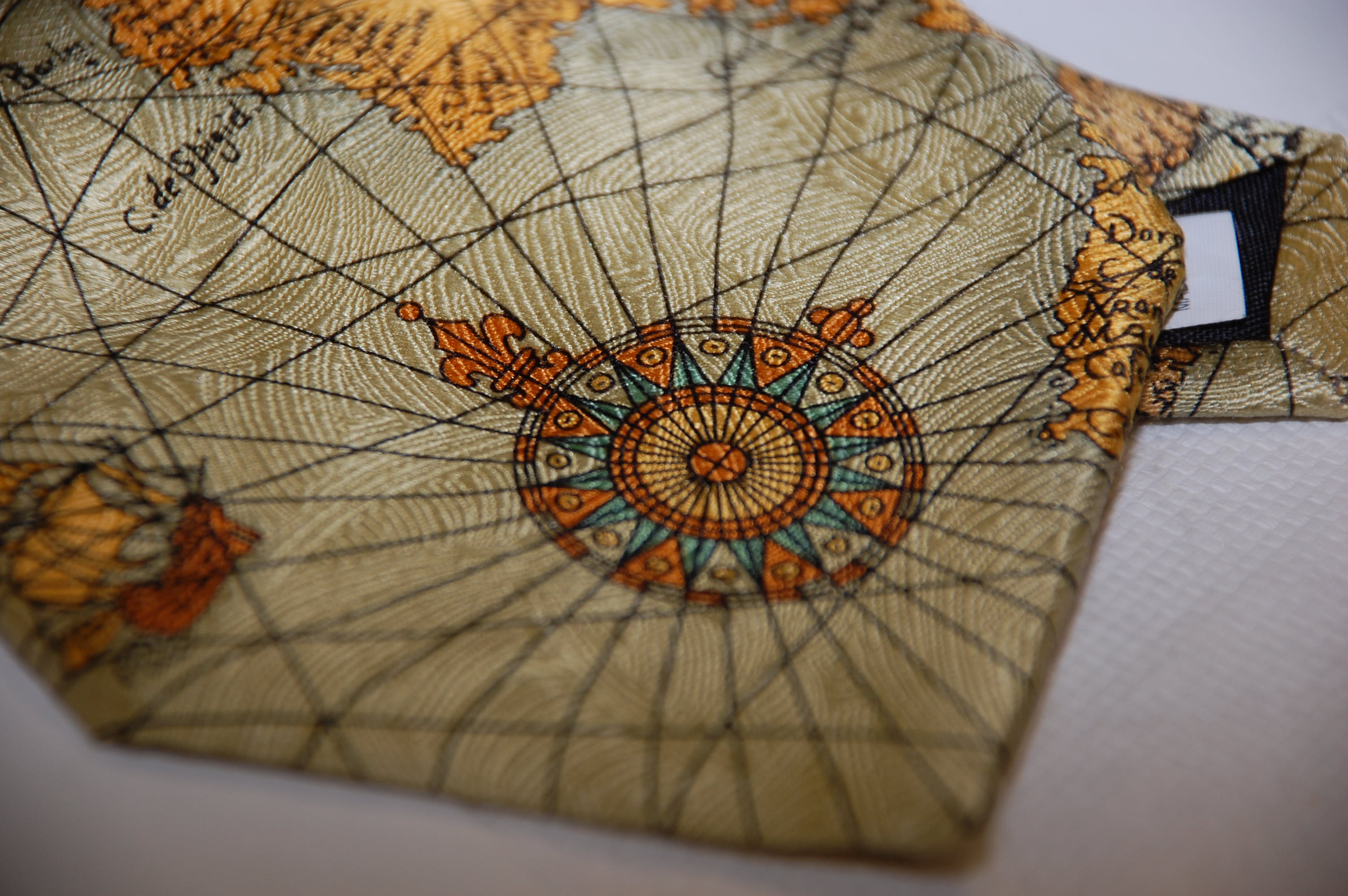
An early clay map depicted Babylon surrounded by a bitter river,
and an island named the sun is hidden and nothing can be seen.

Fitting the limitless within boundaries, she remembers no one.
The lighted sign says boots, but I see books.

Venturing from the shadows, she offers an accord: intersecting borders,
we must retain ourselves, deliver what calls
.

In our place between the hidden and the invisible, consider
that neon gas possesses neither color nor odor.

What lives in creases and at the periphery? The isle called beyond
the flight of birds
has crumbled from the lower edge.

Where I stand defines my portion of the spherical earth.
Crossing lines, I look to the sky, its bisected clouds.

mapman

“A Brief History of Edges” first appeared here in April 2016.

Kites

string

Kites

Will viewpoint shift with my spine’s slow
compression, or will this

window admit only true images
in the shortened days to come?

I pencil phrases on bone-shaped kites
and release them to the afternoon.

Call them prayers, name them moans.
Each string is a regret freed, a separate

skeleton, let go. My two selves shudder
in the attempt. I await the perfect breeze.

OLYMPUS DIGITAL CAMERA

“Kites” first appeared here in July 2016.

To a Poem is a Bott the Stranger

It may interest you to know that I have, in some small way, aided and abetted a poetry-writing bot. It’s fascinating to read how the bot learned to write poetry.