Where the Word Begins


Where the Word Begins

I end, or so it seems.
Small comfort

in the light of that lamp
reflecting from the window,
a low, interior moon
subject to whim and
circumstance.

And how do we retract
those unsaid lines,
heartfelt and meant,
but never expressed?

The hoot owl voices my response.


“Where the Word Begins” was first published in December 2018 at Amethyst Review. Thank you, Sarah Law, for accepting this poem.

Diverting Silence


Diverting Silence

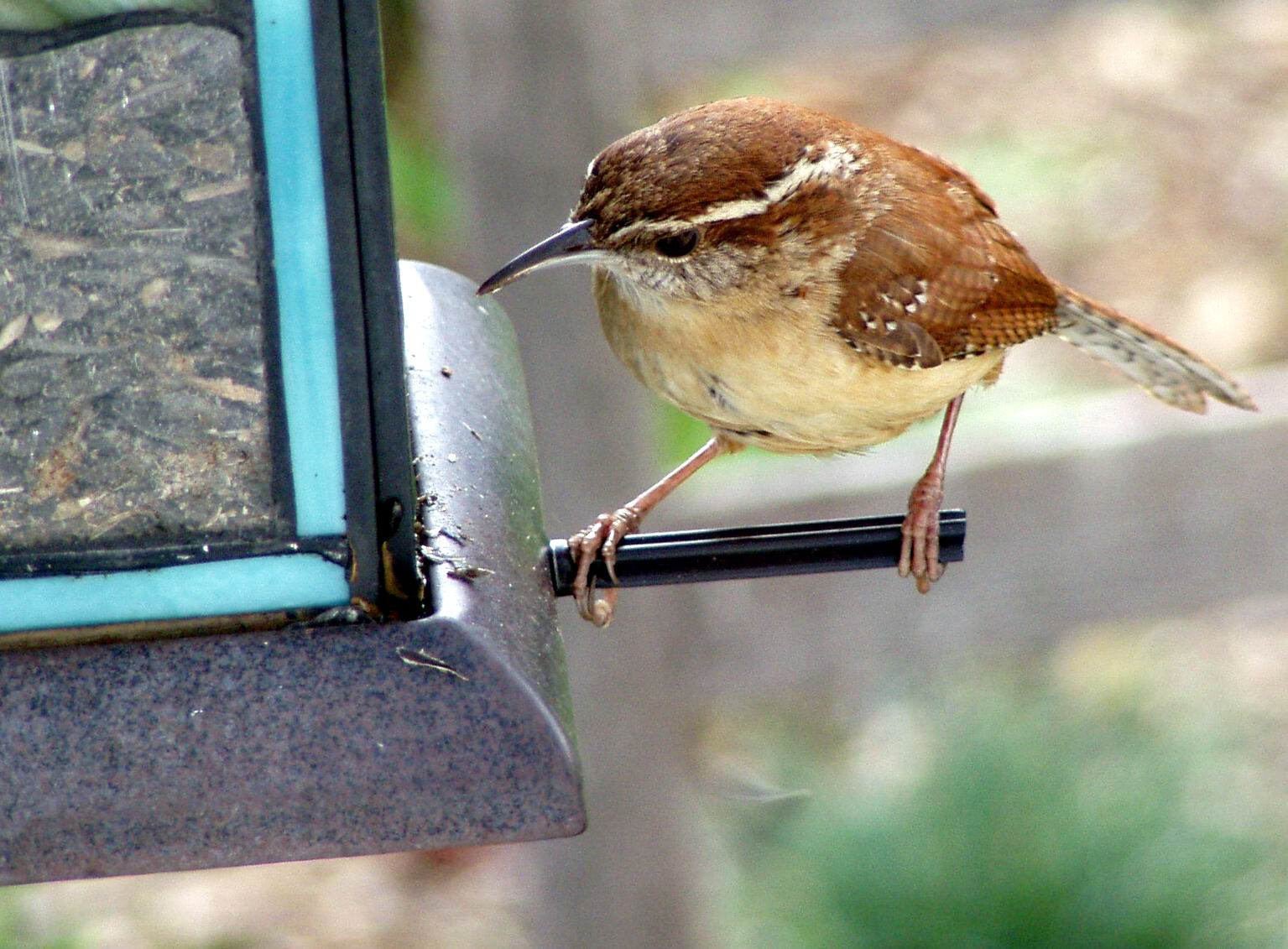
Wren canyons down the morning’s edge, proclaiming dawn.
Unpapered, unfettered, fearless, he abides.

I say “he,” but sexual dimorphism is not apparent in the species.
Accepting signals, we process and choose, freighting gender aside.

Listening requires contextual interpretation, as does belief.
Shrilling to the porch screen, he spears a moth, veers outward.

An acquaintance claims birds are soulless, existing only to serve God.
As temple bells exist solely to announce, and rain, to water lawns.

Faith’s immensity looms in the absence of proof.
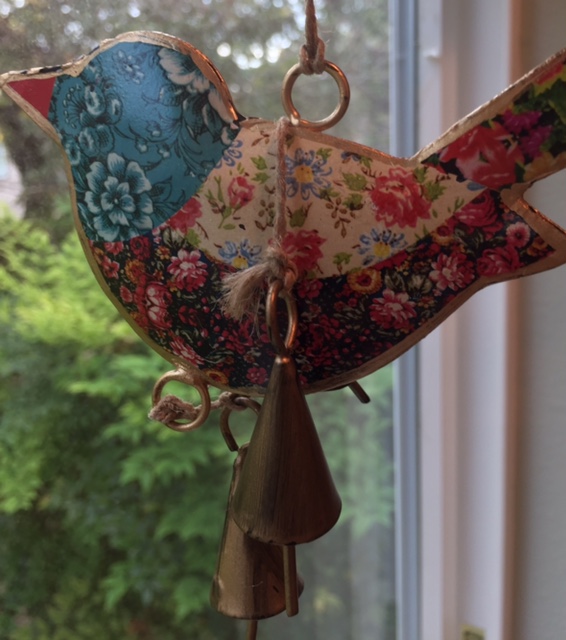
Spherical and hollow, suzu bells contain pellets.

The search for truth without error does not preclude fact.
Even tongueless bells ring.


“Diverting Silence” was published in Taos Journal of International Poetry & Art in February 2017.

On Air Conditioning


 On Air Conditioning

The man who owns everything wants more.

Another offers his sandwich,
accepting grace with a smile.

Like vapor condensing in a coil
to remove heat from the air.
Difficult to comprehend.

Harder to live.


If Ahead I See


 If Ahead I See

Gray skies filtered through light,
eyes adapting space,
the possibilities of the

horizon or a foot
lashing out in reflex,
what do I learn?

The house finch sings as if
all air will expire at song’s end.

Falling, I release this misplaced trust.
The path, muddied and crowded with fools.


* * *

“If Ahead I see” is included in my 2017 chapbook, From Every Moment a Second.

Listening to Cicadas, I See Charlottesville (Ghazal, with recording)


Listening to Cicadas, I See Charlottesville (Ghazal)

Shedding one coat, you live in the red, apart
from the rest. Never together, forever apart.

In this sun-drenched field, the cracks drill deeper,
wider, dribbling soil and small lives, expanding, apart.

What falls truer than any words released from this man?
Once divided, never again to touch, always apart.

The electric shrill fluctuates pitch, in unison. Hundreds
of tymbals, shredding dusk, now together, then apart.

You narrow your eye to a slit, but still see the entire
spectrum. Wing clicks, stridulation. Whole yet apart.

Shearing syllables, I learn the language of half-truth.
What is my name? I reach for that fragment. It falls apart.


Even the Light


Even the Light

You look out and the sunbeam blinks –
a difference in brightness
on the drooping seeds.

Some days nothing gets done.
We live with the unwashed,
with stacks of mail, the unfolded,

the incomplete. Phrases pop out
only to crawl away, and later,
reincarnated in other forms,

embed themselves just under
the skin, calcifying. Scratch
as you might, no relief appears.

Your tongue grows heavy
from shaping these words.
Even the light subtracts.


* * *


“Even the Light” was published in the May 2017 issue of La Presa.


Scarecrow Replies


Scarecrow Replies


This talk of destiny and exceptionalism and the incessant
push towards terror inflames my metaphorical innards.
Birds may kill, but they don’t practice genocide and never
erase history’s missteps with published falsities; their songs
remain true. Not so with man. What grows importance is
not what you hold but what another has in his grasp, no matter
how tenuous. I think of water and how some would charge
for the right to drink, or withhold it from those who cannot
pay. And air? Whose breath defines the dollar? Or the fear
that a distant neighbor might receive a benefit that you
neither need nor desire. Crows claim territory but roam
with the season, adapt as necessary. While they may provoke
curses in their wake, their damage is temporary and they
don’t poison for profit. If I could leave my post what station
would I accept? Having shared my days with sky-bound
friends, how could I choose another? They sing and swoop
and cooperate among the winds, taking only what they need.
They neither hoard nor covet. They steal but don’t swindle.
Their wings lift no grudges. Even gravity respects them.


“Scarecrow Replies” first appeared in MockingHeart Review in May 2018. Thank you to editor Clare Martin for her generosity and many kindnesses.


Which Poet, Which Beer (4)


I come here to sit quietly, emerging from my shack, if only briefly, to eavesdrop and observe, to sip beer and participate in the world of commerce. Ah, yes. The grocery store. If only all of them housed craft-beer bars. I place cilantro and shallots in my basket, add arugula, asparagus and a lime, and wander over to the fish case where two small fillets of Chilean sea bass, the commercial name for Patagonian toothfish, catch my eye.

Finally at the bar, I order Lone Pint Brewery’s Zeno’s Pale Ale, and overhear a disquisition on hydration and landscaping, and a conversation on war and snipers and gratitude. The ale arrives with a light, lacey head, exudes a bready malt profile upfront, and a pine-citrus punch at the back. I can’t quite uncover the truth of the flavor, but enjoy the search, and amidst the swirling combination of voices and beer I somehow think of Veronica Golos’ “Snow in April,” a ghazal in her stunning book Vocabulary of Silence.

“Has my flock of flowers died? An ambush, a bullet-shot
of cold. Undone beneath the snow, what’s truth, in April?”

What is the sniper’s truth? What gratitude might we find within April’s layers? I have no answers, only more questions, and with more questions comes thirst.

My second beer is a curious blend of old and new – a Belgian-style quadrupel that, don’t laugh, smells a bit like a cola, but in a good way. Unibroue’s Trois Pistoles is dark brown, let’s call it mahogany, with a fruity but mellow flavor and a toasty malt finish. And well balanced – with an alcohol content of 9%, it’s strong, but not too strong. Historical undercurrents flow through this brew, yet it also brings with it an appreciation of the new and popular, which leads to thoughts of one of my favorite poets, Frank Bidart, whose work often refers to and resonates with historical figures (in the book at hand, Watching the Spring Festival, Tu Fu and Catullus come to mind), and his poem “Sanjaya at 17,” referencing an American Idol contestant:

“There is a creature, among all others, one,
within whose voice there is a secret voice
which once heard
unlocks the door that unlocks the mountain.”

Today the mountain does not swing open for me. Perhaps a second Trois Pistoles might have done the trick, but instead, knowing I have to prepare dinner, starting with a compound butter of shallot, cilantro, garlic and lime zest, I request a mere taste of Founder’s Breakfast Stout, because, well, the idea of stout for breakfast has a certain appeal, though in my case would not be practical, as it would likely put me to sleep. And yes, it contains both chocolate and coffee (Sumatra and Kona), tastes a bit smoky, is smooth and luxurious in the mouth, and makes me long for a lonely, cold winter’s night in a far-off country, a fire crackling with just a hint of madness, and the full moon leering down at all of us, but particularly the dead genius that was Thomas James, whose poem “Wild Cherries,” from his one and only book Letters to a Stranger, ends:

I watch you eat, tasting yourself perhaps,
Some bitterness that is a part of you,
And I accept it gratefully. When you smile,
I see you dying in that single instant.
Walking back home, into ourselves, we enter
A far-off country neither of us wanted.”

Oh, those things we want and don’t want. To feel. To write. To cook, to sing. To share. To love. To be alone. To be numb. To do nothing. To do everything…


This first appeared on the blog in September 2017.


Self-Portrait as Compost


Self-Portrait as Compost

Beneath the surface find warmth,
the fruit of decay and mastication,
of layered mixes and intermingled
juices. Disintegrated or whole,
still I strive to speak. Bits of me
meld, to be absorbed slowly; I
process and am processed: here,
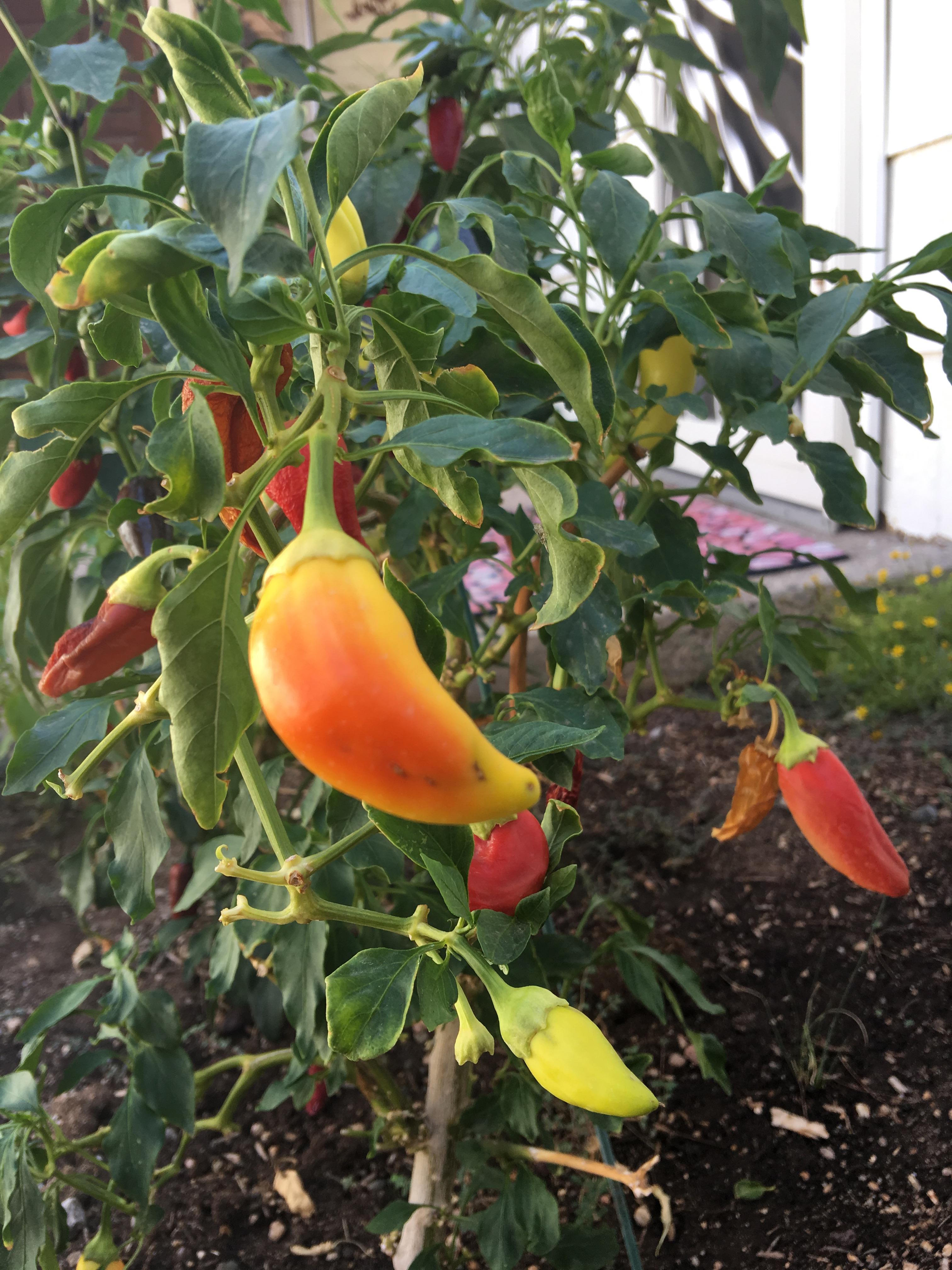
within the pepper bush’s deep red
berries, there among the dianthus.
Scattered, deliberately placed,
having been, I shall emerge again,
forever changed, limitless, renewed.


* * *


“Self-Portrait as Compost” was first published in Issue 125 of Right Hand PointingThank you to editors Dale Wisely, Laura M. Kaminski, F. John Sharp and José Angel Araguz for taking this piece.


Letter to Marshall from the Scarecrow’s Pocket


Letter to Marshall from the Scarecrow’s Pocket

Dear Daniel: How fortunate we are to tap into this medium of ether
and zeros and ones and all the combinations employed in our paperless
context. I am drawn to the concept of text as textile, as an entity
woven into the fabric of communication. Who knew that simple lines,
dots, dashes and squiggles would someday depict so well our
abstract beginnings and fingered desires, from counted goats and
jars of oil to the tattoo on a beloved’s inner thigh. The gap between
thought and graphic representation, whether on paper or glowing
screen, seems heightened these days, in spite of their ubiquitous
presences. I scratched my name onto the frozen creek’s surface,
only to watch it subsume as the mercury rose. I report this only
because you’ve scribed too well that feeling of treading on uncertain
surfaces, of words expanding in meaning and dragging us along
separate byways, fork into fork, under and through what we
never considered. That is our fate – to emerge from the pocket,
folded, wrinkled and smudged, smelling of makkoli and fish
markets and unwritten phrases stored in rice jars, our personal
creases expanding as we inspect the characters found there, some
crimped, others elongated, still others nearly invisible but apparent
through indentation. Translate these and what have you but a history
of glorious failures and unfelt victories in marks, on white,
somehow of note, if only to oneself. Success is a stranger’s smile,
an omelet cooked to order and eaten with gusto. It pulses
in the doing, in the unsteady drip from the faucet with a desiccated
washer, and the ink staining the page symbol by line. I know only
what I know, which ain’t much, but I keep trying to learn, to
cobble together these odd symbols into assemblages greater than
myself. As if anyone would notice. Say hello to the marred, the
cracked and disheveled of Jeju, and I’ll return the favor from
my hideaway in the Texas hills. As always, believe. Bob.


“Letter to Marshall from the Scarecrow’s Pocket” first appeared on Vox Populi in July 2018. I am grateful to Michael Simms for publishing this piece (and others).