Steps

Steps

Up or down, it’s all the same.

How the knee or hip strains under the planet’s
surge. Opposite, and unequally felt.

One knows pain, the other does not.

Forever spinning, we remain still,
moving in place. Wanting.

As the heart pumps,
stronger for its labor,
accustomed to the effort.

2,000 Ways of Looking at Wang Wei (and I still can’t resist)

_5305908

The subject of Nineteen Ways of Looking at Wang Wei: How a Chinese Poem is Translated, these four lines have not suffered from lack of translation. Gary Snyder’s rendition is beautiful – some might say perfect – as is Burton Watson’s. And then there’s Octavio Paz’s version. Yet I persist…

The transliteration on Chinese-poems.com (which differs from that offered by Eliot Weinberger):

Empty hill not see person
Yet hear person voice sound
Return scene enter deep forest
Duplicate light green moss on

And my take:

Deer Sanctuary

There’s no one on this empty hill,
but I hear someone talking.
Sunlight trickles into the forest,
reflecting onto the green moss.

Time and again Weinberger objects to an explicit first person observer, but to my ear it flows better. I’ve tried to retain a sense of precision in observation and at least a hint of duality, and believe that I’ve succeeded, at least in part. Having carried this poem with me for more than two decades, only now have I felt up to the task of adapting it. I chose the title “Deer Sanctuary” because in my neck of the woods spaces enclosed by “game fences” are generally meant for hunting. We Texans do love our venison. But the poem, to me, is ultimately peaceful. Hence my title.

file000701390163

This originally appeared on the blog in April 2014.

Q&A with Poet Lynne Burnett, Part 2

Part 2 of the Q&A with poet Lynne Burnett:

Would you offer up some of your influences – poetic and otherwise. What draws you to that work? 

Well, I’d have to start with the Romantic Poets (Shelley, Keats, Blake) and William Wordsworth, whose lines “To me, the meanest flower that blows/Can give thoughts that do often lie too deep for tears” are engraved in my mind. Then there’s Walt Whitman (the music of his lines!), Emily Dickinson (nutshells bursting with meaning), Rilke (“Again and again, even though we know love’s landscape”…), Rumi (words that dance with beauty, love and ecstasy) and a host of others. More currently, Jane Hirshfield for her image windows and language depth, Billy Collins for his ease of expression and accessibility, George Bilgere for his wry humour, Stephen Dunn for the contemplative mind journeys he takes me on, Tony Hoagland for his wit and great intellect in both poems and essays, Mary Oliver for her simple praise of the natural world, David Whyte for poems that immerse me in the soul’s callings. There are many more – I’m a wide reader and everything I read exerts its influence – but these are the ones that immediately come to mind. I am drawn to work that praises both the extraordinary and ordinary aspects of a life, to the grounded ecstatics, to poems so deep they are bottomless – that reward over and over and feed a hungry mind, questing heart. I’m also drawn to haiku for its succinctness.

And to art, especially paintings: I’ve written a sequence of 17 poems based on one artist’s “Time” sequence of 17 abstract paintings, which resulted in the two of us finally meeting face to face and me being able to see those paintings firsthand. I guess that makes me an ekphrastic poet!


What themes or traits will readers find in your work? What will they not find?

Because of the brevity of life, it’s precious to me. So, the themes of time and death and why are we here, what does it all mean. Readers will find praise, love, ecstasy, humour, irony, an articulation of ideas and ponderings, joy and innate spirituality in my work. I’ll work a theme from every angle over the course of many poems – which I hope I’ve done successfully with this chapbook. You’re unlikely to find swearing or really long poems (yet) or long wordy narratives. I like compression. I try to present different facets of a subject in a poem rather than take a specific stand for or against something. Although I initially worked toward a resolution in my poems, now you’ll find less of that, more of a door for the reader to go through and take what s/he will. Animals and nature abound in my writing. The “aum” of life too. 

And your creative process? Could you offer us a glimpse into how your poems develop from first glimmer to fully realized piece? Do you follow a regular writing routine? Do you listen to music while writing? Write in public or in solitude?

I have so many folders jammed with notes on odd pieces of paper, and little memo pads in every bathroom of the house! Any phrase that comes to mind or overheard and of interest, any incident read or seen that grabs me or gives me pause or makes me think – all get jotted down for later development. An observed image can tunnel through me to unexpected places. Occasionally I’ll use a random group of words and this will result in some of my best poems. Most of the time I start with a memory or something seen or read that I want to make sense of or settle emotionally. I sit at my desk some portion of every day (and thankfully have a large den with a door) but the real writing happens either first thing (before checking emails etc.) or mid-late afternoon. I LOVE this time of day, after I’ve meditated, and can write freshly or look with more objective eyes at something already begun. When I begin a poem, it lives with me – usually for days and weeks – until it amasses enough energy and coherence to be considered a poem and at that point I’ll type it on the computer, print it and then also put a handwritten copy into a binder. Every poem I’ve ever written, and every revision, they’re all dated, signed and noted in these binders. Anyway, this fledgling poem that finally got printed will have had a rocky start and almost always reach a point where it’s not working, I can’t find a satisfactory end or smooth transition between stanzas or the tone or point of view aren’t right and I get stuck – for days. It’s a part of my process I’m familiar and increasingly comfortable with. I’ll go for a walk or iron and the physical motion does some magic. As uncomfortable as this part is, it ALWAYS resolves itself if I just surrender to what wants to be said, not what I think wants to be said. Often I’ll end up with an opposite point of view as a result. The completion of the poem after this tipping point happens quickly: I get an image of sewing, a tactile sensation of words being stitched together, that is strong and stretchy and hole-proof. This doesn’t mean my opinion of the poem doesn’t change over ensuing days/months/years – it certainly does and most of my poems are revised. However, the core energy of the poem – hopefully – stays intact (I believe poems are energetic structures). I’ve learned to always sleep on my “latest, greatest” drafts (what was I thinking?) which turn out to be in the new day’s light – if not “it” then a necessary step to get there. On occasion I’ve written to music (always instrumental) and found it quite freeing! Usually though I work in quiet solitude. Now that I have a much larger den with a fabulous sound system I think I’ll experiment more with that.

List three favorite poets, an admirable animal, and your go-to beverage.

Only three!!! This moment it’s Stephen Dunn, Jane Hirshfield and Dorianne Laux. Ask me again and my answer might be different (isn’t it wonderful to have a Poet Bank to draw from?). An admirable animal would be my totem, the black panther: about ten years ago I dreamed one picked me up in its mouth and half-carried half-dragged me to a path I was supposed to be on, before letting me go, mission accomplished. Shortly after, I was in Mexico and a beach vendor walked by, hawking, among other stone sculptures, a foot long black panther. Yes! Of course I ran after him and this big boy has stalked a corner of my desk ever since. If it’s first thing in the morning, my go-to beverage is a strong cup of coffee but later in the day some coconut water does the trick! 

Thanks, Lynne!

See Part 1 here.

Visit Lynne’s blog to read a sample of her poetry, after which you’ll likely feel an irresistible urge to purchase Irresistible, now available through Amazon.com and Finishing Line Press

Gemini Ink Writers Conference in San Antonio, July 2018

Gemini Ink Writers Conference in San Antonio, July 2018

This 3-day conference has quite the line up in poetry, with renowned poet and editor Veronica Golos, Pulitzer Prize winner Vijay Seshadri, and Ruth Lilly Prize winner and Pulitzer Prize finalist Martín Espada. I can’t pass up this opportunity, and have already registered for Veronica Golos’s workshop. The conference runs from Friday, July 20 until 6:00 p.m. Sunday, July 22. If you’re a local or don’t mind traveling and want to sample the Texas summer (we do have air conditioning), you might consider Gemini Ink Writers Conference. I’m excited!

The non-poetry offerings are equally impressive, but hey, I’m a poet, and will let someone else address those.

Recording of Self-Portrait with Knife

file2771300036063

Self-Portrait with Knife

Lacking benefit of prayer or belief,
it slips through flesh,

praising its temerity. Or,
parting the onion’s core, reclaims
the right to weep.

How many nights have we shared
these pleasures? I smooth the blade

with steel, listening to the fine hum.

“Self-Portrait with Knife” is included in my just released micro-chapbook Only This, available for free download from Origami Poems Project.

Q&A with Poet Lynne Burnett

I’m pleased to offer this Q&A with poet Lynne Burnett:

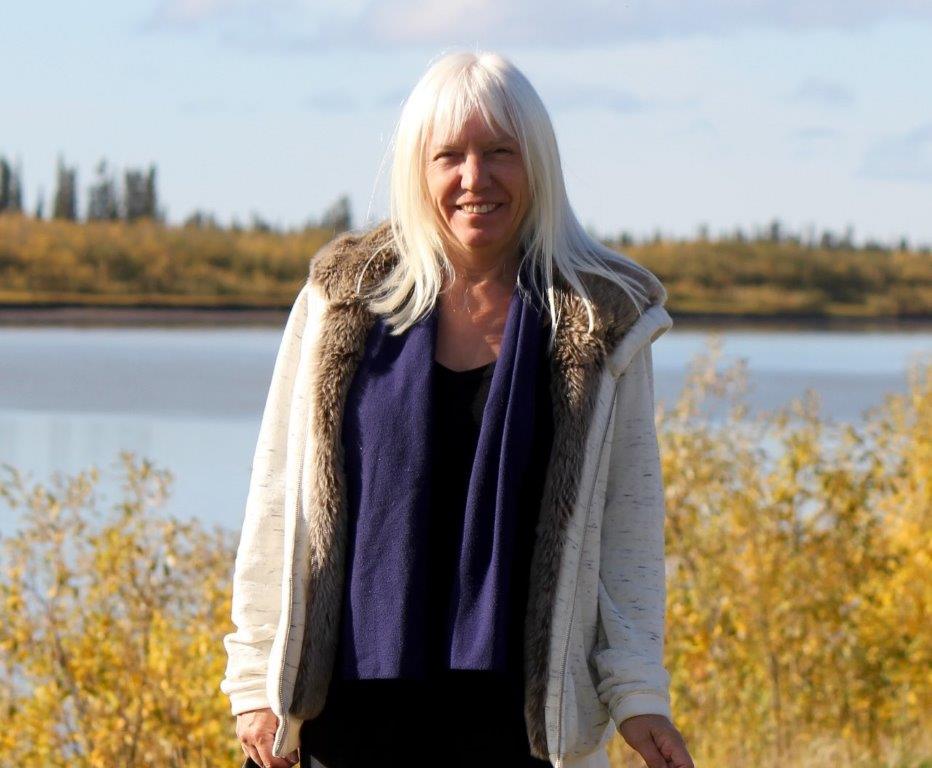
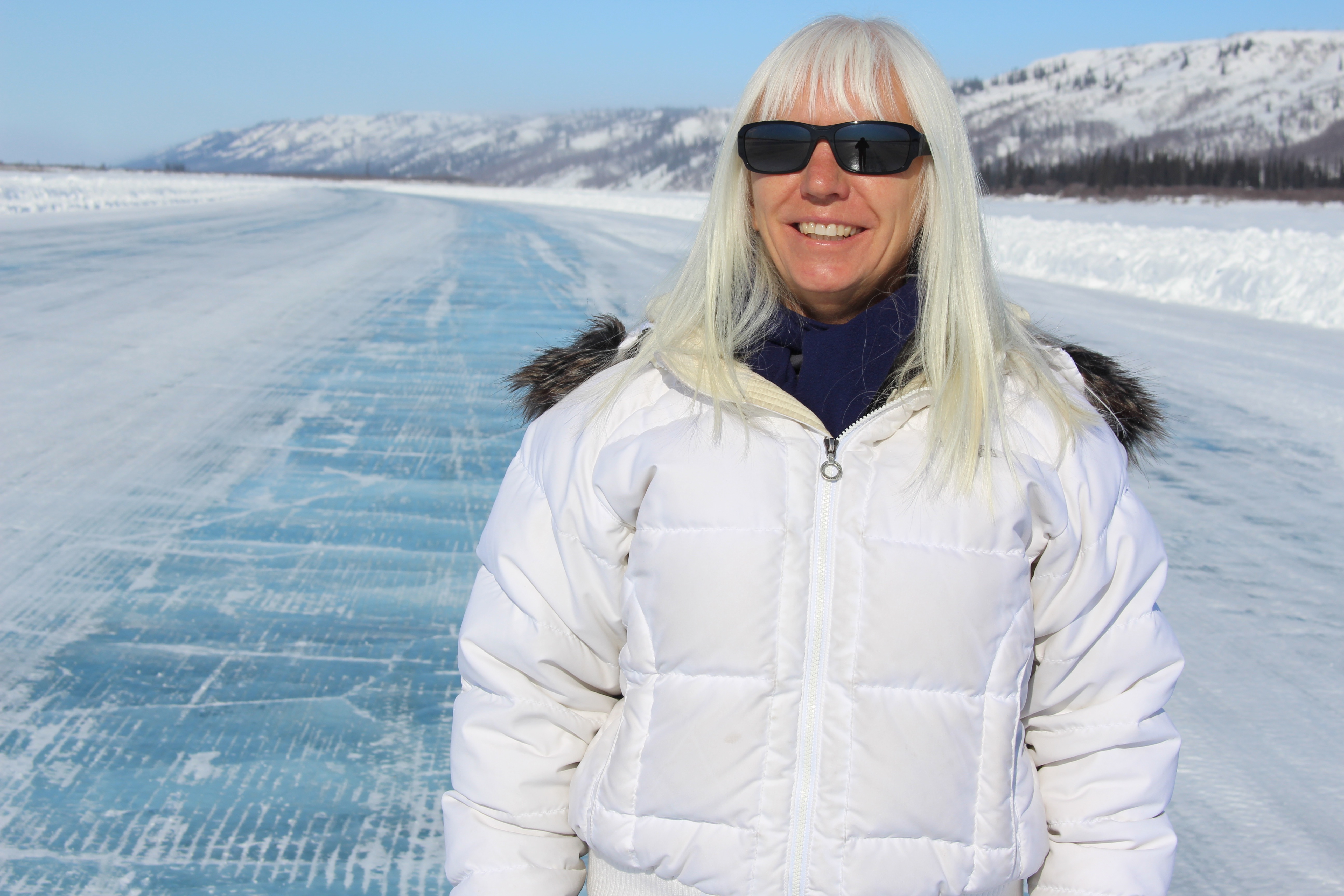
Lynne Burnett on the old Ice Road (Mackenzie River) between Inuvik and Tuktoyaktuk (inside the Arctic Circle).

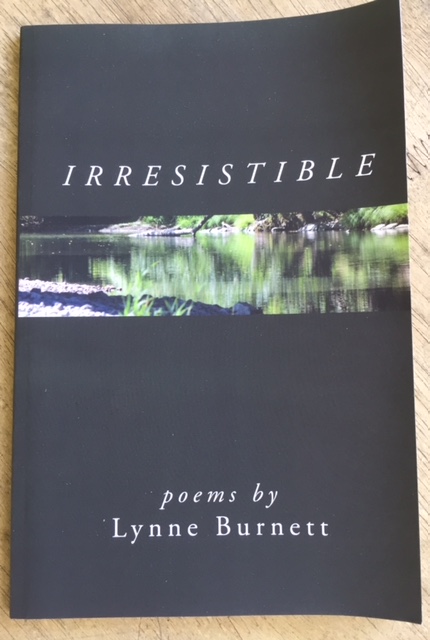
Your chapbook, Irresistible, has recently been published. Can you tell us something about it? 

The poems in this book have transitions in common – from death and dying, whether accidental or planned, to milestones such as a son leaving home etc.  There’s love palpably felt after death and beyond it, little epiphanies from near-disasters, the whole subject of death from many different angles – the news that breaks us, how our lives are enlarged by telling moments. The title poem “Irresistible” and “Tandem Hang-Gliding Incident” seemed to embody our human failings and the unnecessary accidental deaths we suffer as a result. But also, physically, death is inevitable and therefore irresistible – we can’t resist it. It will happen sooner or later: our first breath inspires our last, so to speak, and our last – for those believing there’s more beyond our bodies – inspires our first on a different plane. Physically our time here on Earth is limited and I think this awareness allows an appreciation for the preciousness of life in all its forms (my chapbook includes animal journeys as well as human ones). I seem to be fascinated with this subject as it creeps into a lot of my poems!


(Note to blog readers from RO: Each time I read this book, I find something new to appreciate. You will, too.)

Would you mind sharing a bit about your background?

I was born in London, England, emigrated to Toronto, Canada at age 4, left home at 18. There followed 3 out of an expected 4 years of university (and poems published there) mixed in with travel to Scotland, Wales and England (my hippy years – this was the early 70’s), before returning to Toronto to work for 2 years and then coming west to Vancouver, where I’ve lived 40 years now. Although I’m not politically oriented in my poetry, I’ve always had a vision of what’s possible for this beautiful world we find ourselves in. As a result, I took myself to Findhorn, Scotland for awhile back then, took the Erhardt Seminar Training (EST) in London and was generally quite involved with the human potential movement of that time. In 1975 I began Transcendental Meditation and have been a regular meditator since, which I think has been helpful to my writing (and sanity!). Anyway, after venturing west to Vancouver, I met my husband and voila – here we are 38 years later! I became an instant step-mom to 2 wonderful kids then but having my own took another 8 years, so the older ones were leaving high school when Stewart was born (he did the author and cover photos for my book) – so it was like raising 2 families back to back and as a result, with the intensity of those 2 experiences, writing got put on the back burner until my son was 10 and I could take time for myself again. I was happy about this and do not regret that 20 year gap in writing – in fact I learned that “one hand shakes the other” so to speak and when the time is right, everything you thought you’d lost or forgotten floods the page again and even better – has matured with time. Anyway, aside from third year university courses on the Romantic Poets in the early 70’s, all my learning about craft etc. has come from my own wide reading and study: I’m self-taught.


Please tell us how or why you turned to writing poetry?

 Though I feel like I was born poetically inclined, I remember writing down my first poem at age 9. It was a rhymed poem of many verses, about the path to God/light/worlds unknown, probably influenced by the fact we lived next door to the minister, played with his children, saw him every Sunday. Poetry has always been a way to express deep emotion that was otherwise inexpressible, a way to articulate thoughts and feelings I struggle to voice. We moved every year/year and a half in and around Toronto so I was always changing schools, making new friends. Being shy, quiet and introverted, books, paper and pen were my confidants. As the oldest child of divorced parents, I wanted to be “good” and do good as a person. But on the page I could be dangerous, unpredictable, angry or ecstatic; I could question things. And did. I wrote steadily until my mid-twenties and published here and there – sometimes in university journals, once in Chatelaine (which paid me $50 for a 9 line poem back in 1971 – imagine!). But once I married, fewer poems got written than nightly dreams and those that did were filed away for 20 years before I began sending them out into the world. I think those years of apparent non-activity were a fertile darkness and everything experienced during that time got written into my body and soul. All to say writing poetry involves living a life – everything contributes and is necessary.


What is the relationship of your environment, your daily surroundings, to your writing?

Important! Especially nature – I grew up when you could walk to the end of your street at the age of 8 or 9, roam the fields there all day, only returning for supper – before strip malls replaced them. This is where I discovered I had a natural leaning to meditation, because I’d lie on the grass or sit against a tree and disappear into the silence, often emerging with phrases, images to write about. I have more than one big window in my den so I can sit at my desk and write, looking outside. If ever I’m stuck in a poem, going for a walk quickly loosens things up (I walk every day). That or ironing! The physical motion seems to freshen the creative process. We boat in the summer for several weeks and as much as possible anchor out in very remote bays – no cellphone/internet/newspapers/tv!!! That immersion in wild nature and largely living from the sea (catching prawns, crabs, salmon, cod) is extremely nourishing to me. Many poems are later drawn from that experience.


If you were a poetic form, which would you be?

Hmmm, I think I’d be a haiku because it’s so succinct. I love things in a nutshell! However, I’m also partial to the sonnet, with its twist and turns.


We’ll continue Part 2 of this Q&A in a few days, but in the meantime, you might visit Lynne’s blog to read a sample of her poetry, after which you’ll likely feel an irresistible urge to purchase Irresistible, which is available through Amazon.com and Finishing Line Press.


Water Witching, We Hear

dry


Water Witching, We Hear

The rattle of stalks
along dirt roads,

whispery days
sifting through
parched
light,

you say
patience, my
friend
, and again,

patience.

“Water Witching, We Hear” first appeared on the blog in April 2017.

Awakened, He Turns to the Wall (Cento)

cell

Awakened, He Turns to the Wall (Cento) 

Then, everything slept.
Where were you before the day?

You see here the influence of inference,
whereby things might be seen in another light,

as if the trees were not indifferent, as if
a hand had suddenly erased a huge

blackboard, only, I thought there was
something even if I call it nothing,

like the river stretching out on its
deathbed. No one jumps off.

* * *

A cento is composed of lines from poems by other poets. This originated from pieces by: Larry Levis, Jacques Roubaud, Lorine Niedecker, Gustaf Sobin, Denise Levertov, Elizabeth Spires, William Bronk, Vicente Huidobro, Ingebord Bachmann

For further information and examples of the form, you might peruse the Academy of American Poets site: http://www.poets.org/poetsorg/text/poetic-form-cento

erase

This last appeared here in February 2017.

Martín Espada’s “Here I Am”


Find the stunning poem here, then read his explanation for writing elegies for the living.

3 Poems Up at MockingHeart Review

I have the honor of being the featured poet in Volume 3, Issue 2 of MockingHeart Review. I am grateful to editor Clare Martin and her tireless dedication. She is a blessing!