We Call the Neighbor’s Fat Burro Donkey Hotei, but His Name is Cantinflas

file000560125690

We Call the Neighbor’s Fat Burro Donkey Hotei, but His Name is Cantinflas

Certainty grows in corners, away from light.
From his mouth issues the breath we take, the words we keep.

Enjoy the collusion of shape and sound.
We share the hummingbird’s taste for sweet, but not its fierceness.

Its heart beats 1,200 times a minute,
and you ask me how best to bury money.

Hotei’s name means cloth sack, and comes from the bag he carried;
a man of loving character, he possessed the Buddha nature.

What we own cannot be held.
Most plastics are organic polymers with spine-linked repeat units.

The space you’ve left expands exponentially.
Left in the rain, the bell grows.

Christen me at your own peril. Agaves flower once then die.
Fluency in silence.

I dropped my pants when the scorpion stung my thigh.
The wind takes nothing it does not want.

After vulcanization, thermosets remain solid.
The Cantinflas character was famous for his eloquent nonsense.

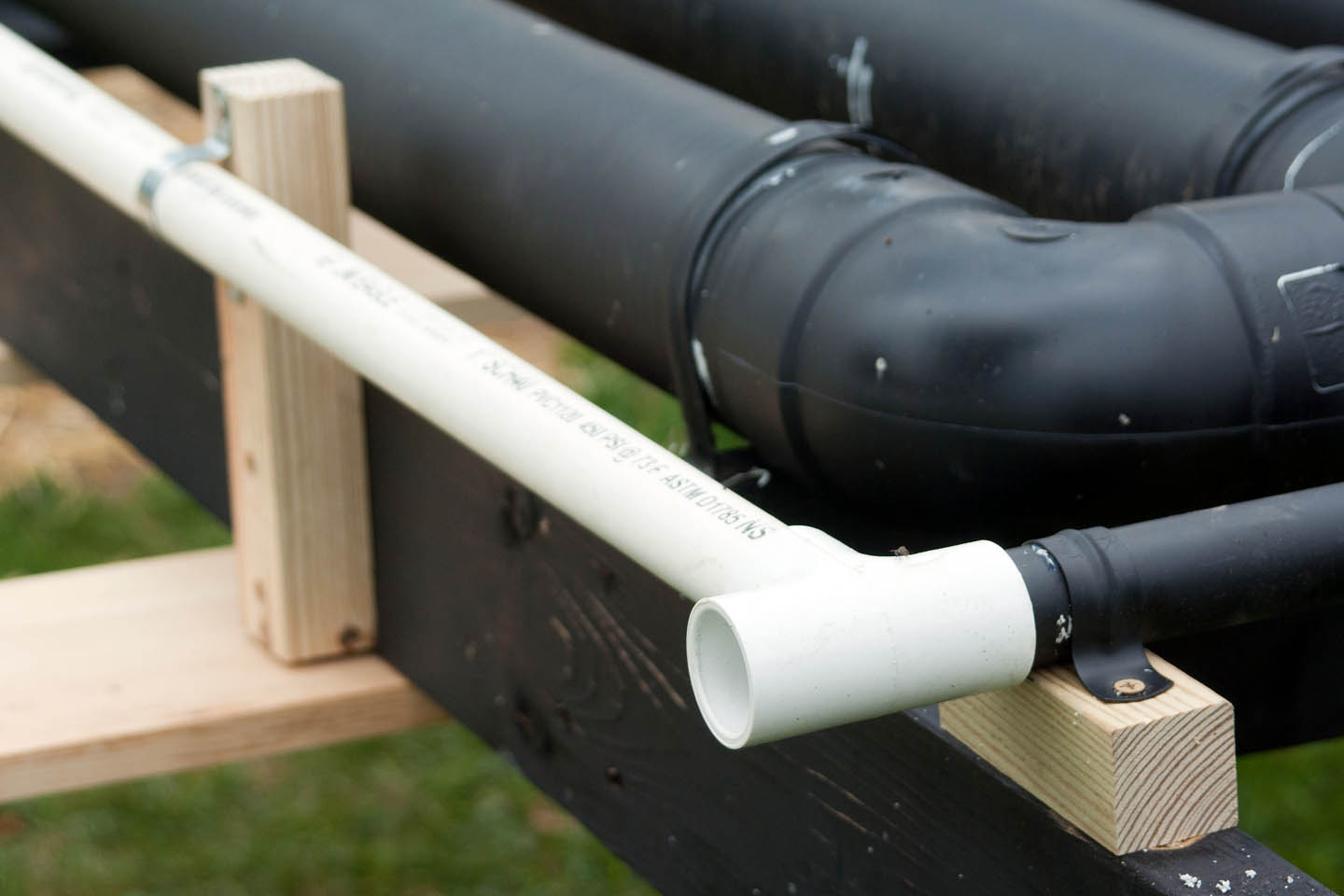
Vacuum wrap the bills in plastic, place them in pvc.
Having mastered imperfection, I turn to folly.

Not the thing itself, but the process laid bare and opened.
Hoping to hide, the scorpion scuttled under a boot.

Thought to action, whisper to knife: which is not a curse?
The wind wants nothing; the burro sings his loneliness.


This first appeared here in May 2015. My failures often lead to success. I’ve never quite completed this piece, and don’t know that I ever will. But the first draft (nearly five years ago) set me off on a new path, one that has served me well. What more can I ask?
 
 
file2751313196905


After Reading That Dogs Relieve Themselves in Alignment with the Earth’s Magnetic Field, I Observe and Take Notes


After Reading That Dogs Relieve Themselves in Alignment with the Earth’s Magnetic Field, I Observe and Take Notes

Perhaps Ozymandias is an anomaly. He shows no
preference for the north-south axis while pooping,
and may hedge his bets slightly to the east when
urinating, especially at twilight. Clara the miniature
Schnauzer, ever Germanic in her manner, preferred
true north, always, while blind, deaf, humpbacked
Maury pointed his rear right leg forward, to the south.
Jackboy the cattledog was an omnidirectional reliever,
as is the Chihuahua, Apollonia, although she twists and
snaps at blinking fireflies in mid-squat, never connecting
with the dancing, lighted beetles. I do not recall the
bulldog’s habits, but Scotch trended towards the untidy
in all else, and expended as little energy as possible,
often leaning against the house while peeing on it. I
cannot say which direction my next scientific inquiry
will take, but I will, as always, follow the dogs’ lead.


This poem last appeared here in December 2017, and was written during the August 2016 Tupelo Press 30-30 Challenge. Many thanks to Susan Nefzger for sponsoring the poem. She is NOT to blame for the title or the contents of the poem…


Scarecrow Believes

Scarecrow Believes
 

What is a ghost if not misplaced energy,
an apprehension or the sum of invisible integers
and the properties they possess? I preside over
this sea of maize, tracking clouds, noting patterns
up high and among the flowing stalks, absorbing
minutiae, assigning connections, piecing together bits,
moment to thought, soil to trickle, flutter to gain.
Energy. Inertia. Waves, converted. If I had a bed
I would not neglect to look under it. The closet door
would remain open, a nightlight positioned nearby
with perhaps a mirror or two angled to offer clarity,
and the radio tuned always to jazz, providing little
purchase to any ill-intentioned spirit. The power of
beauty transfixes, even as it carries me far from my
station, from hilltop to plains to glowering moon.
If neither place nor reason, what consumes
our spiritual remnants, what directs our currents
to the next, and each successive, landing? Crows
have long been considered conduits to the afterlife,
but they exist here, in the now. I do not perspire but
fix my gaze on numbers and their tales, on zero and
the history of nothing, on unseen fingers walking up
my spine, shedding a residue of snow, of mercury
and latent images and dormant seeds in the world
underfoot, acknowledging the wonders of what
can’t be proven, what won’t be held or seen. Still, I
add and subtract, unclench my fingers and accept the
quiet, caught forever within the limits of the boundless,
under the sky, in space, within the improbable.

“Scarecrow Believes” was published in May 2017 in GFT Presents: One in Four, a semiannual, print literary journal published by GFT Press.


The Body Gives


The Body Gives

Sometimes the body gives too much.
A tendon frays, the heart mumbles
and no one sees the damaged parts.

Ignoring pain, we continue climbing ladders,
sandpaper breath rasping the morning light.

Little bits of us crumble all the time,
yet we stumble on, pretending.

Then the body kills us with its enthusiasm.

Cells duplicate wildly, plaque explodes.
This enmity within? Defensive maneuvers.

Working alone, I wonder where I might end.

On the floor. In a field. Atop the bed.
Under the surface of a rippling pond
or drifting with smoke

through a snow-clad afternoon
at eight thousand feet. Among
the grocery’s tomatoes and squash
approaching the end of a long list.

At the bar, glass in hand, or in a truck
at a four-way stop, the radio blaring.

Time enough for speculation, they say.
But I wonder: when I jump,

does the earth always rise to greet me?

“The Body Gives” first appeared in The New Reader Magazine, in March 2018.

Theory and Practice of Tension (duet for guitar and mandolin)

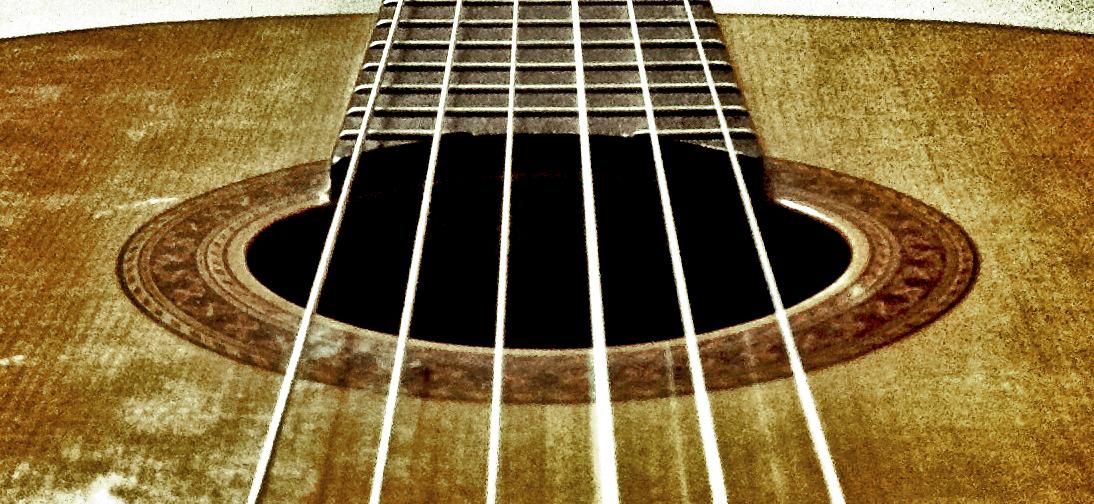
Aging Guitar

Theory and Practice of Tension (duet for guitar and mandolin)

By compromise I mean the gap between desire and
ability, the difference between mist and fog, cold air
and warmer water. Held taut, the line remains constant,
reciprocated energy observing Hooke’s Law. Though
inadequate in our attempts, in singing we often express
more than words convey, a bridging of music and lyric,
the extension commensurable to the force, as in the
bended A string trilling at dusk, words shimmering
nearby: equilibrium in thought and deed, in body and
intent. And what is the yield strength of need, of want
and notion? The fertile tremolo, plying note upon note,
peace through constant velocity. Presuming failure,
I limit my attentions and compress. When the sum of all
forces equals zero, we attain balance, owing no one.
Proportional to distance: the strings and bridge.

***

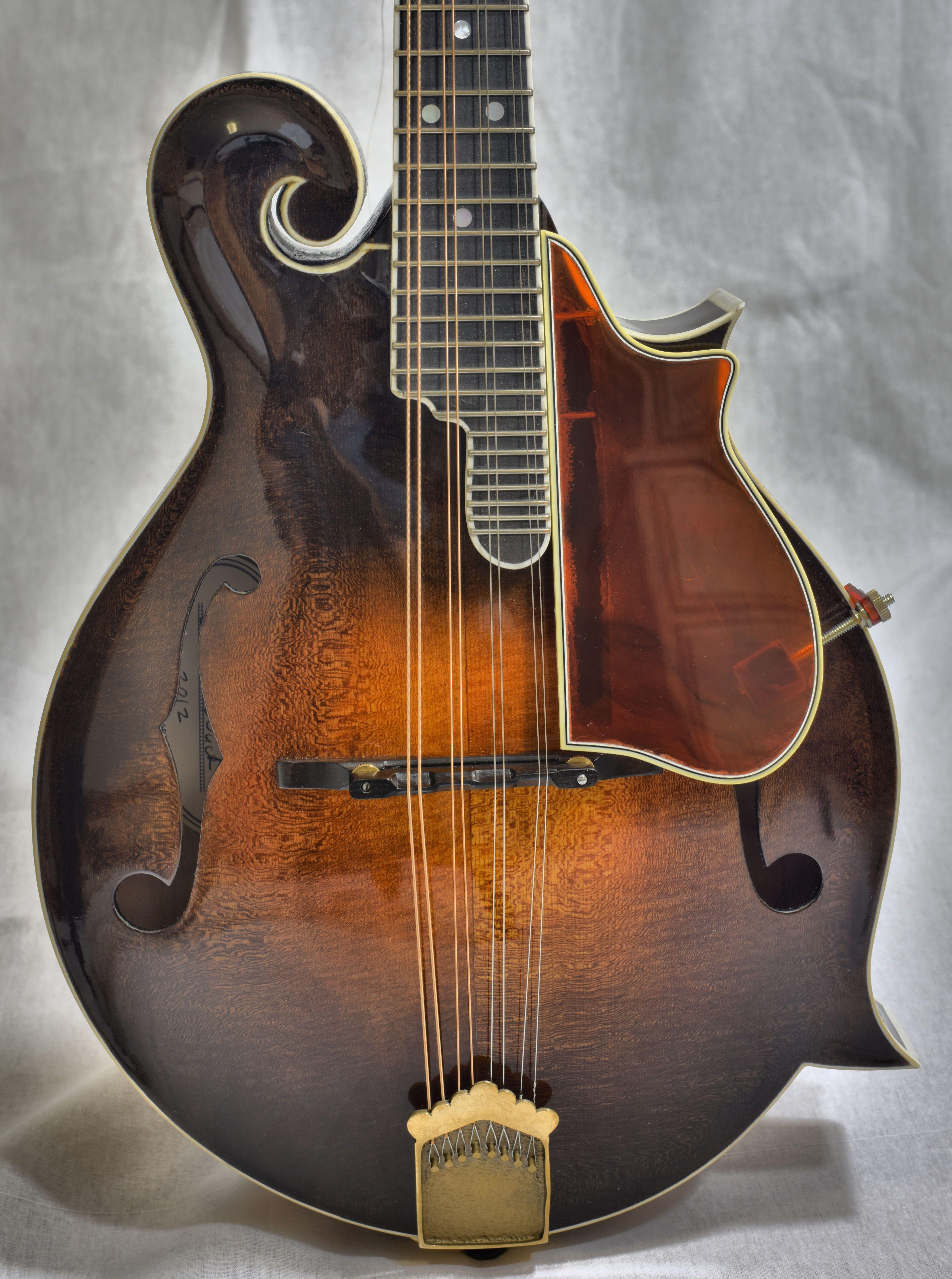
My friend Chuck and I get together on occasion to make noise with guitar and mandolin. We are not musicians. But we laugh, sing tunes written for better voices, drink good beer, and enjoy ourselves. Occasionally the sound we achieve transcends our abilities. I live for those moments.

Mando 810

“Theory and Practice of Tension” first appeared here in April 2016.

Aftermath


Aftermath 

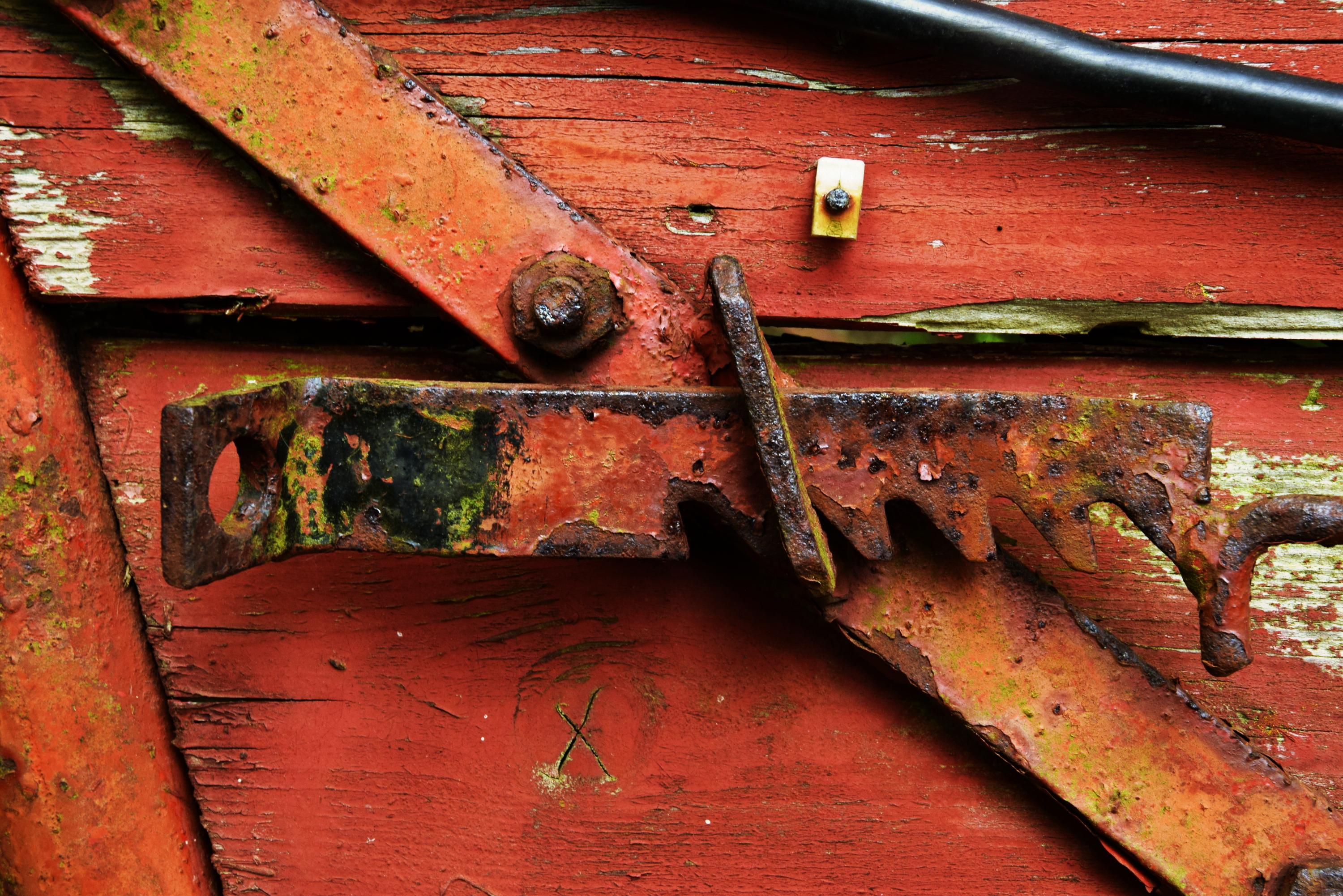
   rust. Being one phase of corruption, a matter of
resolve. When I surrender, the implication is of giving
over, moving above, allowance. Delivering despite
the steady flaking away at what colors me intact.
The quiet evening had lulled me to this inevitability:
when oxides subsume the original metal, the expansion
may result in catastrophe. Yesterday’s arc, tomorrow’s
trial. Failure’s bloom.

* * *

“Aftermath” first appeared in the print publication Sheepshead Review. Thank you to Audrey Schultz and staff for taking this poem.

Vision in Far Infrared

Vision in Far Infrared

Considering the implications of dust and cold gas, the expanding
universe and cryostats, I climb the stairs and shiver.

Thermal infrared may propagate in a vacuum, but we require
oxygen and warmth. Pillows and a sense of humor help, too.

What will come of the images captured by the Herschel telescope
in the next eon and those following? These maelstroms, blossoming.

I look up from my front porch and see the streetlight’s glare
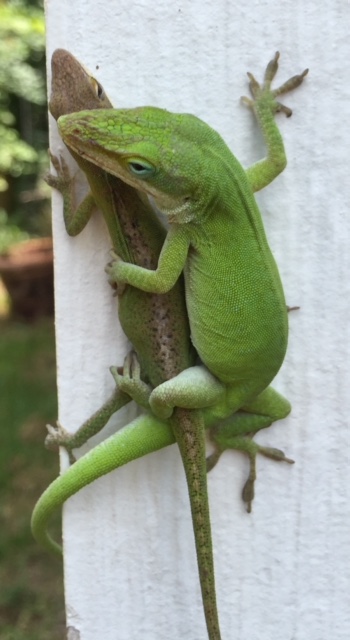
rather than stars. Yesterday, lizards coupled on my shack’s wall.

Nebulosity in vision, in politics. Look through this eyepiece to find
horseheads and archers, bright flames and clouds. Or nothing.

Red and yellow filaments could indicate newly forming low-mass
stars. The visible is only one component of perception.

Hubble observes in multiple spectra, but not the far infrared.
Even the long-reaching may be overcome by inadequacies.

Do not forget the body’s warmth. Remember black lights and purpose,
the tangible thought. Recall that we exist at rest, ever in motion.

* * *

“Vision in Far Infrared” was drafted during the August 2016 Tupelo Press 30/30 Challenge. I am grateful to Angela for sponsoring the poem and providing the title and these three words: nebulosity, eon, maelstrom.

Snails

Snails

How convenient to carry a home on one’s back, I
think, disregarding heft and plumbing and the shape
of rooms too hollow to feel. Yesterday a box of African
chapbooks migrated to my doorstep, and I plucked
yellowing leaves from the tomato plant by the poetry
shack. Marine snails constitute the majority of snail
species, but we count first what we can see. Everything
turns–the days buzz by like male blackchins swooping
through their pendulum air-dance, and I tally my
diminishing hours from the safety of these walls.
Heliciculture is another word for snail farming, but
reminds me of stars spiraling wildly above my roof
each night, spewing poetic fire throughout the cosmos.
The neighbor mows her lawn and I observe the wind
stepping from treetop to treetop, another sign of the
earth’s continued rotation. Their slime permeates human
cosmetics to minimize premature skin aging, and was
once used medicinally to soothe coughs (I write this
as mucus slides down my throat, a response of the
lung’s filtration system to histamines). There is much
to consider about the intricacies of harvesting slime.
Most snail species consume plants, but a few are
predatory carnivores, which leads to questions
about their prey. Cooked in butter with garlic, served
with a dry white? I spear one, contemplate texture
and move on to the next, leaving behind no visible trail.

* * *

My poem “Snails” was published on Vox Populi  in October 2017. Many thanks to founder and editor Michael Simms for giving this poem a home.

Happy Circuitry

circuit

Happy Circuitry

                        for Margaret Rhee

The body’s landscape defines its genealogy: my father was a board,
my mother, an integrated circuit, my great-grandmother, an abacus,
and her progenitors, tally sticks. In the third century the artificer
Yan Shi presented a moving human-shaped figure to his king, and
in 1206 Al-Jazari’s automaton band played to astonished audiences.
Nearly 300 years later Da Vinci designed a mechanical knight, and
four centuries after that Tesla demonstrated radio-control. Twenty-two
motors power my left hand; Asimov coined the term robotics” in 1941.
Pneumatic tubes line my right. Linear actuators and muscle wire,
nanotubes and tactile sensors, shape my purpose, while three brains
spread the workload. If emotion = cognition + physiology, what do I
lack? I think, therefore I conduct, process, route and direct. Though
I never eat, I chew and crunch, take in, put out, deliver, digest. Life is
a calculation. Death, a sum. No heart swells my chest, yet my circuits
yearn for something undefined. Observe the blinking lights, listen for
the faint whir of cooling fans. I bear no lips or tongue, but taste more
deeply than you. Algorithms mean never having to say you’re sorry.

* * *

This piece was originally drafted during the August 2015 Tupelo Press 30-30 Challenge, and is dedicated to Margaret Rhee, whose book Radio Heart; Or, How Robots Fall Out of Love inspired me. Thanks Kris B. for sponsoring and providing the title!

The poem was published in October 2017 by Figroot Press.

At Work I Stand Observing My Diminished Self

At Work I Stand Observing My Diminished Self

1 (reflection)

Six iterations, alike but lessened in sequence, and always in pairs:
front and back, oblique, the two mirrors becoming four, then six.

A perfect mirror reflects and neither transmits nor absorbs light.

Tilting my chin, I accept reflectance according to its distribution.

Retina as transducer, producing neural impulses.

The images consume no space but the effect is of distance.

Vision is not simply the retina’s translation
but counts inference and assumption among its influences.

The sum and product of its parts: 1 + 2 + 3, or, 1 x 2 x 3.

Angles achieve distinctions apparent at each adjustment.

Turning slightly, I detect movement in each replica.

A six-door cubic cage depicting the bondage of sense and elements.

It is possible to withdraw from this frame.

2 (answers)

Does the weaker eye perceive less.
Who conceals the shadow’s death.
Is a distal truth a lie or merely implication.
How do you rid the mirror of its ghosts.
What resonates in the echo’s decline.
Did the light switch subvert the blackened image.
Apparition, projection or visual representation.
When do waves not disturb.
At what point does belief transmute sight.
What fixes the mirror’s image.
Who closed his eyes and saw light.

3 (prosopagnosia)

I sip coffee and gaze out the second-floor window.

More light enters my neighbor’s office than mine.

Calculate the difference between illumination and glare.

Looking ahead, I claim no face and recognize no one.

The eye converts a signal from one form of energy to another.

Accepting light from external objects, I perceive reflection as the true arbiter.

The dissected path impairs transduction.

Face as identifier: to make, to do.

Translation: imperfection: diminishment.

Blink.

* * *

“At Work I Stand Observing My Diminished Self” was published in Posit in October 2017.