Waiting for the Windshield on the Freeway

brick


Waiting for the Windshield on the Freeway

Take velocity into account, figure height and distance,
add trajectory plus time, then let her rip. Billy likes solid
paving stones, while I prefer hollow cinder blocks. Karen
chooses traditional red bricks, as she lacks the upper body
strength to throw anything heavier. What she’s missing in
muscle, she makes up with accuracy – one bull’s-eye last
month, with three kills to her credit. Imagine driving down
the highway, singing along with Toby Keith when wham,
a brick spiderwebs your windshield and without thinking you
mash down the brakes and the idiot tailgating you crunches
your rear end, launching you off the road and into the muddy
ditch, while another obliviot crashes into him – Karen’s work.
The only time I’ve seen her smile. Billy says she’s meaner
than me and the old man put together, which is quite the
compliment. We don’t see each other often, but Daddy’s
up for parole in a few months, and if his lying has improved,
well, who knows. Billy’s aim ain’t much – he’s managed
to dent a few roofs and truck beds, and caused a Ford
F-150 to swerve, but that’s about it. Me, I’m hunting the big
game, the 18-wheelers. I got a good feeling about tonight.


“Waiting for the Windshield on the Freeway” was drafted during the August 2016 Tupelo Press 30/30 Challenge, and ten days later was featured on Algebra of Owls. Thanks to Leigh Smith for sponsoring the poem and providing the title, and editor Paul Vaughan for choosing this piece. 

Flood Gauge in the Morning


Flood Gauge in the Morning

It reclines on its side, submerged.
So far, so good, it seems
to say. Still here, still intact.
And the bridge looks so clean
from this angle
underwater.

I toss
a fist-size stone
onto the upstream
side of the road,
and watch it wash away.
Maybe we’ll cross tomorrow.

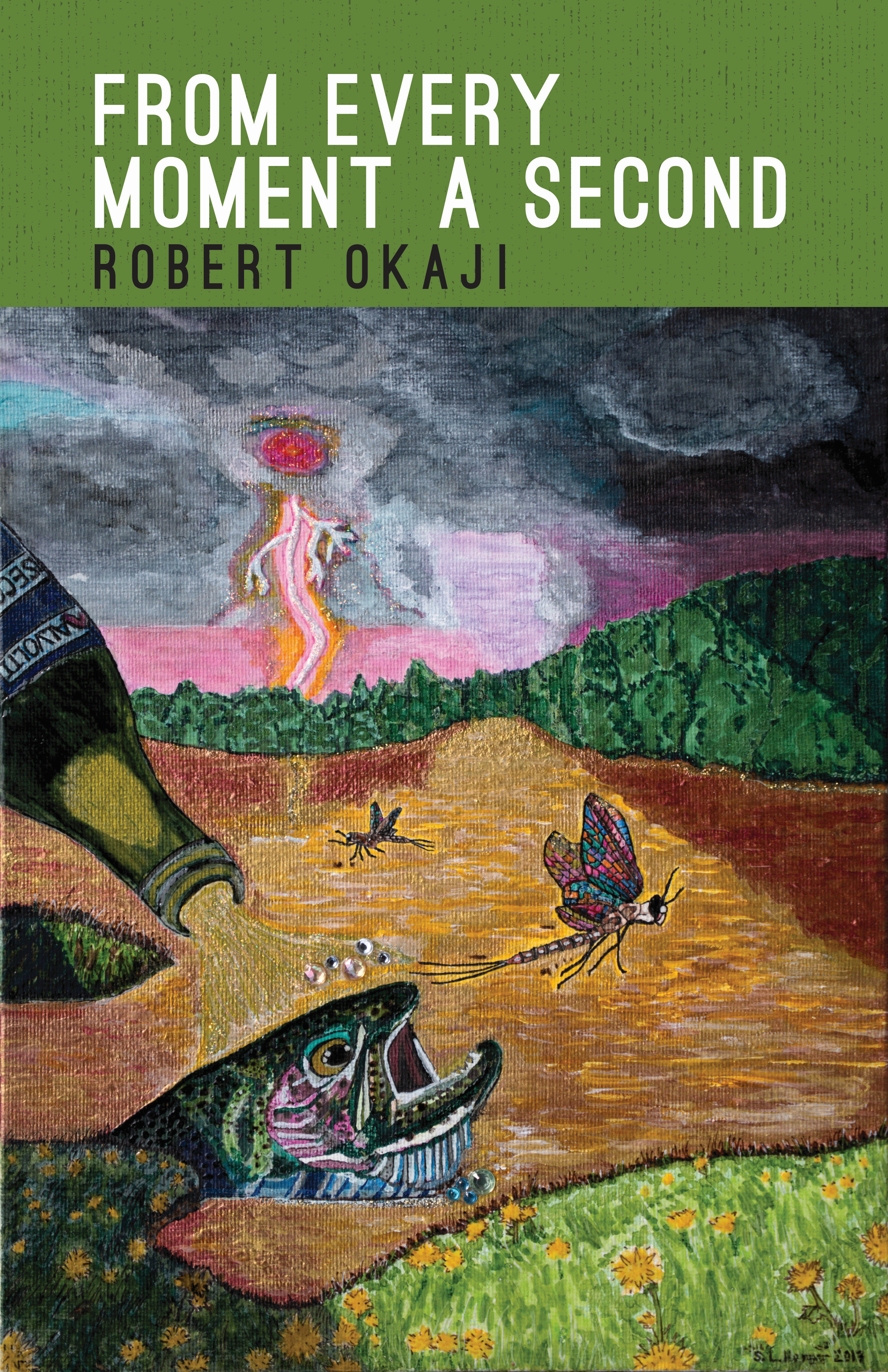
“Flood Gauge in the Morning” is included in my chapbook, From Every Moment a Second, available for order now via Amazon.com and Finishing Line Press.

Gulf

gulf

Gulf
for M.V.

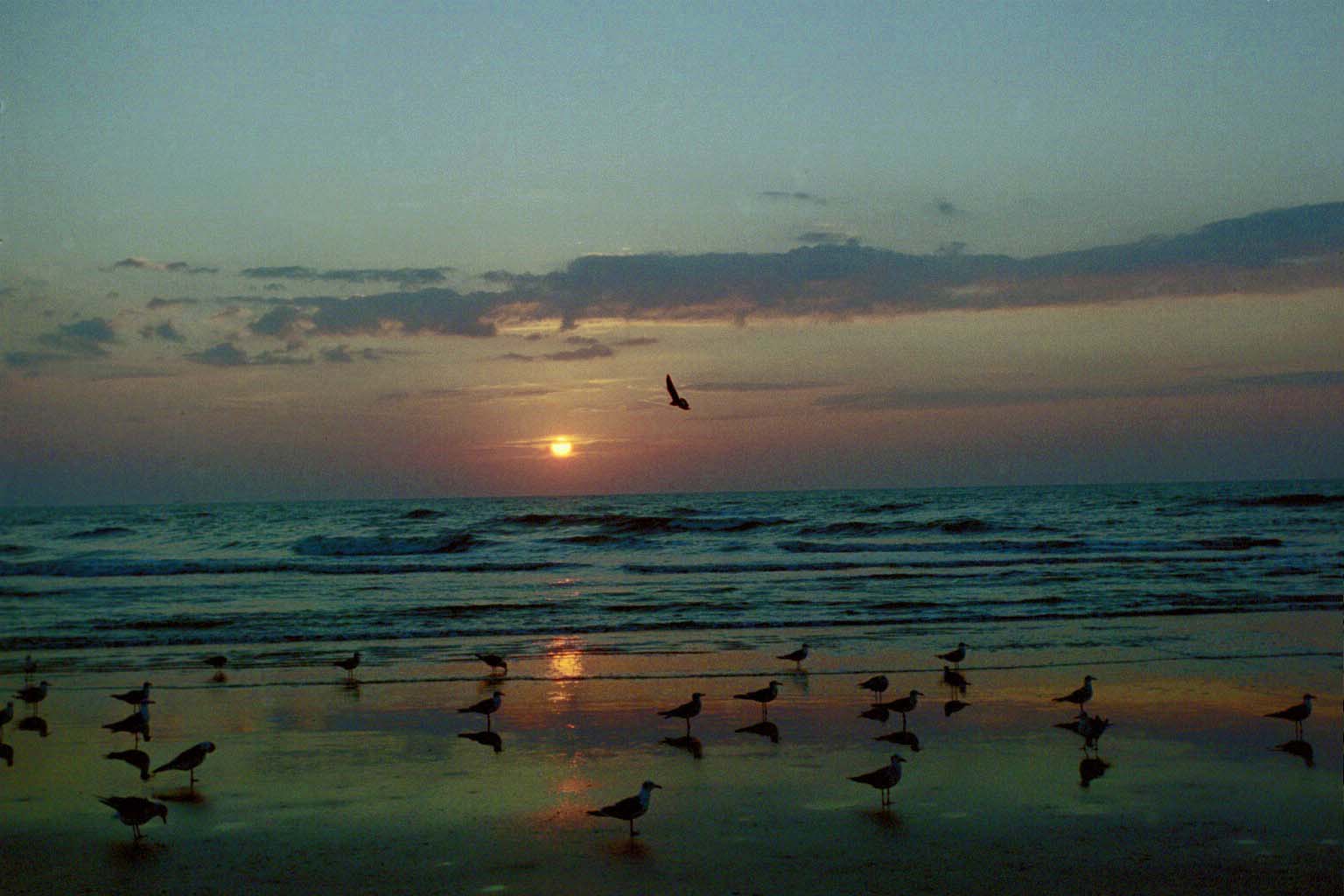
Which looms wider, its sky or water? The birds, here, too,
reconvene in greater streaks. This morning I stomped around
Paisano, examining the grasses and soil, the rocks and various
configurations of clouds, and listened to experts discuss
prescribed burns and how the land’s contours can determine
sequence and efficacy. The mockingbird whose territory
we occupy has disappeared. Perhaps he’s just moved on.
I heard a red-bellied woodpecker yesterday, but never saw it,
and of course the rattlers at the ranch are still underfoot, just
less apparent this time of year. I looked closely, as always,
but never spied one. What else did I miss? The rich people
on the bluffs bulldoze habitat, poison creeks and erect their
Italianate villas, caring not a whit for the breeding warblers
or the landscape, although they might pony up a few bucks
for an environmental charity if sucked-up to properly. Given
a choice between the two, I’d pick the snakes every time;
they don’t smile or offer spiked drinks and stories of their
conquests, and usually warn before striking. Even a minor
deity might take offense and crack open a new fault in the
earth between this place and theirs, widening it by inches
with each presumption, every falsehood, whether shaded
in unrelated facts or illogic, until that shifting space could
be spanned solely by a bridge planked with truth and good
manners, and, yes, by mutual consent. Looking back, I
find many examples of these bridges collapsing in utero,
but we keep trying. Your story of the gulf coast storm
reminded me of weeks spent on calm water, and seeing,
no matter where I turned, blue meeting blue, from horizon
to horizon, the sky never broken by bird or cloud, born
anew each day, always looking between, never down.

“Gulf” was published in West Texas Literary Review in March 2017.

Bandera

image

Bandera

I offer nothing in return, and in offering, receive.
My mouth is a river

whose current bears no words,
but the silence is not of my making.

Notice the streets and their grey
hunger, the rain and the sun

passing by much
as one passes an unopened door.

That question, unvoiced.
That shiver preceding the icy touch.

You may deny my motives.
You may deny my existence and

the very notion of shape unto form.
I offer nothing, and in offering, receive.

image

“Bandera” first appeared here in May 2015, and was subsequently published in The Basil O’Flaherty in November 2016.

Life among the Prickly Pear

image

Life among the Prickly Pear

Rain’s twofold curse: not enough
too much. Still, I take comfort

even among the thorns.
There is much to like here.

Its moonlight flowers.
Paddles fried with minced garlic.

Wren’s jubilant shriek.
The fruit’s red nectar.

I wake to distant screech owls
purring their desires on separate

slopes. Late spring, storms looming.
I close my eyes and the creek rises.

* * *

A draft of this first appeared here in June 2015, and I posted this version in May 2016. It seemed appropriate to this stormy weekend. On a personal note, I’ll need to inspect a flood-prone creek on Monday. I wonder how it will be…

In the meantime, two of my guitar heroes:

And All Around, the Withered

And All Around, the Withered

I total the numbers printed
on passing boxcars,

multiply by seven, then add two,
subtracting every third odd number,

only to find, in the end, myself
tethered to this empty platform,

spelling hapless with integers,
acknowledging Zahlen and

the infinite. Sometimes gravel, too,
calls to me and I observe space

in the path’s patterns, constellation
stacked upon constellation,

multi-dimensional galaxies
expanding in one swooping arc,

heroic eagles and exploding stars
complicit in their deeds and forever

locked in sequence, yet when I explain
my vision, the words emerge

as convex polyhedrons or inverted,
drooled gasps, and people turn aside.

That boy’s two bricks shy a full load, they
say. The lights are on but nobody’s home.


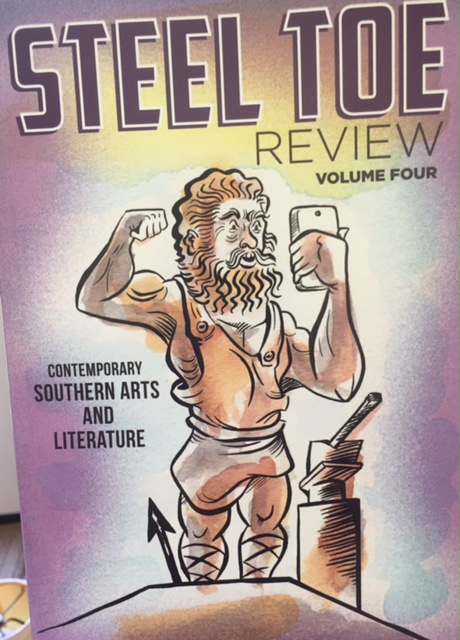
“And All Around, the Withered” was published in Steel Toe Review in January 2017.

Recording of “To the Lovely Green Beetles Who Carried My Notes into the Afternoon”

“To the Lovely Green Beetles Who Carried My Notes into the Afternoon” first appeared in riverSedge Volume 29, Issue 1, released in October 2016. It is also included in my chapbook, From Every Moment a Second, available for pre-publication order through tomorrow, August 11, from Finishing Line Press.


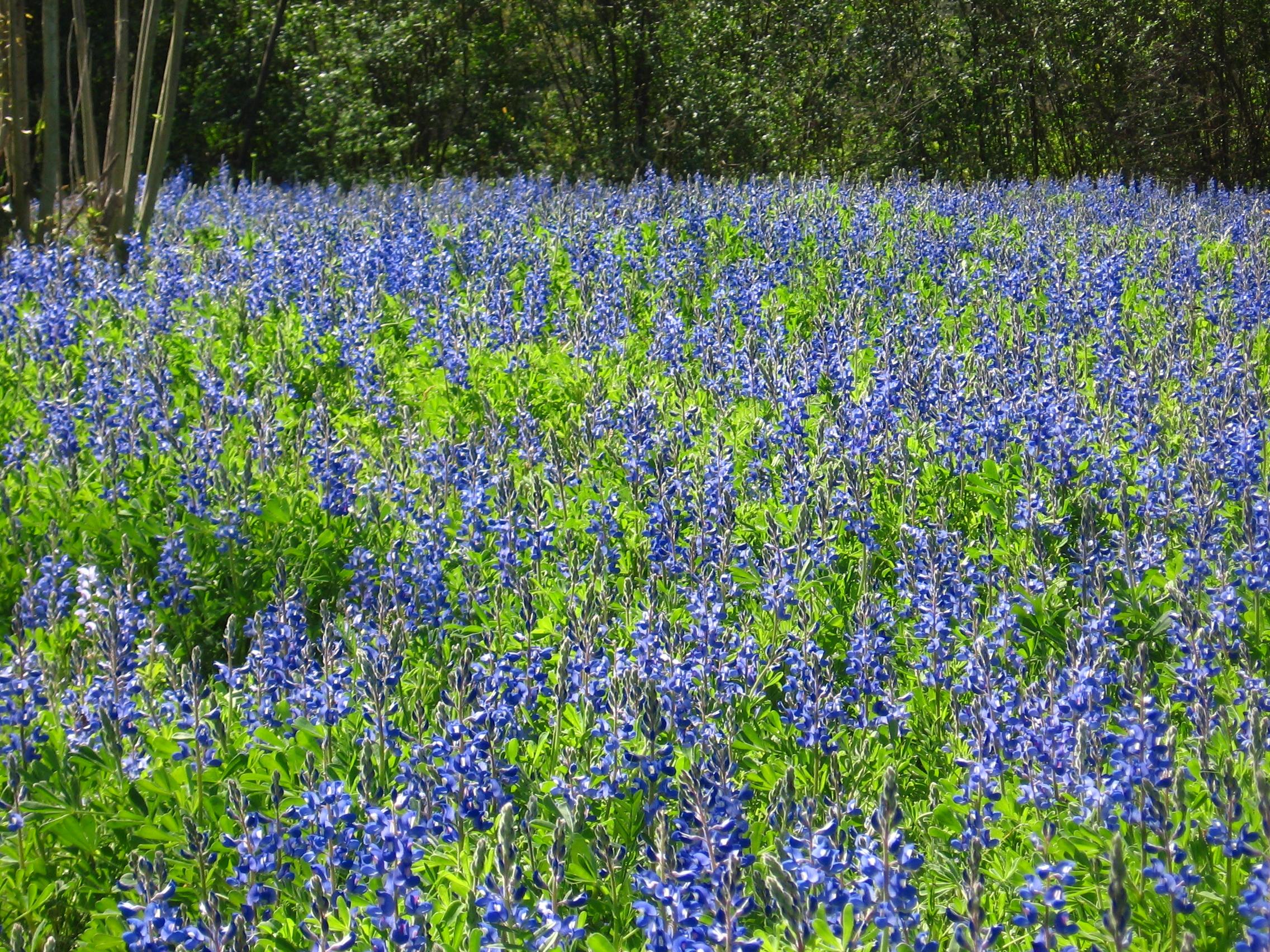
Poem up at Blue Bonnet Review

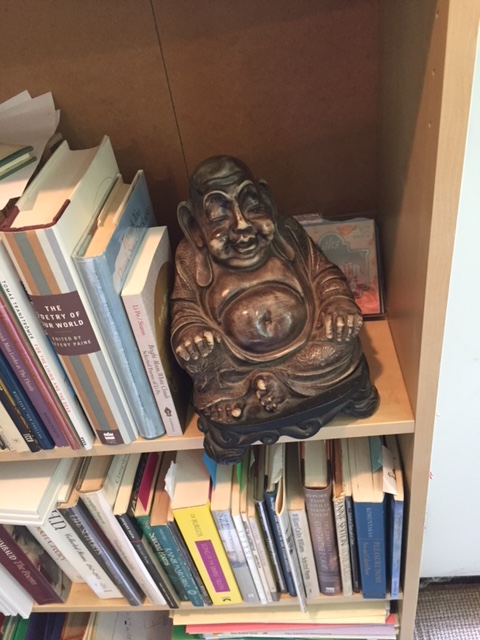
My poem “Buddha’s Not Talking” is live at Blue Bonnet Review.
With gratitude to editor Cristina Del Canto for taking this piece.

Recording of “To the Lovely Green Beetles Who Carried My Notes into the Afternoon”

“To the Lovely Green Beetles Who Carried My Notes into the Afternoon” first appeared in riverSedge Volume 29, Issue 1, released in October 2016. It is also included in my chapbook, From Every Moment a Second, now available for pre-publication order from Finishing Line Press.


Please note:  prepublication sales determine the print run, which means this stage is crucial in terms of how many copies will be printed and the number of copies I’ll receive as payment. So if you feel inclined to help this poet in his commercial endeavor (which does seem a tad strange), and are able, please purchase your copy during this period, which runs through August 11. The book’s tentative release date is October 6.


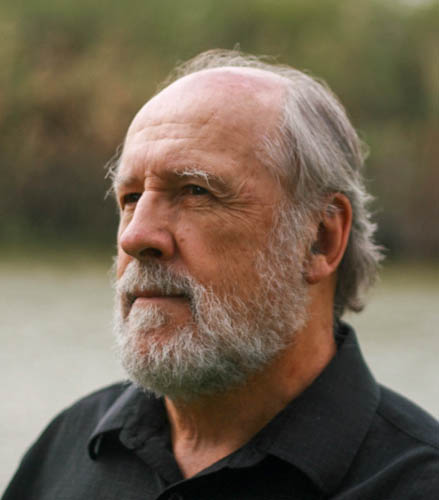
Q&A with Poet Chip Dameron

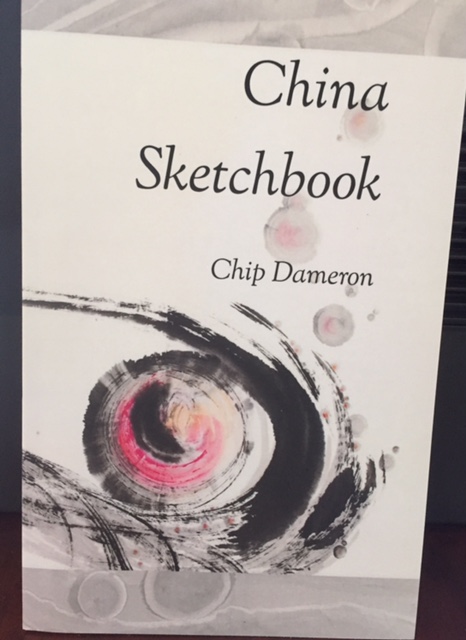
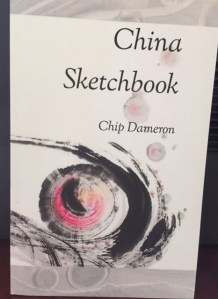
Q&A with Chip Dameron, author of China Sketchbook

Would you mind sharing a bit about your background?

I started writing poems in college and have been been playing with language ever since. To support my family, for many years I taught writing and literature at UT Brownsville and held several administrative positions. Now I am writing full time.

Which three words best describe your poetry?

Precise. Vivid. Imagistic.

Tell us about China Sketchbook. What was its genesis?

A few years ago my wife and I took a month-long trip across China, which was a stunning experience. I’ve long admired Chinese poetry and knew a little Chinese history, so to observe how China is transforming itself and to meet many of its people made for an unforgettable journey. I began drafting poems along the way, and I continued after returning home. China Sketchbook contains 27 poems, and Virtual Artists Collective was kind enough to publish it under its Purple Flag imprint in December 2016.

I’m sure you’re frequently asked this question, but I can’t resist: What carries you from the blank page to a poem? What is your process?

Usually I sit down to explore something I’ve seen or heard or experienced or thought about. What images can I find to get the poem started? Where do they want or need to go? Which words support the movement of the poem and give it the energy it needs to become a language-object that others might enjoy experiencing? Through this process I hope to create poems that are authentic and original.

A few months ago you published At Paisano Ranch, a micro-chapbook, with Origami Poems Project. What can you tell us about this book?

In September 2016, I began a four-month stay as writer-in-residence at Paisano Ranch in Austin, once owned by the legendary Texas writer J. Frank Dobie. You and I met at the ranch several times and talked about poetry, and I was intrigued by the charming micro-chapbook that you had published through Origami Poems Project called You Break What Falls. So I took six poems I had written about my experiences at the ranch and sent them off to OPP, and the editors accepted the micro-manuscript and published At Paisano Ranch in early December. I encourage poets and readers to visit the website, https://origamipoems.com, and download for free any of the micro-chapbooks that interest them. Poets may also wish to submit their own micro-manuscripts of six short poems.

What advice do you have for new poets?

Don’t be in a great rush to publish your work. Work at the craft of creating your poems, read your drafts out loud, and don’t be afraid to tinker with your poems, and even make extensive changes. You are engaging in the process of finding your distinctive voice, your distinctive style. When you’ve found that voice and style, you are ready to go public. And when you experience rejection, as all poets do, keep submitting your poems, and keep writing new ones.

Which artists inspire you? Whose work do you read, listen to, gape at, admire, envy?

I’ve long admired the great American poets of the past, including Whitman, Dickinson, Frost, and Stevens. More recent sources of inspiration include Seamus Heaney, Naomi Shihab Nye, and Billy Collins. And even through translation, which can’t do full justice to the original language, I’ve been amazed at the power of the classical Chinese poets, such as Li Bai, Du Fu, and Tao Qian.

What are you working on now, what’s in the pipeline, and what can we look forward to in the coming months?

I’ve recently completed a collection of poems called Mornings with Dobie’s Ghost, which is scheduled for publication in 2018 by Wings Press. I wrote the 35 poems while living and working at Paisano Ranch. And I’m in the middle of drafting a novel—my first—which has been a most challenging but stimulating experience.

Bio: Chip Dameron is the author of nine collections of poetry and a travel book. His poems and essays on contemporary writers have appeared in the Mississippi Review, Southwestern American Literature, San Pedro River Review, Puerto del Sol, Hayden’s Ferry Review, New Orleans Review, Borderlands, and many other journals and anthologies, as well as publications in Canada, Ireland, Nigeria, India, China, Thailand, and New Zealand.

Website: https://www.cdameron.com

YouTube reading at Malvern Books with Larry D. Thomas

Youtube reading at Malvern Books

Reading at the Friendswood Public Library