Parting from Wang Wei (after Meng Haoran)

P1010508


Parting from Wang Wei (after Meng Haoran)

These quiet days are ending
and now I must leave.

I miss my home’s fragrant grasses
but will grieve at parting – we’ve

eased each other’s burdens on this road.
True friends are scarce in life.

I should just stay there alone, forever
behind the closed gate.

* * *

“Parting from Wang Wei” is included in my micro-chapbook, No Eye But The Moon’s, available via free download at Origami Poems Project.

The transliteration on Chinese-poems.com reads:

Quiet end what wait
Day day must go return
Wish seek fragrant grass go
Grieve with old friend separated
On road who mutual help
Understanding friend life this scarce
Only should observe solitude
Again close native area door

file5971307479422

My New Micro-Chapbook is Available via Free Download

no-eye

My micro-chapbook, No Eye But the Moon’s: Adaptations from the Chinese, is now available via free download from Origami Poems Project. And please peruse their site for other titles and folding instructions.


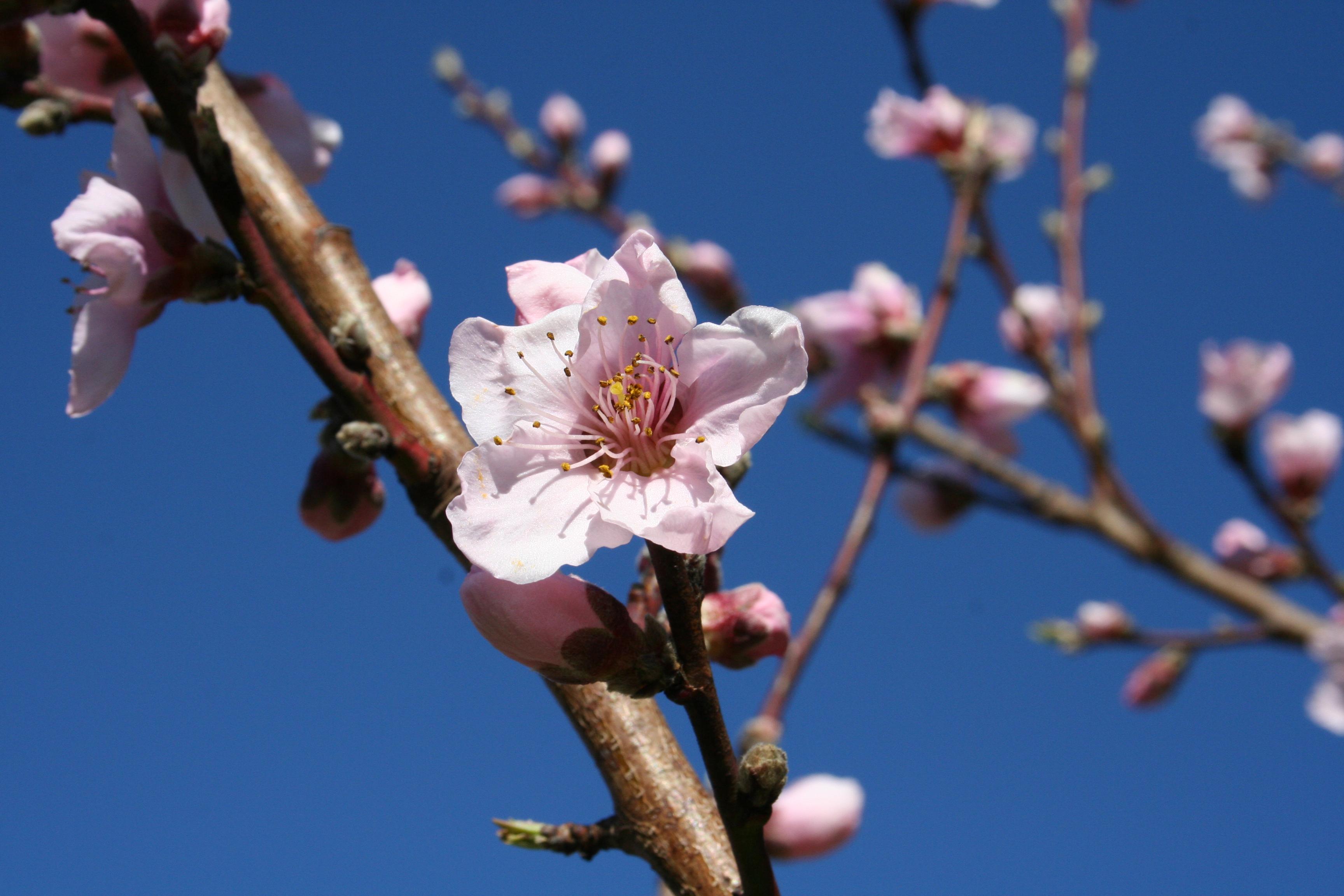
Peach Blossom (after Li Po)

file0001629991807
Another adaptation, which first appeared in April, 2014.

Peach Blossom (after Li Po)

Ask why I stay on the green mountain
and I smile but do not answer; my heart rests.
A peach blossom floats downstream –
Heaven and earth, apart from this world.

The transliteration on Chinese-poems.com is as follows:

Ask me what reason stay green mountain
Smile but not answer heart self idle
Peach blossom flow water far go
Apart have heaven earth in human world

There the poem is titled “Question and Answer on the Mountain.”

IMG_5780

Palinode (translation, passway, glass)

window

Palinode (translation, passway, glass)


(translation)

What falters in translation? The dove’s silhouette resides
on the window three months after the sudden refusal. I
observe wingprints, the skull’s curve, a history of assumptions
angled in the moment of impact. And after, residue. Light’s
incident rests. One body whispers another’s shape and the
next rumbles through the narrowing passway. Traitorous,
I call it fact. I name it truth, and naming it, reverse the coat.

(passway)

I name it truth, but considered denial, root of the renegade’s
term. I have a bird to whistle and I have a bird to sing. Misperception
in flight. Betrayal’s gate, unhinged. What comes next? Sunlight
slants through the window each morning, and departs, bending
in reversal. Stones all in my pass. Dark roads. Another naming,
another transition. Trials waged in the grammar of refraction.
The deflected word.

(glass)

The deflected word reciprocates and the sky opens, outlining
its missing form. I have pains in my heart, they have taken my
appetite.
Derived from wind, from eye, from hole. Once through,
what then? Mention archetype, and my world dims. Mention
windows, and I see processions and enemies lined along the way.
Boys, please don’t block my road. We select certain paths, others
choose us. Wingprints on glass.

Notes: italicized selections are from Robert Johnson’s “Stones in My Passway.”

This piece first appeared, in slightly different form, in ditch, in January 2014.

alley

Huazi Ridge (After Wang Wei)

file4491335295956

Huazi Ridge

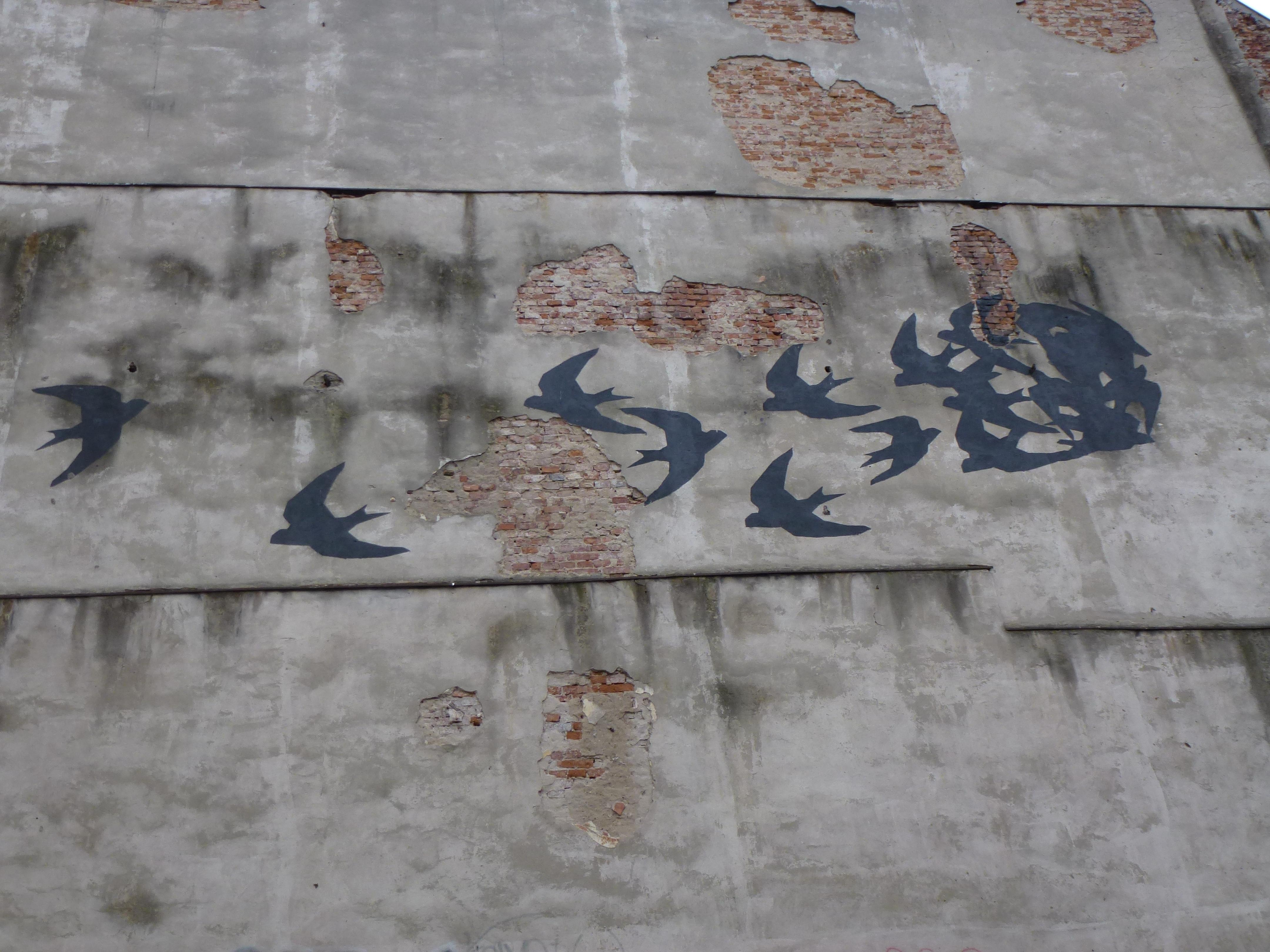
Limitless birds merging
with the autumn-colored hills
all along Huazi Ridge
this sadness, too, without end

Another adaptation. I hope that I’ve not strayed too far from the original’s tone.

The transliteration on Chinese-Poems.com offers:

Fly bird go no limit
Join mountain again autumn colour
Up down Huazi Ridge
Melancholy feeling what extreme

This version of “Huazi Ridge” first appeared in June, 2014.

P1000173

Spring Night (after Wang Wei)

file4401311417052
Spring Night (after Wang Wei)

Among falling devilwood blossoms, I lie
on an empty hill this calm spring night.
The moon lunges above the hill, scaring the birds,
but they’re never quiet in this spring canyon.

Another try at an old favorite…

I consider this adaptation rather than translation, but perhaps appropriation or even remaking might be more accurate.

Here’s the transliteration from chinese-poems.com:

Person idle osmanthus flower fall
Night quiet spring hill empty
Moon out startle hill birds
Constant call spring ravine in

So many choices, none of them exactly right, none of them entirely wrong. How does one imply idleness, what words to use for “flower” (blossom? petal?), or for that matter, “fall” (descend, flutter, spiral)? And how to describe a moonrise that scares the constantly calling birds? My first attempt began:

“I lie among the falling petals”

but it seemed vague. The word “osmanthus” fattened my tongue, or so it felt, but the osmanthus americanus, otherwise known as devilwood or wild olive, grows in parts of Texas. So I brought the poem closer to home.

I considered naming the birds (quail came to mind) but decided against. In this case the specificity felt somehow intrusive.

My hope is that I’ve managed to amplify, in some small way, previous iterations, and that while the edges are still a bit blurred in morning’s first light, perhaps they’ll become slightly crisper by the evening.

“Spring Night” made its first appearance on O at the Edges in April, 2014.

file8981286030058

Autumn Winds (after Li Po)

IMG_1951

Autumn Winds (after Li Po)

Clear autumn winds swirl
below the moon’s glow,
scattering the gathered leaves.
The startled crows return.
When will we see each other again?
This hour, this lonely night, my feelings grow brittle.

The transliteration on Chinese-poems.com reads:

Autumn wind clear
Autumn moon bright
Fall leaves gather and scatter
Jackdaw perch again startle
Each think each see know what day
This hour this night hard be feeling

“Autumn Winds” first appeared in September, 2014. I started the adaptation in the heart of summer, hoping that it would offer a respite from the unrelenting Texas heat…

Bird Fall MGD©

Cedar Grove (after Wang Wei)

file000675350848

Cedar Grove (after Wang Wei)

I sit alone among the cedars,
play my guitar and hum.
In this dark forest
no eye spies me but the moon’s.

My take on Wang Wei’s “Bamboo Grove,” from this transliteration copied somewhere along the way:

alone sit dark bamboo among
strum lute again long whistle
deep forest man not know
bright moon come mutual shine

IMG_1533

“Cedar Grove” made its first appearance in March 2014. I adapted it to fit my circumstances…

You might find the Wikipedia entry on Wang Wei of interest.


Lament for Five White Cat (after Mei Yao-ch’en)

file3461249385398

Lament for Five White Cat (after Mei Yao-ch’en)

Five White cat always made sure
no rats gnawed my books,
but this morning Five White died.

On the river I offered up rice and fish,
and buried you in its lazy currents,
chanting my lament. I could never neglect you.

One time you caught a rat
and carried it squealing around the yard
to frighten all the other rats
and keep my cottage clear of them.

We’ve shared space aboard this boat,
and although the food is meager
it’s free of rat piss and droppings
because you were so diligent,
more so than any chicken or pig.

Some people speak highly of horses,
saying nothing compares to them or donkeys.
But we’re done with that discussion!

My tears prove it so.

The transliteration from Chinese-poems.com:

Self have 5 white cat
Rat not invade my books
Today morning 5 white die
Sacrifice with rice and fish
See off it at middle river
Incantation you not you neglect
Before you bite one rat
Hold in mouth cry around yard remove
Want cause crowd rat frightened
Thought will clear my cottage
From board boat come
Boat in together room live
Dry grain although its thin
Evade eat drip steal from
This real you have industriousness
Have industriousness surpass chicken pig
Ordinary person stress spur horse drive
Say not like horse donkey
Already finish not again discuss
For you somewhat cry

A Song Dynasty poet, Mei Yao-ch’en (or Mei Yaochen) died in 1060. His great poems live on.

This adaptation first appeared in November 2014, and is for one of my favorite poets, Jeff Schwaner, whose Mei Yao-ch’en sequence has entertained, inspired and enlightened me. You can find the sequence here: http://jeffschwaner.com/mei-yao-chen-sequence/

DSC_1646

Sheng-yu’s Lament (after Mei Yao-ch’en)

DSC_1243

Sheng-yu’s Lament (after Mei Yao-ch’en)

First heaven took my wife,
and now, my son.
These eyes will never dry
and my heart slowly turns to ash.
Rain seeps far into the earth
like a pearl dropped into the sea.
Swim deep and you’ll see the pearl,
dig in the earth and you’ll find water.
But when people return to the source,
we know they’re gone forever.
I touch my empty chest and ask, who
is that withered ghost in the mirror?

The transliteration on Chinese-poems.com reads:

Heaven already take my wife
Again again take my son
Two eyes although not dry
(Disc) heart will want die
Rain fall enter earth in
Pearl sink enter sea deep
Enter sea can seek pearl
Dig earth can see water
Only person return source below
Through the ages know self (yes)
Touch breast now ask who
Emaciated mirror in ghost
SAM_0841

Originally posted in December, 2014.