My Poem “Nine Ways of Shaping the Moon” is on Other People’s Flowers Podcast

My poem “Nine Ways of Shaping the Moon” is featured on the Podcast Other People’s Flowers. I’ve never heard this poem read by someone else. It’s good to hear a different voice. Many thanks to Hugo Gibson for recording this version. You may find the podcast at these various links:

https://itunes.apple.com/gb/podcast/other-peoples-flowers/id1351210915?mt=2https://www.podbean.com/podcast-detail/tw73f-672dc/Other-People’s-Flowers-Podcasthttps://anchor.fm/other-peoples-flowershttps://player.fm/series/series-2182071https://www.stitcher.com/podcast/other-peoples-flowers

Nine Ways of Shaping the Moon

                                         for Lissa

1
Tilt your head and laugh
until the night bends
and I see only you.

2
Weave the wind into a song.
Rub its fabric over your skin.
For whom does it speak?

3
Remove all stars and streetlights.
Remove thought, remove voice.
Remove me. But do not remove yourself.

4
Tear the clouds into threads
and place them in layered circles.
Then breathe slowly into my ear.

5
Drink deeply. Raise your eyes to the brightness
above the cedars. Observe their motion
through the empty glass. Repeat.

6
Talk music to me. Talk conspiracies
and food and dogs and rain. Do this
under the wild night sky.

7
Harvest red pollen from the trees.
Cast it about the room
and look through the haze.

8
From the bed, gaze into the mirror.
The reflection you see is the darkness
absorbing your glow.

9
Fold the light around us, and listen.
You are the moon in whose waters
I would gladly drown.

* * *

First posted in October 2014, and again on Valentine’s Day in 2016, 2017 and 2018, “Nine Ways of Shaping the Moon” also appears in my chapbook, If Your Matter Could Reform. Coincidentally, my poem is paired with one by Veronica Haunani Fitzhugh, with whom I am acquainted via this blog and the Tupelo Press 30-30 challenge. I’m very pleased and proud to have my poem read alongside hers.

While Reading Billy Collins at Bandera’s Best Restaurant, Words Come to Me


While Reading Billy Collins at Bandera’s Best Restaurant, Words Come to Me

And having no other paper at hand,
I scrawl on a dollar bill, “I want to speak
the language of smoke.” My invisible friend
interrupts. That is a white man’s dilemma.

 At least you have a dollar and a pen.
“But I’m only half-white,” I reply, “with half
the privilege.” Then you must bear double
the burden,
he says. This version of math

twists my intestines into a Gordian knot,
as does the concept of half equals twice,
or in terms I might better comprehend,
one beer equals four when divided by color

or accent and multiplied by projection.
The unsmiling waitress delivers my rib-eye
as I’m dressing the salad, and the check appears
just after the first bites of medium-rare beef

hit my palate, certainly before I can answer the
never-voiced question “would you like dessert?”
Cheese cake, I would have said. Or cobbler. And I
seldom turn down a second beer. This too, I’m told,

is another example of my unearned entitlement. I
contemplate this statement, scribble a few other
phrases on bills, drop them on the table, and walk out,
wondering which direction to take, which to avoid.

* * *

“While Reading Billy Collins at Bandera’s Best Restaurant, Words Come to Me” was a finalist last fall for the Slippery Elm Prize in Poetry. It was published in Slippery Elm (print only) in December 2017. You may be amused to hear that last October I had lunch in Bandera with one of the other finalists in this competition, but not at the restaurant featured in the poem. The photo is of a local bar, not the eatery, but it offers some of the flavor of the town.

Poem Up at Vox Populi

My poem, “The Question is Never,” is up at Vox Populi, and has been paired with Allison Skinner’s essay on the psychological effects of dehumanizing language. Thank you, Michael Simms, for taking this poem.

Yesenin

image

Yesenin

Respite, involuntary and gentle
circling one’s
collar, a touch barely felt, renewed.

Or, the other turns,
belying expression and the halted voice.

The recursive window, closing.
A final poem in blood.

And beyond the glass? The face behind
the indifferent mask
designs its own

smile, risking everything
as the chair’s leg tilts,

inertia become constriction,
the taut lapse begun.

* * *

A fascinating poet, Sergei Yesenin died nearly 90 years ago. You might check out his bio on wikipedia.

image

If You Drop Leaves


If You Drop Leaves

If you drop leaves when she walks by,
does that signify grief for those
cut down early,

or merely drought?
How easily we abandon and forget.

Yet a whiff of lemon verbena or the light
bouncing from a passing Ford
can call them back,

tiny sorrows ratcheted in sequence
above the cracked well casing

but below the shingles
and near the dwindling shade
tracing its outline on the lawn.

And what do you whisper
alone at night within sight
of sawn and stacked siblings?

Do you suffer anger by way
of deadfall or absorption,

bark grown around and concealing
a penetrating nail, never shedding
tears, never sharing one moment

with another. Offered condolences,
what might you say? Pain earns no
entrance. Remit yourselves.

“If You Drop Leaves” was published at Bad Pony in November 2017. Many thanks to editor Emily Corwin for taking this piece.

Window Open, Closed

black-curtains2

Window Open, Closed

We enter daylight in the shape
of praise, little words

billowing through wire mesh. Across
the highway a busboy questions time

and the concept of never, while
someone plucks leaves from the bay

tree and plans her day. Roger Bacon
longed to manipulate the inner essence

of inanimate objects, to harness their force,
and a lonely man swallows prescription drugs

deliberately, releasing their attributes over time.
My eyes redden from juniper pollen as the moon

spins invisibly above our roofs, tugging at the
clouds. I once traced in a building of music

the organ’s sound to the woman I longed
to attract. Now, the window prevents the passage

of solids, but waves penetrate. I spread my fingers
across the glass, but feel no vibrations. Distant

sirens announce a procession of cause and intent,
of carelessness and indecision. Somewhere a voice rises.

* * *

This originally appeared during Bonnie McClellan’s 2015 International Poetry Month celebration, and is included in The Circumference of Other, my offering in the Silver Birch Press chapbook collection, IDES, available on Amazon. A recording of the poem may be found on Bonnie’s site.

ides front cover 92915

In This I Find You Again

image

In This I Find You Again

If there is truth to be found
let someone find it. The yellow

rose rests in its jar. Day and
night it looks out through the glass

at the world of altered
lines, sensing, perhaps, beauty

through its failure to prevent
fading. Each morning I wake

and think of you. The hibiscus
on our patio readies itself to blossom,

but pauses as if to prolong
the moment, waiting for a reason

to end its denial. Then it unfolds.
You are all I care to find.

* * *
Written in the 80s, this last appeared here in December 2016.

image

Karl Taro Greenfield on Being a ‘Minor’ Writer

In this essay on Lithub, Karl Taro Greenfield notes that not every writer is destined for greatness.

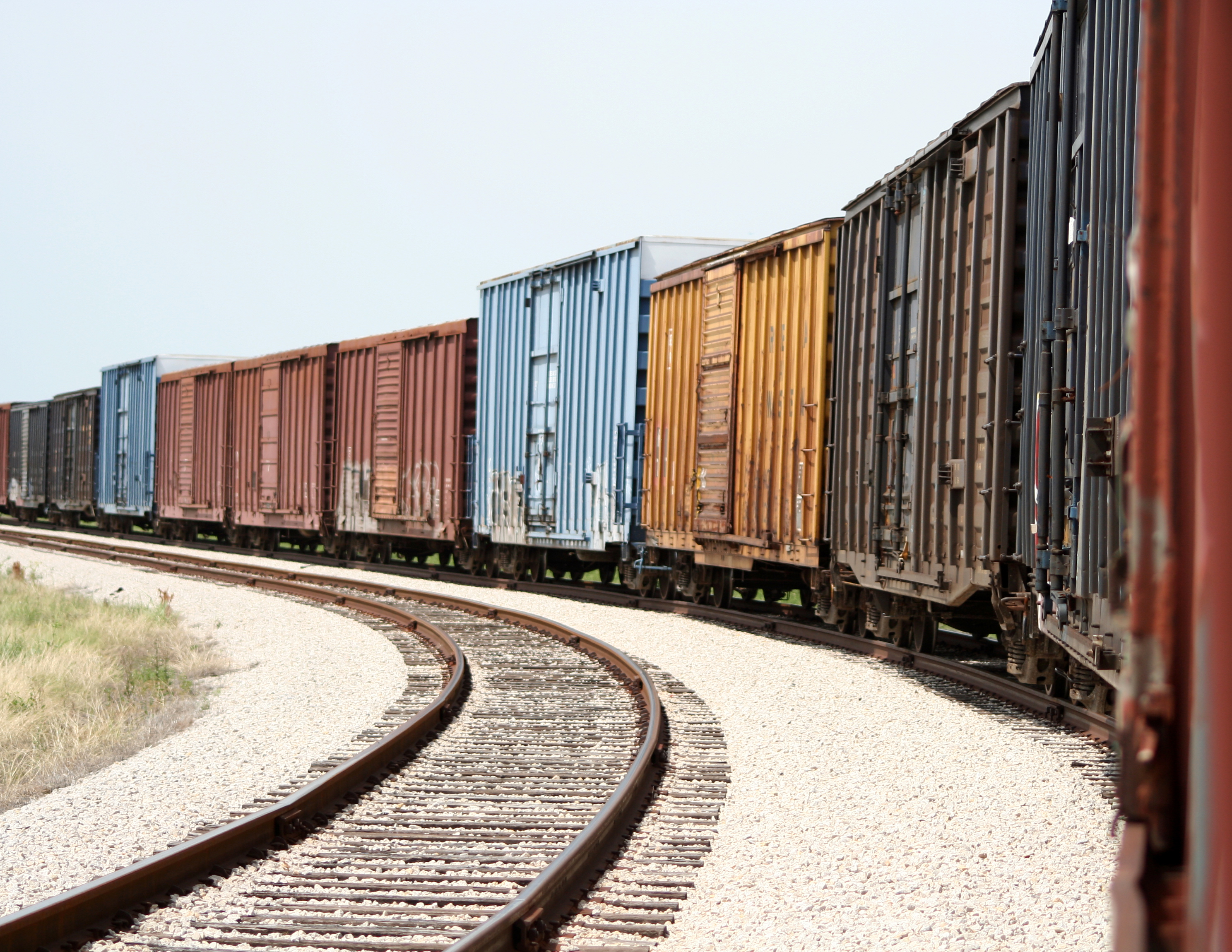
The Trains I Know

file000923469902

The Trains I Know

The trains I know
seek solitude
in darkness,

they wear
wind and cold
with pride,

are never
lonely.
Sometimes they

sing too loud,
or mourn
harshly a

star’s fall, but
they never
deny their

purpose: to
draw between
and connect,

to witness and
serve, to bear
and endure

our unsought
burdens
to the end.

* * *

file0001825830910

“The Trains I Know” last appeared here in July 2015.