The Gift


The Gift 

 What lasts longer than ink
or stone or a pond’s ripple?

I want to give you
the deepest green.

Memory circles back,
highways turn

to dirt, the dead blossom
in children’s voices.

Place this carnation in a vase.
Swallow these pills.

Don’t move, don’t speak.
Let me do this.


“The Gift” was first published in Brave Voices in January 2019.Many thanks to Audrey Bowers and her editorial staff for taking this piece.


Baking Bread


Baking Bread

I would knead you in the afternoon,
in the warmth of a still room,
starting high at the shoulders,
one finger sliding down your spine,

my lips following, tracing the path
of a hummingbird’s flight. Oh, my love,
circumstance and distance, floods and
wildfires, will never truly douse our light.

I wait as the dough rises, and think
in the languages of yeast and water
and flour and salt, how my hands

will feel at your waist, how our day
falls into night, our love firming,
ever expanding through the rising heat.


“Baking Bread” first appeared in Ristau: A Journal of Being in January 2019. Many thanks to editor Bob Penick for taking this piece.

Which Poet, Which Beer (2)

pint

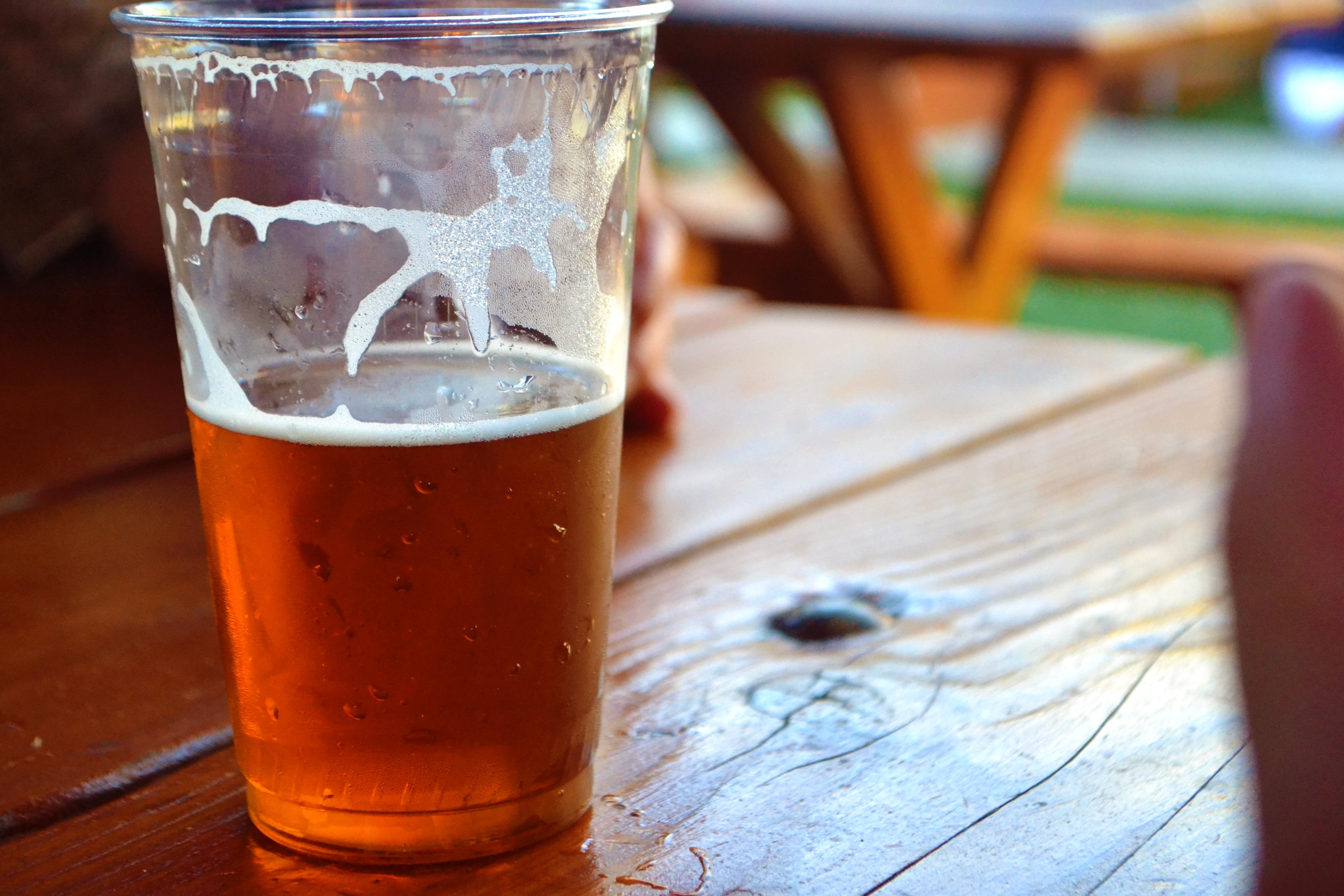
Tastes change. In my younger years I preferred sweeter brown ales, eschewed hoppier, bitter beverages, and seldom branched out. Nowadays, I lean heavily towards the bitter, and when the opportunity presents itself, feel compelled to sample the unknown. Thus when I spied Alaskan Brewing Company’s Alaskan Jalapeño Imperial IPA on tap, I had no choice but to order a pint. We may not normally place the words Alaska and jalapeño alongside each other, but if this Imperial IPA is any indication, perhaps we should. With an odor of hops and capsicum, it felt smooth on the tongue, a little malty, even earthy. Not  complex at the outset, but subtle, defying definition and developing over time, in the way a good poem develops. My only complaint would be the lack of heat. But hey, I’m from Texas, and we do jalapeños. This is a beer of multiple cultures, a blend of distinct identities. I think of Joan Naviyuk Kane, and her first book, The Cormorant Hunter’s Wife, in which she writes in “Antistrophic”

Instead of out, I am in,
Trying at the old habit of imperfect definition
As well as the less familiar,
Between falling gold

Kane’s narrative, her mythology and landscape, are not mine, yet they invite me in and envelop my senses, allowing synthesis, acceptance, to occur.

But sometimes I crave the unadorned. The Lone Pint Brewery’s Yellowrose IPA, a single malt, single hop concoction, startled me. Surprisingly mellow in the mouth, it imparts grapefruit and perhaps pineapple with a hint of something I can’t readily identify. Strong yet delicate, infinitely interesting, Yellowrose is most definitely a celebration of simplicity and craft – a few ingredients combined to create magic. Which may also describe Christina Davis’s book An Ethic. Spare in nature, her work transcends the limits of language, the borders of the page. Her poems blossom anew with each reading, and the farther away I move from them, the more I long to return:

”All Those That Wander,” in its entirety:

After the ark survived the Flood,
it was taken apart
to be made into cages.

This is the nature of religion.

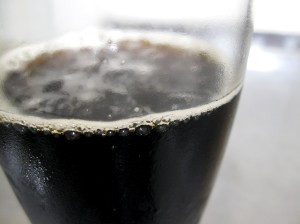
Of course my curiosity leads me down other paths, too. Infamous Brewing Company’s Sweep the Leg peanut butter stout pours with a small head, and tastes of rich malts and coffee, with a little cocoa and, of course, subtle peanut tones. An opaque, dark brown or black, with minimal carbonation, exuding stillness, it isn’t quite what I anticipated, with the peanut butter flavor a tad muted. But the mouthfeel is spot on, and the aftertaste lingers, leaving me requesting more of this unlikely combination, and reminding me of Charles Simic’s  Dime-Store Alchemy: The Art of Joseph Cornell, in which he imparts, through prose poems, the experience of viewing Cornell’s enigmatic art. Nothing is quite as you expect it should or could be, yet you go on, somehow understanding. He writes in “Secret Toy”:

In a secret room in a secret house his secret toy sits
listening to its own stillness.

Simic offers openings into Cornell’s art, explains the unexplainable without explanation. I stare into the pint of Sweep the Leg, and find my own stillness. I read Simic and find another. This is what I seek in poetry, what I want in good beer. I have found it.
 

blackbeer

“Which Poets, Which Beer (2)” has appeared here several times. You will be relieved to hear that I am still conducting research in these matters.

Poem Up at OPEN: Journal of Arts & Letters


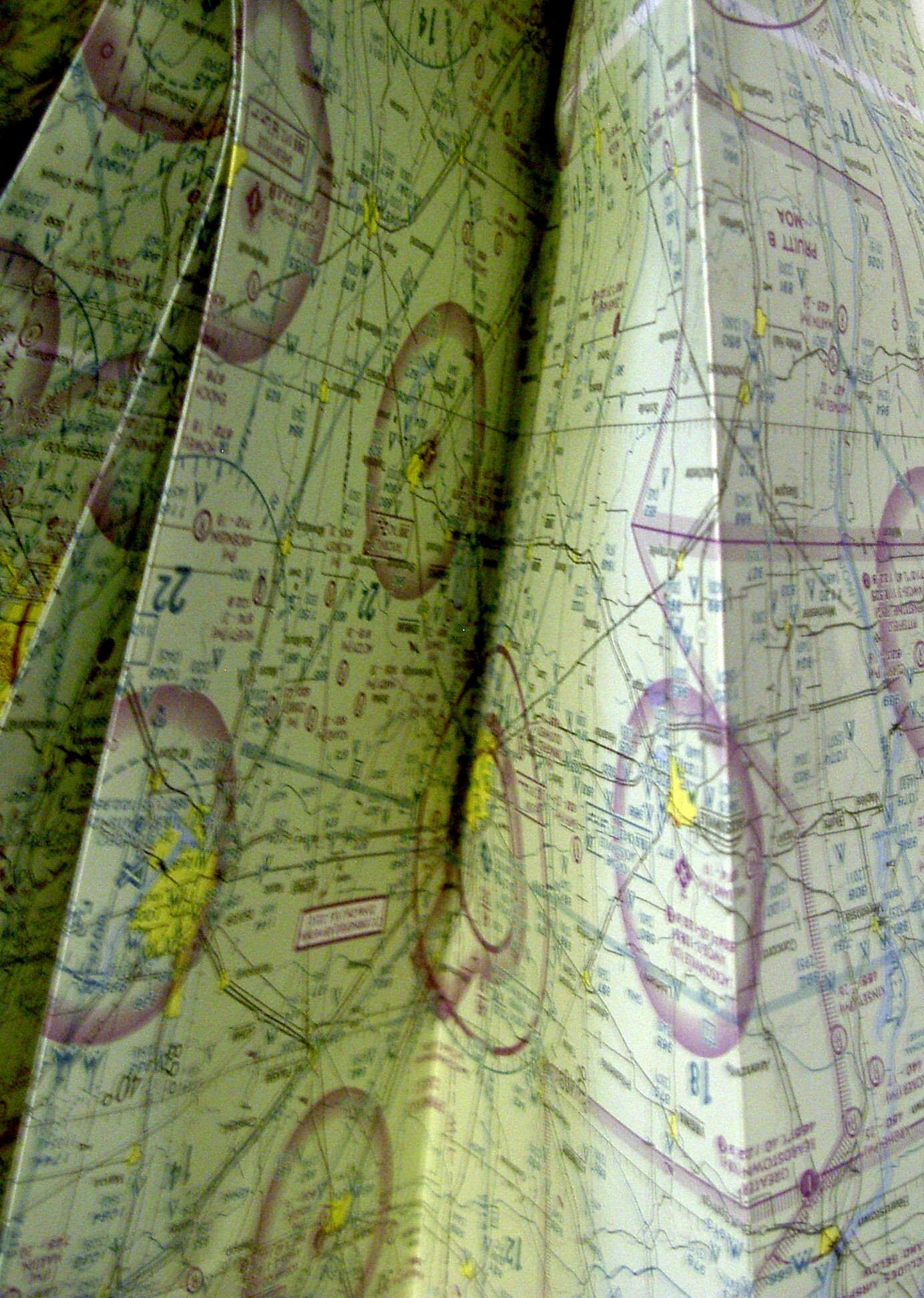
My poem “Reticent as Ever I Follow the Map” is featured at OPEN: Journal of Arts & Letters. Thank you, Jeff Streeby, for taking this piece.


Bamboo Flute


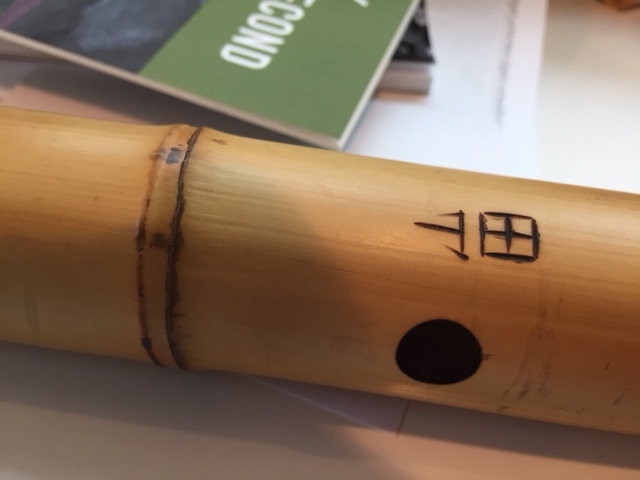
Bamboo Flute

I am studying simplicity
in the way a rattlesnake
watches a field mouse,

which means of course
that I am doing it all wrong
and making this much more

difficult. Today’s lesson
is humility: I achieve no
tone from this damn bamboo

flute, no matter how I adjust
my mouth and wind. Go
watch football
, the voices

say. Instead I go to the grocery,
buy my wife’s favorite
wine, and later pour her

a glass and offer Irish cheddar
with rice crackers and a few
grapes. I sip beer, pick up

the flute, and sound a
wavering D followed by a goose
fart and spitting hamsters.

Progress, at last! Now
back to the lesson. Relax.
I’m nailing this simplicity thing.


* * *

“Bamboo Flute” first appeared in The Larger Geometry: poems for peace, available at Amazon. This anthology of poems that “uplift, encourage and inspire,” features poets from five countries and three continents. Published by the interfaith peaceCENTER of San Antonio, Texas, a 501(c)(3) nonprofit organization. All proceeds from the sale of this anthology go to benefit the peaceCENTER.

I’m pleased to have had a small role in selecting the poems.

Contributing poets include Lynne Burnett, Charlotte Hamrick, Daryl Muranaka, Stephanie L. Harper, Sudhanshu Chopra, Texas Poet Laureate Carol Coffee Reposa, Michael Vecchio, Rebecca Raphael and others.

Dickinson, Texas


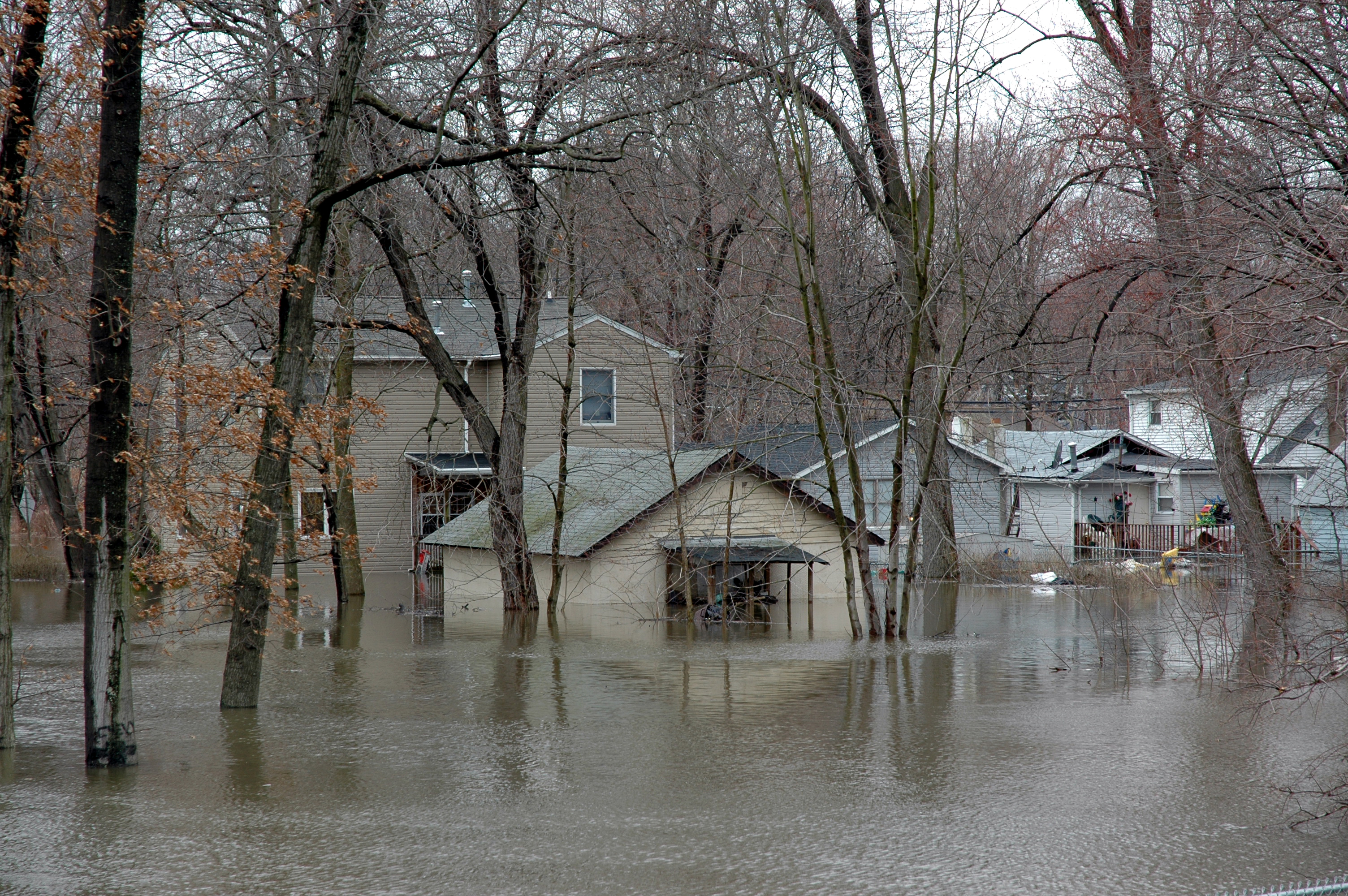
Dickinson, Texas

Yellow light seeps through the clouds
pretending the storm has passed.

I am drawn to this falsehood like matches to
the abrasive box-end, a swatter to the fly.

Old women wait in the creeping water,
confidence draining with every risen

inch, their ears straining to believe.
As hill meets dusk and torn sky,

where heroes reveal their shared voice,
fear’s black finger scratches the roof.


“Dickinson, Texas” first appeared in Ristau: A Journal of Being in January 2019. Many thanks to editor Bob Penick for taking this piece.

Jackboy’s Lament

Jackboy’s Lament

We define ourselves in movement,
in the uncertain light and forms

shuddering by: fences, the nameless
wave, odors, dark water.

Look at the hills, their lines stretched taut like
smiles, or voices torn from the earth.

Or the creek below us – how its mouth never closes
yet nothing emerges but a shadow

on the wind. Two questions arise,
leaving only the abandoned to consider.

In our solitude, only my self is missing.


“Jackboy’s Lament” made its first appearance here in October 2015. I started the poem about a dozen years ago, after a drive through the Texas hill country with Jackboy the cattledog, who was quite the philosopher and humorist. This is what emerged after several conversations and much reflection over his circumstances (abused, abandoned, rescued). Jack didn’t talk much, but he thought. Oh, how he thought.

vultures


Bowls, Emptied

bowls


Bowls, Emptied

I picture them always separate, unfilled, never nested among the others.

In descending order: yellow, green, red. The missing blue.

Concave, hollow, hemispherical, freed of conscience.

Other images – the skies, denser with age.

You stirring with a wooden spoon, cigarette smoldering nearby.

Or the itinerant smell of new sod and wet soil.

My knee aches whenever I traverse stairs or turn quickly.

Which holds more grief, these vessels or memory’s lapse?

Inverted, their capacity remains constant as the heavens, dark or light.

The paling dome, a memory of freshly pulled onion.

Squatting, you would patiently pluck weeds.

I bite my tongue and kneel to place the flowers.

Near this stone, where the crickets chirr and dew worms burrow.

By this mound and these blades of near-silent grass.

Where I accept this moment’s offering. And you do not.


OLYMPUS DIGITAL CAMERA

“Bowls, Emptied” first appeared on the blog in January 2016, and was subsequently published in Galway Review in December 2016.

In Praise of Rain (with recording)

file00093561951


In Praise of Rain

Which is not to say lightning or hail.
Sometimes I forget to open the umbrella

until my glasses remind me: Wake up, you’re
wet! If scarcity breeds

value, what is a thunderhead worth
in July? A light shower in August?

Even spreadsheets can’t tell us.


***

We’ve had rain lately…

“In Praise of Rain” is included in my micro-chapbook, You Break What Falls, available via free download from the Origami Poems Project.

file8541339345592


Scarecrow Pretends

scarecrowfield

Scarecrow Pretends

How may I claim another’s earth for myself? My perpetual
stance invites occlusion of the senses and a certain disregard
for dignity; I flap in the breeze and bits of me scatter across
the fields. Sze asks if we know a bird’s name in ten
languages do we know any more about the bird. I say no,
but I am a species of stitched remnants and expectation,
a race of one. Genderless, my hollow name holds no secrets,
no history. If I called myself Hudson would anyone recognize
my stuffing for what it is not? What flows through my clothing
but rags, straw, the useless and unwanted. Insects and their feces.
The unearned, the unwarranted. The underclass. Folly. Design.
Gift by delusion. Does attracting more crows than I deter negate
my existence? And which am I? A river? A man? An effigy, one
perception, or another? I do not frighten, but welcome. Speak
louder, that we may ignore our insignificance, our true names.


“Scarecrow Pretends” was published in The Slag Review in January 2017, and a few months later was mentioned in an article in the Long River Review’s blog: “Scarecrow Pretends: Robert Okaji’s Metallurgy.