Some Dogs Are Larger Than Others

ozzy


Some Dogs are Larger Than Others

How he stares
at you,

relentless
in his desire,

offering
belly to scratch

and head to pet
just when you most

need them,
even if

you don’t know it,
then curling

against you, saying
in the language

of warmth and fur,
this, just this.

* * *

“Some Dogs are Larger Than Others” first appeared here in January 2017.


Two Poems in Voices

I’ve added the link to the journal.

robert okaji's avatarO at the Edges

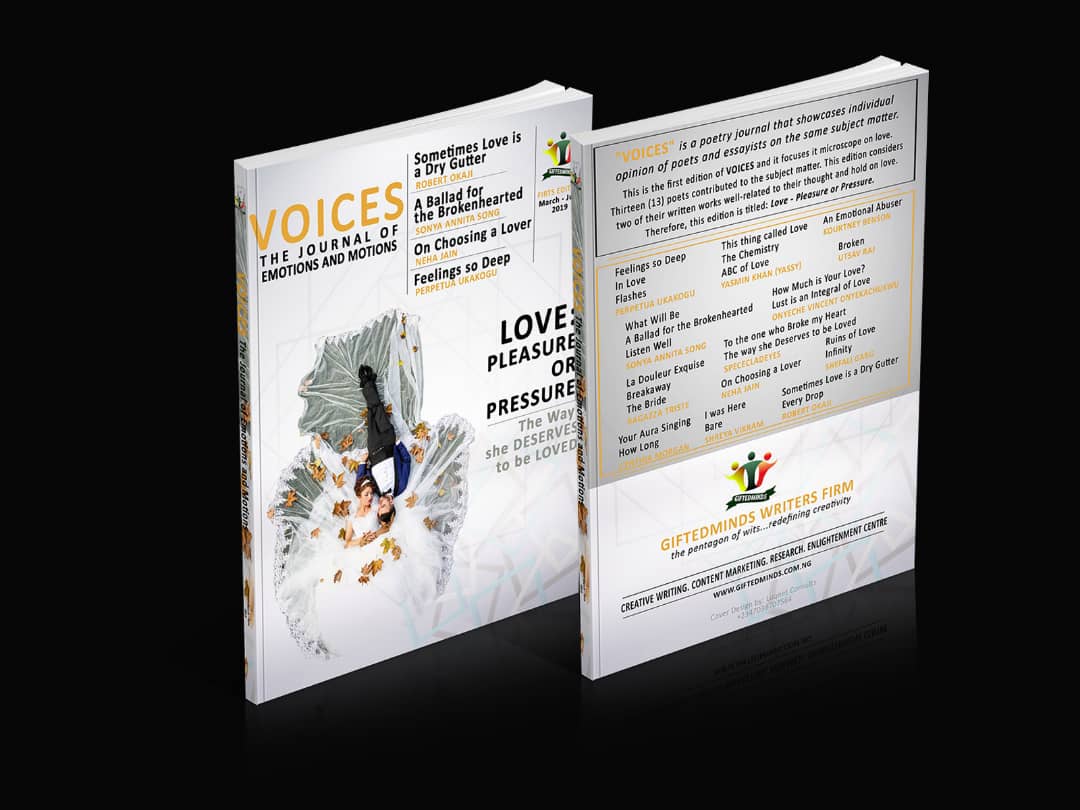
I’m delighted to report that my poems “Sometimes Love is a Dry Gutter” and “Every Drop” are included in the new Nigerian publication Voices: The Journal of Emotions and Motions. Thank you, Victor Eshameh, for selecting these pieces.

View original post

Spring Night (after Wang Wei)

file4401311417052

Spring Night (after Wang Wei)

Among falling devilwood blossoms, I lie
on an empty hill this calm spring night.
The moon lunges above the hill, scaring the birds,
but they’re never quiet in this spring canyon.

Another try at an old favorite…

I consider this adaptation rather than translation, but perhaps appropriation or even remaking might be more accurate.

Here’s the transliteration from chinese-poems.com:

Person idle osmanthus flower fall
Night quiet spring hill empty
Moon out startle hill birds
Constant call spring ravine in

So many choices, none of them exactly right, none of them entirely wrong. How does one imply idleness, what words to use for “flower” (blossom? petal?), or for that matter, “fall” (descend, flutter, spiral)? And how to describe a moonrise that scares the constantly calling birds? My first attempt began:

“I lie among the falling petals”

but it seemed vague. The word “osmanthus” fattened my tongue, or so it felt, but the osmanthus americanus, otherwise known as devilwood or wild olive, grows in parts of Texas. So I brought the poem closer to home.

I considered naming the birds (quail came to mind) but decided against. In this case the specificity felt somehow intrusive.

My hope is that I’ve managed to amplify, in some small way, previous iterations, and that while the edges are still a bit blurred in morning’s first light, perhaps they’ll become slightly crisper by the evening.

file8981286030058

“Spring Night” last appeared here in February 2018.

Two Poems in Voices


I’m delighted to report that my poems “Sometimes Love is a Dry Gutter” and “Every Drop” are included in the new Nigerian publication Voices: The Journal of Emotions and Motions. Thank you, Victor Eshameh, for selecting these pieces.


Inquisition

IMAG0153


Inquisition

1.
I breathe smoke
from the fire
warming our feet

Something is not right
but not wrong
yet

like the bones’ dance
on wires
in a bad dream

Fear’s sharp blade twists
burning with the slow
heat of coals

2.
I cannot read ashes
the message
of cracked stones in desert light

nor the poetry
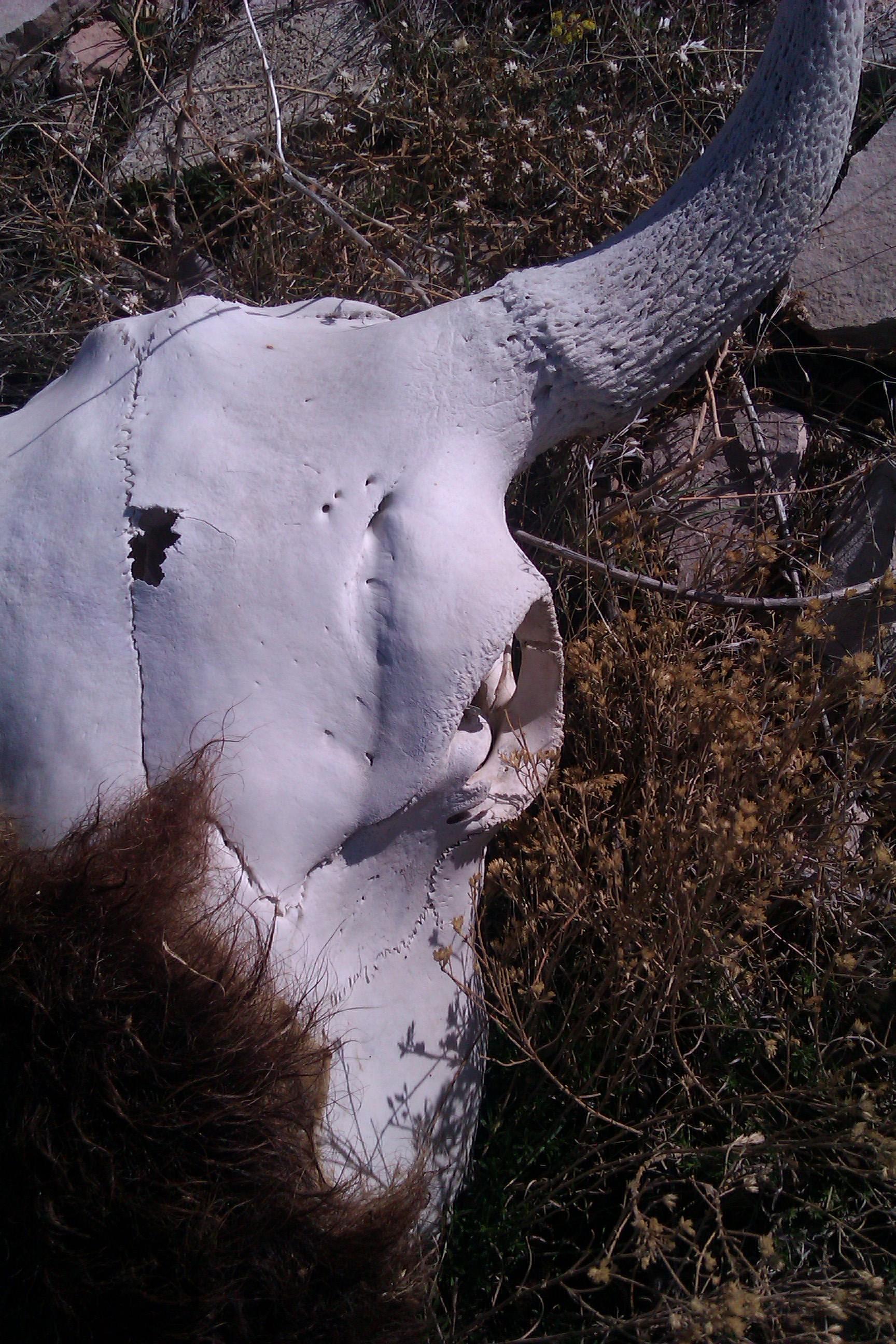
of the cow’s skull
white on dark sand

What right has a man

And the snake’s
quivering tongue tasting
what the air brings to him


file0001288673865


Originally posted in December 2014. One of my earliest published pieces, this first appeared in Taurus, in 1984. Curiously, this is not the piece that I remembered having been published in Taurus. I wonder if that poem still exists somewhere? Such is memory…


I have a bird to whistle

Gary Gautier reviews my latest chapbook!

Daedalus Lex's avatarshakemyheadhollow

Review of Robert Okaji’s chapbook of poems, I Have a Bird to Whistle (Luminous Press, 2019, 27 pages), by Gary Gautier

Beautifully crafted, each poem is an uneasy marriage of image and concept, of fullness and emptiness. Each is suggestive without yielding a fixed meaning. Meaning, like the sense-rich images, follows geometric curves through space to the vanishing point. The logic moving through each poem is like an extended haiku concatenation, jumping from one discrete image or cluster to another sometimes unrelated one. So far, so good. But the discontinuity, suggestive as it is, is sometimes too much, and I wish Okaji had given us a more stable throughline to hang onto as we move across the flow of language. When I set these prose-poem paragraphs against Okaji’s pre-existing work (see his blog here), for my taste he flourishes better with the more traditional poetic line structure. Still, those…

View original post 49 more words

April 15

Read C’s poem, and watch the ashes flutter away…

C's avatarOPTIONAL POETRY

They told me how one architect
cast himself as St Thomas

to look out over
the rooftops

in perpetuity–
a sentinel of the Île,

to dawns, the rains,
those low gold winter sunsets,

the Seine grown vein-dark
by evening, bridge spans

reflected to form
perfect spheres of sky–

transient beauty,
it was a later addition,

the apostles on the spire,
nothing lasts forever

as it stands
and nothing stands forever

but they took down
those statues

a few days ago
for what little that is worth

View original post

Variations on a Theme

darkedinburgh_shadow

Variations on a Theme

1. The Long Night

We envy the shadow its attributes, its willingness to subside,
but what of its flesh?

I lay in the field and wept.

Think of the fragrance, the moist leaves
enveloping the still

warm body. In retrospect, I realize that I should never have left, that air
returns to voided space despite all attempts to disavow

light, that wind and rain and soil alike filter through the chest’s
cavity, that stones may bear one’s touch in perpetuity.

At nineteen, death had gifted nothing to my world.
At twenty, little else remained.

So close, so lovely.


2. The Loneliness of Shadows

Light collapsing around a point. The two-headed flower.

In my dreams, no one speaks.

Not the thing itself, the bud bursting forth, petals ablaze with color,
but rather change: the process reinforced.

Sleep seldom shows such kindness.

Or its fruit, redolent of sun and rain, withdrawn and shriveled,
and finally, ingested.

Yesterday I woke damp but unafraid.


3. Alchemy

Stones never talk, but they rise from the earth, appearing as if by invitation.

The way silence lines an unfilled
grave, which is to say as below

so above, an infinite murmur open to the night.
And other notions: transpiration.

Waste.
Sublimation. Calcination and burning.

At times I have withdrawn
like water from the air’s

body, fearful yet reckless in the act.
That evening the moon flickered and the shadows lay at our feet,

and all the words we never framed,
the bitters our tongues could not know, the wasted

music and abandoned caresses, those words,
sighed into the ground, leaving you adrift, alone.

But how else might one transform darkness to light?
Or the reverse.
huey_ef


This originally appeared in Boston Poetry Magazine in April, 2014, and was first posted here in July of 2015.

 

Listening to Cicadas, I See Charlottesville (Ghazal, with recording)


Listening to Cicadas, I See Charlottesville (Ghazal)

Shedding one coat, you live in the red, apart
from the rest. Never together, forever apart.

In this sun-drenched field, the cracks drill deeper,
wider, dribbling soil and small lives, expanding, apart.

What falls truer than any words released from this man?
Once divided, never again to touch, always apart.

The electric shrill fluctuates pitch, in unison. Hundreds
of tymbals, shredding dusk, now together, then apart.

You narrow your eye to a slit, but still see the entire
spectrum. Wing clicks, stridulation. Whole yet apart.

Shearing syllables, I learn the language of half-truth.
What is my name? I reach for that fragment. It falls apart.


Scarecrow Sees

Scarecrow Sees

Da Vinci maintained that sight relies on the eye’s
central line, yet the threads holding my
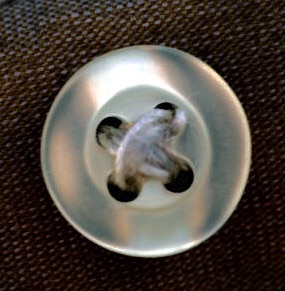
ocular buttons in place weave through four
holes and terminate in a knot. My flying friends
perceive light in a combination of four colors,
unlike the farmer, who blends only three. The
octopus knows black and white but blushes
to escape predators, while I remain fixed,
evading no one. Certainly my sense is more
vision than sight, and not the result of nerve
fibers routing light. Crows choose colors
when asked, but a certain shade of yellow
eludes them. And who would hear, above
the flock’s clamor, my claim to see this world
as it is? Grayscale, monochrome, visual
processing and perceptual lightness measures
mean little to one whose space accumulates
in uncertain increments – what is a foot to an
empty shoe? If I painted, which hues would
prefer my attempts, which would distract or
invade my cellulosic cortex, resulting in
fragmentation or blindness? Fear is not
limited to the sighted alone. I look out over
the field and perceive the harmonious
interaction of soil and root, leaf and sun,
the beauty of atmospheric refraction and
the wonder sprouting daily around me. Then
as one entity the crows explode into the blue,
leaving me alone with the shivering stalks,
questioning my place and purpose, awaiting
the next stray thought, a spark, a lonely
word creeping through this day’s demise.


This was written during the August 2015 Tupelo Press 30-30 Challenge, and was published by The High Window in December 2016.