Katharsis

OLYMPUS DIGITAL CAMERA

KATHARSIS

The questions, as always: which rocks to ignore, who will
place them, and how to defy the laws of mathematics.

Note: you will create two separate walls to build one.
You will measure length and depth. You will weigh consequence.

Dig a shallow trench, and set your first two foundation stones
at a slight angle, high points on the outside, low ends meeting

in the middle. Count your failures and multiply them by 100.
Let gravity share the burden, then discard every one. Take

care in selecting your stones. Scorpions lurk in the dark,
underneath. Wear heavy gloves. Use leverage. Seek balance.

Avoid the smooth and rounded, as they too readily relinquish
their footing. Select hard-angled, rough pieces. Accept

faults, and work with them. Stack carefully — the two walls
should lean inward, touching, each bearing the other’s

weight. Work alone, but think to the future, with strength in
mind. Be deliberate. One stone, followed by another. Repeat.

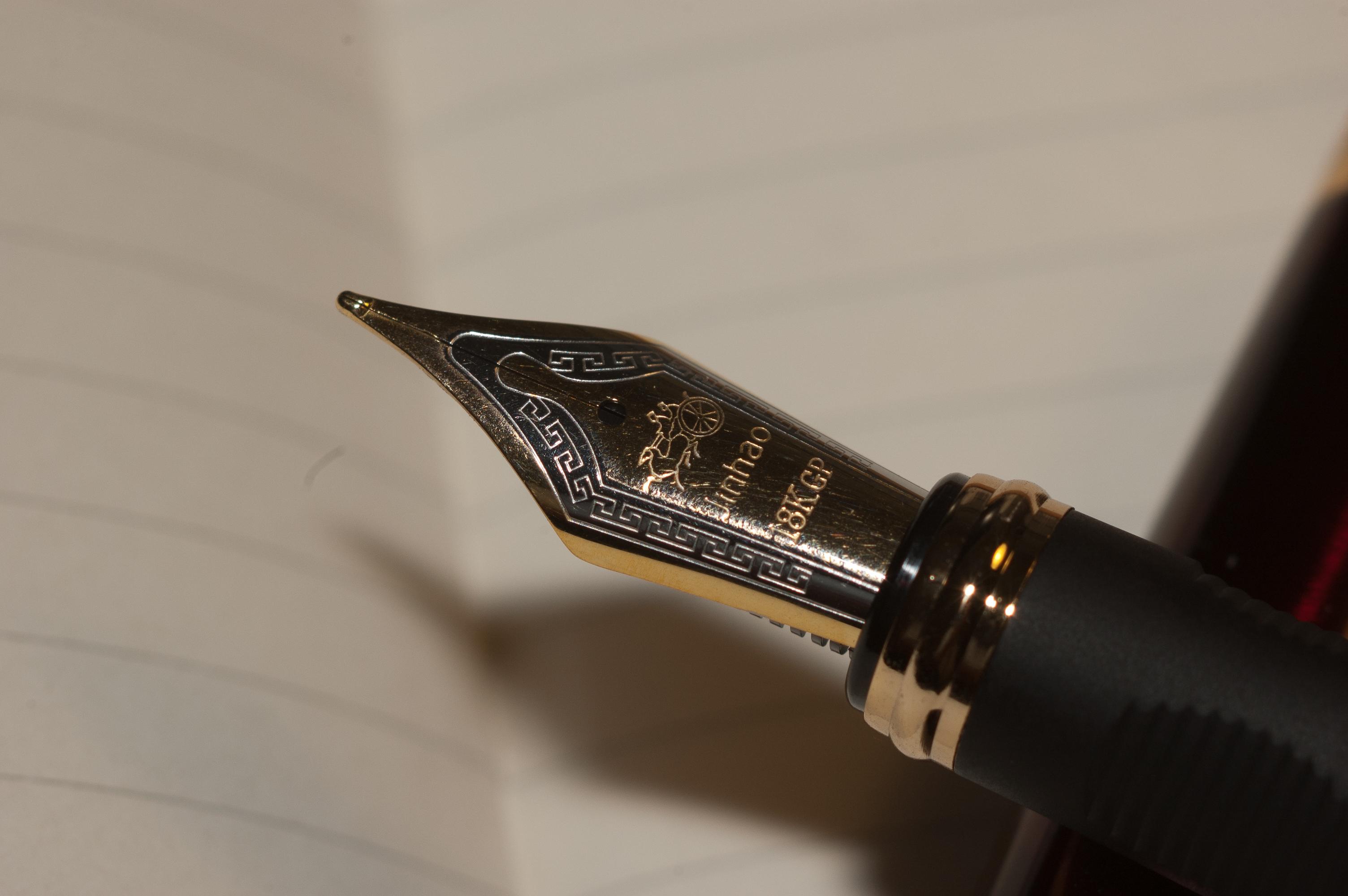
pen

“Katharsis” was drafted during the August 2015 Tupelo Press 30/30 Project. Many thanks to Plain Jane who sponsored and provided the title.

Theory and Practice of Tension (duet for guitar and mandolin)

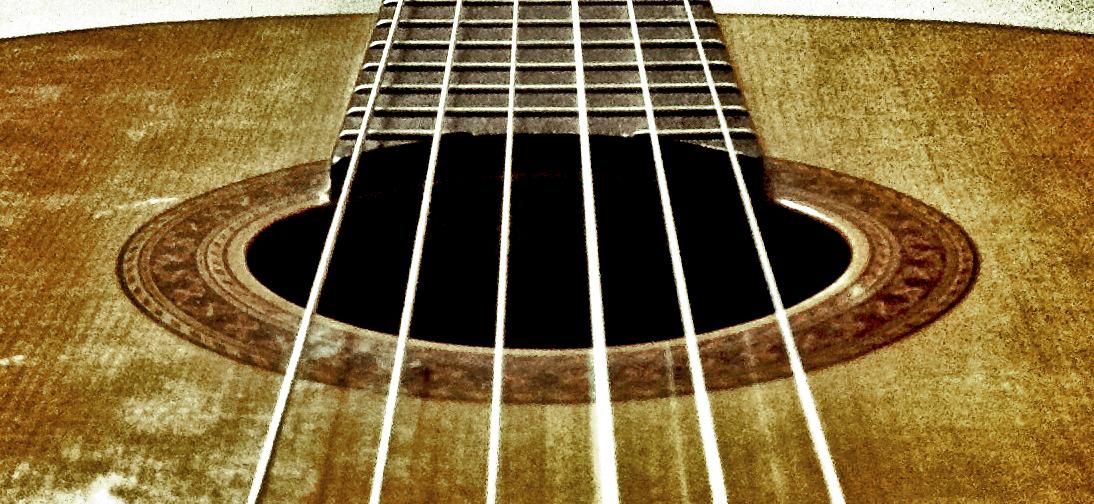
Aging Guitar

Theory and Practice of Tension (duet for guitar and mandolin)

By compromise I mean the gap between desire and
ability, the difference between mist and fog, cold air
and warmer water. Held taut, the line remains constant,
reciprocated energy observing Hooke’s Law. Though
inadequate in our attempts, in singing we often express
more than words convey, a bridging of music and lyric,
the extension commensurable to the force, as in the
bended A string trilling at dusk, words shimmering
nearby: equilibrium in thought and deed, in body and
intent. And what is the yield strength of need, of want
and notion? The fertile tremolo, plying note upon note,
peace through constant velocity. Presuming failure,
I limit my attentions and compress. When the sum of all
forces equals zero, we attain balance, owing no one.
Proportional to distance: the strings and bridge.

***

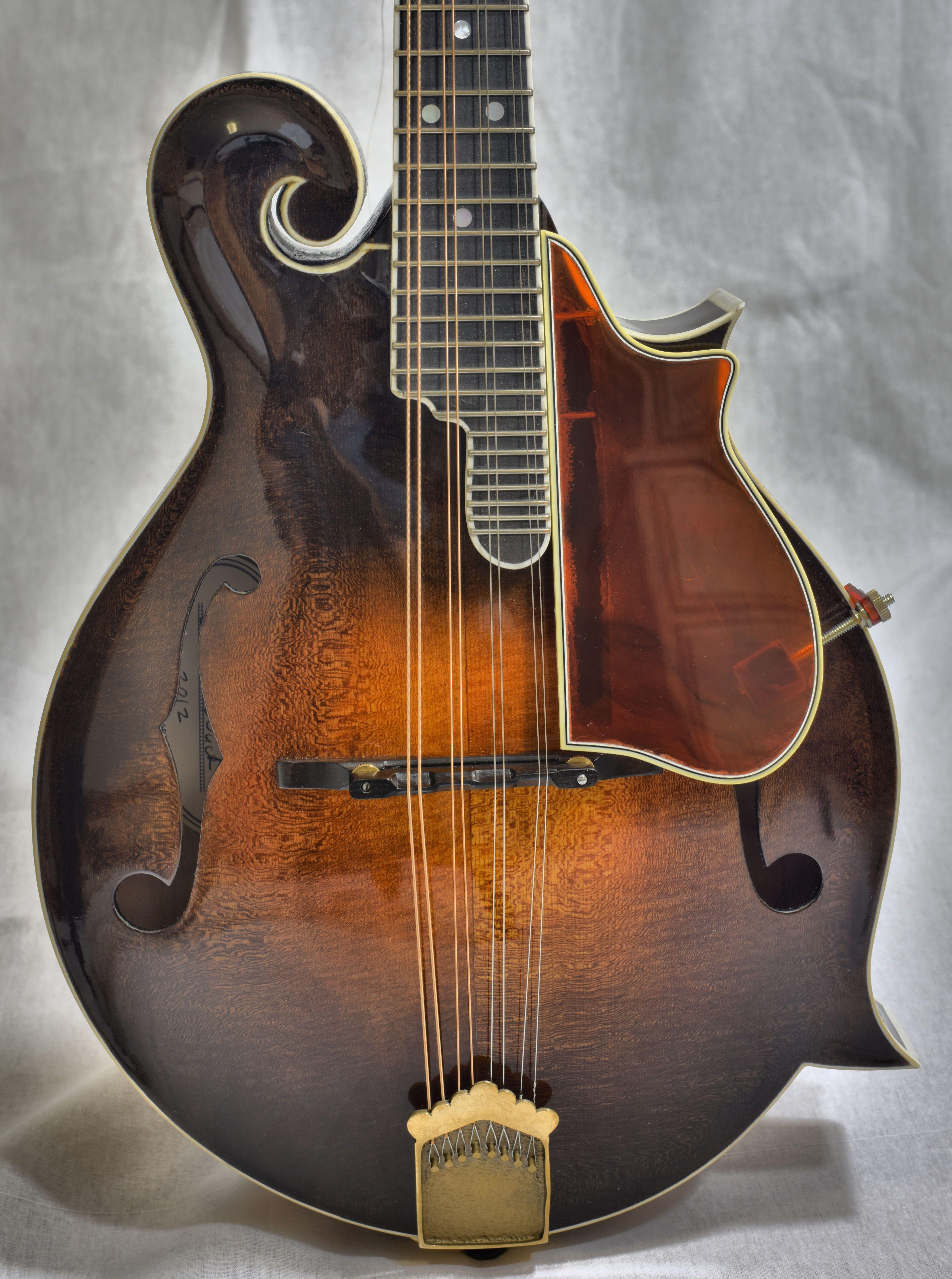
My friend Chuck and I get together on occasion to make noise with guitar and mandolin. We are not musicians. But we laugh, sing tunes written for better voices, drink good beer, and enjoy ourselves. Occasionally the sound we achieve transcends our abilities. I live for those moments.

Mando 810

“Theory and Practice of Tension” first appeared here in April 2016.

Bardic Reply

Simon H. Lilly writes of “this glory, this defeat, this wonder,” which is of course about art and its bewildering meanings…or not.

simonhlilly's avatarsimonhlilly

2018/08/img_3778.jpg

BARDIC REPLY

Our art is not about sanity.
You, who have learned neither name nor edge,
Who insist there is one word, one view, one meaning.
You can know nothing of this glory, this defeat, this wonder.
Whose life must be pleasant above all things,
despite death and all its monsters, despite the shadows, the whispers.
Trained neither to remember nor forget, muddling through.
Oh the mirrors are sharp and they are fine, but they lie.
That is never your face that looks out -just a trick we
Have become accustomed to, knowing no better.
Staring into dark pools hypnotised, dissassociated, becoming
Numb, drained of decisions, drained of moments,
the buzzing of summer flies, the click of electrical circuits.

View original post

Self-Portrait as Blemish

Self-Portrait as Blemish

Do not turn away. Stare at my impropriety
and accept the facts exposed: the mixed,
the blended, the unholy result of the extra-
legal conjoining. Or, that unconcealed
mark on the cheek, brown or black,
a pupil in the eye of the sack-clothed
target. Look closer. Ask your question.
I am the world inside the fermented
egg, the tacit accusation. What you choose
not to see. Feel my breath. Remember.

Palinode (platelets, sign, color)

red

Palinode (platelets, sign, color)

Cloistered, it circulates and combats, feeds, heals
and defends, destroying, at times, its host, and thereby
itself. Extracted, it congeals into a dark symbol,
resembling our innermost facade. The reddened
moon, incorruptible and estranged. A bull’s eye.
I pressure it daily, measuring flow and constricting
elements. Numinous river, source of strength, the internal flood.

The internal flood summons bitterness,  application
of the embodied life, rubedo. I inscribe my name in
three strokes: the upright, the downward curve, the
encompassing circle, omitting the between: as above,
so below
. The color-blind more accurately perceive
texture, alleviating the effects of spectral sensitivity.
We build from within, flowing outward in unison.

Flowing outward, split asunder, I assume the neural
response. Color, as expression, as survival factor,
attractant and warning. As symbol. The ancients
buried red pigment with bones to hasten renewal.
Life energy, passion and rage. The force in bodies,
in spirit, in blood. Shade of the alchemist’s sulfur,
glowing embers, ash, the transitory energy of human desire.

This first appeared, in slightly different form, in ditch, in January 2014, and was posted here in January 2017..

Palinode (Texas, cedar, misery)

Palinode (Texas, cedar, misery)

More than repression, more than fate and the captive idiom. More
than denial. More than the juniper’s red wind, the grackles’ flocked
effervescence. More. My friend lives on clay and I, on stone. How
to express stability’s process, the jurisdiction of pollen? The warbler
suffers no choice but that of extinction; it requires. It breathes. It
feeds, it sings and yet we come to excision. Destruction, with no
thought to consequence. Wet clay expands. Stone is constant.

Stone is constant but harbors no thought to permanence. We are
its mineral, pressing for wisdom and the eternal: to gain entrance.
Look closely. The juniper berry is a cone whose scales have merged.
I seek space and find habitat bounded in half-truths and careless
talk as the north wind broadcasts microspores throughout my
neighborhood. Inhale and know the power of propagation. Helpless
in its path, we think only to escape.

We think only to escape and instead wear misery in the attempt.
Crusted eyes, raw throats. Diminished patience. Our neighbor
chain-sawed his female cedar years ago, but his discomfort continued
unabated. The Juniper Hairstreak butterfly overwinters as a chrysalis.
Golden Cheek Warblers nest among its limbs. I flavor food with its
berries, relish the shade in July, the fragrance, year-round. Celebrating
coexistence, we sneeze. My saw lies still.

As the Gravy Flows


As the Gravy Flows

Viscosity is always a consideration, as is definition:
traditionally a sauce composed of meat juices and
thickeners, or, a sediment of melted tallow, which
somehow brings to mind a laborer rising early after
a hard night, eating red-eye, made of fried ham
drippings and coffee, served over grits. Or perhaps
an egg gravy – a béchamel sauce flavored by bacon,
with water and milk, and an egg – ladled over butter-
rubbed biscuits. But then I picture my vegetarian
friends pushing away from plates of this fine repast,
and not wishing to deny them or those following a vegan
lifestyle, we turn to roasted vegetables with broth, oils
and wine and a savory yeast extract. But I can’t fathom
a life without giblet gravy, which features the neck and
offal of fowl, including the liver, the taste of which may
be too strong for other recipes using giblets, an interesting
word in itself, from the Old French for a game-bird stew,
and the Middle English meaning of an inessential
appendage, or entrails, morphing to garbage. I would
never throw out an onion gravy, essentially a thick sauce
of slow-cooked onion and stock or wine, and admit to
having tasted a cream version with the consistency and
flavor of diluted paste, indicating a lack of balance in
flavor and poor roux-making technique. My favorite
would be an Italian-American buddy’s gravy, his word
for a rich ragù of sausage, braised beef and shredded
pork, red wine, tomatoes and herbs, served over pasta.
This of course stretches the definition of the word, but
language is elastic, is it not? So it flows, as does the gravy.

“As the Gravy Flows” was drafted during the August 2016 30/30 Challenge. Thank you to Lady Phoenix for sponsoring the poem and providing the title!

Recording of Bottom, Falling

bird silhouette

Bottom, Falling

Through that window you see another bird
rising, unlabeled, unwanted, yet noticed.
A limb’s last leaf. The boy’s breath.
Like the morning after your father died,
when temperature didn’t register
and heat shallowed through the morning’s
end. Still you shivered. Glass. Wind.
Night’s body. How to calibrate nothing’s
grace? Take notes. Trace its echo. Try.

“Bottom Falling” was published in Into the Void in October 2016, and is included in my chapbook, From Every Moment a SecondIt was written in response to a note my friend Michael sent me, and as he’s in town and we’re having lunch today, it seems a good time to repost this.

femas-mock-cover

Letter from Austin

perfection

Letter from Austin

Michael, when you say moons do you see
cold stone floating in the firmament
or phrases frayed in the mouth and spat on paper?
And does the Spanish moon simmer at a similar
pace to mine or yours? Which embers blush brighter?
But let’s turn to estuaries, to salt and clamor and gun-
running poets and interrupted words sold in stalls
between parenthetical gates, to incomparable cavas
and the deterioration of envy and intervening years.
Or perhaps mislaid passion – a friend claims love
is merely a bad rash, that we scratch and scratch
and inflame but never truly cure what ails us. Sounds like
politics to me. Or sports. And business. Or neighborhoods.
On my street people should cook and play music together,
laugh, raise chickens and read good books. They should
brew beer, swap tomatoes, recite each other’s poetry and sing
in tune. But we’re different here, preferring instead electronics
glowing in dimly lighted rooms. I reject this failure, as I also
reject the theory of centrifugal force spinning off the moon’s
body from the earth’s crust, preferring to imagine a giant
impact blasting matter into orbit around what morphed into the
earth, and somehow accreting the stuff into this orb we
sometimes worship. This, to me, is how good relationships
form: explosions of thought and emotion followed by periods
of accretion. But what I mean is I hope this finds you well
by the river of holy sacrament. Remember: brackish water
bisects our worlds. Turn. Filter. Embrace. Gotta run. Bob.

Originally published in Heron Clan 3, this first appeared on the blog in July 2015.

My friend Michael occasionally sends hand-written notes or letters to me, and I respond with poems. This is one. You might read some of his writing at Underfoot Poetry.

OLYMPUS DIGITAL CAMERA

Elegy

Elegy  

1. Adrift

I count more graves than people in my sleep,
but nothing turns more quickly

than an empty wind
in a place whose memory has died.

And all manner of departure: What you have left is you
without you
. As if it could be different, as if decades

could withdraw and draft a blueprint of motive and action,
returning them, returning you, to that point

across the sea where the ship has not yet arrived.
If you ask she will say it does not matter. If you ask.

2. Parentheses

To be within, yet without, as in the unuttered phrase.

It is time the stone made an effort to flower,

to render the void clear and resolute, the diction of
separation divided by decades and your ocean.

The language of silence, drawn near.

3. From the Other Side

Sometime becomes never and steps around a desolate corner,
and all we have left is our field

awash in stone, remnants of the unspoken.
I have no memory of you. Nor you, of me,

but the strands do not lie, and unraveled,
expose the imperfect blends

that compose my love. A leaky roof. The last word.
A pity to put up at all

but there is rain.

4. Another Night

Of all the hours which were the longest?
The earth trembled around me

and I lay still, bearing witness to
the uncertain malice of its

shrug, shoulders brought to
fore, then returned,

and finally, released. If,
after this half-century, words

could reform in your mouth,
what denial would issue?

Ashes, washing ashore.

5. Bridge

And seeing you only as the shadow of an

ending whose voice lies
in an uncommon past, how
may we recognize the very shape we share?

The bridge’s fate is loneliness,
knowing that one side

decries the other’s
call, that separation affords new light:

they are between
comfort and space, between words and a smile,

between nothingness and sorrow,
two points, beginning and end,

reaching, in opposition, towards each other.

Notes:

“What you have left is you without you” is from Edmond Jabes’s “At the Threshold of the Book” in The Book of Questions: Volume I, translated by Rosemary Waldrop.

“It is time the stone made an effort to flower” is from Paul Celan’s poem Corona,” included in Poems of Paul Celan translated by Michael Hamburger.

“A pity to put up at all but there is rain” is from Basho’s Back Roads to Far Towns, translated by Cid Corman and Kamake Susumu.

Albert Huffsticklers poem “Bridges” which appeared in The Balcones Review in 1987, begins “They are between…”

“Elegy” first appeared on Underfoot Poetry in October 2017.