Snow with Moose

OLYMPUS DIGITAL CAMERA

Snow with Moose

Guide to the incremental, to the sifted mass. The Phoenician mem shifted
shapes, but always suggested water.

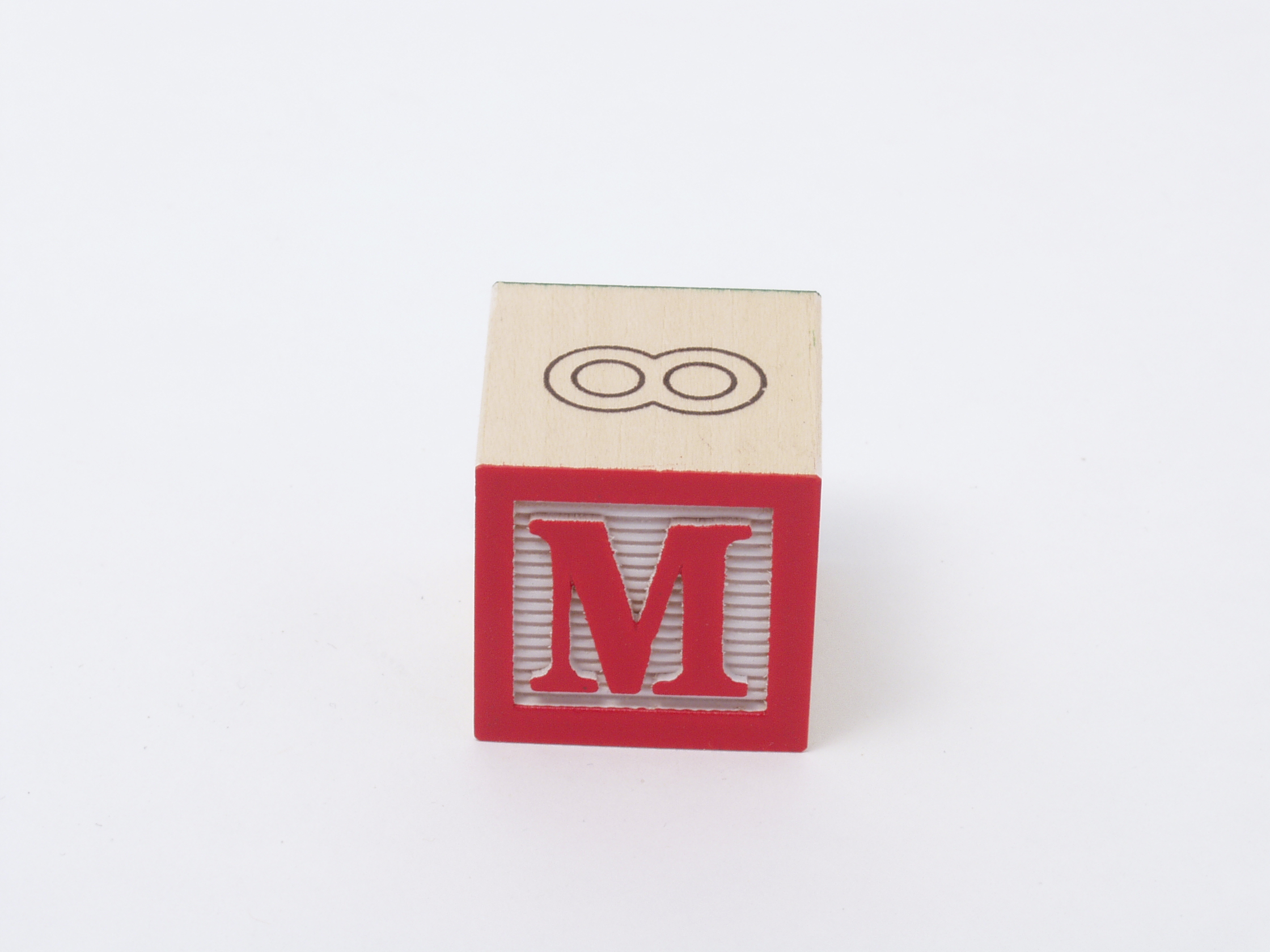
Moose likely derives from the Algonquian descriptor “he strips away.”

The Japanese character for water, mizu, evokes currents.

Moose are solitary creatures and do not form herds. A bilabial consonant,
M is a primary sound throughout the world.

The prehensile upper lip undresses branches and grabs shoots.

Wavering, I share the lack of definition, of clarity in design and choice.

The sound is prevalent in the words for mother in many unrelated tongues,
from Hindi to Mandarin, Hawaiian to Quechua, and of course English.

Eleven strokes compose the Japanese character for snow.

A smile would reveal no upper front teeth.

Long legs enable adults to manage snow up to three feet deep. Under water,
individual flakes striking the surface sound similar, despite size disparities.

It can also accurately be classified as a mineral.

Solitude to connection, dark on white. The lone traveler.

moose

“Snow with Moose” first appeared here in December 2015.

A Brief History of Babel

image


A Brief History of Babel


Borders, windows.
Sound.

Trudging up the steps, I am winded after six flights,
my words smothered in the breathing.

The Gate of God proffers no favors.
When the spirit gives me utterance, what shall I say?

Curiously, no direct link exists between Babel and babble.

A collective aphasia could explain the disruption. One’s
inability to mouth the proper word, another’s
fluency impeded by context.

A stairway terminating in clouds.

Syllable by twisted syllable, dispersed.

Separated in symbols.
And then,
writing.

To see the sunrise from behind a tree, you must face
east: higashi, or, a discrete way of seeing
the structure of language unfold.
Two characters, layered. One
thought. Direction.
Connotation. The sun’s
ascent viewed through branches
as through the frame
of a glassless
window.

Complexity in simplicity.
Or the opposite.

I have no desire to touch heaven, but my tongues reach where they will.

Who can know what we say to God, but God?

And the breeze winding through, carrying fragments.


* * *


My poem, “A Brief History of Babel,” was drafted during the August 2015 Tupelo Press 30-30 challenge, and was subsequently published at Bonnie McClellan’s International Poetry Month celebration in February 2017.


Uccello

file000687759623(1)


Uccello

the wind is what
the stillness
desires to say
each instant
collapsing into itself
like a bud
returning
to the seed

listen
the birds in my tree
are silent
as echoes
before their brief
lives are
silent

something thrashes
in the leaves
the feather
spiraling
slowly
is not only what
it is

as the candle
is more
than flame
or a moment

curling
to darkness

the question
is of clarity

I built a frame
but placed
nothing in it

the wind
blows through
quietly as if
between silences
there exists
only silence or

light
the familiar embrace

unfolding


IMG_0602

Originally published in 1987 in a short-lived publication called The Balcones Review, this is the opening of a longer work. When I last looked out my window at that same tree, I heard the birds, no longer silent.


Wind

blossoms

Wind

That it shudders through
and presages an untimely end,

that it transforms the night’s
body and leaves us

breathless and wanting,
petals strewn about,

messenger and message in one,
corporeal hosts entwined,

that it moves, that it blends,
that it withdraws and returns without

remorse, without forethought, that it
increases, expands, subtracts,

renders, imposes and releases
in one quick breath, saying

I cannot feel but I touch,
I cannot feel

* * *

“Wind” first appeared in Blue Hour Magazine and is included in my first chapbook, If Your Matter Could Reform.

tree

Senate (Tritina)

Senate (Tritina)

Not imposition, but welcome.  The way
cooperation welcomes coercion, turning the
tenor of the intended phrase, opening

the statement to interpretation, opening
a point without dissension, in the way
of politics, agreeing which fact will shape the

morning, which truth will determine the
next word and the subsequent, as if opening
the issue, claiming to have found the way,

one way, the only, but never actually opening.

* * *

A tritina might best be described as the lazy poet’s sestina, consisting of ten rather than 39 lines, with the end words of the first stanza repeating in a specific pattern in the subsequent two stanzas. The last line includes all three end words.

The patterns:
abc
cab
bca

The last line uses the end words in sequence following the pattern of the first stanza.

This first appeared on the blog in March 2017.

Chill (Cento)

silhouette


Chill (Cento) 

I shiver a little, with the evening,
and you print a shadow like a thin twig.

Wait for my death, then hear me again.
He believes a pomegranate is a thesaurus,

the thundercloud, tomorrow’s puddle. Is
this hunger unlike that of others?

When a drowning man calls out,
his voice follows him downstream.

Why am I grown so cold?


A cento is composed of lines borrowed from other poets. “Chill” owes its existence to: James Wright, H.D., Ingeborg Bachmann, Eduardo C. Corral, Blaga Dimitrova, Forrest Gander, Yusuf Komunyakaa, and Adelaide Crapsey.

pom.jpg

“Chill” first appeared on the blog in March, 2016, and was subsequently published in Long Exposure in October 2016.


Self-Portrait with Umeboshi (with recording)

file0001818876295(1)


Self-Portrait with Umeboshi

Our resemblance strengthens each day.

Reddened by sun and shiso,
seasoned with salt,

we preside, finding
comfort in failure. Or does
the subjugation of one’s flavor for another’s

define defeat? The bitter, the sour, the sweet
attract and repel

like lovers separated by distances
too subtle to see.
Filling space becomes the end.
What do you learn when you look through the glass?

Knowing my fate, I say fallen. I say earth.


Ah, simplicity! When I was a child my mother would occasionally serve rice balls in which a single mouth-puckering umeboshi rested at the center. These have long been a favorite, but I admit that umeboshi might be an acquired taste. Commonly called “pickled plums,” ume aren’t really plums but are more closely related to apricots. I cherish them.

“Self-Portrait with Umeboshi” first appeared in the Silver Birch Press Self-Portrait Series (August 2014), was included in the subsequent print anthology, Self-Portrait Poetry Collection, and also appears in my chapbook, If Your Matter Could Reform.


file0001977442406

Music: “Senbazuru” Kevin MacLeod (incompetech.com)
Licensed under Creative Commons: By Attribution 3.0 License
http://creativecommons.org/licenses/by/3.0/

Letter to Marshall from the Scarecrow’s Pocket


Letter to Marshall from the Scarecrow’s Pocket

Dear Daniel: How fortunate we are to tap into this medium of ether
and zeros and ones and all the combinations employed in our paperless
context. I am drawn to the concept of text as textile, as an entity
woven into the fabric of communication. Who knew that simple lines,
dots, dashes and squiggles would someday depict so well our
abstract beginnings and fingered desires, from counted goats and
jars of oil to the tattoo on a beloved’s inner thigh. The gap between
thought and graphic representation, whether on paper or glowing
screen, seems heightened these days, in spite of their ubiquitous
presences. I scratched my name onto the frozen creek’s surface,
only to watch it subsume as the mercury rose. I report this only
because you’ve scribed too well that feeling of treading on uncertain
surfaces, of words expanding in meaning and dragging us along
separate byways, fork into fork, under and through what we
never considered. That is our fate – to emerge from the pocket,
folded, wrinkled and smudged, smelling of makkoli and fish
markets and unwritten phrases stored in rice jars, our personal
creases expanding as we inspect the characters found there, some
crimped, others elongated, still others nearly invisible but apparent
through indentation. Translate these and what have you but a history
of glorious failures and unfelt victories in marks, on white,
somehow of note, if only to oneself. Success is a stranger’s smile,
an omelet cooked to order and eaten with gusto. It pulses
in the doing, in the unsteady drip from the faucet with a desiccated
washer, and the ink staining the page symbol by line. I know only
what I know, which ain’t much, but I keep trying to learn, to
cobble together these odd symbols into assemblages greater than
myself. As if anyone would notice. Say hello to the marred, the
cracked and disheveled of Jeju, and I’ll return the favor from
my hideaway in the Texas hills. As always, believe. Bob.


“Letter to Marshall from the Scarecrow’s Pocket” first appeared on Vox Populi in July 2018. I am grateful to Michael Simms for publishing this piece (and others).


Which is an Eye or a Bowl, a Dream

eyes3


Which is an Eye or a Bowl, a Dream

Or well-placed mirror in a sunburnt room, shivering through shifted
images: that hand, blackened and stout, opened like a dark peony;
the tattooed chin; shovel and torch; hook and owl. You say no one
chooses one fist over another, that bread’s rise completes its cycle
and begins anew, pressed flat and rounded. Take this heart and seal
its chambers. Note the anterior descent. Compression, lesion. Plaque.
Consequence. And your friend, who slept, never to awaken. Lying
in that strange bed, you taste salt, acknowledge change, whisper
to no one: audible house…audible tree, knowing that time’s limit
remains unclear. The air swirls and you accept this new light.


Note: “Audible house…audible tree” is from Jane Hirshfield’s “Not Moving Even One Step,” from The Lives of the Heart.

bowlnhashi

Sheng-yu’s Lament (after Mei Yao-ch’en)

DSC_1243


Sheng-yu’s Lament (after Mei Yao-ch’en)

First heaven took my wife,
and now, my son.
These eyes will never dry
and my heart slowly turns to ash.
Rain seeps far into the earth
like a pearl dropped into the sea.
Swim deep and you’ll see the pearl,
dig in the earth and you’ll find water.
But when people return to the source,
we know they’re gone forever.
I touch my empty chest and ask, who
is that withered ghost in the mirror?


* * *

“Sheng-yu’s Lament” is included in my micro-chapbook, No Eye But The Moon’s, available via free download at Origami Poems Project.

The transliteration on Chinese-poems.com reads:

Heaven already take my wife
Again again take my son
Two eyes although not dry
(Disc) heart will want die
Rain fall enter earth in
Pearl sink enter sea deep
Enter sea can seek pearl
Dig earth can see water
Only person return source below
Through the ages know self (yes)
Touch breast now ask who
Emaciated mirror in ghost


SAM_0841